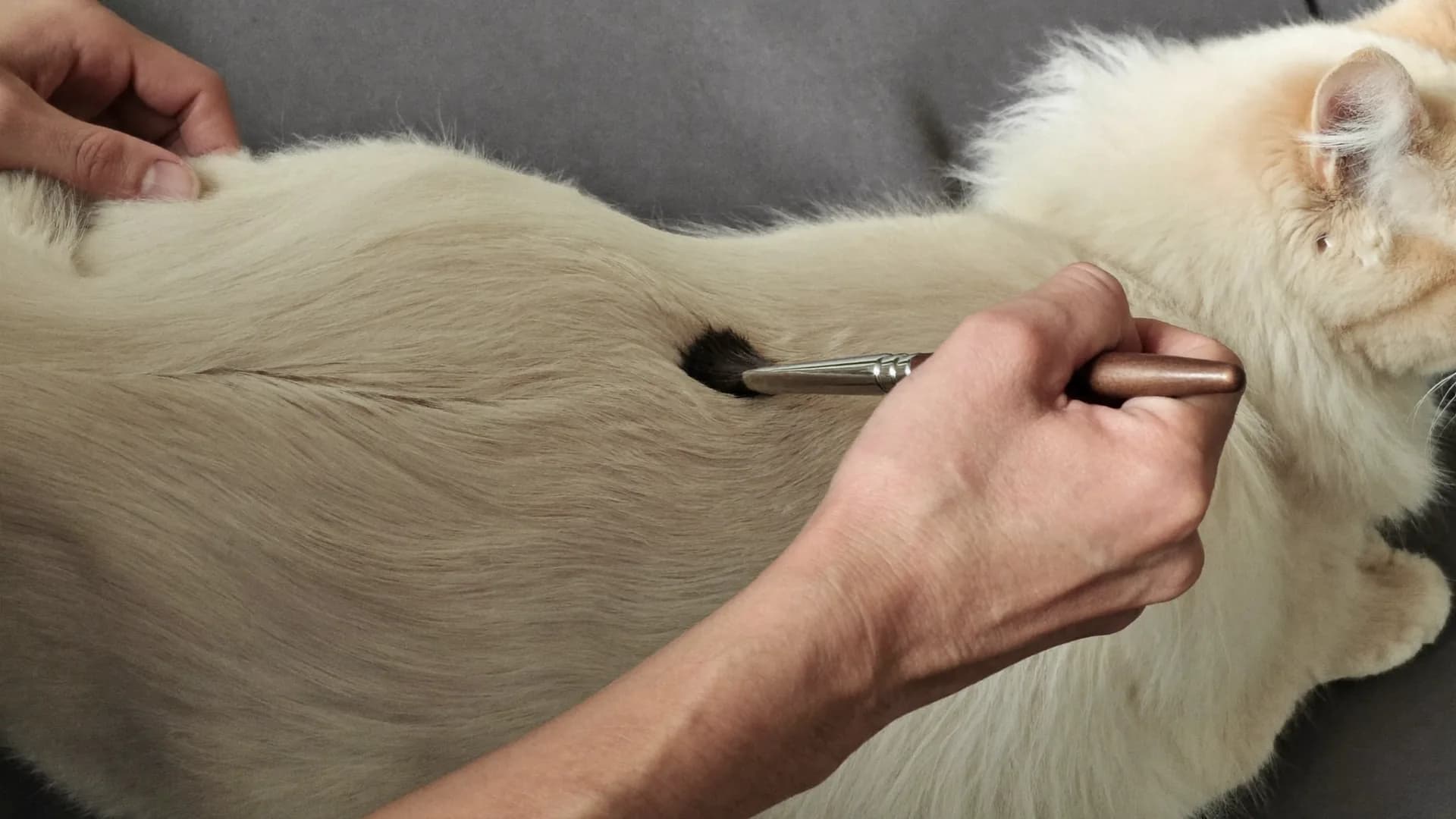
Grooming a long-haired cat: staying ahead of the mats
A long-haired cat cannot keep its own coat mat-free, and a neglected one ends in painful pelts and a shave at the vet. Regular brushing is the whole game. Here is how often, how, and which breeds need it most.
A long or semi-long coat is more than a cat's own tongue can manage, and left to itself it tangles, then knots, then forms tight pelts that pull painfully on the skin. Brushing is not optional maintenance for these cats; it is the difference between a comfortable animal and a trip to the vet for a sedated shave. Done little and often, it is also easy.
Why long coats mat
Loose hairs that a short coat would simply shed instead weave into the surrounding fur, and they gather fastest at the friction points — behind the ears, in the armpits, along the belly and around the rear. A cat grooming a long coat also swallows far more hair, which is why the long-haired breeds are the hairball champions. Both problems ease with regular brushing.
A mat is not just a tangle that got bigger. Once hair is woven tightly enough it contracts as it moves, so the knot tightens against the skin and pulls with every step; the skin underneath goes red, then damp, and can develop sores that nobody sees until the pelt comes off. That progression is the reason a mat is a welfare problem rather than an untidy one, and why time is not on your side once it starts.
How to brush
Use a comb to find tangles and a slicker to lift loose hair, and work little and often rather than in rare marathons — many long-haired cats want near-daily attention. Be gentle at knots, teasing them apart from the tip rather than dragging from the skin, and check the friction zones every time. Keep the sessions pleasant with breaks and praise so the cat does not come to dread the comb.
Work in sections and in the direction the hair lies, starting where the cat likes to be touched — the cheeks and along the back — and leaving the belly and armpits until it has settled. A wide-toothed metal comb finds trouble a brush skates over: run it through and stop where it snags rather than pulling on. Two minutes of combing that ends with the cat still relaxed is worth more than fifteen that ends with the cat leaving the room.
Reading the cat, not the clock
A cat that is done tells you before it bites. A twitching tail, ears turning back, skin rippling along the back, a purr that stops, a paw coming up to hold your hand — any of these means stop now and finish later. Pushing past them buys one more minute of brushing and costs weeks of cooperation, because the next time the comb appears the cat has already decided how the session ends.
Cats that were combed as kittens rarely fight it; cats that met the comb at their first mat often do. If yours belongs to the second group, rebuild it in tiny steps — the comb visible and nothing else, then one stroke and a treat, then two — and put a session at the end of a meal or a nap when the cat is already inclined to sit still. The consent test works exactly as well with a comb in your hand as with a bare one.
When it has gone too far
A tight mat pulls the skin and hurts, and it will not brush out. Never cut one off with scissors — the skin tents up into the knot and is easy to catch — and never simply yank. A badly matted cat needs a groomer or vet to clip the pelts safely, sometimes under sedation, after which prevention is far kinder than letting it happen again.
Scissor wounds from well-meant mat removal are a routine reason for stitches, because a pelt lifts a tent of skin up into itself and there is no way to feel where the fur ends from the outside. A clipper blade slides flat against the body and cannot do that, which is the whole reason groomers use one. If a cat comes back from the clip in a short 'lion' cut, that is not a failure — it is the coat starting again from a clean sheet, and the four months of regrowth are the easiest window you will get to establish a routine.
The other jobs that come with a long coat
A long-coated cat needs a few checks a short-coated one does not. Hair around the rear catches faeces and forms dags, which are worth trimming back before they become a hygiene problem; tufts between the toes pick up litter and slide on hard floors; and long ear furnishings hide wax. Look at the rear every few days on an older or heavier cat, which may no longer be able to reach and clean it properly.
Hairballs are the internal version of the same problem, and brushing is the main lever you have on them: hair you remove is hair the cat does not swallow. An occasional hairball is normal; frequent ones, or retching that produces nothing, are a vet question rather than a grooming one, as is a cat that suddenly stops grooming itself — in an older cat that is often arthritis rather than laziness.
What not to do
Bathing to fix mats. Water tightens them. A matted cat should be clipped before it is ever washed.
Detangling sprays as a substitute. They help a comb glide through minor tangles and do nothing to an established pelt.
Human hairbrushes and blunt slickers. Both skim the top layer and leave the tangles forming underneath, which is how an owner can brush daily and still find pelts.
Waiting for the cat to be in the mood. Coats mat on their own schedule. Short sessions on a routine, whether or not the cat is enthusiastic, are what keeps it ahead.
How often should I brush a long-haired cat?
Most long- and semi-long-haired cats need brushing every day or close to it, because their coats tangle faster than the cat can manage. Little and often prevents the mats that a rare, thorough session cannot undo.
Why does my long-haired cat get matted?
Loose hairs weave into the coat instead of shedding, especially at friction points like the armpits, belly and behind the ears. Without regular brushing they knot into pelts that pull on the skin.
Can I cut a mat out of my cat's fur?
Please don't with scissors — the skin tents up into a tight mat and is very easy to cut. Leave bad mats to a groomer or vet, who can clip them safely, sometimes under sedation, and focus on preventing them afterwards.
Do long-haired cats get more hairballs?
Yes — grooming a long coat means swallowing far more hair, so the long-haired breeds are the most prone to hairballs. Regular brushing removes the loose hair before the cat can swallow it.
Which cat breeds need the most grooming?
The long- and semi-long-haired breeds — Persians, Maine Coons, Ragdolls and the like — need the most, up to daily brushing. Short-coated breeds largely manage their own coats.
What comb or brush should I use on a long-haired cat?
A wide-toothed metal comb to find tangles and a slicker to lift loose hair, both worked down to the skin rather than over the surface. Human hairbrushes and soft slickers tidy the top layer while the tangles keep forming underneath.
How do I brush a cat that hates it?
In much smaller steps than feels necessary: the comb in sight and a treat, then one stroke, then two, stopping while the cat is still relaxed. Time the sessions after a meal or a nap, and stop at the first twitching tail or flattening ear rather than after the bite.
Why has my long-haired cat stopped grooming itself?
It may not be able to. Arthritis, dental pain, obesity and general illness all stop a cat reaching parts of its coat, and an unkempt rear or a suddenly matted back is often the first visible sign. A cat that gives up grooming is worth a vet's examination, not just more brushing.