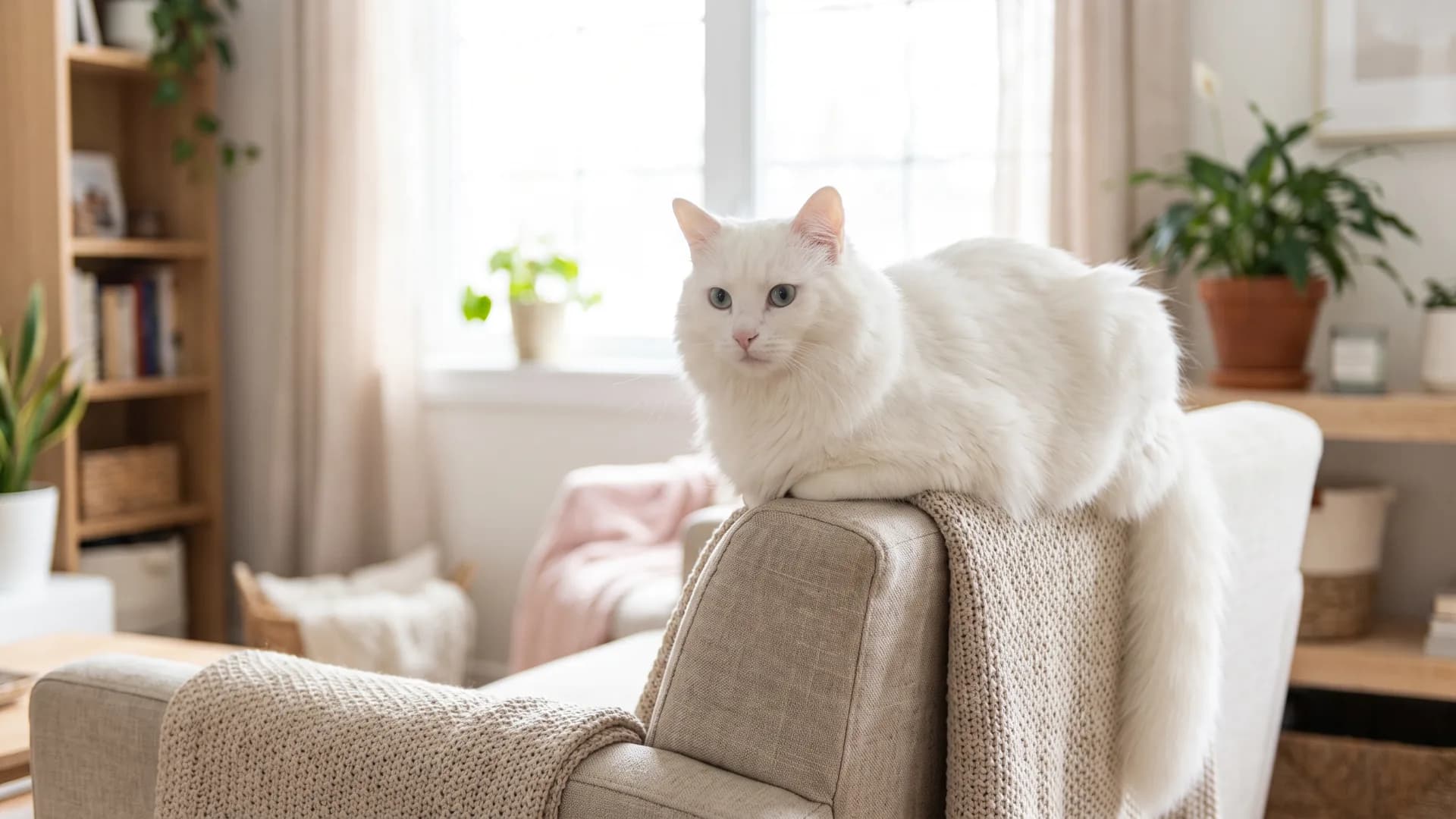
Why your cat bites you when you pet it
A cat that asks for a stroke and then sinks its teeth in isn't being fickle. Most petting bites come with a warning you can learn to read, and the fix is usually to stop sooner rather than to stop altogether.
It's one of the most bewildering things cats do: settle into a lap, enjoy a few minutes of fuss, then whip round and bite the hand doing the fussing.
It looks like betrayal and it's nothing of the kind. In most cases it's a cat that ran out of patience for being touched and had already said so twice.
Why pleasant becomes irritating
Stroking stimulates the same patch of skin over and over, and a great many cats have a fairly low ceiling for that.
Past the ceiling, the sensation stops being pleasant and starts being an itch that won't stop, and the cat does the blunt thing available to it. Behaviourists call it petting-induced aggression or overstimulation; from the cat's side it's closer to switching off a radio that has got too loud.
It's worth saying plainly that this isn't a mean cat, an ungrateful cat, or a cat that doesn't like you. Cats vary enormously in how much handling they enjoy, largely by temperament and by what they experienced as kittens, and the ones with a short fuse aren't defective. They're simply cats whose limit you have to learn.
The warning it gives first
The bite almost always has a preamble, and reading it is most of the solution.
A tail that begins flicking or thumping. A ripple of skin running along the back. Ears swivelling backwards or flattening. The body stiffening under your hand. A purr that stops. Pupils widening. Whiskers pushed forward. A head that turns deliberately towards your hand, or a paw that comes up to hold it.
Any one of those is enough. End the stroke at the first one and the bite mostly vanishes, because the cat learns that the smaller signals work — and a cat whose signals work has no need of the larger one.
Most cats that bite hands have simply learned that nothing short of teeth gets a response. That's a lesson we taught them, and it's one of the few behaviour problems that can be fixed entirely by changing what the human does.
The consent test
There's a simple way to stop guessing. Stroke twice, then take your hand away and wait.
A cat that wants more will push its head into your hand, lean, headbutt, or shift closer. A cat that has had enough will stay still, look away, or start grooming. Then respect the answer.
Do that consistently and two things change. You stop crossing the line, and the cat — which now has a reliable way to ask — starts asking for more rather than enduring it.
It's the single most useful habit for a cat that bites hands, and it takes no training on the cat's part at all. Most people are surprised by how often the answer turns out to be no, and how much friendlier the cat becomes once the no is honoured.
Where cats actually like being touched
The face and the base of the ears are where cats scent-mark, and most enjoy being stroked there: cheeks, chin, the top of the head, along the jaw. The neck and shoulders are usually fine. Down the back is tolerated by many.
The belly, the legs and the base of the tail are the areas most cats merely put up with, and the belly in particular is where a relaxed cat rolling over is displaying trust rather than requesting a rub — a distinction learned the hard way in a great many households.
The base of the tail is worth a separate warning, because it's the one that produces the most confusing reaction. Some cats become intensely aroused when stroked there, arching and treading, and then bite — and the owner reasonably concludes the cat liked it right up until it didn't. It did. That's the problem: it's more stimulation than the cat can regulate.
Not every bite is this bite
Four different things get called the same name, and the fix depends which one you have.
Overstimulation happens during willing contact, follows warning signals, and stops when you stop. That's this article.
Play aggression is a cat, usually young, ambushing ankles and grabbing hands with pupils wide and a wiggling backside. It's a hunting game that needs an outlet — wand toys, twice-daily play to the point of actual tiredness — and hands must never be the toy. A kitten taught that fingers are prey becomes an adult that bites for fun, which is much harder to unteach.
Fear or defensive biting comes with a crouched body, ears flat and sideways, a tucked tail and a cat that would leave if it could. The answer is distance and an escape route rather than persistence.
Pain. A cat that has recently started objecting to being touched where it never used to is a cat to have examined rather than a cat with a new attitude. Arthritis, dental disease, an ear infection, a wound under the coat and skin conditions all make handling hurt. Sudden onset is the single clearest reason to see a vet rather than to look for a training fix.
The love bite, which is a fifth thing
Worth separating out because it worries people unnecessarily. Some cats deliver a soft, deliberate nibble — often to a hand or an arm, sometimes while purring and kneading — that doesn't break skin and isn't preceded by any warning at all.
That's social rather than defensive, closer to the grooming nibble cats give each other, and it usually means the cat is thoroughly relaxed. The tell is the pressure and the context: a love bite is gentle and arrives in the middle of contentment, where an overstimulation bite is sharp and arrives at the end of a build-up.
It doesn't need fixing. If you'd rather it stopped, simply end the contact when it happens — quietly, without a reaction — and most cats drop it within a few weeks.
What to do in the moment, and what never to do
If teeth land, go still rather than jerking away — a hand snatched back triggers the grab reflex and tears more skin than a hand held still.
Wait for the release, then get up and end the interaction quietly. No shouting, no tapping the nose, no scruffing.
Punishment doesn't teach a cat to tolerate touch; it teaches that hands are unpredictable, which produces a cat that bites sooner and with less warning. It's the one response that reliably makes the problem worse and it's the one people reach for first.
Cat bites deserve respect medically: they're puncture wounds that seal over dirt, they infect readily, and a deep bite — particularly on a hand — is worth a doctor's opinion rather than a plaster.
Building tolerance, slowly
If you want a cat that enjoys longer contact, the way there is short sessions that always end before the limit, paired with something the cat values.
Two strokes, a treat, stop. Then three. The number rises over weeks because the cat is relaxed rather than because it's enduring more, and it rises fastest in cats that are never pushed past the line.
Where you stroke matters as much as how long. Building from the cheeks outward — the place almost every cat enjoys — gets further than starting down the back and hoping. And ending the session yourself, while the cat still wants more, is what turns contact into something it looks forward to.
Children, and the household rule
Most bitten hands in a family belong to a child, because children stroke fast, for a long time, and towards the tail.
The rule that works is short, gentle, front half only, and stop when the cat stops asking — plus never following a cat that has walked away.
A cat with a reliable escape route bites far less than one that has learned it must make its own. That means somewhere high the child can't reach, and an agreement that a cat under a bed or on top of a wardrobe is off limits entirely.
When it needs more than patience
See a vet for any biting that's new, escalating, or accompanied by hiding, a change in appetite or a reluctance to jump.
Once pain is excluded, a cat behaviourist is worth involving for aggression that's severe or unpredictable, and referral through your vet is the reliable route.
Read the signals, keep the sessions short, and let the cat decide when they end — that alone resolves the great majority of these cases, usually within a fortnight and without the cat having to learn anything.
Why does my cat bite me when I am petting it?
Usually overstimulation: the cat has had more stroking than it finds comfortable and bites to end it, after subtler signals were missed. It isn't spite, and reading the early warnings largely prevents it.
What are the warning signs before a cat bites?
A flicking or thumping tail, skin rippling along the back, ears turning back or flattening, the body stiffening, a purr stopping, pupils widening, or the head turning deliberately towards your hand. Stopping at the first sign usually heads off the bite.
How do I know when my cat wants me to stop petting it?
Use the consent test: stroke twice, take your hand away and wait. A cat that wants more pushes into your hand, leans or headbutts. A cat that has had enough stays still, looks away or starts grooming. Respecting that answer is the most useful habit there is.
Where do cats like to be petted?
Cheeks, chin, the top of the head and the base of the ears — the places they scent-mark — and usually the neck and shoulders. The belly, legs and base of the tail are merely tolerated by most cats, and a cat rolling over is displaying trust rather than asking for a belly rub.
Should I be worried if the biting is new?
Yes, enough to have the cat examined. A cat that suddenly objects to being touched where it never used to may be in pain — arthritis, dental disease, an ear infection or something under the coat. New or escalating biting is a vet question before it's a training one.
What should I do when my cat bites my hand?
Go still rather than pulling away, because a snatched hand triggers the grab reflex and tears more skin. Wait for the release, then get up and end the session quietly. Never shout, tap or scruff — that teaches the cat that hands are unpredictable and produces less warning next time.
Is my cat biting during play the same thing?
No, and it needs a different fix. Play biting comes from a cat, usually young, ambushing ankles with wide pupils and a wiggling backside; it needs wand toys and twice-daily play to real tiredness, and hands must never be the toy. Overstimulation biting happens during willing stroking and follows warning signals.
My cat gives soft nibbles while purring. Is that aggression?
No, that's a social nibble — closer to the grooming bite cats give each other — and it usually means the cat is thoroughly relaxed. The difference is pressure and timing: it's gentle and arrives in the middle of contentment, where an overstimulation bite is sharp and arrives after a build-up.
Why does my cat bite when I stroke the base of its tail?
Because that spot is unusually stimulating for many cats. They often arch and tread as though enjoying it, which they are — right up to the point where it's more sensation than they can regulate, and the bite follows. It's the clearest example of why stopping early matters more than reading enjoyment.