How to bathe a cat without either of you getting hurt
Most cats rarely need a bath and hate the idea — but now and then one is unavoidable. The trick is preparation, a calm setup, and a method that keeps the water off the face and the claws off you.
A healthy cat grooms itself and almost never needs a bath. The times it does are specific: something toxic or sticky on the coat, a medicated wash a vet has asked for, or a very dirty, elderly or overweight cat that can no longer keep itself clean. When one of those comes up, the goal is a fast, calm, safe bath — not a weekly ritual, and not a fight.
First, decide whether a full bath is even needed
Often it is not. A damp cloth over the dirty patch, a pet-safe waterless foam, or a cornstarch-and-brush for a greasy spot handles most of what owners reach for the tub about. If you are bathing, brush the coat out first — a mat tightens into a solid pad once it is wet, so deal with any matting before the water, not after. Trim the claws beforehand too; it is the single thing that most changes how the bath goes for your arms.
Set everything up before the cat is in the room
A wet cat will not wait while you look for the towel. Put a non-slip mat in the sink or tub, run a few inches of warm — not hot — water, and have cat shampoo, a jug for rinsing and two towels within reach. Use a shampoo made for cats: dog and human products are the wrong pH for feline skin. Shut the door, keep the room quiet, and if you can, have a second calm person to hold while you wash.
The method
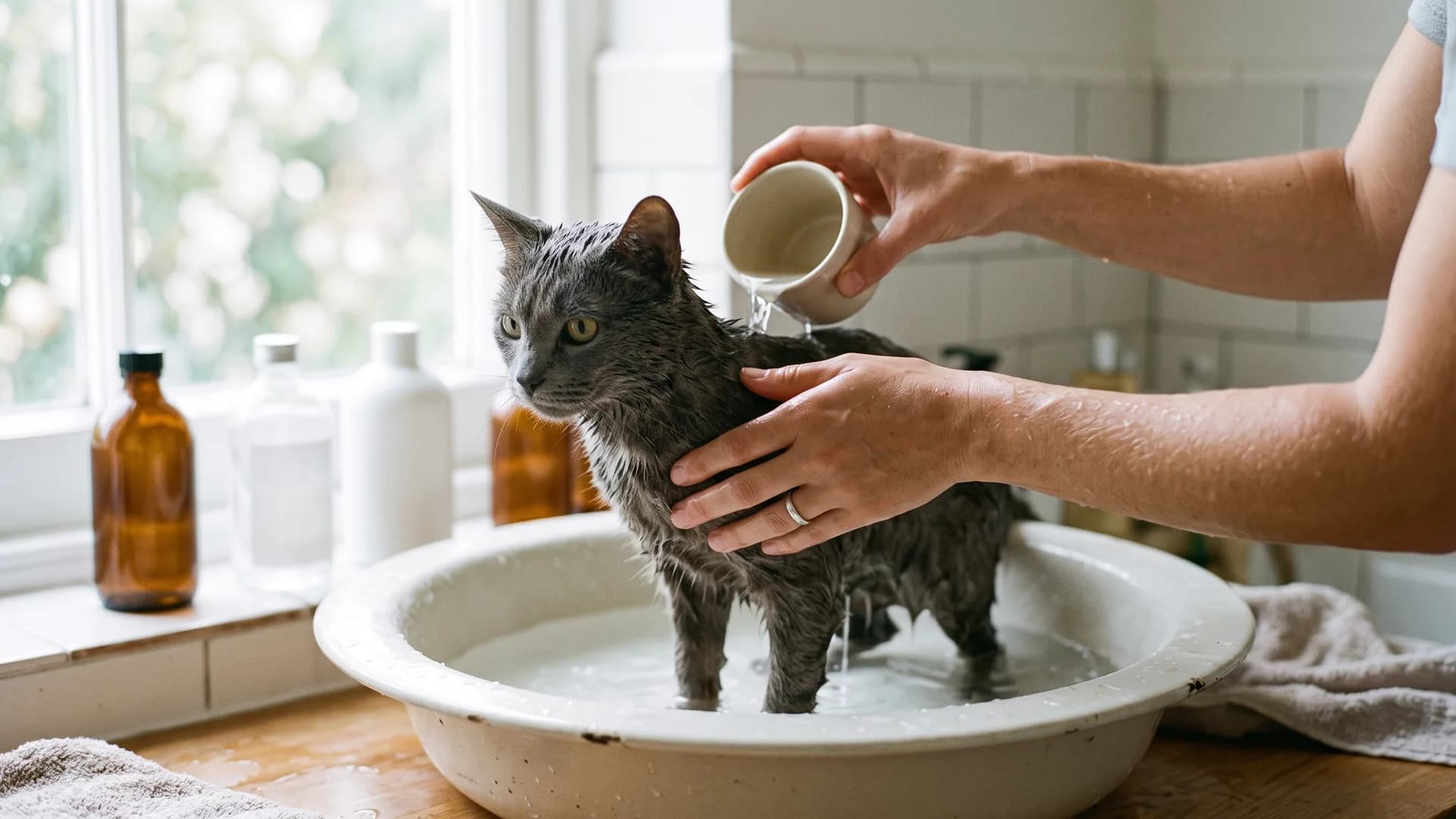
Lower the cat in gently and wet it from the neck backwards with the jug, keeping water off the face and out of the ears. Lather, then rinse until the water runs completely clear — leftover shampoo irritates skin and gets licked off later. Never pour water over the head: wipe the face with a damp cloth only. Work quickly and talk calmly; the faster it is over, the better it goes.
Drying, and letting it recover
Wrap the cat in a towel and blot rather than rub, then keep it warm and out of drafts until it is fully dry — a wet cat gets cold fast. A long-haired cat needs combing through as it dries so the coat does not mat again. Most cats hate the dryer's noise, so a warm room and towels usually beat it. Then leave the cat alone to decompress; the bath is not the moment for cuddles.
When to skip it and call a professional
A cat that panics, bites in earnest, or has a coat matted to a solid pelt is a job for a groomer or vet, sometimes under light sedation, done safely in minutes rather than fought over at home. The same is true for a frail, elderly or ill cat. Forcing a terrified cat through a bath teaches it to fear you and the bathroom both, which is a worse outcome than a slightly dirty cat.
When a bath cannot wait — and when to stop and call the vet
Sometimes there is no time to build up to it: the cat has walked through something sticky, filthy or toxic that it must not groom off. Then the priority is getting the substance off fast and safely. Rinse the affected area with plain warm water first to dilute and carry away the bulk of it, then wash just that part with cat shampoo if the cat will allow it, keeping the rest of the coat as calm and dry as you can. Speed and a narrow focus beat a thorough, drawn-out bath here.
Some things, though, are a phone call before they are a bath. Oil, paint, tar, a garden chemical, anything caustic, or a substance you cannot identify all warrant ringing the vet or a poison line first, because the instinctive home fixes — solvents, washing-up liquid, hot water, hard scrubbing — can drive the substance into the skin or strip it raw, and a few contaminants are safer clipped out of the fur than bathed out. Stop, too, if the cat tips from protesting into genuine panic: a cat that is thrashing, screaming or biting in earnest can hurt itself and you, and a job that has turned into a fight is one to hand to a groomer or vet who can do it safely, sometimes with light sedation, in a fraction of the time.
Waterless washes and spot-cleaning that skip the tub entirely
For the far more common everyday grubbiness, you rarely need water at all, and reaching for the tub by reflex is what makes bath time a battle in the first place. A pet-safe waterless foam or a grooming wipe made for cats cleans a dirty patch with no rinsing and no drama, which suits a water-averse cat far better than a full bath it will remember and resent. Cornstarch worked into a greasy spot and then brushed out lifts the oil; a damp microfibre cloth drawn along the coat in the direction of the fur freshens a cat between anything more involved.
Matching the method to the mess is most of the skill. A single muddy paw is a job for a warm damp cloth, not a bath. A little dried food or litter stuck to the coat combs out once softened. A faint smell is usually the bedding rather than the cat, so washing the bed does more than washing the animal. Keeping the coat brushed and the litter tray clean removes most of the reasons a cat gets dirty at all — which is why, for the great majority of cats, the honest answer to "how do I bathe my cat" is that you almost never have to, and the times you do are the exception worth preparing for calmly rather than the routine to dread.
How often should I bathe my cat?
Most cats never need a routine bath — they groom themselves. Bathe only for a specific reason: something toxic or sticky on the coat, a medicated wash the vet asked for, or an elderly or overweight cat that can no longer clean itself. A damp cloth or waterless foam handles most other cases.
What shampoo can I use on a cat?
A shampoo formulated for cats. Human and dog products are the wrong pH for feline skin and can irritate it, and cats then lick off whatever is left, so the residue matters more than for a dog. Rinse until the water runs completely clear.
My cat hates water — how do I bathe it?
Prepare everything first, trim the claws, and keep it short and calm: a non-slip mat, a few inches of warm water, wash from the neck back with a jug, and never over the face. A top-and-front-opening sink or a second person helps. If the cat genuinely panics, stop and let a groomer or vet do it safely.
Can I use dog or human shampoo on a cat?
No. Both are the wrong pH for a cat's skin and can leave it irritated and flaky, and a cat grooms the residue straight back off. Use a cat-specific shampoo, or ask a vet for a medicated one if the bath is for a skin condition.
How do I dry a cat after a bath?
Wrap it in a towel and blot rather than rub, then keep it somewhere warm and draft-free until fully dry, since a wet cat chills quickly. Comb a long coat through as it dries so it does not mat. Most cats find a hairdryer terrifying, so a warm room and towels are usually the calmer choice.