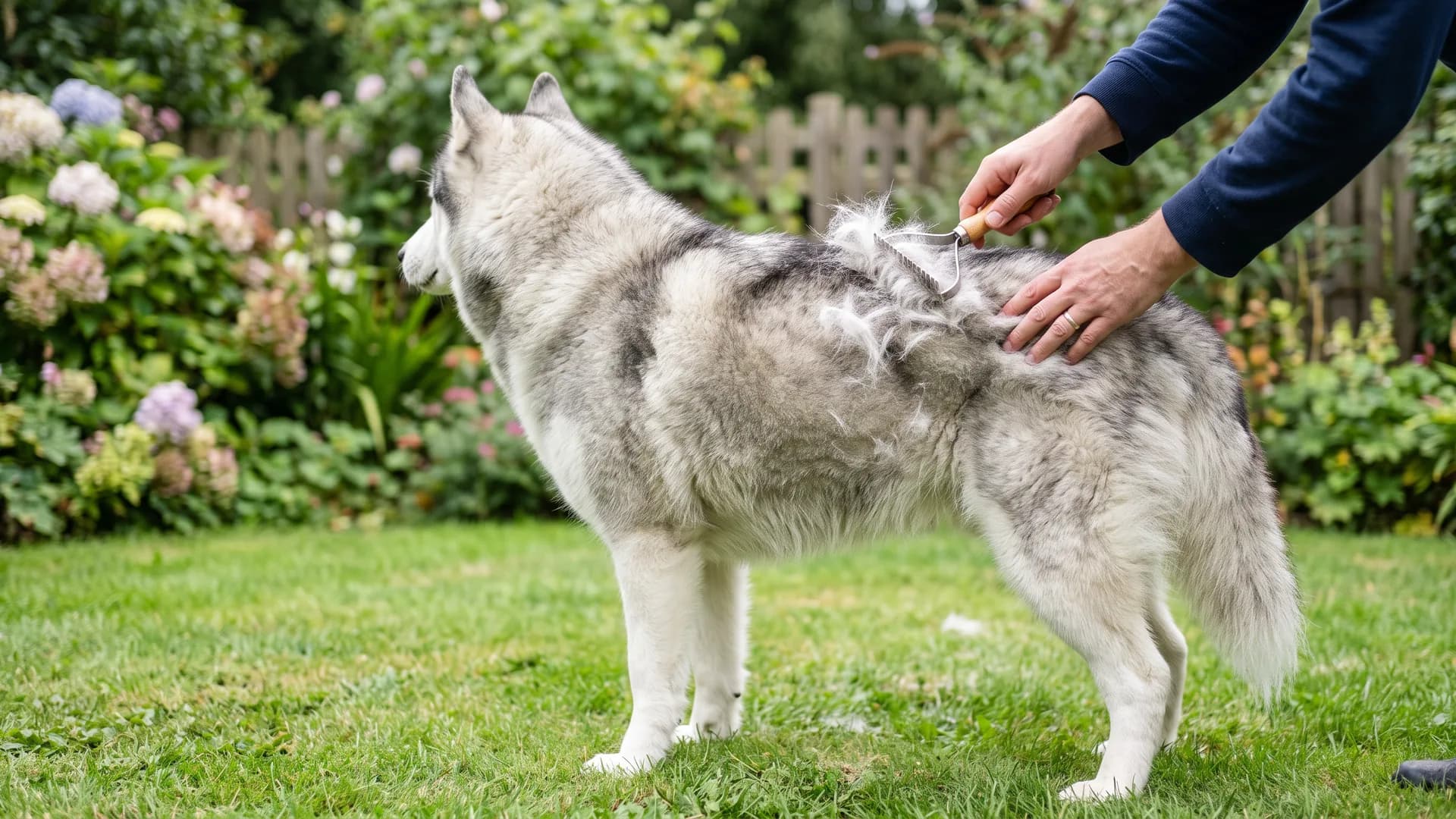
Grooming a double-coated dog, and why you should never shave one
A double coat is insulation, sun protection and a shedding system in one — and shaving it off does none of those jobs better. Here is how to brush, deshed and bathe the coat the dog is meant to have.
A double coat is two coats at once: a dense, soft undercoat that insulates, and a layer of longer, coarser guard hairs over it that sheds water and blocks the sun. Huskies, German Shepherds, Golden Retrievers, Corgis, Samoyeds, Australian Shepherds and Pomeranians all wear one, and it asks for a particular kind of care — most of which is brushing, and none of which is a razor.
What the coat actually does
The undercoat is a climate system, not just fluff. It traps a layer of air that holds warmth in against cold and, just as importantly, keeps heat out in summer — the same way loft insulation works both ways. The guard hairs above it shed rain and shield the skin from sun. A dog in a well-kept double coat is better equipped for a hot day than a shaved one, which is the opposite of what most people assume.
Why shaving backfires
Shaving a double coat does not keep a dog cooler; it strips out the insulation and the sun protection and leaves thin skin exposed to sunburn and overheating. It does not reduce shedding either — the hair simply comes off shorter. And it often grows back wrong: patchy, woolly, or slow to return at all, a coat-regrowth problem common enough to have a name. For a hot day the answer is shade, water, air conditioning and avoiding the midday sun, not a clipper. The one time a double coat is shaved is on veterinary advice, for a medical reason.
Brushing is the real maintenance
The work is a rake and a slicker, used to the skin rather than over the top. Line-brush in sections so the undercoat is actually reached, run a comb through afterwards to check you got down to skin, and do it through the whole year — then step it up during the seasonal "coat blow", the heavy shed in spring and autumn when the undercoat comes out in handfuls. Regular brushing is also what keeps the coat from matting in the first place.
Bathing and, above all, drying
Bathe a double coat only when it needs it, and brush the loose coat out before the water goes on. Rinse until the water runs completely clear — trapped shampoo irritates skin — and then dry it thoroughly, ideally with a dryer while you brush. A dense undercoat left damp underneath is how a double-coated dog ends up smelling and matting; the drying matters more than the washing.
Shedding is the deal, not a defect
A double coat sheds, and the job is to manage it rather than to end it — regular brushing moves the hair into the brush instead of onto the sofa. It is worth being clear-eyed about this before choosing the breed: a double-coated dog is not a low-shedding one, and no amount of grooming turns it into one. What grooming does is keep the coat doing its job, and keep your home livable while it does.
Should I shave my husky or double-coated dog in summer?
No. The undercoat insulates against heat as well as cold, and the guard hairs block the sun, so a shaved dog is more exposed to overheating and sunburn, not less. Shaving also does not reduce shedding and often grows back patchy. For hot weather use shade, water and air conditioning, and brush the coat out instead.
How do I stop a double-coated dog shedding?
You manage it rather than stop it. Brush to the skin with an undercoat rake and slicker through the year, and step it up during the twice-yearly heavy shed. That moves the loose undercoat into the brush before it reaches your floors. A double coat is not a low-shed coat, and grooming will not make it one.
What brush does a double coat need?
An undercoat rake to pull the dense shedding undercoat, a slicker brush to work the coat and lift loose hair, and a comb to check you have reached the skin rather than just the surface. Line-brushing in sections is what gets down to the undercoat where mats and loose hair actually sit.
How often should I bathe a double-coated dog?
Only when it is genuinely dirty — over-bathing strips the coat. Brush the loose hair out first, rinse until the water runs clear, and then dry the coat thoroughly, ideally with a dryer while brushing. A damp undercoat left to dry on its own is what makes a double-coated dog smell and mat.
Will a shaved double coat grow back normally?
Often it does not. Double coats commonly grow back patchy, woolly or slowly after shaving, sometimes permanently changed, because the undercoat and guard hairs return at different rates. This is a large part of why shaving is advised against unless there is a medical reason for it.