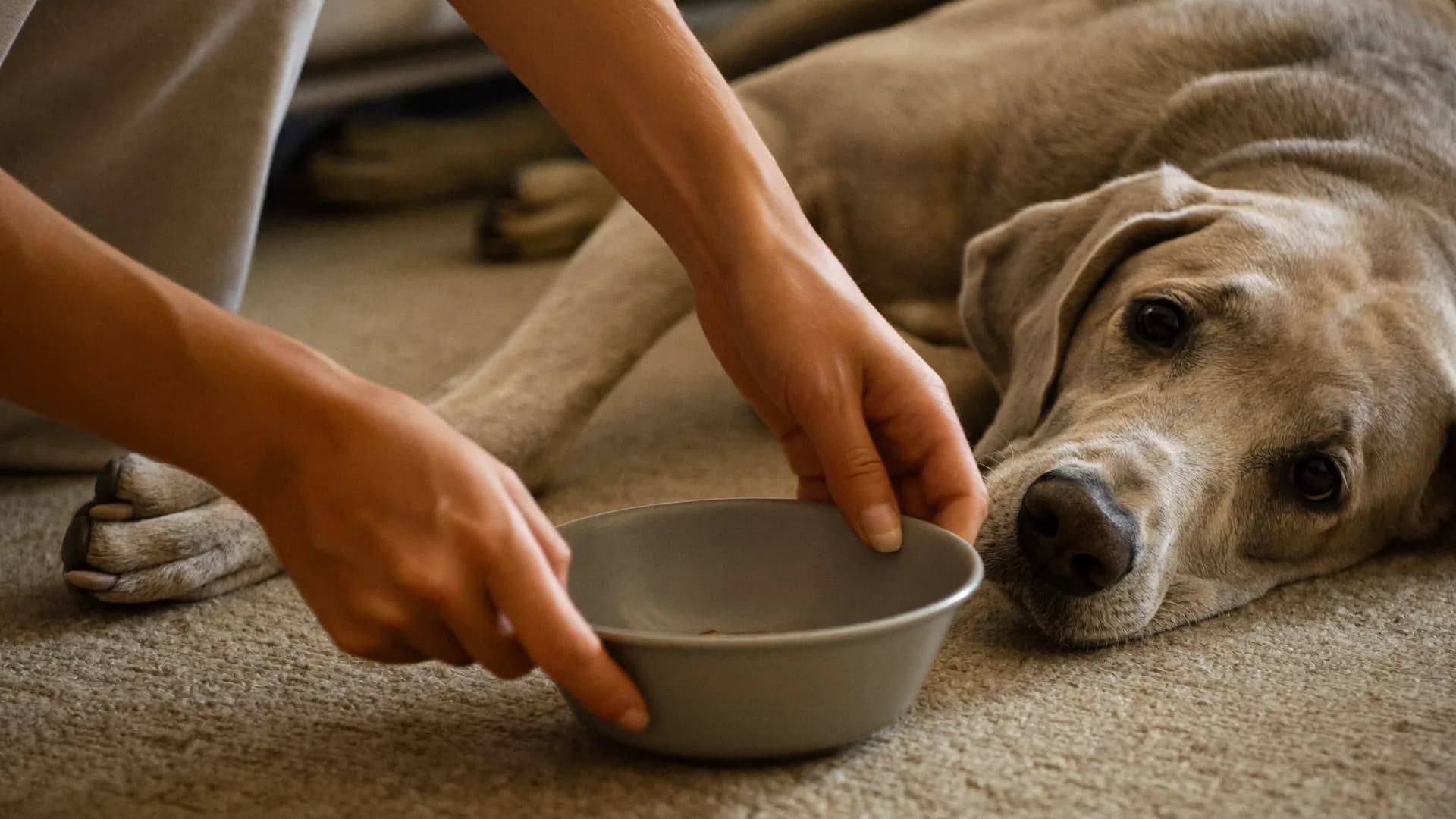
Feeding an older dog or cat: what changes with age
There's no birthday when a pet becomes a senior — a giant breed gets there years before a small one. What changes is the body's needs, and some of the old advice about protein has been turned on its head.
Old age arrives on a sliding scale, and feeding for it is less about a special bag than about noticing what has shifted in a particular animal.
Several things reliably do, and two of them are the opposite of what the advice used to say.
When senior starts depends on size
Age catches up with a big body faster. A giant-breed dog may be a senior at six or seven while a small terrier is barely middle-aged, and cats generally cross into their senior years around eleven. That size effect is the same one measured across the breed catalogue: weight and documented lifespan run against each other at a correlation of -0.66, and the heaviest breeds average 10.6 years against 13.4 for the smallest.
The practical consequence is that there's no birthday to wait for. If you have a large dog, start watching for the changes below in its middle years instead of at some notional cut-off, and if you have a small one, don't treat eight as old just because a bag says senior.
Protein: the advice reversed
For years the standard instruction was to cut protein in older animals to spare the kidneys. That has largely been turned on its head.
In a healthy older dog or cat, protein is what holds muscle on the frame, and restricting it accelerates the muscle loss that ageing already causes. Unless a vet is managing a diagnosed condition, an older animal generally needs as much good-quality protein as an adult, and often benefits from more.
The exception is real and it's the vet's call, not the label's. Diagnosed kidney disease is managed with a prescribed diet in which protein and, more importantly, phosphorus are controlled — and that decision follows blood and urine results and not an age. Restricting protein in a healthy senior on the assumption that it protects the kidneys does harm without doing good.
Cats deserve a sentence of their own here, because the effect is sharper. An older cat digests protein less efficiently than a young one, so it needs more in the bowl to end up with the same amount in its muscles — which is the precise opposite of the low-protein senior food that used to be the default. The muscle wasting you can feel along an old cat's spine is often that arithmetic going the wrong way.
Weight moves in both directions
Metabolism slows first.
The bowl that kept an adult trim quietly adds weight to a middle-aged animal, and extra weight on old joints is the difference between a dog that still enjoys a walk and one that doesn't. Then, later, the direction often reverses: very old animals frequently lose weight, and that loss is the one worth taking seriously.
Read it with your hands, not the scales, and read for muscle instead of fat. Run a palm over the spine and hips: bone that has become easy to feel where it used to be padded is muscle going, not diet succeeding. The rib-and-waist check in how much to feed a dog still applies, but in a senior it's the topline that tells the more important story.
Muscle loss and fat loss can happen at once, which is why an old dog can weigh the same as it did last year and be in a noticeably worse state. Keep some resistance in its week — short walks up gentle slopes, standing instead of lying for a few extra minutes a day, swimming if it's available — because protein in the bowl only becomes muscle on a body that's being asked to use it.
The mouth is the most missed cause
An old pet that has gone off its food is, more often than owners expect, an old pet whose mouth hurts.
Dental disease is close to universal by middle age, it's painful long before it's obvious, and the animal won't tell you — it'll simply eat less, eat slower, drop food, prefer soft food, or turn its head away from the side that hurts. Before you change the menu, look in the mouth, and get a vet to look properly. Brushing is the prevention; by the time a senior is refusing meals it's usually treatment that's needed.
The objection owners raise is anaesthesia, and it's worth meeting head-on: age isn't a disease, and modern protocols with bloodwork and monitoring make a dental a reasonable proposition for most old animals. The comparison isn't against doing nothing, it's against another two years of eating on a painful mouth. Old animals routinely come home from a dental eating properly for the first time in months.
Water, and why it matters more in a cat
Kidney disease is common in older cats, and cats have a weak thirst drive to begin with, so hydration stops being a background detail.
More water bowls in more places, away from the food, changed daily; a running fountain if the cat prefers moving water; and wet food, which is most of the way to water by weight — the argument set out in wet or dry food for a cat. A senior cat that starts drinking noticeably more than it used to isn't solving its own problem; it's reporting one, and that warrants blood work.
Making food easier to eat
Appetite and the sense of smell both fade, and much of what looks like fussiness in an old animal is food that has stopped smelling like anything.
Warming wet food slightly lifts the aroma and is the cheapest intervention available. Smaller meals more often suit a stomach that no longer takes a large one comfortably. Softening dry food with warm water helps a sore mouth. And a bowl at a comfortable height spares a stiff neck — though if you have a large breed, raising the bowl is a subject to raise with your vet rather than a settled improvement.
Where the animal eats matters more than it used to. An old cat that has to jump onto a worktop for its bowl may quietly give up instead of complaining; an arthritic dog standing on a slippery floor braces instead of eating. Move the bowl somewhere it can be reached without a climb, put a mat under it for grip, and give a cat somewhere the other cat can't loom over — sore joints make competition much harder to face.
And be careful about how you respond to a picky senior. Standing over the bowl with three alternatives teaches an animal that refusing produces something better, and a pet that has learned that is very hard to feed. Offer the meal, leave it a reasonable time, take it up, and try again at the next one — while remembering that a genuine refusal to eat in a cat is a medical matter within a day or two, not a standoff.
What senior diets actually offer, and what to check instead
Senior formulations range from genuinely thoughtful to a new label on the same food. There's no legal definition of senior in pet food, which is worth knowing before paying for the word.
What can be useful in one: fewer calories per bowl for an animal that has slowed down, joint support, a texture an older mouth manages, and controlled phosphorus where a vet wants it.
What matters more than which bag: being seen more often. Twice-yearly checks are commonly recommended once an animal is senior, because the conditions that shorten a good old age — kidney disease, heart disease, hyperthyroidism in cats, several cancers — are far more manageable found early than found late. Weigh the animal at those visits and write the number down; a trend across four visits tells you something no single weighing can.
When the food has to fit the medicine
Most senior animals eventually end up on something daily, and that changes the feeding routine more than the diet does.
Some medication needs food with it and some needs an empty stomach, so it's worth asking which instead of assuming. A pill hidden in something tasty works well until the animal learns to eat around it, which cats do quickly — pill pockets, a small amount of pâté, or a liquid formulation where one exists all last longer than a tablet in cheese. Never crush or split a tablet without checking, since some are coated for a reason.
If a prescription diet is involved, it only works as the whole diet, and the commonest way one fails is a household quietly topping it up with the old food or with treats because the animal seemed disappointed. Ask which treats are compatible — most manufacturers of prescription diets make matching ones — so there's something to give that doesn't undo the point.
What none of this can tell you
It can't tell you whether your animal needs a prescription diet, because that follows test results.
It can't tell you which joint supplement earns its price, because the evidence there is thinner than the marketing. And it can't separate ageing from illness: appetite loss, weight loss, drinking more and sleeping more all read as getting old and are also how several treatable diseases announce themselves. Old age isn't a diagnosis, and treating it as one is how a treatable condition gets missed for a year.
At what age is a dog or cat a senior?
It depends on size. Giant-breed dogs can be seniors by six or seven, small dogs not until ten or later, and cats generally around eleven. Larger animals age faster — the same pattern the breed data shows in lifespan — which is why there's no single number.
Should I feed an older pet less protein?
Usually not. The old advice to cut protein has largely reversed: in a healthy senior, protein is what holds muscle on, and restricting it speeds the muscle loss age already causes. Older cats digest protein less efficiently, so they often need more, not less. Diagnosed kidney disease is the exception, managed after blood and urine tests.
Why has my senior pet stopped eating well?
Look in the mouth first. Dental pain is a common and easily missed cause, and so is illness of several kinds. Fading smell and appetite play a part too, which is why warming food helps — but a senior that goes off its food deserves a vet visit rather than only a change of menu.
Is a dental under anaesthetic safe for an old pet?
Age isn't a disease, and with pre-anaesthetic bloodwork and modern monitoring a dental is a reasonable proposition for most older animals. The comparison isn't against doing nothing but against years of eating on a painful mouth — and old animals often come home eating properly for the first time in months.
My old dog is losing weight even though it eats. Why?
Weight loss in an old animal that's still eating is a reason to see a vet, not to add food. It can be muscle loss with age, but it's also how kidney disease, heart disease, hyperthyroidism in cats, diabetes and some cancers present. Test results answer this; guessing doesn't.
How do I stop my senior pet becoming fussy?
Don't reward refusal. Standing over the bowl with three alternatives teaches an animal that holding out produces something better. Offer the meal, leave it a reasonable time, take it up and try again — while remembering that a cat genuinely not eating for more than a day or two is a medical matter, not a standoff.
Do senior pet foods actually help?
Some do and some are a label. There's no legal definition of senior in pet food, so read the bag and not the word: fewer calories, a manageable texture and joint support can all be useful, while controlled phosphorus is something a vet asks for rather than something to choose yourself.
How do I feed a pet that's on daily medication?
Ask whether each medicine needs food with it or an empty stomach. Pill pockets, a little pâté or a liquid version all outlast a tablet in cheese, which cats learn to eat around. And don't crush or split tablets without checking, since some are coated for a reason.
How often should an older pet see a vet?
Twice a year is the common recommendation once an animal is senior, against once a year for an adult. The point isn't the visit but the trend — weight, blood work and a look in the mouth compared against the last time, which is how the conditions that shorten a good old age get caught early.
Should I give my senior pet supplements?
Ask the vet who knows the animal. Joint supplements are the most commonly given and the evidence for them is thinner than the advertising, some supplements interact with medication, and a senior on a complete diet isn't short of vitamins. Money spent on an earlier check-up usually buys more than money spent on a jar.