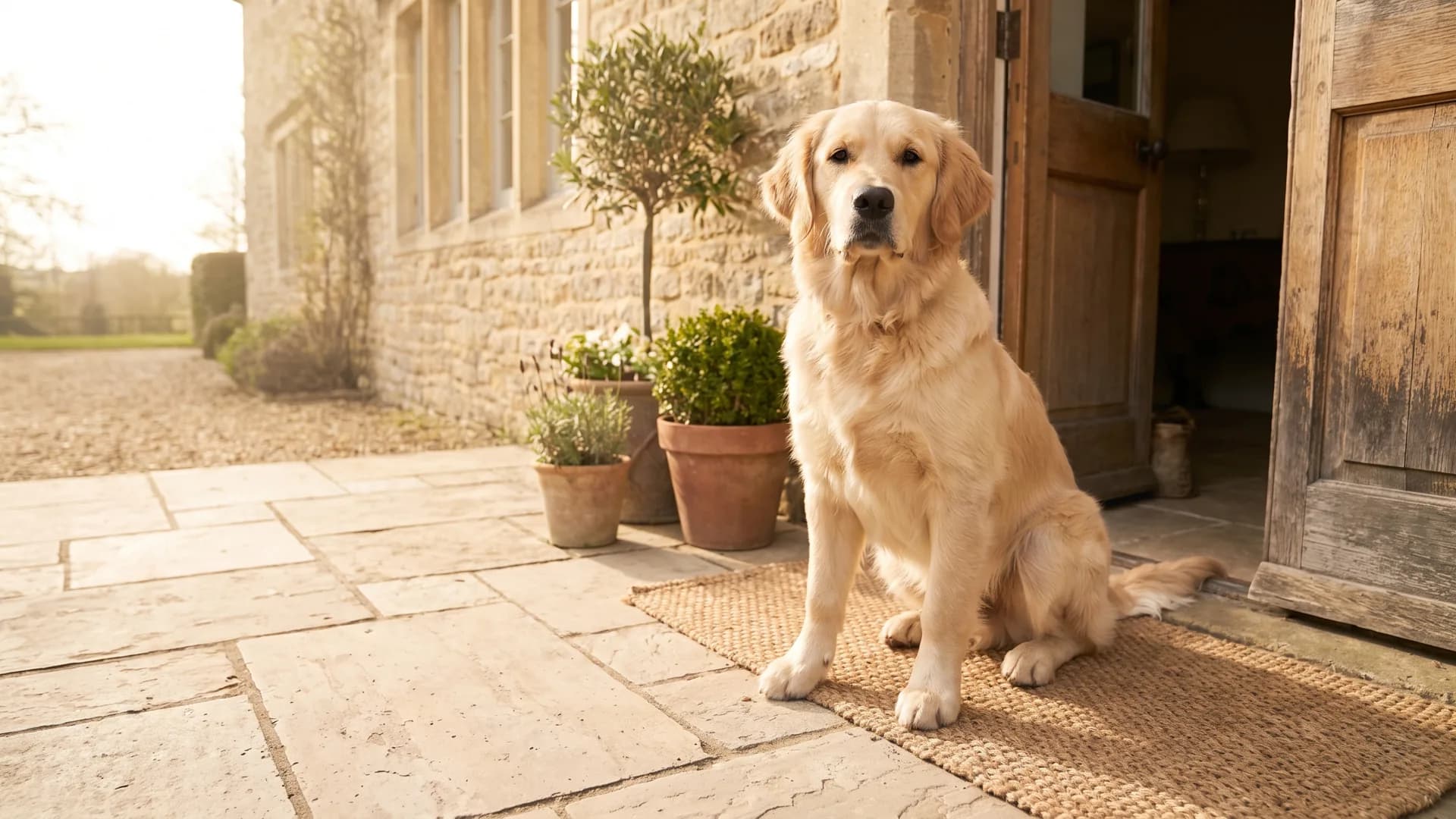
Is my dog or cat overweight? How to tell, and why it matters more than it looks
Most overweight pets belong to people who would swear they are not, because the change is slow and the scales lie without a breed to compare against. The honest test is your hands, not a number — and carrying extra weight quietly shortens a pet's life.
Excess weight is the commonest preventable health problem in pets, and the hardest for an owner to see, because it arrives a few grams at a time over years and the animal you look at every day never seems to change. It is worth getting past that blind spot, because a lean pet lives measurably longer and more comfortably than a heavy one — the studies that have followed dogs for life put the difference at around two years. This is not about appearance; it is one of the few things within your control that changes how long you get.
Why the scales are not enough
A number on its own means little without a breed and a frame to read it against, since a healthy weight for one Labrador is overweight for another of the same breed with lighter bones. Weight is useful for tracking change in one animal over time, but for the question of whether a pet is the right size, the body itself is the better instrument.
The hands-on test
Vets score body condition on a nine-point scale, and you can do the core of it at home with three checks. Run your hands along the ribs: you should feel them easily under a thin layer, the way the back of your hand feels through skin, without having to press. Look down from above: there should be a visible waist, a narrowing behind the ribs rather than a straight or bulging outline. Look from the side: the belly should tuck up behind the ribcage, not hang level or sag. If you cannot feel the ribs without pressing, there is no waist from above, and the belly does not tuck, the pet is carrying too much — and the same three checks work on a cat, where a swinging belly pouch and no felt ribs tell the same story.
The honest version of this test is that it takes the emotion out of it. You are not judging how the animal looks, which is where affection and habit mislead you; you are feeling for ribs and a waist, which are either there or they are not.
Why extra weight does real harm
Carried weight is not inert. It loads the joints and brings on or worsens arthritis, it strains the heart and airways, it makes an animal overheat sooner in warm weather, and it is bound up with diabetes in cats and with a shorter life across the board. A heavy pet is also a pet in more day-to-day discomfort than its owner realises, because the stiffness and the breathlessness come on so gradually that they read as simply getting older or slowing down, when some of it is the weight and would lift if the weight did.
Taking it off safely
Weight comes off through slightly less food and slightly more movement, but the details matter and crash dieting is genuinely dangerous — a cat dropped onto too little food too fast can develop a serious liver condition, so a cat's weight loss in particular should be planned with your vet rather than improvised. Start by measuring meals with proper scales instead of a scoop, and account for treats, which are where most of the hidden calories live: the biscuits, the chews and the scraps can quietly make up a large part of the day's intake, and the simplest single change many pets need is honesty about them.
Two existing pieces do the arithmetic this article only points at: how much to actually feed starts from the dog rather than the label, and the ten-percent rule covers where the extra calories hide. Weigh the pet every couple of weeks as you go, aim for slow steady loss rather than fast, and if the weight will not shift on a genuinely reduced ration, that is a conversation with the vet, because a handful of medical conditions cause weight gain and need ruling out.
How can I tell if my dog or cat is overweight?
Use your hands, not the scales. You should be able to feel the ribs easily under a thin layer without pressing, see a waist when you look down from above, and see the belly tuck up when you look from the side. If the ribs are hard to find and there is no waist, the pet is carrying too much.
Does a bit of extra weight really matter?
Yes, more than it looks. Lean pets live measurably longer — around two years in lifelong studies of dogs — and carry less joint pain, heart and airway strain, and diabetes risk. Much of the discomfort reads as simply ageing when some of it is the weight.
How do I help my pet lose weight safely?
Measure meals with scales rather than a scoop, be honest about treats, and add gentle movement. Aim for slow, steady loss and weigh every couple of weeks. Plan a cat's weight loss with your vet in particular, because losing weight too fast can cause a serious liver condition in cats.
Why can't I just go by my pet's weight on the scales?
A weight means little without a breed and frame to compare against, since a healthy weight for one dog is heavy for another of the same breed with lighter bones. Scales are good for tracking change over time; the hands-on body check answers whether the size is right.
My pet won't lose weight even on less food — why?
If the weight will not shift on a genuinely measured, reduced ration, see the vet. A handful of medical conditions cause weight gain and need ruling out, and hidden treats and scraps are worth auditing honestly first.