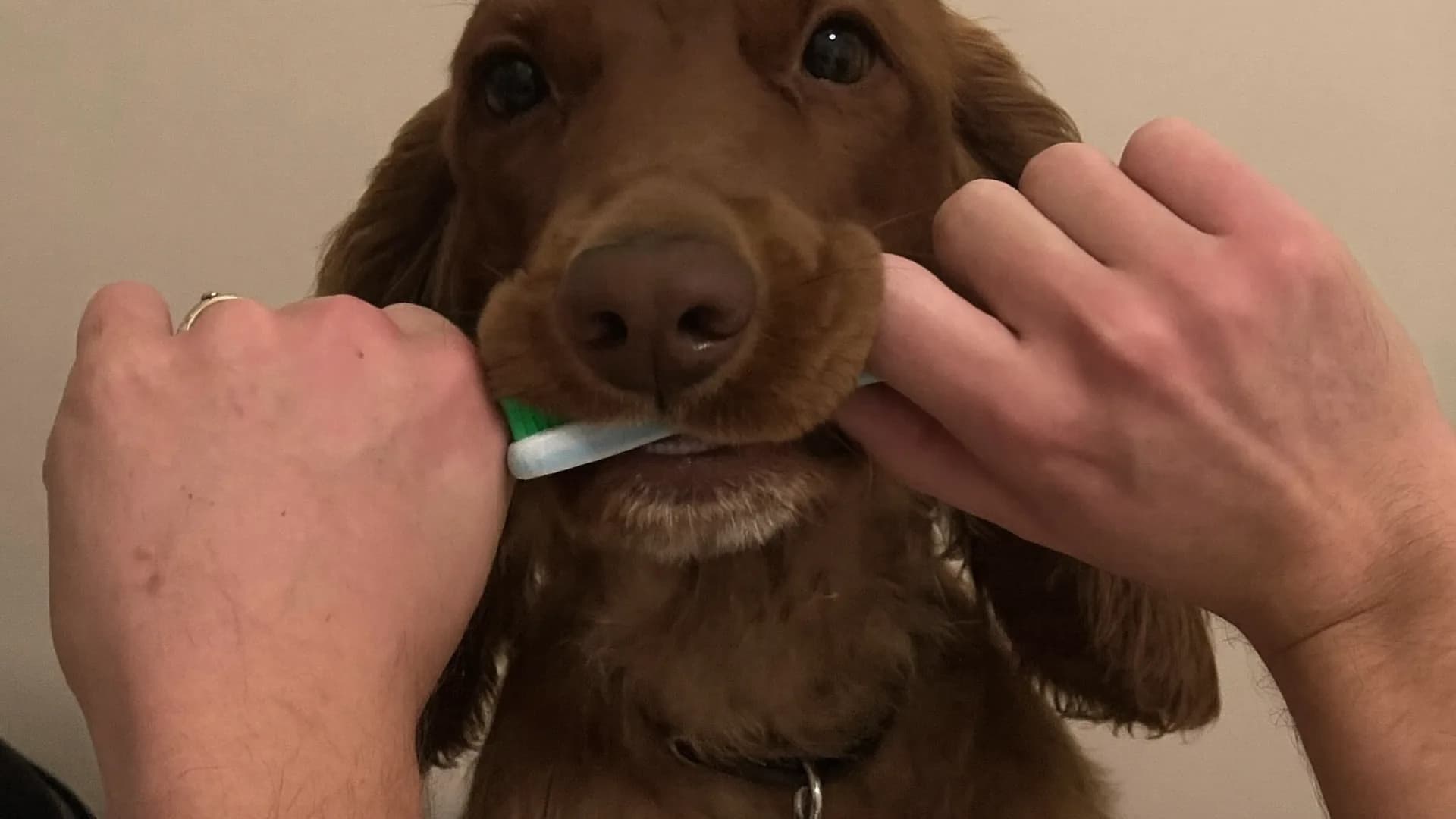
Brushing your dog's teeth: why bad breath is not normal
Dental disease is one of the most common problems vets see, and it hurts long before you notice. 'Dog breath' is usually its first sign, not a fact of life. Here is how to brush, how often, and what actually works between brushings.
Bad breath in a dog is not just something dogs have — it is usually the first sign of dental disease, which is among the most common and most overlooked problems vets see. Left alone it becomes painful and costs teeth, and the discomfort builds silently because dogs hide it. The good news is that it is largely preventable, and the main tool is a toothbrush.
Why it matters more than looks
Plaque hardens into tartar, tartar inflames the gums, and gum disease brings pain, infection and lost teeth — with bacteria from a diseased mouth able to burden the organs too. None of this shows as obvious suffering; a dog keeps eating through a sore mouth. That is why the smell matters: it is the early warning of a process already under way.
The timeline is what makes brushing worth doing daily. Plaque forms on a clean tooth within hours and begins to mineralise into tartar in a couple of days, and once it has hardened no brush will shift it — only a scale under anaesthetic will. So brushing is not really about cleaning dirty teeth; it is about interrupting that window before it closes, which is why a short brush most days beats a thorough one each month.
What to look for in the mouth
Lift a lip once a week and you will spot trouble long before the dog complains. Healthy gums are an even pink and sit tightly against the teeth; the warning signs are redness or a darker line along the gum edge, yellow-brown crust near the gumline, gums that bleed when brushed, a receding gum with root showing, a loose or discoloured tooth, and swelling under an eye — which is often an abscessed upper tooth rather than an injury.
Behaviour tells you as much as the mouth does. Dropping food, chewing on one side, turning away from hard treats, pawing at the face, or a dog that suddenly prefers soft food are all worth a check. Dogs very rarely stop eating over a painful mouth, which is exactly why owners are so often surprised by what a vet finds; a dog will eat through a great deal rather than go hungry.
How to brush a dog's teeth
Use toothpaste made for dogs — never human toothpaste, which can contain fluoride or the sweetener xylitol that is toxic to them — and a soft brush or a finger brush. Build up gradually, letting the dog taste the paste and rewarding each step, and aim to brush daily or most days, working along the gumline where the trouble starts. A minute of a dog tolerating it beats a wrestling match twice a year.
The gumline is the whole target. Angle the bristles into the join between tooth and gum at roughly forty-five degrees and use small circles, concentrating on the outer surfaces of the back teeth, where tartar builds first and fastest. The inner surfaces matter far less and cost most of the goodwill, so skip them rather than lose the routine. You do not need to open the mouth: lift the lip and brush along the side with the jaw closed.
Teaching a dog to accept it
Almost every failed toothbrushing routine failed at the introduction. Spend the first days doing nothing but letting the dog lick paste off your finger; then touch a finger to the outside of the teeth for a second and pay it; then a finger brush on two teeth; then four. A week or two of that, ending each time while the dog is still happy, produces a dog that pushes its face into the brush — and forcing it in one evening produces a dog that hides when the tube comes out.
Start in puppyhood if you have the option. A puppy that has had its mouth handled cheerfully from eight weeks treats brushing as a normal part of the day, and the same handling makes examinations, pills and nail trims easier for the next decade. It is the same five minutes that pays off across every kind of handling.
What helps between brushings
Brushing is the gold standard, but vet-approved dental chews, dental diets and water additives are useful backups — look for products accepted by a veterinary oral health body rather than marketing alone. One thing that does not clean teeth, despite the claim, is ordinary dry food, which shatters rather than scrubs. Treat these as adjuncts to brushing, not replacements.
Two popular options deserve a warning rather than an endorsement. Hard chews — bones, antlers, hooves, nylon — are a well-known cause of fractured teeth, and a slab fracture of a big chewing tooth is a painful, expensive way to clean a mouth. Tennis balls wear enamel down like sandpaper in dogs that carry them constantly. If you want a chew to do dental work, pick a product designed to flex rather than one that wins against a tooth.
The professional clean
Even a well-brushed dog benefits from a veterinary scale-and-polish, done under anaesthetic, which removes the tartar below the gumline that no brush can reach and lets the vet examine each tooth. Beware 'anaesthesia-free' cleanings marketed as an alternative: they tidy the visible surface and miss the disease under the gum. Your vet checks the mouth at annual visits and will say when a clean is due.
Anaesthesia is the part owners worry about most, and it is worth being straight about it. Modern protocols with pre-anaesthetic bloodwork and monitoring make the risk low for most dogs, including many old ones, and the comparison is not against doing nothing — it is against leaving painful infected teeth in place for years. Dogs commonly come home from a dental brighter and hungrier, which tells you what the mouth had been costing them. Small breeds and brachycephalic dogs get crowded, overlapping teeth and tend to need cleans sooner and more often; that is a feature of the skull, not neglect.
How often should I brush my dog's teeth?
Ideally daily, or at least most days — plaque starts hardening into tartar within a couple of days, so occasional brushing does little. A short, calm daily brush along the gumline is far more effective than a rare thorough one.
Can I use human toothpaste on my dog?
No. Human toothpaste can contain fluoride and sometimes xylitol, both harmful to dogs, and dogs swallow it rather than spit. Use a toothpaste made for dogs, which is safe to swallow and flavoured for them.
Is bad breath normal in dogs?
No — persistent bad breath is usually the first sign of dental disease, not a normal feature of dogs. It is worth a vet check and a dental-care routine rather than being ignored.
Do dental chews replace brushing?
No. Vet-approved dental chews, diets and water additives help, but none matches brushing, which physically removes plaque along the gumline. Use them as backups to a brushing routine, not instead of one.
Does dry food clean a dog's teeth?
Largely no. Ordinary kibble shatters on the bite rather than scrubbing the teeth, and does little for the plaque that causes disease. Brushing and veterinary cleaning do the real work.
What are the signs of dental disease in a dog?
Persistent bad breath first, then red or receding gums, yellow-brown crust near the gumline, bleeding when brushed, a loose or discoloured tooth, and swelling under an eye. Dropping food, chewing on one side or a new preference for soft food all point the same way.
Is anaesthesia for a dental clean risky?
The risk is low for most dogs with modern monitoring and pre-anaesthetic checks, and it is the only way to clean below the gumline and examine each tooth. Weigh it against leaving painful, infected teeth in place, not against doing nothing.
Are bones and antlers good for a dog's teeth?
They are a common cause of fractured teeth, which is a painful and expensive trade for a bit of scraping. Choose a chew designed to flex against a tooth, and be wary of dogs that carry tennis balls constantly, since the fuzz wears enamel like sandpaper.