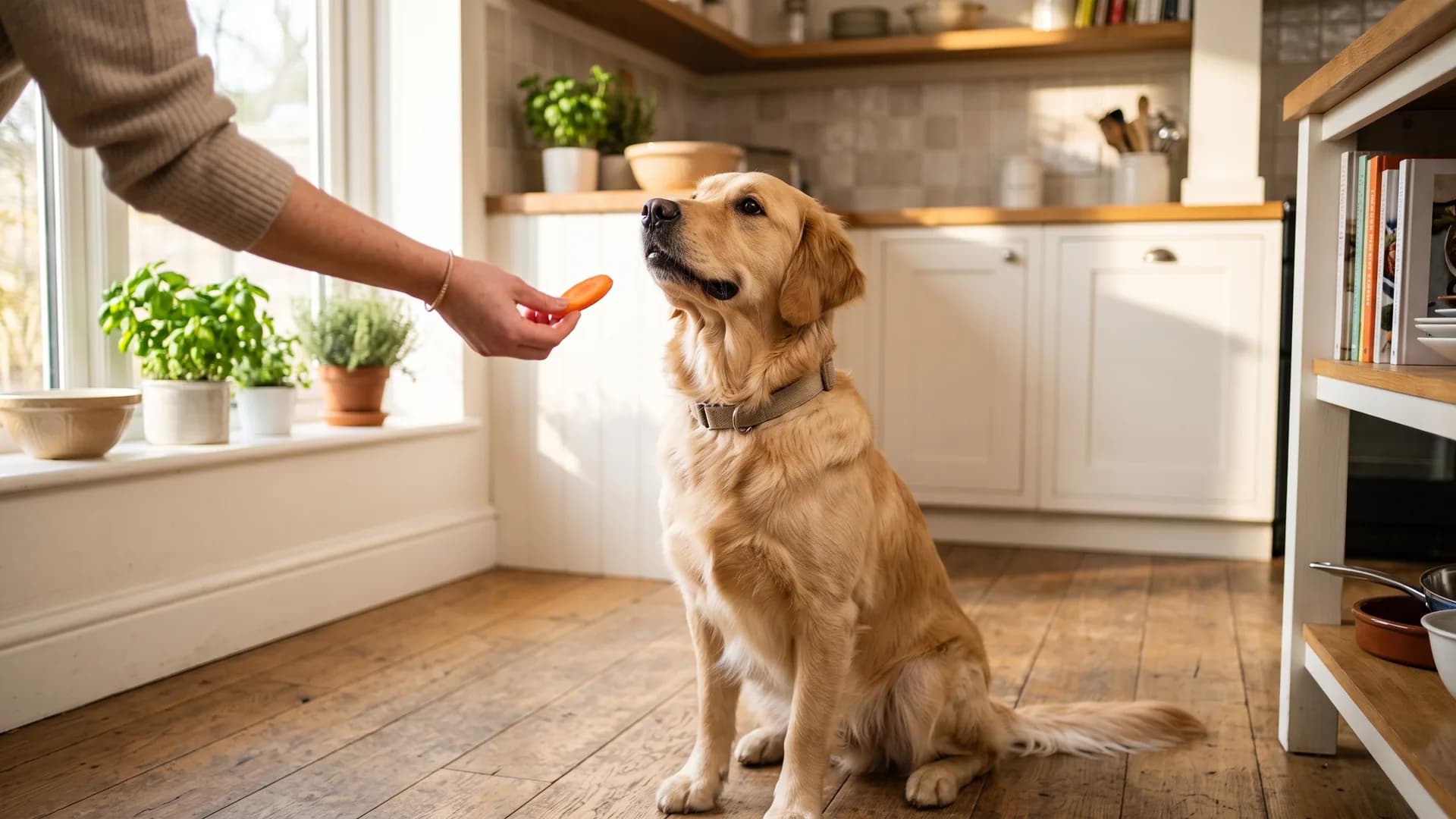
Human foods pets can eat, and how to share them safely
Plenty of what is on your plate is fine for a dog or cat in small, plain amounts — and a few things are genuinely dangerous. Here is the safe list, the hard limits, and the one rule that keeps sharing from unbalancing the diet.
The reputation of table scraps is worse than it deserves and more dangerous than it sounds, both at once. A good deal of ordinary food is perfectly fine for a dog or cat in small, plain amounts; a short list of common foods is toxic and belongs nowhere near them. Knowing which is which, and holding to one rule about quantity, is all it takes to share safely.
The ten per cent rule comes first
Whatever you share is a treat, and treats should stay under about a tenth of the day's calories. The other nine tenths is a complete, balanced diet, because that is where the vitamins and minerals an animal actually needs are measured out. Share past that and you are not topping up a diet, you are replacing it with something that was never formulated to be one. The treat budget matters more than the specific food.
Cats change the picture, too. A cat is an obligate carnivore — it runs on meat and takes little interest in the fruit and vegetables a dog will happily eat. For a cat, a scrap of plain cooked meat or fish is the treat that makes sense; a green bean is not harmful, just pointless.
Foods that are usually fine, plain and in moderation
Plain cooked lean meat — chicken, turkey, beef — with no bones, skin or seasoning, is the safest thing to share with either species. So is a little cooked egg, and cooked boneless fish such as salmon. For dogs, most plain vegetables are welcome: carrot, green beans, peas, plain cooked pumpkin or sweet potato. Plain cooked rice or oatmeal sits well on an upset stomach.
Fruit is a dog thing more than a cat thing, and a few are good: apple without the core or pips, banana, blueberries, seedless watermelon flesh. Small amounts — fruit is sugar, and sugar is calories. None of this is a meal; all of it is a topping on a diet that already does the real work.
Plain is the whole trick
Almost everything that turns a safe food dangerous is what we add to it. Onion and garlic are toxic and hide in gravy, stuffing and seasoning. Salt, butter and rich sauces upset stomachs and pile on calories. A cooked bone can splinter, and fried food invites the kind of pancreas flare-up that ends at the vet. The rule is simpler than a list: share the food before it reaches the pan and the seasoning, not the version off your plate.
The foods to never share
A handful of common foods are toxic even in small amounts, and no quantity is a safe treat: chocolate, grapes and raisins, onion, garlic and chives, xylitol (the sweetener in sugar-free gum and many baked goods), macadamia nuts, alcohol, caffeine, and raw bread dough. Grapes and xylitol in particular do serious harm fast. The full list, with what each one does and what to do if it is eaten, is on the toxic-foods page — worth reading once so the dangerous ones are already familiar.
How to introduce anything new
Add one new food at a time, in a small amount, and watch the next day's stools and appetite before offering more — that way a food that does not agree is obvious rather than a mystery mixed in with three others. Dairy is the classic surprise: many adult dogs and cats are lactose-sensitive, so a lick of plain yoghurt suits some and loosens others. Anything richer than usual, given in quantity, upsets a stomach that is used to one steady food, which is also why changing the main diet is done gradually rather than overnight.
What human foods can dogs eat safely?
Plain cooked lean meat with no bones or seasoning, cooked egg, boneless cooked fish, and most plain vegetables — carrot, green beans, peas, plain pumpkin or sweet potato. A little fruit is fine too: apple without pips, banana, blueberries, seedless watermelon. All in small amounts, as a treat rather than a meal.
Can cats eat human food?
A cat is an obligate carnivore, so the human food that makes sense for it is a scrap of plain cooked meat or fish. Fruit and vegetables are not harmful but hold little for a cat. Keep it plain and small, and never as a substitute for a complete cat food.
How much human food can I give my pet?
Keep all treats and extras under about a tenth of the day's calories, with the rest a complete balanced diet. More than that and you start replacing the nutrition the animal actually needs with food that was never formulated to provide it.
Why does plain matter so much?
Because most of what makes a safe food dangerous is added in the kitchen. Onion and garlic are toxic and hide in seasoning and gravy; salt, butter and sauces upset stomachs and add calories; cooked bones splinter. Share food before the pan and the seasoning, not the version off your plate.
Which common foods are dangerous for pets?
Chocolate, grapes and raisins, onion, garlic and chives, xylitol (a sweetener in sugar-free gum and baking), macadamia nuts, alcohol, caffeine and raw bread dough. These are toxic even in small amounts. The toxic-foods page lists what each does and what to do if one is eaten.