Switching your pet's food without the upset stomach
Change a dog or cat's food overnight and the result is often waiting on the floor by morning. A gradual swap over a week or so lets the gut keep pace — here's the short version, and when to stretch it out.
Most of the mess that follows a new bag of food is avoidable, and the cause is speed rather than the food itself.
The community of microbes that digests a pet's meals is tuned to what it has been eating, and swapping everything at once leaves it briefly out of its depth. Ease the change in and the gut adjusts quietly.
The week-long swap, day by day
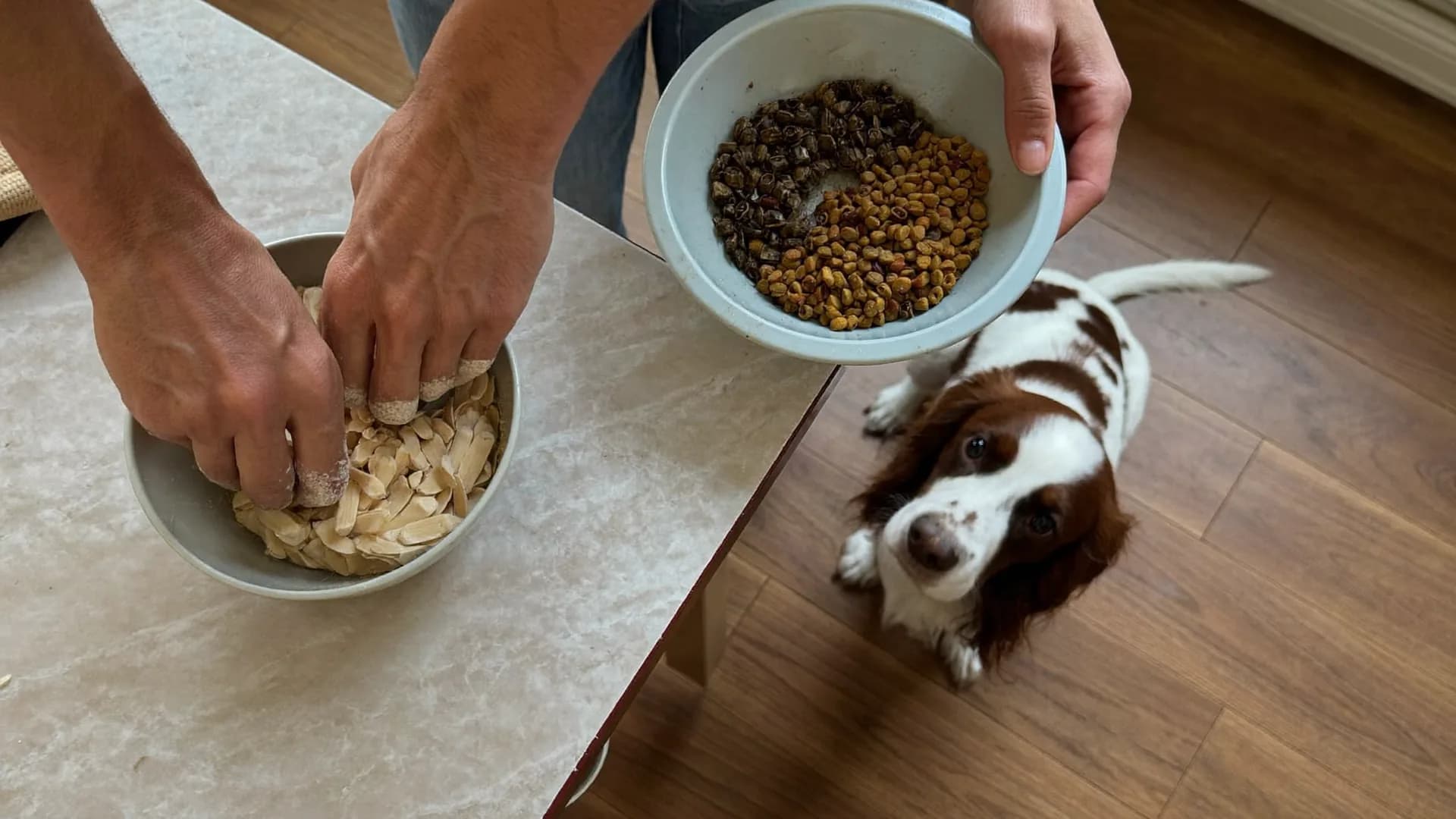
The reliable method is to blend the two foods and tilt the mix a little further towards the new one every couple of days.
Roughly: a quarter new for the first two days, half for the next two, three-quarters for the two after that, and all new by the end of the week. By the time the old bag runs out the switch has already happened and the animal has barely noticed.
Mix the two together in the same bowl rather than feeding them as separate meals. A pet fed old food in the morning and new at night isn't being transitioned; it's getting two different diets a day, which is harder on the gut than the blend and also lets a fussy animal simply hold out for the meal it prefers.
Weigh the new food rather than measuring it
The two foods are almost certainly not equal in calories, so swapping cup for cup can quietly change how much the animal is eating even while the transition looks textbook. Check the calorie statement on both packs — reading a pet food label explains where it sits — and work out the new amount before you start, so the switch changes one thing instead of two. This is one of the more common ways a dog gains weight in a month for no apparent reason.
Why you might be switching at all
It's worth being clear about the reason, because it changes how carefully you need to go.
Some switches are routine and low-stakes: a life-stage change from puppy to adult or adult to senior, a brand discontinued, a price rise, or simply a food you'd rather feed. Those follow the ordinary week. Others are a response to a problem — a dull coat, loose stools, itching, a dog that's gone off its food — and those deserve a different first step, which is a conversation with the vet rather than a new bag.
The reason is that changing food is a poor diagnostic. A dog with a persistent itch usually has an allergy to something environmental and not dietary; a cat with recurring loose stools may have a parasite or an underlying condition; and a pet that stops eating has a symptom, not a preference. If you change the food and things improve, you've learnt very little, because most of these problems fluctuate anyway. If they don't improve, you've now changed two variables at once.
So the useful order is: rule out the medical explanation, then change the food if there's still a reason to. Changing it first is how people end up on their fifth bag in four months with a dog that's no better and a gut that's had a difficult season.
Stretch it out for a delicate stomach
Some animals need longer.
A known sensitive stomach, a very young or very old pet, a cat instead of a dog, or a jump between two quite different diets — dry to raw, one protein to another — can all warrant a fortnight rather than a week.
Loose stools are the signal to slow down, not to press on. Hold the ratio where it is for a few more days until the stools firm up, then continue from there; if they loosen again at the same point, go back a step and move in smaller increments. A transition that takes three weeks and stays uneventful is a success, not a failure.
Cats need more patience than dogs
Cats are markedly more neophobic about food, and a cat that decides a new food isn't food can hold that position for a long time.
Start with a smaller share than you would for a dog — a spoonful stirred in instead of a quarter of the bowl — and move more slowly. Warming wet food lifts the smell, which is most of what a cat is judging.
Some of that fussiness is set early. Cats form their sense of what counts as food in the first months of life, and one raised on a single texture often refuses everything else as an adult — which is a good argument for offering a kitten both wet and dry, and more than one flavour, while it's still open-minded. If you're stuck with an adult that only eats one thing, that's the history you're working against rather than stubbornness.
What matters is that you don't let a standoff become a fast. A cat that eats nothing for more than a day or two is a genuine medical concern and not a battle of wills, because a cat's liver copes badly with sudden fasting; see when a cat stops eating. If a cat refuses the new food outright, go back to the old one and try again in a week with a smaller share, rather than waiting it out.
Two small tactics help with a refusing cat. Put the new food down alongside the old in a separate dish instead of mixing it, so the cat can investigate it without the familiar meal being contaminated by it — some cats accept a food they'd reject if it were stirred through. And feed at the usual time, in the usual place, when the cat is genuinely hungry rather than after a day of grazing.
When there is no time for a gradual swap
Sometimes the choice is taken away: a food is discontinued, a batch is recalled, the shop has none, or you're travelling and forgot the bag.
A sudden change isn't dangerous for most healthy adult animals, it's just likely to be messy for a couple of days. Feed slightly smaller meals more often for those days, keep water available, and expect loose stools rather than being alarmed by them.
If you know a change is coming, buy the new food before the old runs out. Half a bag of overlap is what makes a gradual transition possible, and running out on a Sunday is what makes it impossible.
The travel version is easier to head off. Take the pet's own food with you instead of planning to buy it there, keep a few days' worth in a sealed tub in the car or the boarding kennel's bag, and write the daily amount on the lid so whoever is feeding gets it right. Nearly every holiday stomach upset is a food change nobody intended to make.
Prescription and therapeutic diets
A diet prescribed for a condition follows the vet's instructions and not this article.
Some are introduced gradually in the ordinary way; others are switched faster on purpose, because the condition being treated matters more than a few loose stools. Equally, don't quietly return a pet to its old food because it prefers it — a prescription diet stops working when it's half of what the animal eats.
Multi-pet households
Transitioning one animal in a house of several means feeding them apart, at least for the fortnight.
Otherwise the dog on the new food eats the cat's old food, the cat samples the new one, and nobody knows which animal ate what when something disagrees with someone. Separate rooms or separate times are easier than they sound and make the whole exercise interpretable.
When it is not the food
A gentle transition should pass without drama.
If the upset outlasts the swap by more than a few days, or arrives with vomiting, blood, lethargy, fever or a refusal to eat, the food change probably isn't the whole story and a vet should look. Puppies, kittens and very old animals dehydrate quickly and have less margin, so the threshold for calling should be lower for them.
A slow switch prevents the ordinary kind of stomach upset. It isn't a treatment for the kind that means something else, and it isn't a test for food allergy either — a true dietary intolerance is diagnosed with a controlled elimination trial run by a vet over weeks, not by noticing that one bag seemed to suit better than another.
How long should it take to switch pet food?
About a week for most dogs and cats: a quarter new for two days, half for two, three-quarters for two, then all new. Sensitive stomachs, cats, the very young and very old, and big jumps between diet types are better given a fortnight.
Why does my pet get diarrhoea after a food change?
Usually because the change outran the gut microbes that digest the food. Hold the mix where it is for a few extra days until the stools firm up instead of pressing on, and if they loosen again at the same point, step back and move in smaller increments.
Should I mix the old and new food together or feed them separately?
Mix them in the same bowl. Feeding old in the morning and new at night isn't a transition — it's two diets a day, which is harder on the gut, and it lets a fussy animal hold out for the meal it prefers.
Should I change food because of an itch or loose stools?
See the vet first. Changing food is a poor diagnostic: most persistent itching is environmental and not dietary, recurring loose stools can be parasites or an underlying condition, and these problems fluctuate anyway, so an improvement after a switch teaches you very little. Rule out the medical cause, then change the food if there's still a reason to.
Can I switch my cat's food suddenly?
Better not. Cats are markedly more neophobic than dogs, so start with a spoonful stirred in instead of a quarter of the bowl and move slowly. Crucially, don't let a standoff become a fast: a cat that eats nothing for more than a day or two is a medical matter, not a battle of wills.
My cat refuses the new food entirely — what now?
Go back to the old food and try again in a week with a smaller share. It sometimes helps to offer the new food in a separate dish alongside, so the familiar meal isn't contaminated by it, and to feed at the normal time when the cat is genuinely hungry rather than after a day of grazing.
What if I have to change food immediately?
A sudden change is messy, not dangerous, for a healthy adult. Feed smaller meals more often for a couple of days, keep water available, and expect loose stools. Where you can see a change coming — a discontinued food, a recall — buy the new one before the old runs out.
Do I need to change the portion size when I change food?
Almost always, because energy density varies a lot between products. Compare the calorie statements on both packs and work out the new amount before you start, or the switch changes two things at once — which is a common way a dog gains weight in a month for no obvious reason.
How do I switch food for one pet in a multi-pet house?
Feed them apart for the transition. Otherwise animals sample each other's bowls, and when something disagrees with someone you have no idea which food it was or how much of it was eaten.