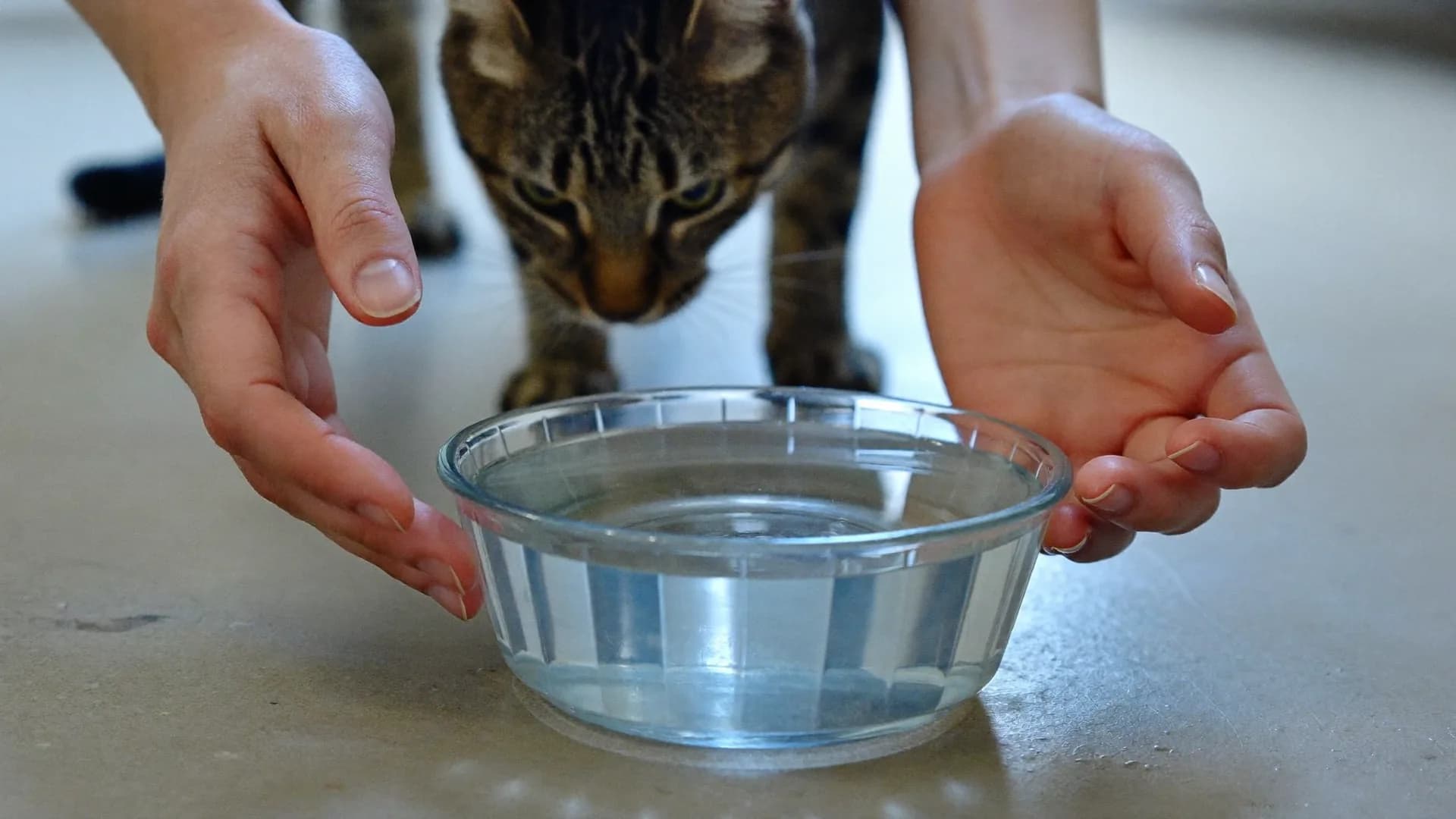
How much water should your dog or cat drink?
There's a rough daily figure that scales with weight, but the more useful skill is noticing when a pet drinks a lot more or less than its own normal — often the earliest sign that something is wrong.
Water gets less attention than food and matters just as much, and the question owners ask — how much is enough — has a rough answer worth knowing and a more important one underneath it.
The rough figure, scaled to weight
As a rule of thumb, a healthy dog needs somewhere around fifty millilitres of water per kilogram of body weight over a day, and a cat is in a similar range.
A bigger animal therefore needs proportionally more, and one eating wet food will drink noticeably less from the bowl because a large share of its water arrives in the meal. Treat that as a ballpark, not a target to pour down them — a pet self-regulates when water is freely available.
Plenty of ordinary things move the number without meaning anything. Heat, exercise, a salty treat, a switch from wet food to dry, and in a bitch, being in season or nursing a litter all raise intake legitimately. A cold wet week, a day spent asleep, or a move to wet food lowers it. What you're looking for is a change that doesn't have one of those explanations sitting beside it.
How to actually measure it
Guessing from how often the bowl looks empty is unreliable, and the answer the vet wants is a number.
Do it over two or three days rather than one, since intake varies. Fill the bowl from a measuring jug, note what goes in, and at the same time each day measure what's left before refilling. In a house with more than one animal, that only works if you can separate them for the exercise; otherwise take the total for both and say so.
Account for the other sources honestly — a dog that drinks from the garden pond, a cat that prefers the bathroom tap, a toilet lid left up — because a pet drinking heavily elsewhere will look normal at the bowl. And note what it's eating while you measure, since a switch from wet to dry alone can double the bowl reading.
The change is the real signal
Far more telling than the exact volume is a shift away from what's normal for your particular animal.
A dog or cat that suddenly drinks much more, or much less, than it usually does is worth a vet's attention, because a change in thirst is among the first outward signs of conditions from kidney disease to diabetes. Knowing your pet's ordinary intake is what lets you notice the day it changes.
Drinking more is the one that carries the most weight, and it usually arrives with a partner: more urine. A house-trained dog asking to go out in the night, a cat filling the tray far faster than it used to, or a cat that starts urinating outside the tray because it can't hold on — all of those belong in the same conversation as the water bowl. Kidney disease, diabetes, hormonal conditions and some medications all show up this way, and every one of them is better caught early.
Drinking noticeably less matters too, and it's easier to miss. It usually means the animal feels unwell rather than that it needs less water, and in a cat it often travels with not eating — which is its own urgent problem.
Dehydration, and how to spot it
Two quick checks tell you a good deal, and they're worth practising on a healthy animal so you know what normal feels like.
Lift the skin at the scruff and let go: on a well-hydrated animal it drops straight back, and on a dehydrated one it stays tented for a moment. Then touch the gums, which should be slick and wet rather than tacky. Sunken-looking eyes, lethargy and a dog panting heavily with thick ropey saliva all point the same way.
Neither check is perfect — a very thin or elderly animal's skin tents anyway — so treat them as reasons to ring rather than as a diagnosis. Real dehydration isn't something to correct at home with a syringe of water, particularly in an animal that's vomiting, because the fluid it needs goes under the skin or into a vein, not into a stomach that's sending it straight back.
Cats and the water they do not drink
Cats descend from desert hunters and carry a famously weak thirst drive, built to take most of their moisture from prey rather than a bowl.
A cat living on dry food often doesn't make up the difference by drinking, which is one reason wet food, a water fountain, or several bowls placed away from the food can matter more for a cat than for a dog. If a cat is drinking far more than usual, that's the opposite worry and a reason to ring the vet.
Cats are also unusually particular about how water is offered, and most of their objections are easy to meet. A wide shallow bowl, so the whiskers don't touch the sides. Ceramic or glass rather than plastic, which holds a smell. Away from the food, because in the wild a kill is a contaminated place to drink. Away from the litter tray for the same reason. Filled to the brim, so the cat doesn't have to put its face down into a narrow space. Several of them, in different rooms. And running water, which many cats strongly prefer — a fountain is worth trying for any cat prone to urinary trouble.
Dogs, and the cases worth watching
Most dogs drink what they need if a clean bowl is always available, so the practical job is availability rather than encouragement.
Carry water on any walk longer than a stroll and on every warm day, keep a bowl where an old dog doesn't have to negotiate stairs to reach it, and refresh it often, since a bowl of warm stale water is one many dogs will walk past. Outside, put it in the shade and check it hasn't frozen in winter.
Two things are worth avoiding. Don't let a dog drink huge amounts in one go immediately after hard exercise — offer small amounts and let it settle — and be wary of a dog that gulps river, pond or sea water: standing water carries the risk of algal toxins and stomach bugs, and salt water in quantity makes a dog genuinely ill. And a dog that suddenly starts drinking from puddles, the toilet or anywhere it can find water has usually developed a thirst, which is a symptom rather than a habit.
How much water should a dog drink a day?
Roughly fifty millilitres per kilogram of body weight is a common rule of thumb, so a larger dog needs more and a wet-food eater drinks less. It's a ballpark; a healthy dog with water always available regulates itself.
How do I measure how much my pet drinks?
Over two or three days, not one. Fill the bowl from a measuring jug, note the amount, and measure what's left at the same time each day before refilling. Separate multiple animals if you can, and account for ponds, taps and toilets — a pet drinking elsewhere will look normal at the bowl.
My cat barely drinks — is that a problem?
Cats have a low thirst drive and take much of their water from food, so a cat on wet food may drink little and be fine. A cat on dry food that drinks little is worth helping with wet food or a fountain, and any sudden change in drinking is a reason to see the vet.
How do I get a cat to drink more?
Meet its preferences: a wide shallow bowl filled to the brim, ceramic or glass rather than plastic, placed away from both the food and the litter tray, with several around the house. Many cats strongly prefer running water, so a fountain is worth trying — particularly for a cat prone to urinary problems.
When should I worry about how much my pet drinks?
When it clearly changes from that animal's normal — a marked rise or fall in thirst is one of the earliest signs of several illnesses, so it's worth a vet call rather than a wait. Drinking more usually comes with urinating more, which is the pair to mention when you ring.
How can I tell if my pet is dehydrated?
Lift the skin at the scruff — it should drop straight back rather than stay tented — and feel the gums, which should be slick rather than tacky. Sunken eyes and lethargy point the same way. Neither check is conclusive, so treat them as a reason to ring rather than something to correct at home.
Is it bad for a dog to drink a lot after exercise?
Gulping a large volume at once after hard exercise is best avoided — offer small amounts and let the dog settle. Be careful with ponds and the sea too: standing water can carry algal toxins and stomach bugs, and salt water in quantity makes a dog genuinely ill.