Your pet's eyes: normal gunk, tear stains, and the signs that mean a vet today
A little sleep in the corner of the eye is normal; a lot of the other signs are not, and eyes are the one place where waiting a day too long can cost sight. Here is how to tell ordinary from urgent, what tear stains are and are not, and why flat-faced breeds need extra watching.
Eyes are worth paying attention to precisely because they do not forgive delay: a problem that would be minor anywhere else can threaten sight in a day or two on an eye. The useful skill is not treatment — most eye problems are a vet's job — but triage: knowing the difference between the ordinary bit of gunk that means nothing and the handful of signs that mean pick up the phone. Most of eye care is looking, gently wiping away the normal, and acting fast on the abnormal.
What is normal, and how to clean it
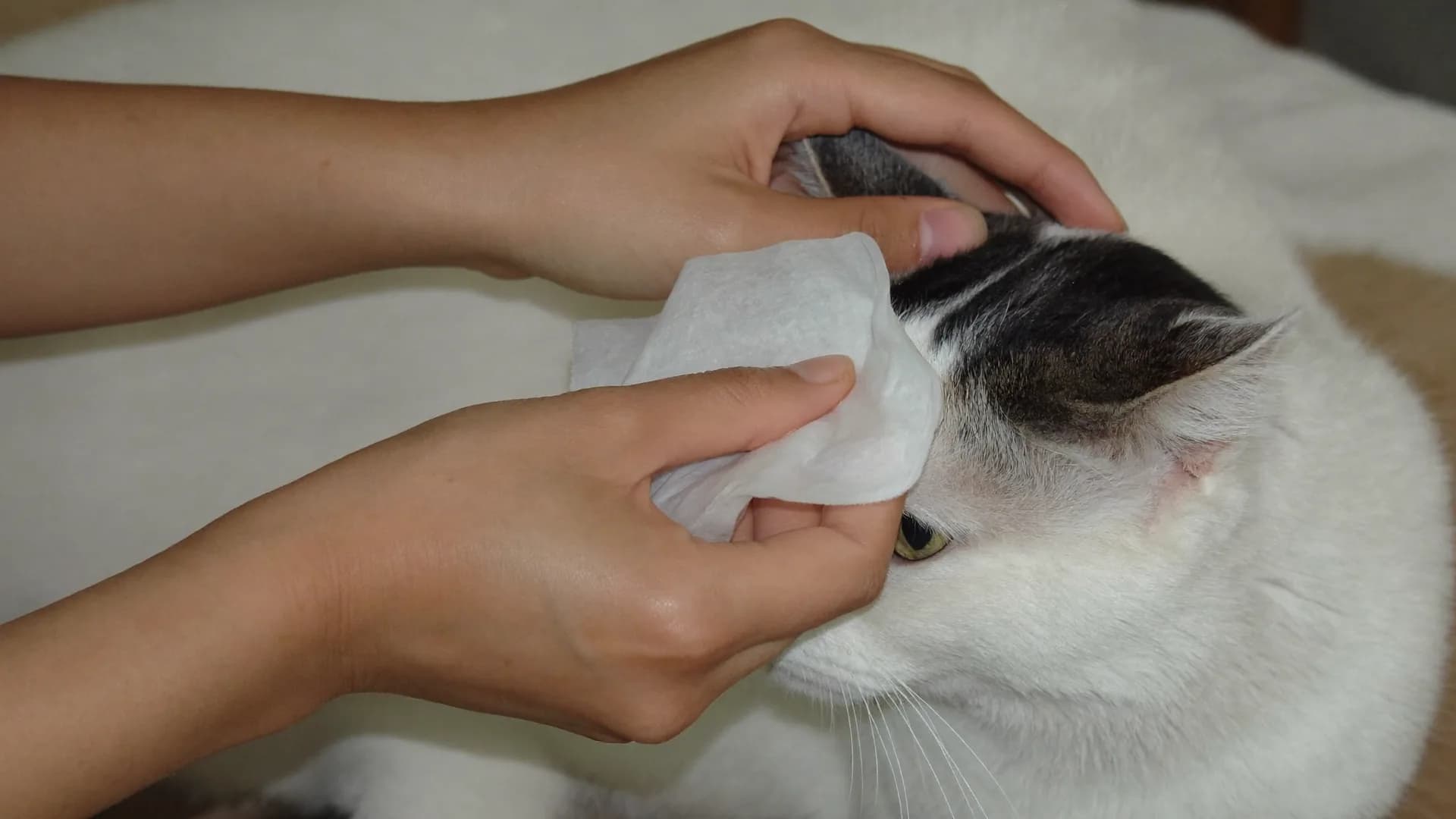
A small amount of clear or slightly brownish matter in the corner of the eye overnight is normal, the eye's ordinary housekeeping. Wipe it away with a clean piece of damp cotton wool, using a fresh piece for each eye so you never carry anything from one to the other, and wiping outward and away from the eye rather than towards it. Never put a human eye drop, cleaner or any other product near a pet's eye unless a vet has told you to — many are actively harmful, and the eye is the last place to improvise.
The signs that mean a vet, promptly
Some things are not cleaning jobs and should not wait. A green or yellow discharge, redness across the white of the eye, obvious swelling, cloudiness or a bluish haze, or a pet squinting, holding the eye shut, or pawing and rubbing at it all mean an eye that needs looking at, and soon. So does an eye that is suddenly weeping far more than usual, or one the animal is clearly protecting. Pain and light-sensitivity around an eye escalate quickly, so this is a category where same-day is the right instinct rather than wait-and-see — a scratch on the surface of the eye, for instance, can worsen fast and needs treatment early to heal cleanly.
Tear stains: mostly cosmetic, occasionally not
The reddish-brown streaks that run down from the inner corner of the eye in many light-coloured dogs and cats are tear staining, and most of the time they are a cosmetic matter rather than a health one — the pigment in tears simply shows up on a pale coat. Keeping the area gently wiped and dry helps, and there is no need to reach for the marketed 'tear stain removers', some of which contain things you would not want near an eye. What is worth noting is a change: staining that suddenly increases, or appears alongside any of the warning signs above, can mean the eye is producing more tears for a reason — a blocked drainage duct, an irritation, an inturned eyelash — and that is a vet conversation rather than a grooming one.
Flat-faced breeds need extra watching
The same short-muzzled shape that defines pugs, bulldogs, French bulldogs and Persians also gives them prominent, exposed eyes with shallow sockets, and that comes with a higher rate of eye trouble — from ulcers to tear-drainage problems to, in the worst cases, an eye that can be displaced by an injury. If you have a flat-faced breed, look at the eyes daily as a matter of routine, know that they are more vulnerable than most, and have a lower threshold for calling the vet about them.
Eyes rarely need the regular attention that ears or teeth do, and the goal is not a routine so much as a habit of noticing. Glance at them when you groom, wipe away the ordinary, and treat the warning signs as the urgent things they are — with eyes, acting a day early is always better than a day late.
What is the normal amount of discharge from a pet's eye?
A small amount of clear or slightly brownish matter in the corner overnight is normal. Wipe it with damp cotton wool, a fresh piece per eye, outward and away from the eye. A green or yellow discharge, or a sudden increase, is not normal and needs a vet.
When is an eye problem an emergency in dogs and cats?
Green or yellow discharge, redness across the white, swelling, cloudiness or a bluish haze, or a pet squinting, holding the eye shut, or pawing at it all mean a prompt vet visit. Eyes do not forgive delay — a surface scratch can worsen within a day — so same-day is the right instinct.
Are tear stains harmful to my pet?
Usually not — the reddish-brown streaks are pigment from tears showing on a pale coat, a cosmetic matter. Keep the area wiped and dry and avoid marketed removers. But a sudden increase, or staining with any warning sign, can mean a drainage or irritation problem and is worth a vet check.
Can I use human eye drops on my dog or cat?
No, not unless a vet has specifically told you to. Many human eye products are harmful to pets, and the eye is not a place to improvise. Clean only the normal discharge with damp cotton wool, and let a vet handle anything more.
Why do flat-faced breeds have more eye problems?
Their short-muzzled shape gives prominent, exposed eyes in shallow sockets, which raises the rate of ulcers, drainage problems and injury. If you have a pug, bulldog, French bulldog or Persian, check the eyes daily and have a lower threshold for calling the vet.