Cleaning your dog's ears: when it helps, when it harms, and the smell that means a vet
A healthy dog's ears mostly clean themselves, and the urge to swab them regularly does more harm than good. The useful skill is knowing the difference between a bit of normal wax and the start of an infection — and never reaching for a cotton bud.
Dog ears are self-cleaning by design, and a healthy one needs nothing from you but the occasional look. Over-cleaning is a real problem: it strips the ear's natural balance, irritates the lining, and can start the very inflammation it was meant to prevent. So the goal here is not a routine — it is knowing when an ear actually needs attention, doing it correctly on those occasions, and recognising the point where the job stops being yours and becomes the vet's.
When an ear needs cleaning — and when it doesn't
Leave a clean, healthy, non-smelly ear alone. Clean one when you can see a build-up of wax or light debris, after a swim or a bath if water got in, or when your vet has told you to as part of managing a known problem. That is the whole list. A faint, slightly waxy smell is normal; a floppy-eared or hairy-eared breed and dogs that swim need looking at more often simply because their ears hold moisture and warmth, which is what trouble likes.
How to do it without causing harm
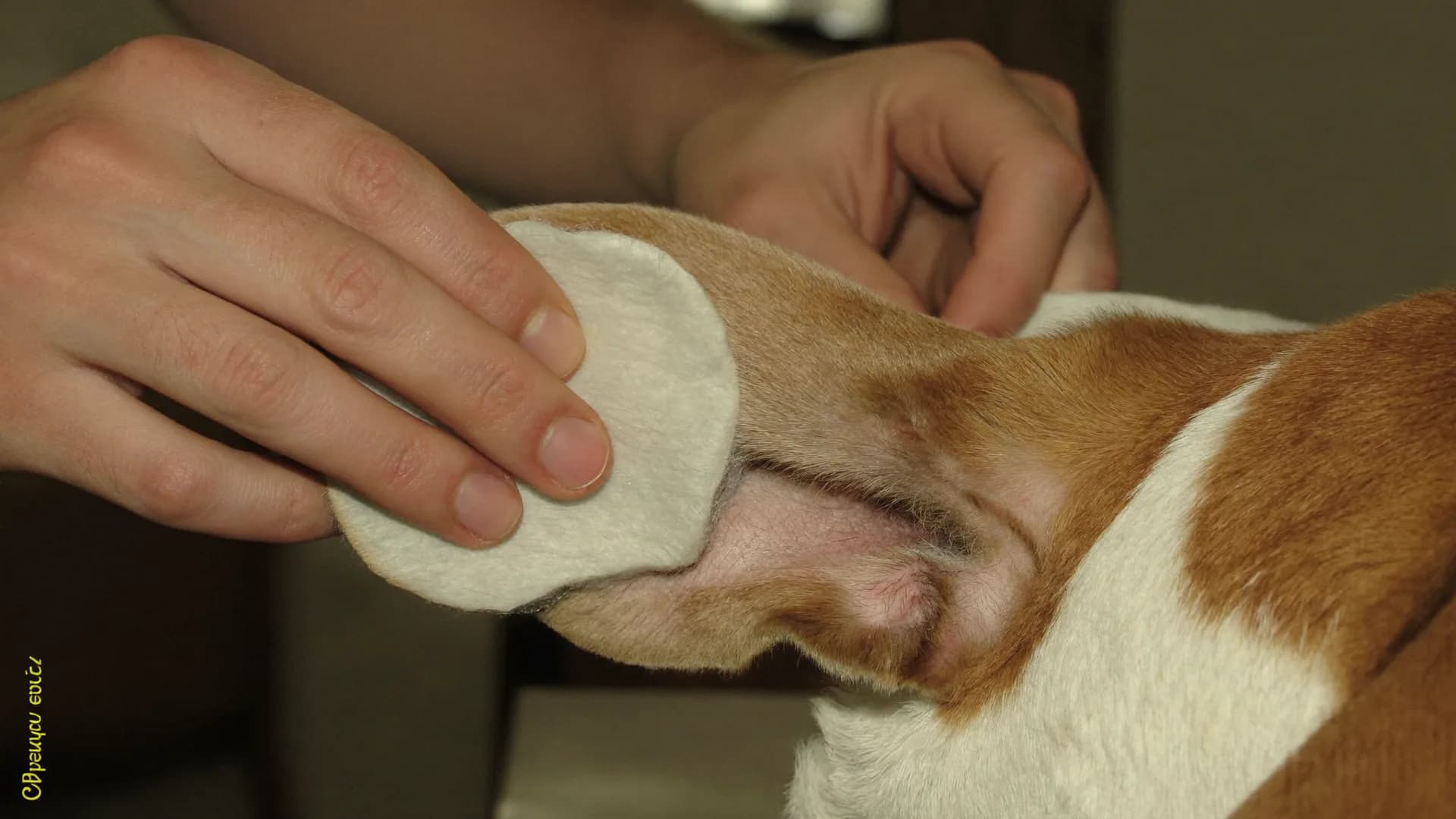
Use a proper dog ear cleaner from the vet or pet shop, at room temperature, and never a cotton bud — buds push debris down onto the eardrum and are a common cause of injury. Fill the ear canal with the cleaner, then massage the base of the ear for a few seconds; you will hear a squelch as it loosens the debris. Let the dog shake its head, which does most of the work of bringing the mess up, then wipe away what you can reach with a cotton pad or a piece of gauze wrapped over your finger. Do not push into the canal — you clean only as far as a finger reaches, and the ear brings the rest up itself. Water alone is a poor choice because it sits in the canal and keeps it damp, which is the opposite of what you want.
The signs that mean an infection, not a clean
Some things are not a cleaning job and get worse if you treat them as one. A strong or yeasty smell, a brown, yellow or bloody discharge, redness or swelling inside the ear, heat, or a dog that whines when you touch the ear all point to infection. So does persistent head-shaking, scratching at the ear, tilting the head to one side, or rubbing the ear along the floor. An ear infection needs the vet, because it needs the right medication for the right cause, and cleaning a painful infected ear at home only hurts the dog and delays the treatment that would actually fix it.
Recurring infections are their own signal. An ear that keeps flaring is often being driven by something underneath — commonly an allergy — and chasing each flare with a clean never gets ahead of it. That pattern is worth raising with the vet as a problem in itself rather than a run of bad luck, and it frequently traces back to the same allergic itch behind a lot of skin and paw trouble.
The wider itch
Ears rarely misbehave in isolation. A dog that is also licking its paws, scratching, or rubbing its face is often showing one allergy in several places at once, and treating the ear alone will not settle it. If the ear trouble travels with a wider itch, that is a whole-dog conversation with the vet rather than a grooming task — and it belongs alongside the rest of a dog's routine care rather than as a standalone chore.
How often should I clean my dog's ears?
Only when they need it — when you can see wax or debris, after swimming or a bath, or when your vet advises it for a known problem. A clean, healthy, non-smelly ear should be left alone, because over-cleaning irritates the ear and can start an infection.
Can I use cotton buds to clean my dog's ears?
No. Cotton buds push debris down onto the eardrum and are a common cause of injury. Use a proper ear cleaner, massage the base of the ear, let the dog shake, then wipe only as far as a finger reaches with a pad or gauze.
What does an ear infection look like in a dog?
A strong or yeasty smell, brown, yellow or bloody discharge, redness, swelling or heat inside the ear, and pain when touched. Persistent head-shaking, scratching, head-tilting or rubbing the ear on the floor point the same way. It needs the vet, not cleaning.
Why does my dog keep getting ear infections?
Recurring ear infections are often driven by something underneath, commonly an allergy, and cleaning each flare never gets ahead of the cause. A dog that also licks its paws or scratches is often showing one allergy in several places — raise it with the vet as a problem in itself.
Should I clean my dog's ears with water?
Water alone is a poor choice, because it sits in the canal and keeps it damp, which encourages infection. Use a proper dog ear cleaner designed to break down wax and help the ear dry, and dry the ear afterwards.