Paw and pad care through the seasons: what dogs' feet actually need
Dogs' feet do a hard job and mostly look after themselves — until salt, hot pavement, grass seeds or a split pad turn a paw into a problem. Here is what to check, what to leave alone, and when a limp means a vet.
A dog's paws are tougher than they look and need less fussing than the internet suggests, but they are not maintenance-free, and the things that go wrong with them are seasonal and largely preventable. The pads are built to take abrasion, the claws wear on hard ground, and most feet do fine on a normal life of walks. The trouble starts at the edges of the year — the frozen, salted pavement of winter and the baking tarmac of summer — and with the small foreign objects that work their way in unnoticed.
What a healthy foot looks like, and the weekly check
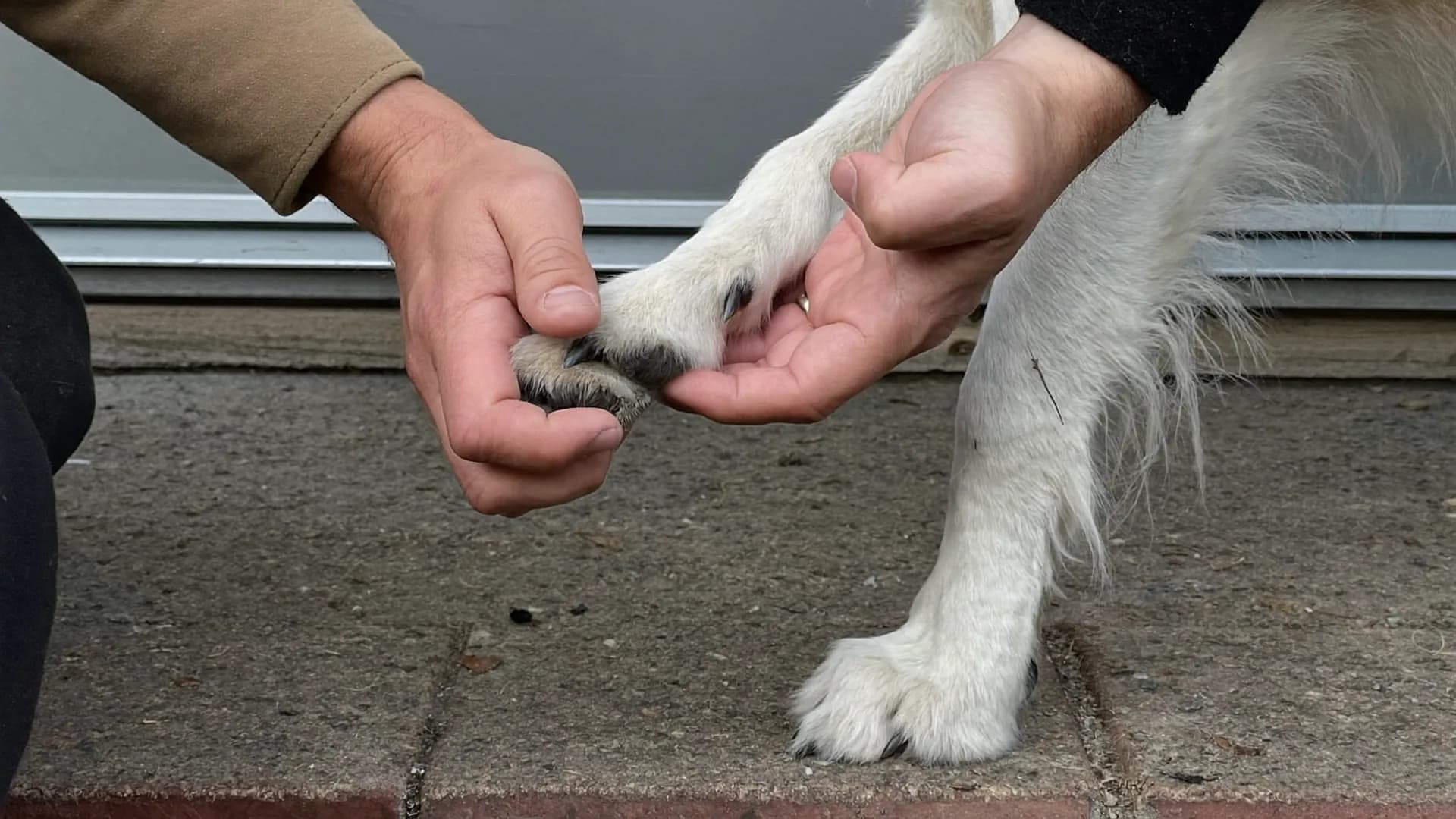
Learn the normal so you notice the abnormal. A healthy pad is supple rather than cracked or rock-hard, the skin between the toes is clean and dry, the claws are worn but not split, and the dog bears weight evenly without licking at one foot. Once a week, and after every rough or wet walk, run a hand over each foot: spread the toes and look between them, press the pads for tenderness, and check the claws and dewclaws. A dog that suddenly licks or chews one paw is telling you something is in there or wrong with it.
Nails are part of foot health, not just tidiness: a claw left too long changes how the foot meets the ground, splays the toes and can curl into the pad. If you can hear clicking on a hard floor or see the nails touching the ground when the dog stands, they are too long. Keeping them short is its own small skill — see trimming a dog's nails — and the single most useful thing you can do for the structure of the foot.
Winter: salt, ice and cracked pads
Winter is the hardest season on feet, and most of the damage is chemical rather than cold. The de-icing salt and grit spread on pavements is an irritant that stings broken skin, dries the pads, and makes a dog sick if it licks it off, so wipe or rinse the feet after every winter walk and dry between the toes. Ice balls that form in the fur between the pads of hairy-footed dogs are painful and worth trimming the fur back to prevent. The rest of the cold-weather picture — how long to be out, when it is too cold at all — sits with keeping a pet safe in cold weather.
Cracked, dry pads are the winter complaint owners notice, and a dog-specific pad balm helps a genuinely dry pad — but resist treating a pad you have not looked at, because a deep crack, a cut or a limp is a vet problem, not a moisturiser problem. Boots solve the salt and ice entirely for dogs that will tolerate them, which is a minority; introduce them slowly and indoors, and accept that some dogs simply will not walk in them.
Summer: hot pavement and the burn nobody sees coming
Summer's danger is heat conducted straight into the pads from tarmac and paving that has sat in the sun. Dark surfaces get far hotter than the air, hot enough to blister a pad in under a minute, and the injury does not show until later. The test is simple and worth doing: press the back of your hand flat to the ground for seven seconds, and if you cannot hold it there, it is too hot for the dog. Walk on grass, walk early or late when the ground has cooled, and on a hot day the honest answer may be a shorter walk or none.
A pad burn looks like darkened, peeling or blistered skin, and a dog with one will limp and lick. It is painful and can get infected, so keep the foot clean, stop the walks that caused it, and get a vet to look at anything beyond the mildest case. Summer also brings the risk of a dog cooking overall, not just its feet, so the hot-ground rule sits alongside the wider warning about heat and dogs.
Grass seeds, cuts and the limp that means a vet
In the drier months, grass seeds are the classic hidden injury: a barbed seed lodges between the toes, burrows through the skin and drives up the leg, causing a sudden painful swelling and relentless licking, and it needs a vet to remove before it travels. Check between the toes after every walk in long dry grass. Cuts from glass and sharp stone are common too, and a pad bleeds impressively; clean a minor one and watch it, but a deep cut, one that will not stop bleeding, or a flap of pad hanging loose all need veterinary attention rather than home care.
The rule that ties it all together is simple: a healthy dog uses all four feet evenly and does not obsess over one. A limp that lasts more than a short while, a foot the dog will not put down, a swelling, a bad smell, or licking that has become constant are all reasons to look closely and, if you do not find and fix an obvious cause, to see a vet. Feet are easy to ignore because they mostly cope — right up until the moment they need you to notice.
How often should I check my dog's paws?
Give them a quick look weekly, and after any rough, wet, salted or hot-ground walk. Spread the toes and look between them, press the pads for tenderness, and check the claws. The habit takes seconds and catches grass seeds, small cuts and early salt damage before they become painful problems.
Is road salt dangerous for dogs?
Yes, in two ways. It irritates and dries the pads and stings any broken skin, and a dog that licks it off its feet can be made sick by it. Rinse or wipe the feet after every winter walk, dry between the toes, and consider a pad balm for dryness or boots for dogs that tolerate them.
How do I know if the pavement is too hot for my dog?
Press the back of your hand flat to the ground for seven seconds. If you cannot hold it there comfortably, it is too hot for your dog's pads, which can blister in under a minute on hot tarmac. Walk on grass, walk early or late, or skip the walk on the hottest days.
Should I put balm on my dog's pads?
A dog-specific pad balm helps a genuinely dry or mildly cracked pad, but only after you have looked at the foot. A deep crack, a cut, a burn or a limp is a veterinary problem, not something to cover with balm. Treat dryness, not injury, and never use human foot products.
Why is my dog licking one paw so much?
Constant licking of a single paw usually means something is in it or wrong with it — a grass seed between the toes, a cut, a burn, a splinter or an irritation. Check the foot carefully, and if you cannot find and resolve an obvious cause, or the licking continues, have a vet look at it.
Do dogs need boots?
Most do not, but boots genuinely solve winter salt and ice and summer heat for dogs that will wear them — which is a minority. Introduce them slowly indoors with rewards, expect some comic walking at first, and accept that some dogs simply refuse. They are a useful tool, not a necessity for the average dog.
What is a grass seed injury?
A barbed grass seed lodges between the toes, burrows through the skin and can travel up the leg, causing a sudden painful swelling and heavy licking. It is common in dry summer months and needs a vet to remove before it moves further. Checking between the toes after walks in long grass is the best prevention.