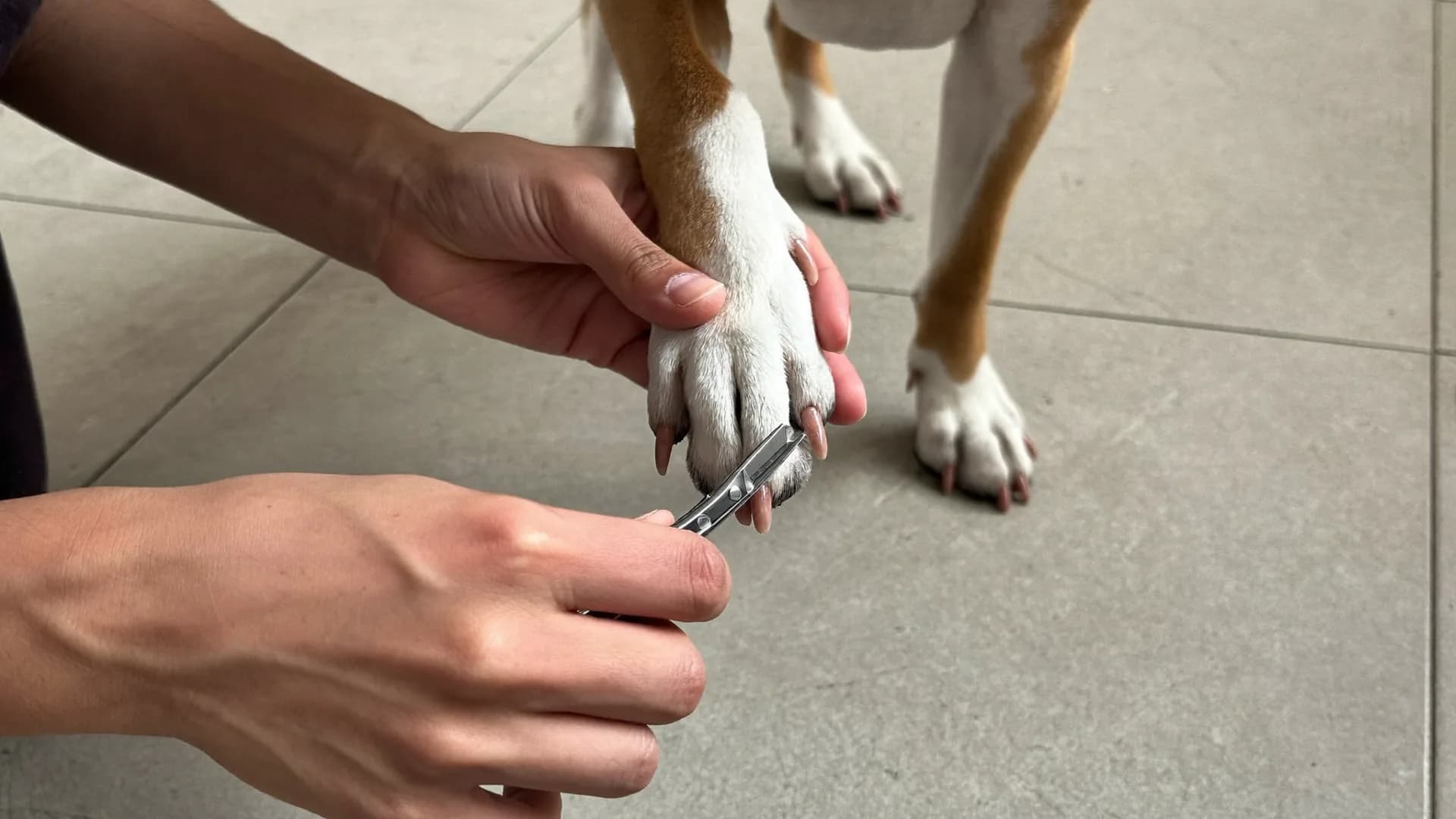
Trimming a dog's nails without the drama
Overgrown nails are not cosmetic — they change how a dog stands and can hurt. Most dogs dread the clippers because of how the job was introduced, not the act itself. Here is how to do it safely and build a dog that tolerates it.
If you can hear a dog's nails clicking on the floor, they are too long. Overgrown nails are not just untidy; they push against the ground with every step, change the way the dog stands, and over time strain the toes and joints — and left far enough, they curl into the pad. The good news is that the fear most dogs show at the clippers is learned, not innate, and it can be undone.
Why length matters
A nail that touches the ground when the dog stands is already affecting its posture, forcing the toes back and shifting weight off the paw. The click test is the simple check: quiet nails on a hard floor are about right, clicking ones are due a trim. Neglected nails eventually grow into the pad, which is painful and prone to infection.
The knock-on effects are easy to miss because they arrive gradually. A dog standing back on its feet loses grip on smooth floors, which matters most to the old and the arthritic, and long nails snag and tear — a torn nail is one of the more painful minor injuries a dog can have and often needs sedation to tidy up. Owners who assume a stiff, slipping older dog is simply ageing are sometimes half right and half looking at a nail problem.
Don't forget the dewclaw
The dewclaw sits high on the inside of the leg, never touches the ground, and therefore never wears down — which makes it the nail most likely to curl right round into the skin. It is also the easiest one to overlook, since it hides in the fur above the paw. Check it every time, and check the hind legs too on the breeds that have them there.
The quick, and why dogs fear the clip
Inside each nail is the quick — a blood vessel and nerve — and cutting into it hurts and bleeds, which is exactly the experience that teaches a dog to hate the clippers. On pale nails the quick shows as a pink core to avoid; on dark nails it is hidden, so you take small slices and stop at the first sign of a pale or moist centre. Keep styptic powder to hand for the day you nick it.
A useful thing about the quick is that it moves. In a nail that has been long for months the quick has grown out with it, so there is no single cut that gets back to a good length without hitting it. Frequent small trims make the quick recede over several weeks, and that is the only route back from badly overgrown nails — a few weeks of taking a sliver off, not one heroic session.
How to do it — and the grinder option
Trim small amounts at a slight angle, a little off the tip rather than one bold cut, and stop well short of the quick. A rotary grinder is more forgiving than clippers because it takes the nail down gradually and is harder to overdo. Reward the dog throughout, and if the whole thing unnerves you, a groomer or vet nurse will do it quickly and can show you how.
Practical details make the difference between a calm job and a scramble. Use scissor-type clippers rather than the guillotine kind, which crush more and are harder to place, and keep them sharp — a blunt blade pinches the nail and the dog remembers it. Work in good light, hold the paw without gripping the toes hard, and cut from underneath so you can see the shape you are taking off. With a grinder, touch the nail briefly and lift off repeatedly rather than holding it there, because friction heats the nail, and hold long fur well clear of the head, which will catch it.
Building a dog that tolerates it
Tolerance is built long before the clippers come out. Handle the paws often and pair it with treats from puppyhood, work one nail at a time, and never wrestle a frightened dog through the whole set in one sitting. A calm, rewarded routine of a nail or two at a time beats a monthly battle, and it keeps the fear from ever taking hold.
For a dog that is already frightened, go slower than seems reasonable. Pay it for the clippers merely existing on the floor, then for a paw being held, then for the clippers touching a nail without cutting, then for one nail — ending every session while the dog is still comfortable and doing one nail a day rather than sixteen on a Sunday. A dog with a genuine phobia is worth a conversation with your vet, who can discuss short-term medication to keep the experience calm while the training rebuilds; sedating for a trim is not defeat, it is a way to stop the fear deepening.
If you cut the quick
It will happen eventually, and it looks worse than it is. Press styptic powder or a styptic pencil into the nail, or use cornflour with firm pressure if that is all you have, and hold it for a couple of minutes rather than checking every ten seconds. Keep the dog quiet until it has clotted properly, since a nail that has stopped bleeding will restart if the dog runs on it. Then pay the dog, end the session, and pick a different foot next time — bleeding that will not stop after several attempts, or a nail that stays sore, is worth a call.
How often, and who should do it
Often enough that you never hear a click: for most dogs that is every three to four weeks, less for a dog that covers miles of pavement and wears its nails down naturally, more for a small indoor dog on carpet and for any dewclaw. Weekly grinding of a sliver suits dogs that have learned to dread the clippers, because nothing much happens each time. And there is no shame in outsourcing it — a vet nurse or groomer will do the job in minutes, and paying for that beats a monthly fight that teaches your dog to fear your hands. Handling practice from the socialisation window is what makes any of these options easy.
How do I know if my dog's nails are too long?
If they click on a hard floor or touch the ground when the dog is standing, they are too long. Overgrown nails alter the dog's posture and strain the toes, and left unchecked they can curl into the pad.
What is the quick, and how do I avoid it?
The quick is the blood vessel and nerve inside the nail; cutting it hurts and bleeds. On pale nails it is a visible pink core to stop short of; on dark nails, take small slices and stop at the first pale or moist centre. Keep styptic powder ready.
Are nail clippers or a grinder better?
A grinder is more forgiving for nervous owners because it removes the nail gradually and is harder to overdo, while clippers are quicker once you are confident. Either works — the key is small amounts and stopping short of the quick.
Why does my dog hate having its nails done?
Almost always because an early trim caught the quick and hurt, teaching it to dread the clippers. Rebuild the association slowly with paw handling and treats, and do one nail at a time rather than forcing the whole set.
How often should I trim my dog's nails?
Often enough that they never click on the floor — for many dogs every few weeks, less for those that wear them down on pavement. Frequent small trims are easier on the dog than occasional big ones.
What should I do if I cut the quick and it bleeds?
Pack styptic powder into the nail, or cornflour with firm pressure, and hold it for a couple of minutes without peeking. Keep the dog quiet until it has clotted, since running restarts it. Bleeding that will not stop after several attempts is worth a call to the vet.
What is a dewclaw and does it need trimming?
It is the nail high on the inside of the leg that never touches the ground, so it never wears down and is the one most likely to curl into the skin. It also hides in the fur, which is why it gets missed — check it at every trim.
How do I fix nails that are already far too long?
Gradually, because the quick has grown out with the nail and no single cut reaches a good length without hitting it. Take a sliver off every week or so and the quick recedes over several weeks; a vet or groomer can do the same job faster, and will sedate a dog that is genuinely frightened.