Do cats need baths? Usually not — and when they actually do
Cats groom themselves obsessively, so most never need a bath in their lives. Here is when that rule breaks, how to bathe a cat without a fight, and what to do instead the rest of the time.
It is one of the few genuinely easy answers in pet care: most cats do not need baths, ever. A healthy cat is a self-cleaning machine, spending a large part of its waking life grooming, and its tongue, teeth and flexibility keep its coat cleaner than a bath usually could. The instinct to wash a cat the way you would a dog is almost always unnecessary, and often counterproductive. But the rule has real exceptions, and knowing them — and how to handle a bath when one is genuinely needed — matters more than a routine that mostly should not exist.
Why cats stay clean on their own
A cat's grooming is not tidiness for its own sake; it is a well-engineered system. The rough tongue works like a comb, lifting dirt and loose hair and spreading natural oils that keep the coat water-resistant and healthy. Grooming also regulates temperature, and it is soothing, which is why a content cat grooms and a stressed one may over- or under-groom. The upshot is that a cat in normal health keeps itself clean to a standard that soap and water rarely improve, and washing away those natural oils can leave the coat drier and the skin more irritated than before.
This is why bathing a cat on a schedule, as a matter of hygiene, is the wrong default. It removes a working system's output, stresses an animal that mostly hates water, and solves a problem the cat did not have. The starting assumption should be that your cat never needs a bath, and you only revisit that when something specific overrides it.
When a cat genuinely does need a bath
The exceptions are real and worth knowing. A cat that has got something on its coat it should not lick off — paint, oil, a chemical, anything sticky or toxic — needs washing promptly, because its instinct will be to groom the substance straight into itself. A cat too old, too arthritic or too overweight to reach parts of its own body may need help staying clean at the back end, and a very ill cat sometimes stops grooming altogether, which shows as a dull, greasy or matted coat. Hairless breeds are the standing exception, since with no coat to absorb skin oils they need regular bathing that furred cats do not.
Long-haired cats are a special case that is more about mats than baths. They can develop tangles their own grooming cannot manage, and the answer there is usually brushing and de-matting rather than water — the routine covered in grooming a long-haired cat. A bath does not fix mats; it can tighten them. So even for a long-haired cat, the coat is managed mostly with a comb, and a bath is reserved for the specific messes above.
How to bathe a cat without a battle
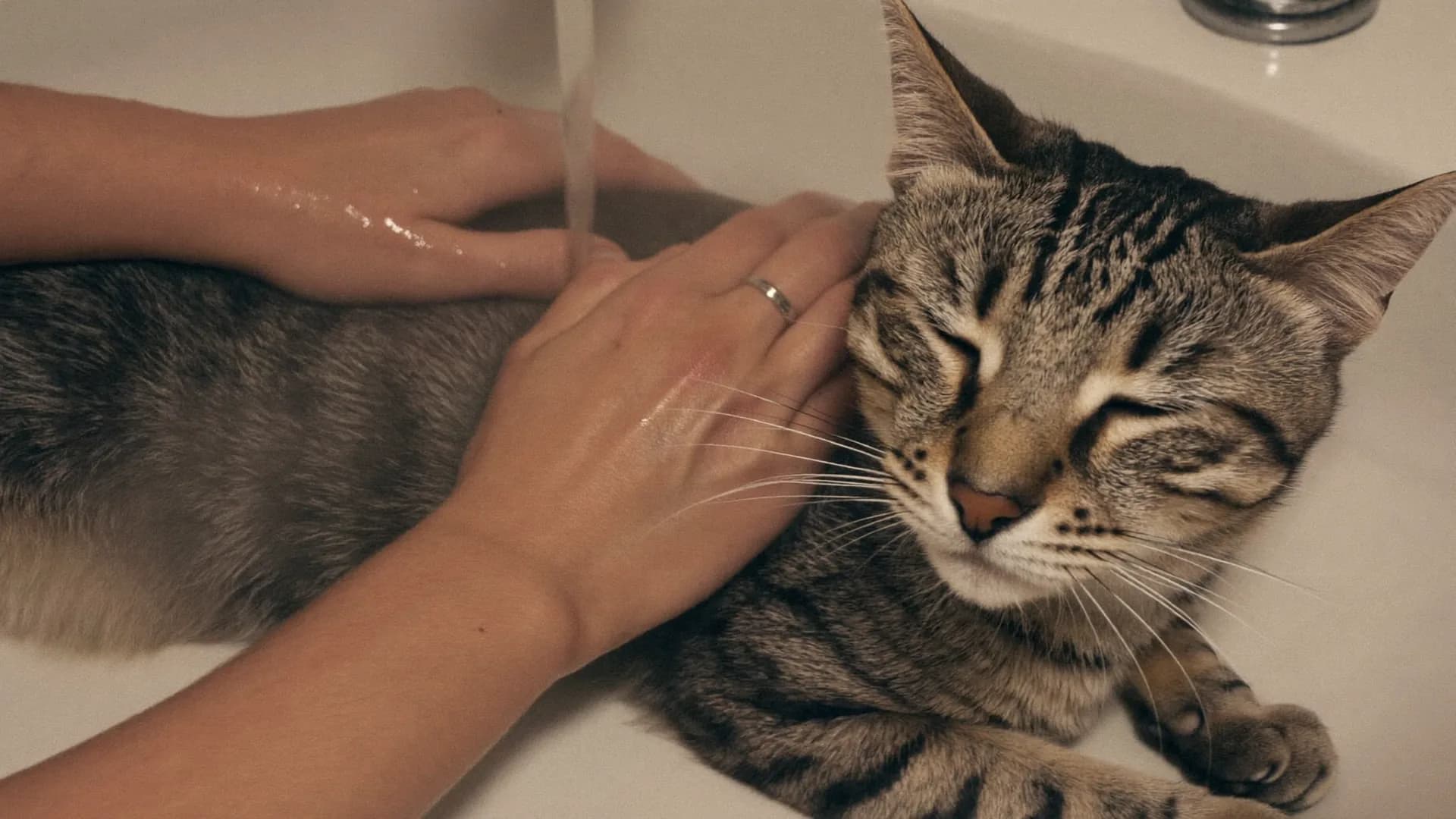
If a bath is genuinely needed, preparation does most of the work. Trim the claws first, brush out any loose hair and mats beforehand, and gather everything within reach — cat shampoo, a jug, towels, a non-slip mat for the sink or bath — so you are never leaving a wet cat to fetch something. Use warm, not hot, water only a few inches deep, and a sink is easier to control than a full bath. Two calm people are far better than one; one holds and reassures while the other washes.
Work quickly and gently: wet the cat from the neck down, avoiding the face and ears entirely, lather with a shampoo made for cats — never a human or dog product, which can be toxic to them — and rinse thoroughly, because residue irritates skin and gets groomed off later. Keep your voice low and the whole thing short. Wrap the cat in a towel immediately, dry it as much as it will tolerate, and keep it somewhere warm and draught-free until fully dry. Skip the hairdryer unless the cat is genuinely unbothered by it, which most are not.
What to do instead, most of the time
For the everyday reality — a cat that is a bit dirty, has a sticky patch, or simply is not as pristine as you would like — reach for something other than a bath. A damp cloth wipes off a small mess without the trauma of full immersion. Pet-safe grooming wipes handle paws and coat spot-cleaning. Regular brushing, especially for long-haired and older cats, does more for a coat than washing ever will, removing loose hair and dirt and spreading oils the way the cat's own grooming does. Most situations that make an owner think bath are better answered with a cloth and a comb.
And treat a sudden change in a cat's own grooming as information rather than a cleaning job. A cat that stops grooming and turns greasy and unkempt, or one that grooms so much it creates bald patches, is telling you something has changed — and the answer is to look into why, not simply to bathe over the symptom. For the healthy majority, though, the honest position is the easy one: your cat has the grooming handled, and the kindest bath is usually no bath at all.
Do indoor cats need baths?
Almost never. A healthy indoor cat grooms itself to a standard baths rarely improve, and washing away its natural coat oils can dry the skin and irritate it. Unless the cat gets something harmful on its coat, cannot groom itself properly, or is a hairless breed, an indoor cat can go its whole life without a bath.
How often should I bathe my cat?
For most cats, never on a schedule — bathing is for specific problems, not routine hygiene. The exceptions are hairless breeds, which need regular baths because they have no coat to absorb skin oils, and cats that cannot groom themselves well due to age, weight or illness. Otherwise, brushing and spot-cleaning replace bathing entirely.
Can I use human or dog shampoo on my cat?
No. Human shampoo is the wrong pH for cat skin, and many dog shampoos contain ingredients that are toxic to cats, who then groom the residue off and ingest it. Only ever use a shampoo made specifically for cats, and rinse thoroughly so nothing is left on the coat to irritate the skin or be swallowed later.
How do I bathe a cat that hates water?
Prepare fully first — trim claws, brush out mats, and gather everything within reach — and use a sink with a few inches of warm water and a non-slip mat. Have two people if possible, wash quickly from the neck down avoiding the face, use cat shampoo, rinse well, and towel-dry in a warm room. Keeping it short and calm matters more than getting the cat spotless.
My cat stopped grooming and looks greasy — what do I do?
Treat it as a sign rather than a cleaning task. A cat that stops grooming and develops a dull, greasy or matted coat has usually had something change — often it is finding grooming difficult or is unwell — so the priority is to work out why, not just to bathe over it. Older and heavier cats especially may need help with the areas they can no longer reach.
Do long-haired cats need baths?
Not usually — their challenge is mats, not dirt, and mats are managed with brushing and de-matting, not water, which can actually tighten a tangle. Keep a long-haired cat combed regularly to prevent mats forming, and reserve a bath for the same specific messes as any other cat: something harmful on the coat that must be washed off.
What can I use instead of bathing my cat?
A damp cloth for small messes, pet-safe grooming wipes for paws and spot-cleaning, and above all regular brushing, which removes loose hair and dirt and spreads the coat's natural oils much as the cat's own grooming does. For the everyday not-quite-clean cat, a cloth and a comb solve almost everything a bath would, without the stress.