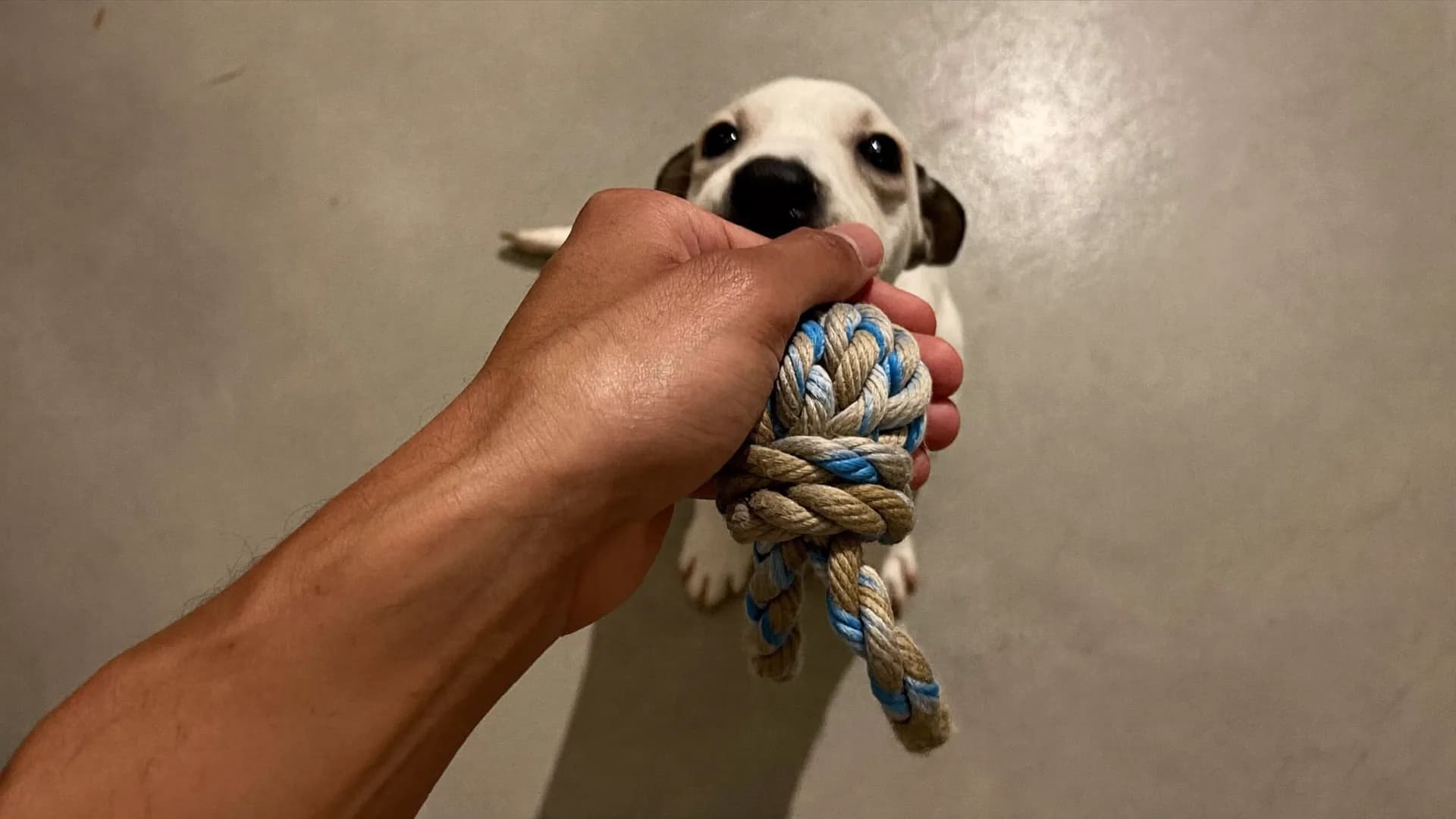
Puppy biting: mouthing, teething and how a soft mouth is taught
Needle-teeth on your hands is normal puppy behaviour, not early aggression — a puppy explores and plays with its mouth, and it is teething on top of that. The goal is not silence overnight but teaching that human skin is off limits. Here is how.
A puppy that bites hands, sleeves and ankles is doing something completely normal: it explores the world with its mouth, plays with its mouth, and on top of that spends months teething. It is not a warning of an aggressive adult, and treating it as one is the wrong start. What you are teaching is not that the mouth is forbidden but that human skin is, and that lesson is taught in weeks, not in a single afternoon.
Why a puppy uses its teeth
Three things overlap. Exploration comes first — a puppy has no hands, so the mouth is how it tests what everything is. Play is second, because littermates wrestle and bite, and yours arrived expecting you to be a littermate. Teething is third and painful: sore gums want something to clamp on, and a puppy chews harder for weeks as the adult teeth come through. Add a fourth, less obvious one — an overtired puppy bites like an overtired toddler shouts, and the answer is sleep rather than correction.
Bite inhibition is the thing you are actually building
Long before a puppy learns to keep teeth off skin entirely, it learns how hard is too hard — and that lesson, called bite inhibition, is the one that matters most for life. A puppy that has learned to control the pressure of its jaw is a dog that, startled or hurt at eight years old, grabs without breaking skin. This is why the goal in the early weeks is a soft mouth first and no mouth second: you are teaching the brake before you teach the stop.
What to do in the moment
Keep it dull and consistent. When teeth land on skin, let the fun stop — go still, withdraw your hand and your attention for a few seconds, and carry on only when the puppy is calm. A short yelp works with some puppies and winds others up, so read yours. The other half of the job is redirection: keep a toy within reach and put it where your hand was, so the puppy learns that teeth belong on toys and that skin ends the game. For a teething puppy, a chew it is allowed — a firm rubber toy, something frozen — gives the sore gums a legal target.
What makes it worse
Some habits train the very thing you are trying to stop. Rough hand-wrestling teaches that hands are toys, so play with a toy between your hand and the teeth instead. Snatching your hand away fast turns it into a game of chase for a fast puppy. And punishment — holding the mouth shut, smacking, pinning the puppy down — teaches fear of your hands rather than gentleness, and a puppy that learns to fear hands is a harder problem than one that mouths. Consistency across everyone in the house matters more than any single technique: one person who lets the puppy chew on them undoes the rule for the rest.
The teething months, specifically
Teething runs roughly until the adult teeth are in at around six months, and the urge to chew peaks somewhere in the middle of it. This is not the moment to leave shoes, cables and chair legs within reach, because a teething puppy will find them — manage the environment as you would in any other room-by-room pass, and give plenty of appropriate things to chew so the drive has somewhere to go. A puppy left alone with sore gums and nothing legal to bite makes its own entertainment out of your furniture.
When it is more than ordinary puppy mouthing
Normal puppy biting is loose, wiggly and paired with play. What is worth a closer look is biting that comes with stiffness, a hard stare, a growl that means it, or that arrives out of guarding food or a resting place rather than out of play — that is fear or resource guarding, not mouthing, and it deserves a qualified behaviourist rather than a louder version of the play rules. The same is true of an older dog that starts mouthing hard when it never did, where a vet check for pain comes first.
Is puppy biting a sign of aggression?
Almost never. Mouthing is how a puppy explores and plays, made worse by teething, and it is normal for the age. What deserves attention is biting that comes with stiffness, a hard stare or guarding rather than play — that is a different problem and worth a behaviourist's eye.
How do I get my puppy to stop biting me?
Let the fun stop the instant teeth touch skin — go still and withdraw attention for a few seconds — then redirect the mouth onto a toy. Keep it consistent across everyone in the house, give teething chews, and make sure an overtired puppy is put to sleep rather than corrected.
What is bite inhibition and why does it matter?
It is a dog learning how hard is too hard with its jaw. A puppy taught a soft mouth becomes a dog that, if ever startled or hurt, grabs without breaking skin. That is why the early goal is gentleness first and no-teeth second — the brake before the stop.
Should I punish my puppy for biting?
No. Holding the mouth shut, smacking or pinning teaches fear of your hands rather than a soft mouth, and a hand-shy dog is a harder problem than a mouthy puppy. Stop the game and redirect to a toy instead of correcting.
How long does puppy teething last?
Roughly until the adult teeth are through at about six months, with the urge to chew peaking in the middle. Expect harder chewing through that window, give plenty of appropriate chews, and keep shoes, cables and furniture out of reach.
Why does my puppy bite more in the evening?
Often because it is overtired. A puppy that has had too much stimulation and too little sleep bites like an overtired child melts down — the answer is a quiet nap in a settled space, not a correction.
Does yelping 'ouch' actually work?
It works for some puppies and winds others up into biting harder. Try it, and if your puppy gets more excited rather than less, drop it and simply go still and withdraw attention instead. Read the puppy in front of you.
My older dog has started mouthing hard — is that the same thing?
Not necessarily, and it is worth a vet check first. A sudden change in an adult dog can have a medical cause, and mouthing that comes with stiffness or guarding is behaviour to assess rather than play to manage. Get it looked at rather than waiting.