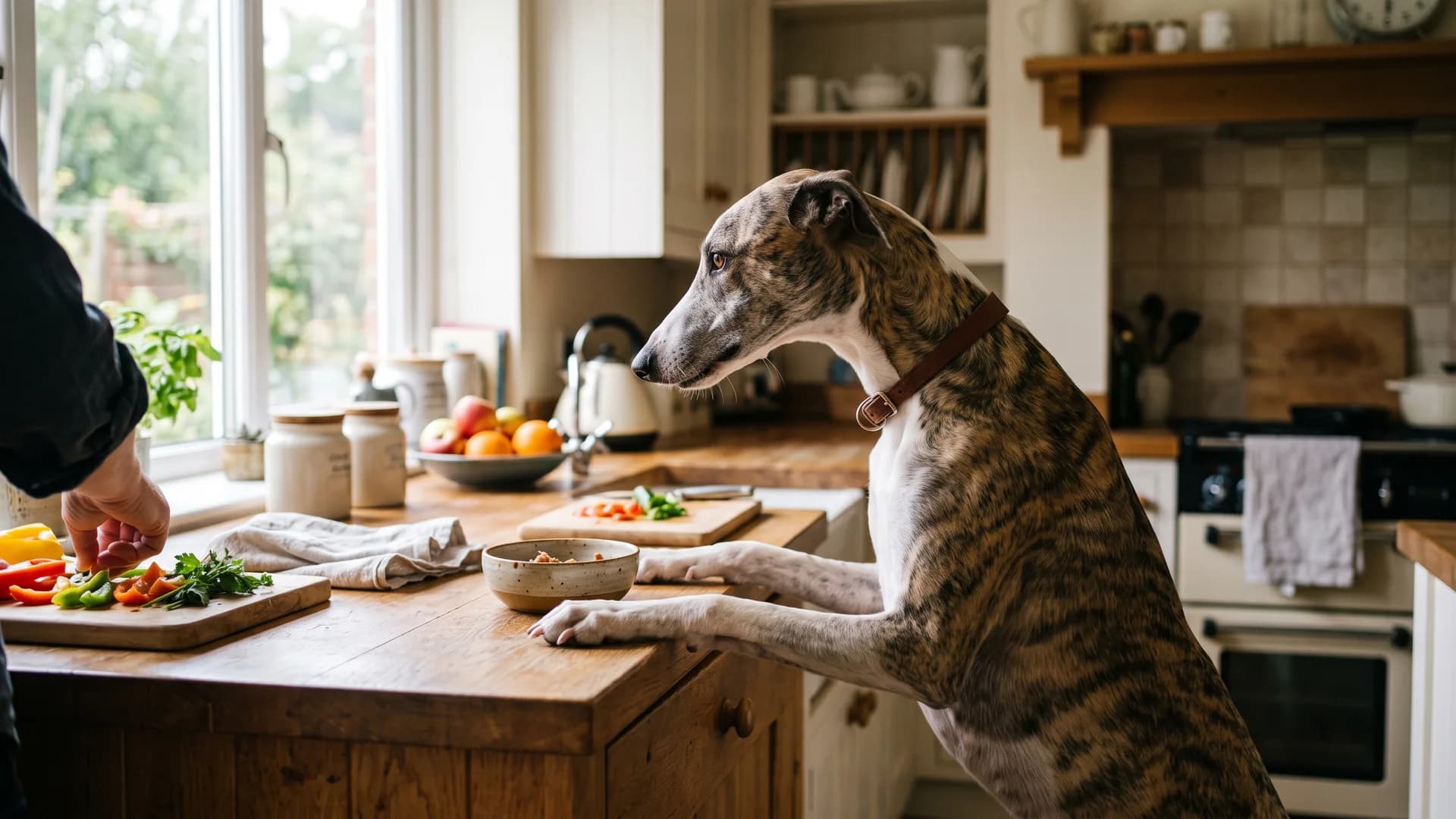
Counter surfing: stopping the dog that steals food off the counter
A dog that lifts food off the worktop has been paid, once, in the best currency there is — and the habit rewards itself. Beating it is mostly about management and a better default behaviour, not catching the dog in the act.
Counter surfing — a dog helping itself to whatever is on the kitchen worktop or the table — is one of the most stubborn habits to break, and for a very specific reason. The reward is food, the best thing in a dog's world, and it arrives the instant the paws go up. A behaviour that pays off that well, even occasionally, becomes deeply ingrained, and the dog does not need you there to be rewarded — the counter pays it directly. It is not disobedience or spite; it is a dog doing the thing that has worked.
Why 'no' does not work
Telling a counter surfer off misunderstands the problem. The food is the reward, and the dog gets it whether or not you are in the room — in fact it quickly learns to surf precisely when you are not looking, because that is when it succeeds. Worse, a habit that only pays off now and then is the hardest of all to extinguish, the same reason a slot machine is compelling: intermittent wins keep the behaviour alive. And punishment after the fact does nothing, because the dog cannot connect your anger with a sandwich it took ten minutes ago.
Management first: remove the payoff
The foundation of the fix is simple and unglamorous: make sure the dog never succeeds. Keep counters clear, push food to the back, use a bin with a lid, and when you are cooking or eating, put the dog behind a baby gate, in its crate, or on a bed with something to do. Every single successful steal reinforces the habit, so the priority is to close off the wins entirely. Weeks with zero payoff let the behaviour fade; one unattended roast undoes a lot of that, so consistency is everything.
Teach a better default
Management stops the habit; a trained alternative replaces it. Teach the dog what to do instead of surfing — a solid "off", four feet on the floor rewarded generously, and above all a settle on a mat or bed while you work in the kitchen. Reward the settle heavily and often at first, so lying calmly on its spot becomes more rewarding than gambling at the counter. Built on ordinary reward-based training, a reliable "go to your bed" while food is prepared is the single most useful thing you can teach a food thief, and it overlaps with keeping four feet on the floor generally.
Do not accidentally train it
Plenty of households reinforce the very thing they are trying to stop. Feeding the dog from the counter or the table, leaving tempting food out unattended, or reacting with a big dramatic chase when the dog grabs something — which reads as attention, a reward in itself — all keep counter surfing alive. Everyone in the home has to hold the same line: if one person slips the dog a tidbit from the worktop, the counter stays a place where good things sometimes happen, and the gamble stays worth taking.
The role of exercise and feeding
A well-exercised, properly fed dog scavenges a little less than a bored, hungry one, so getting the basics right takes some of the pressure off. But be realistic: even a full, tired dog will take a steak left within reach, because the opportunity is simply too good. Do not rely on a full stomach to solve counter surfing — management still rules — and be careful that the food you do give stays within a sensible treat budget rather than adding a stolen course on top.
Booby traps, and why to skip them
It is tempting to rig the counter to startle the dog — noisy cans, mats that make a bang — so it learns the worktop itself is scary. These can work, but they carry a cost: a dog frightened badly enough can become anxious about the whole kitchen, or about being near you when you cook, and none of it teaches the dog what it should be doing instead. Management plus a trained settle is kinder, more reliable and does not risk fallout. And if a steal does happen, check what was taken against the list of foods that are toxic to dogs, because some kitchen foods are an emergency rather than just a lost dinner.
Consistency across everyone in the home
A counter-surfing habit survives on the weakest link. If one person keeps the counters clear and another leaves a plate within reach, or slips the dog a scrap from the worktop, the counter stays a place where food sometimes appears, and the dog keeps checking. The same goes for the trained settle: if it is rewarded when you cook but ignored when someone else does, the dog learns the rule is only sometimes true. Agree the approach with everyone who lives with or visits the dog — counters clear, the dog on its bed while food is out, no hand-feeding from the worktop — and hold it even when it is inconvenient. A habit only fades when the wins stop for good, and a single soft touch keeps the gamble worth taking.
How do I stop my dog stealing food off the counter?
Manage first so the dog never succeeds — clear counters, a lidded bin, and the dog gated, crated or on its bed while you cook — because every steal reinforces the habit. Then teach an alternative: a rewarded settle on a mat while food is prepared. Management plus a trained default beats trying to catch the dog in the act.
Why does my dog only counter surf when I'm not there?
Because the food rewards it directly, with or without you, and the dog has learned it succeeds when you are not watching. The counter pays the behaviour whether you approve or not, which is why supervision alone never fixes it and physically preventing access is the key.
Does punishing counter surfing work?
No. Punishment after the fact means nothing to the dog, which cannot connect your anger with food it took earlier, and startling it off the counter can create anxiety about the kitchen without teaching what to do instead. Removing the payoff and rewarding a better default is what actually works.
My dog ate something off the counter — should I worry?
Check what it was. Many foods just mean a lost meal, but chocolate, grapes and raisins, onion and garlic, xylitol and a few others are toxic even in small amounts — see the toxic-foods page and call your vet if the dog ate any of those or you are unsure. Cooked bones and large fatty amounts are also worth a call.
Will my dog grow out of counter surfing?
Not on its own — if it keeps working, it keeps happening, and it can get more determined with practice. It fades only when the wins stop and a better behaviour is rewarded in its place. The good news is that consistent management plus a trained settle reliably turns it around at any age.
Should I get a taller counter or a barrier?
Physical management is exactly the point, so anything that keeps food out of reach helps — pushing food to the back, a bin with a lid, or gating the dog out of the kitchen while you cook. A very tall or determined dog may still reach, so the reliable answer is not relying on height but removing the food and rewarding the dog for settling elsewhere.