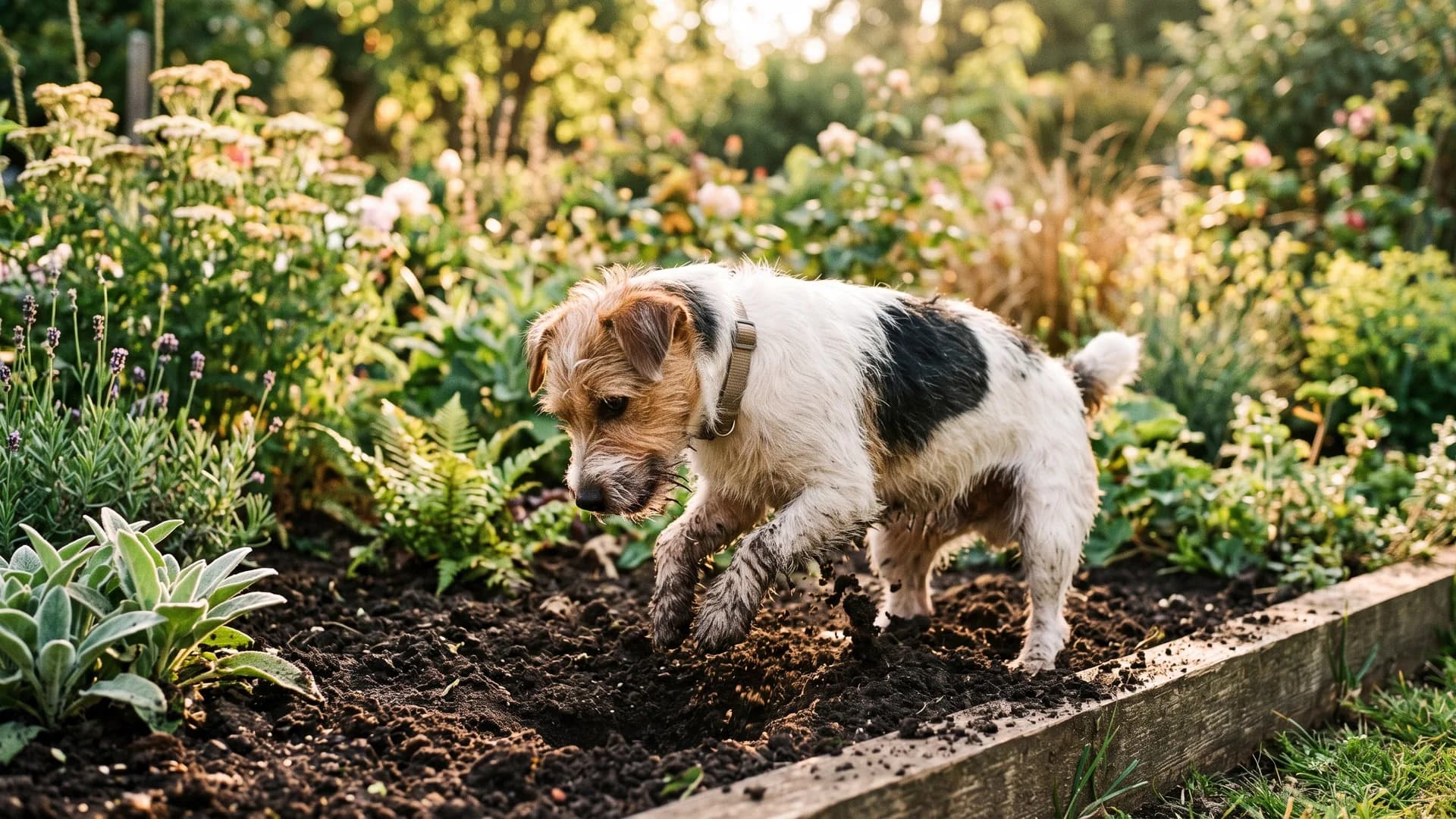
Why does my dog dig, and how to redirect it
Digging is normal dog behaviour with several possible causes — and stopping it starts with working out which one you are looking at, then giving the dog a legal outlet rather than a telling-off it will not understand.
A cratered lawn is a common complaint, and a frustrating one, because digging is not a fault to be scolded out of a dog — it is a natural behaviour with a real drive behind it. Punishing it rarely works, partly because the reward is in the digging itself and partly because a dog rarely connects a telling-off with a hole it made an hour ago. The way forward is to figure out why this dog is digging, deal with that cause, and give it somewhere the digging is allowed.
The common reasons
Dogs dig for several distinct reasons, and the fix depends on which. Boredom and under-exercise are the biggest: a dog with energy and nothing to do makes its own entertainment. Some dig to cool down, scooping out a pit of cool earth to lie in on a hot day. Some are hunting, following the scent of rodents or insects under the lawn. Some are simply built for it — terriers and northern breeds have digging in the job description. And some dig at fences and doorways to escape or out of anxiety, which is a different problem wearing the same shape.
Boredom is the one to rule out first
Most everyday garden digging is an under-stimulated dog filling its own time. The answer is not less garden access but a fuller day: more real exercise, and just as importantly more to do with its head — sniffing walks, chews, food puzzles, training games. A dog that arrives in the garden already satisfied has far less reason to excavate it. The same understimulation shows up as destructive chewing indoors, and the cure is the same; getting the exercise right removes a surprising amount of unwanted behaviour at a stroke.
Give the digging a legal home
You will get much further redirecting digging than forbidding it. Set up a digging spot — a sandbox or a marked-off corner of the garden with loose earth or sand — and make it the best place to dig: bury toys and treats in it, dig alongside the dog to get it started, and praise the digging there warmly. When the dog heads for the flowerbed, lead it to its own patch instead. A dog that has an approved place to dig, and gets rewarded for using it, largely leaves the rest of the garden alone.
Heat, hunting and breed instinct
Match the response to the cause. A dog digging shallow pits in shade to lie in is telling you it is too hot; give it a cool, shaded spot, a raised bed or access indoors, and the digging eases. Digging that follows scent lines or targets one spot obsessively often means something is living under the lawn, and dealing with the pests removes the motive. And in a breed bred to dig, some digging is simply who the dog is — the realistic aim is to channel it into the digging pit and the daily outlet rather than to eliminate a hardwired instinct.
Digging to escape, or from anxiety
Digging at the base of a fence, at the gate or frantically at a doorway is a different story from happy garden excavation. It often means the dog wants out — after something on the other side, or trying to follow you — or is distressed at being left, in which case the digging is a symptom rather than the problem. Secure the boundary so the dog cannot get out and hurt itself, but also address the why: a dog digging out of separation anxiety needs that anxiety treated, not just a deeper fence, and a dog left alone in a garden for hours needs company and stimulation more than it needs a barrier.
Management and what to avoid
While you work on the cause, prevent rehearsal: supervise garden time, fence off prized beds, and do not leave a bored dog alone outside for long stretches, which is a recipe for digging. Above all, do not punish a hole after the fact — the dog cannot link your anger to something it did earlier, so all it learns is that you are unpredictable, which can add anxiety and, ironically, more digging. Redirect in the moment, reward the right spot, and be patient; a dug-up lawn is fixed by boredom and outlet, not by telling-off.
A tired body and a busy mind together
It is worth being specific about what "more exercise" means for a digger, because a fast walk on its own often is not enough. Physical exercise burns energy, but a dog also needs to use its nose and its brain, and it is the mental side that most reduces destructive digging. A long sniffing walk where the dog is allowed to investigate at its own pace tires it more than a brisk march; scatter-feeding, food puzzles, chews and short training sessions fill the parts of the day a bored dog would otherwise spend excavating. Aim to send the dog into the garden already satisfied rather than looking for a job, and much of the digging simply never starts.
Why does my dog dig holes in the garden?
Most often boredom and too little exercise, but also to cool down in hot weather, to hunt rodents or insects under the lawn, from breed instinct, or to escape. The cause decides the fix, so watch when and where your dog digs before deciding what to do about it.
How do I stop my dog digging?
Deal with the cause and offer a legal outlet: more exercise and mental stimulation for a bored dog, a shaded cool spot for a hot one, pest control for a hunter, and a dedicated digging pit with buried toys for any of them. Redirect to the pit and reward it rather than punishing the holes.
Why does my dog dig at his bed or the carpet before lying down?
That circling and scratching at bedding is an ancestral nesting instinct — wild dogs turned and scraped a patch to make it comfortable and safe before settling. It is normal and harmless, and quite different from garden excavation, so it needs no fixing beyond a comfortable bed.
Do some breeds dig more than others?
Yes. Terriers were bred to dig quarry out of the ground, and northern and some hunting breeds dig readily too, so in those dogs the drive is strong and hardwired. The realistic goal is to channel it into an approved digging spot and a well-filled day rather than to eliminate an instinct.
Should I punish my dog for digging?
No. A dog rarely connects a telling-off with a hole it made earlier, so punishment after the fact just teaches it that you are unpredictable, which can add anxiety and more digging. Redirect in the moment, reward the right place, and remove the underlying reason.
Is it cruel to stop a dog digging?
Not if you redirect rather than simply forbid. Digging is a real need for many dogs, so blocking it with nothing in its place is frustrating — but giving a legal digging spot, plenty of exercise and mental work, and dealing with heat or pests meets the underlying drive. You are channelling a natural behaviour, not suppressing it.
How do I make a digging pit my dog will actually use?
Put it where the dog already likes to dig, fill it with loose sand or soft earth, and make it pay: bury toys and treats just under the surface, dig in it yourself to start the dog off, and praise digging there warmly. Lead the dog to its pit whenever it starts on the lawn, and keep the buried treasure topped up so the approved spot stays the most rewarding place to dig.