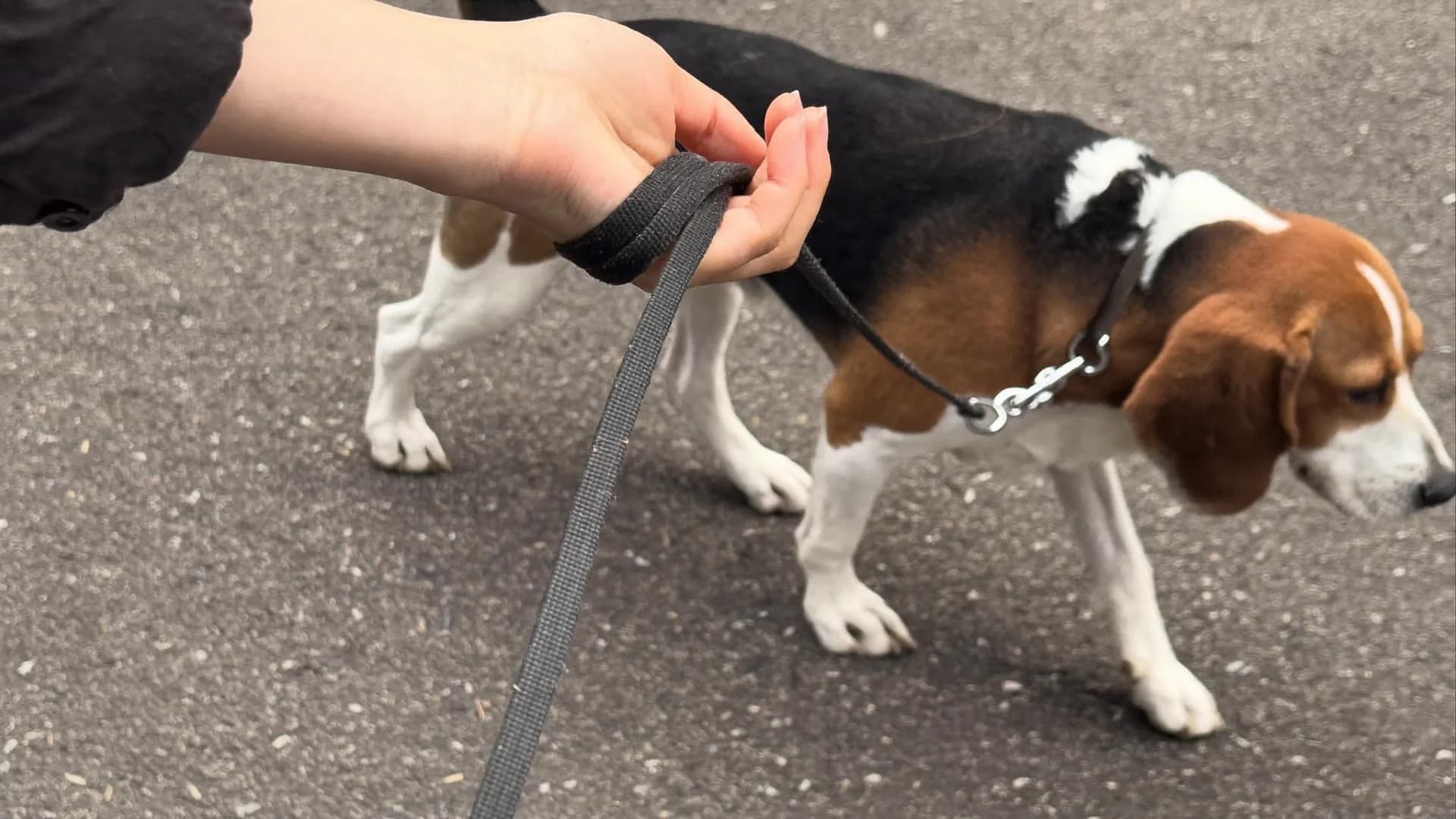
How to stop a dog pulling on the leash: the calm way that actually works
Leash pulling is the most common thing owners want fixed, and most of the usual fixes make it worse. Here is why dogs pull, and the patient method that teaches a loose leash for good.
Almost every dog owner has been towed down the street by a dog that treats the lead as a rope in a tug of war. Pulling is the single most common training complaint, and it is also one of the most misunderstood — because the instinctive human responses to it, and most of the gadgets sold to solve it, either do nothing or quietly make it worse. The good news is that the real fix is not a trick or a tool but a simple, patient method, and understanding why dogs pull is half of it.
Why dogs pull in the first place
The honest reason is unflattering to us: pulling works. A dog pulls, the walk continues in the direction it wants, it reaches the interesting smell or the other dog sooner — and behaviour that pays off gets stronger, which is the whole mechanism behind how dogs actually learn. Every time a dog pulls and you follow, you have rewarded pulling. Add to that a dog that is simply faster than us and often under-exercised and over-excited, and you have an animal that has been taught, walk after walk, that leaning into the collar is how you get where you are going.
There is also a physical wrinkle called the opposition reflex: when a dog feels steady pressure on its collar or harness, its instinct is to pull against it, not yield to it. So the human reflex of pulling back on a pulling dog does the opposite of what you want — it triggers the dog to pull harder. The dog is not being defiant or dominant; it is doing the thing that has always worked, reinforced by a reflex that makes tension breed tension.
The core method: pulling never gets the dog anywhere
The whole fix rests on one rule applied with total consistency: a tight leash stops the walk, and a loose leash lets it continue. When the dog pulls, you stop moving — become a tree — and wait. The forward progress the dog wanted simply ceases the instant the lead goes tight. When the dog eases the tension, even slightly, even by accident, the walk resumes. Over many repetitions the dog learns the thing you actually want it to learn: pulling closes the door, a loose lead opens it.
A variation that speeds it up is to change direction: the moment the dog forges ahead and hits the end of the lead, calmly turn and walk the other way, so the dog learns it must pay attention to where you are going rather than dragging you along. Whichever you use, the principle is identical — the dog never, ever gets to move forward by pulling. Consistency is everything here, because a single walk where pulling works undoes several where it did not.
Reward the position you want, don't just punish the one you don't
Stopping the pulling is only half the lesson; the other half is showing the dog what to do instead. Walking nicely on a loose lead has to become the thing that pays. Reward the dog — with a treat, a word, or simply continuing the walk — whenever it is in the position you want: near you, lead slack, checking in. Many people mark that spot at their side and pay it generously early on, so the dog discovers that staying there is far more rewarding than surging ahead. You are not just closing off pulling; you are building a habit of walking with you.
Keep the sessions short, upbeat and successful, especially at first, and start somewhere boring. A quiet street with few distractions is where loose-lead walking is learnable; the middle of a park full of dogs and squirrels is the exam, not the lesson. Practise where the dog can succeed, and raise the difficulty only as fast as it can handle — the same graded, set-up-to-win approach that underlies all good training.
Equipment helps management, not the lesson
The gear matters, but for the right reason. A well-fitted harness — ideally one with a front clip that turns the dog gently back toward you when it pulls rather than letting it dig in — makes a strong puller manageable and protects its neck while you train, and it removes the collar pressure that triggers the opposition reflex. What no piece of equipment does is teach loose-lead walking on its own; the tools that promise to stop pulling by causing discomfort tend to suppress the symptom, add fear or pain, and leave the dog no better educated. Use a harness to manage the dog safely while the method does the actual teaching.
Retractable leads are the quiet saboteur here, worth naming because so many pullers live on one. A retractable lead teaches a dog that pulling extends its range — that leaning into the lead is exactly how you get more freedom — which is precisely the lesson you are trying to undo. Swap it for a fixed lead of a couple of metres while you train, and the dog gets a consistent, learnable rule instead of a reel that rewards tension.
Patience is the whole thing
Loose-lead walking is slow to build because you are unpicking a habit reinforced over every previous walk, and the early sessions, where you stop every few steps, feel like you are getting nowhere. That is normal and it passes. Keep the rule absolute — pulling never moves the dog forward — reward the loose lead richly, practise where the dog can win, manage with a good harness and a fixed lead, and the pulling fades not because you overpowered it but because you finally taught the dog that the calm lead, not the tight one, is what gets it down the street. Get those pieces right and consistent, and the towing stops for good.
Why does my dog pull on the leash?
Mostly because it works: pulling gets the dog to the smell or the other dog sooner, and behaviour that pays off gets stronger, so every walk where you follow a pulling dog rewards pulling. A reflex called opposition reflex adds to it — steady collar pressure makes a dog instinctively pull against it, so pulling back triggers more pulling. The dog is not being dominant; it is doing what has always worked.
What is the fastest way to stop leash pulling?
There is no instant trick, but the most reliable method is making pulling never work: the instant the lead goes tight you stop moving, and you only continue when it slackens, or you calmly turn and walk the other way. Combined with rewarding the dog richly for walking near you on a loose lead, and total consistency, this teaches a loose leash faster than any gadget.
Does pulling back on the leash work?
No — it usually makes pulling worse. Dogs have an opposition reflex: steady pressure on the collar or harness makes them instinctively pull against it. So tugging back on a pulling dog triggers it to dig in harder. The fix is to stop dead on tension and reward slack, not to out-pull the dog.
What harness stops a dog pulling?
A well-fitted harness, ideally with a front clip that gently turns the dog back toward you when it pulls, makes a strong puller manageable and protects its neck — and it removes the collar pressure that triggers the opposition reflex. But no harness teaches loose-lead walking on its own; it manages the dog safely while the training method does the actual teaching.
Should I use a retractable leash for a dog that pulls?
No, at least not while training. A retractable lead teaches a dog that pulling extends its range — that leaning into the lead earns more freedom — which is the opposite of what you want. Swap it for a fixed lead of a couple of metres so the dog learns a consistent rule instead of being rewarded for tension.
How long does it take to stop a dog pulling?
It varies, and it is usually gradual rather than sudden, because you are undoing a habit reinforced over every previous walk. Early sessions where you stop every few steps feel slow, and that is normal. With an absolute rule that pulling never moves the dog forward, rich rewards for a loose lead, and consistency across every walk, most dogs improve steadily over weeks.
Why is my dog good on the leash at home but not outside?
Because dogs do not automatically apply a lesson across places and distraction levels — a loose lead on a quiet street and a loose lead in a busy park are almost separate lessons at first. It is not defiance; the skill has not been proofed against that level of excitement. Practise in gradually more distracting settings, raising difficulty only as fast as the dog can succeed.