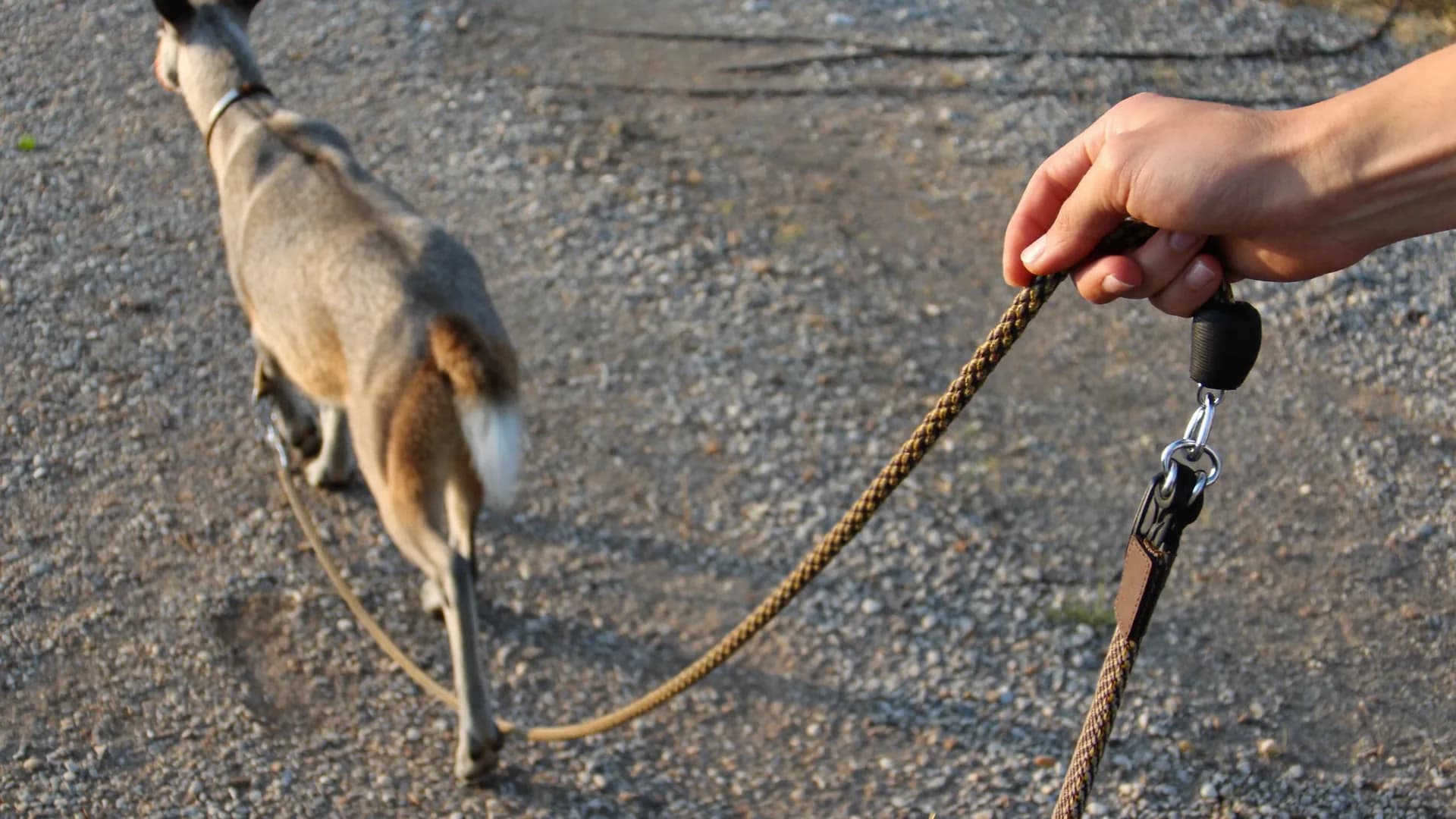
Loose-lead walking: why your dog pulls, and how to stop it
A dog pulls because pulling works — it gets where it wants to go — and because we accidentally reward it by following. Fixing it is less about strength than about changing what the lead teaches. Here is the method, and the kit that helps.
A dog pulls on the lead for a simple reason: it works. Every time a straining dog reaches the lamppost it wanted, the pulling paid off, and every step you take while the lead is tight teaches that leaning forward moves the walk along. The fix is not a stronger arm but a change in that lesson — making a tight lead achieve nothing and a loose one achieve everything.
Why pulling works
Dogs walk faster than we do and the world is thrilling, so a dog naturally forges ahead — and we, wanting to get on, follow. That following is the reward. Add equipment a dog can throw its weight against and you have trained the pull without meaning to. Understanding that it is learned, not stubbornness, is the start of unlearning it.
The core method: a tight lead stops the walk
The reliable technique is dull and effective: the moment the lead goes tight, stop, and move again only when it slackens; reward the dog for being at your side. Some trainers turn and walk the other way instead. Either way the dog learns that pulling ends progress while a loose lead continues it. Early walks are slow and stop-start; that is the training working, not failing.
Kit that helps — and what to avoid
A front-clip harness or a head halter reduces a dog's leverage and steers it gently, which makes the training easier without hurting the dog. Avoid choke and prong collars: they work through pain, risk injury to the neck, and can teach a dog to associate other dogs or people with that pain. The tool assists; the training does the actual work.
Set the dog up to succeed
Take the edge off first with some free running or play, start where there is little to pull towards, keep sessions short, and reward a loose lead generously at the beginning. A dog that is calm, in an easy setting, and paid well for walking nicely learns far faster than one dragged, over-excited, straight into a busy street.
Why does my dog pull on the lead?
Because it works — pulling gets the dog to what it wants, and we reward it by following. It is a learned habit, not defiance, and it is fixed by making a tight lead stop the walk and a loose one continue it.
How do I train my dog to stop pulling?
Stop moving whenever the lead tightens and move again only when it slackens, rewarding the dog at your side — or turn and change direction. Be consistent and start in low-distraction places; early walks will be slow and stop-start.
What is the best equipment to stop pulling?
A front-clip harness or a head halter reduces leverage gently and makes training easier. Avoid choke and prong collars, which work through pain, can injure the neck and create fear.
Are choke or prong collars a good idea?
No. They rely on pain, risk injuring the neck, and can teach a dog to associate the discomfort with whatever it sees at the time. Humane equipment plus training achieves loose-lead walking without those harms.
How long does it take to fix lead pulling?
It varies with the dog and your consistency, from a couple of weeks to a few months. Frequent short sessions, low-distraction settings and generous early rewards speed it up; inconsistency is what drags it out.