You have found somebody's pet: what to do, and what not to
Most animals found wandering are not strays at all, and what you do in the first hour largely decides whether one gets home. Here is how to tell a lost animal from a cat that lives outdoors, how to handle it safely, and the one step that does more than everything else combined.
Finding an animal on its own is a small emergency you did not ask for, and it comes with a genuine conflict: doing nothing feels negligent, and doing too much can turn a cat who was ten minutes from its own back door into a missing pet in somebody else's house. The good news is that the right sequence is short, and most of it costs nothing. The bad news is that the instinctive first move — scoop it up and take it home — is often the wrong one.
First, decide whether it is actually lost
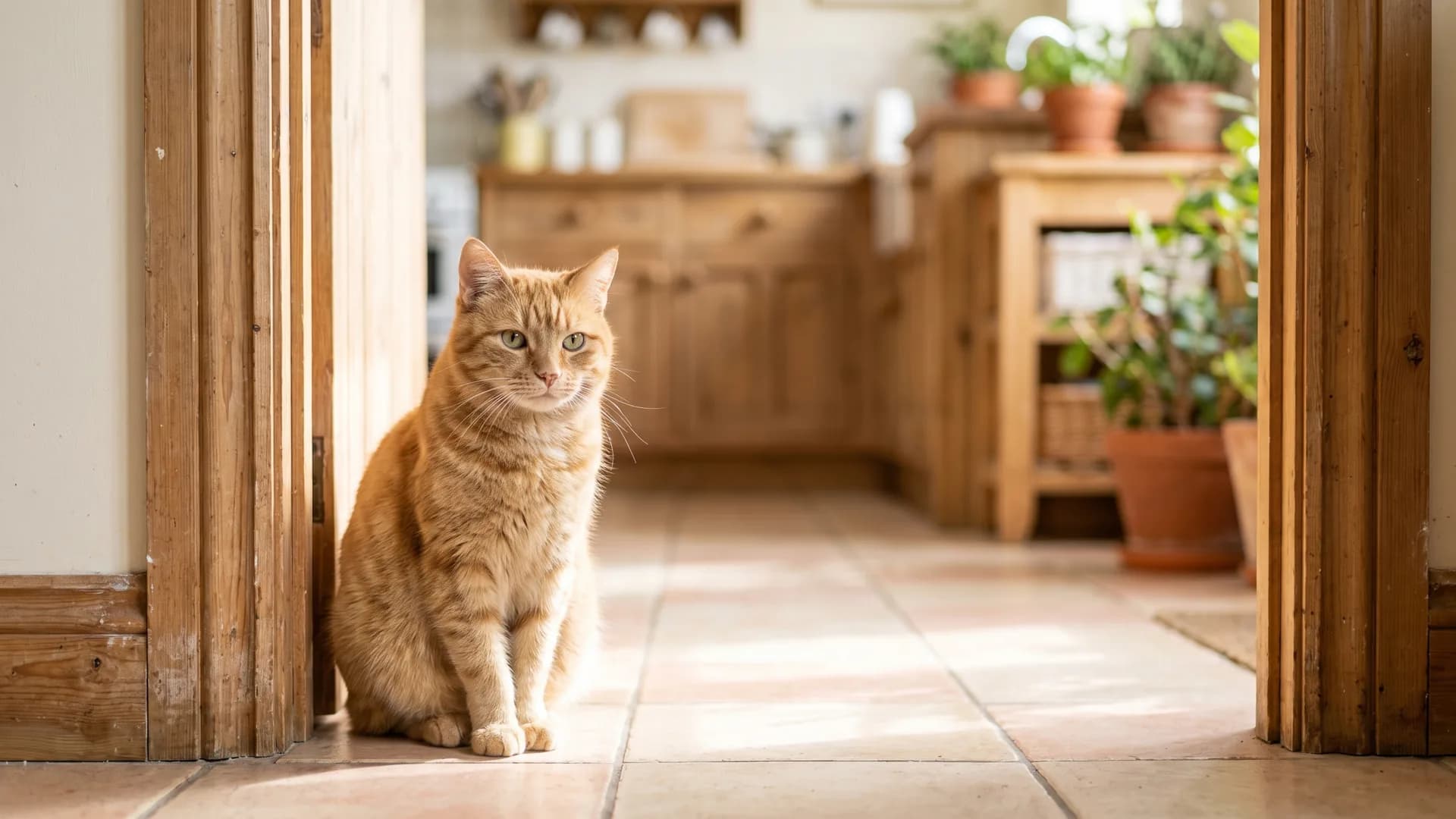
This matters far more with cats than with dogs. A very large share of cats reported as strays are owned animals with outdoor access, sitting in their own neighbourhood, being fed at home twice a day. They look thin because cats look thin. They are affectionate because they are friendly. And a cat taken in by a well-meaning stranger a street away is, from its family's side, a cat that vanished without trace.
So look before you act. A cat that is clean, unmatted, at ease with its surroundings and appears in the same spot at similar times is almost certainly local and fine. A cat that is filthy, matted, visibly underweight, injured, unsteady, or crying and following you is a different case. If you are unsure, the paper collar trick settles it: a strip of paper around the neck, loose, with a polite note asking whether the cat has a home and a way to reach you. Owners answer these, and it costs the cat nothing.
A dog is more clear-cut. A loose dog with a collar, in a suburb, in daylight, has usually been out for minutes rather than days, and a dog that is genuinely stray is rarer than people assume. Either way a dog on a road is in immediate danger in a way a cat generally is not, so with a dog the balance tips much sooner toward intervening.
Approach safely, and contain rather than chase
A frightened animal in an unfamiliar situation is not the animal its owner knows. Do not run at it, do not chase it, and do not corner it against a road — chasing is the single most common way a findable dog ends up two miles away and genuinely lost. Crouch side-on, avoid staring, and let it come to you; sitting down and ignoring an animal works far better than reaching for it. Food helps, but throw it rather than hold it out.
If you can contain it safely, do — a garden with the gate shut, a hallway, a car with you outside it — but assume it may bite even if it is friendly, because pain and fear make ordinary animals snap. Do not put your face near it, do not let children approach, and if the animal is injured or aggressive, call the local warden, shelter or police rather than handling it yourself. Reading what a dog is telling you and what a cat is telling you is worth more here than confidence.
Get it scanned — this is the step that does the work
Take the animal, or arrange for it to be taken, to be scanned for a microchip. Any vet practice will scan for free and without an appointment, and so will most shelters and wardens. This single act does more than all the posting and searching combined: a chip that is registered and current turns into a phone call within minutes. It is also why an animal you have contained should reach a scanner today rather than at the weekend — the chip is only useful if somebody runs it.
Be aware that a scan can come back with nothing useful in two ways: no chip at all, or a chip whose registration is out of date. The second is extremely common and is not a dead end — the practice or shelter can often still contact the database, and the breeder or original owner listed may know where the animal went. Ask them to try rather than assuming an unregistered chip means an unwanted animal.
Report it found, in the places the owner is looking
Somebody is very likely searching for this animal right now, and they are searching in a predictable set of places: the local shelters and rescues, the council warden, the nearby vets, and the neighbourhood and lost-pet groups online. Report the animal as found to all of them, which is the mirror image of what a person does when their own animal goes missing. Phone rather than assuming a form will be read.
When you post publicly, withhold one identifying detail — a marking, the collar colour, something on the tag — and ask anyone claiming the animal to describe it. This is not paranoia; animals are occasionally claimed by people who have no right to them, and one withheld detail is the cheapest verification there is. Meet in a public place or at a vet practice, never alone at your home, and do not hand an animal over to somebody who cannot describe it or produce any evidence of ownership.
What not to do
Do not simply keep it. Beyond the obvious, in many places there is a legal duty to report a found animal to the authority or shelter within a set period, and quietly rehoming somebody's pet — however well-meant — can be an offence as well as a cruelty to the family looking for it. Do not rehome it yourself in the first weeks. Do not give it any medication, including human painkillers. And do not assume an animal that looks neglected has been abandoned; illness, an escape during a family emergency and old age all look similar from outside.
Do not let it meet your own animals. A found animal has an unknown vaccination status and an unknown parasite load, and the kind thing for everybody is a separate room with its own bowls for the first days. That is also safer for the found animal, which is frightened and does not need to negotiate a resident dog on day one.
Looking after it in the meantime
Keep it quiet, warm and contained, with water always available and small amounts of plain food rather than a large meal — an animal that has not eaten for a while should not be given a full bowl. A cat wants somewhere to hide and will settle much faster with a box to get into than with attention. Keep children calm around it and give it a room where the door stays shut, both to prevent escape and because a second disappearance from your house is a much harder problem than the first. If anything about the animal worries you, a vet will look at a found animal and will usually not charge to check it over.
If nobody claims it
Holding periods before a found animal can be rehomed are set locally and vary a good deal, and they run from the point it is reported rather than from the point you found it — another reason to report early. If you would like to keep it, say so when you report it; in many places the finder is first in line if the holding period passes unclaimed. If you cannot keep it, a shelter is not a failure of yours: an animal in a shelter is visible to the people searching for it in a way an animal in your spare room is not. Either way, once it is settled somewhere, the usual questions about taking on an animal apply to you exactly as they would to anybody else.
I found a cat outside — is it a stray?
Probably not. A very large share of cats reported as strays are owned animals with outdoor access, in their own neighbourhood, fed at home. A clean, unmatted, relaxed cat that appears in the same place at similar times is almost certainly local. Use a loose paper collar with a note asking whether it has a home before you take it anywhere.
What is the most useful thing to do with a found animal?
Get it scanned for a microchip. Any vet will scan for free without an appointment, and so will most shelters and wardens. A registered, current chip becomes a phone call within minutes, and no amount of posting or searching matches it. Do it the same day rather than at the weekend.
How do I safely catch a loose dog?
Do not chase it — chasing is the commonest way a findable dog ends up genuinely lost. Crouch side-on, avoid eye contact, and let it come to you; sitting down and ignoring it works better than reaching for it. Throw food rather than offering it by hand, and contain it in a garden or hallway rather than grabbing at it. If it is injured or aggressive, call the warden or a shelter.
Can I keep an animal I found?
Not straight away, and often not lawfully. In many places there is a duty to report a found animal to a shelter or authority within a set period, and holding periods run from when it is reported. Say when you report it that you would like to keep it — in many places the finder is first in line if nobody claims it.
Someone says the animal is theirs — how do I check?
Withhold one identifying detail when you post publicly — a marking, the collar colour, something on the tag — and ask them to describe it. Meet at a vet practice or in a public place rather than at your home, and do not hand the animal over to somebody who cannot describe it or show any evidence of ownership.
Should I introduce a found animal to my own pets?
No. Its vaccination status and parasite load are unknown, so keep it in a separate room with its own bowls for the first days. It is also kinder to the found animal, which is frightened and does not need to negotiate a resident dog or cat on its first day.