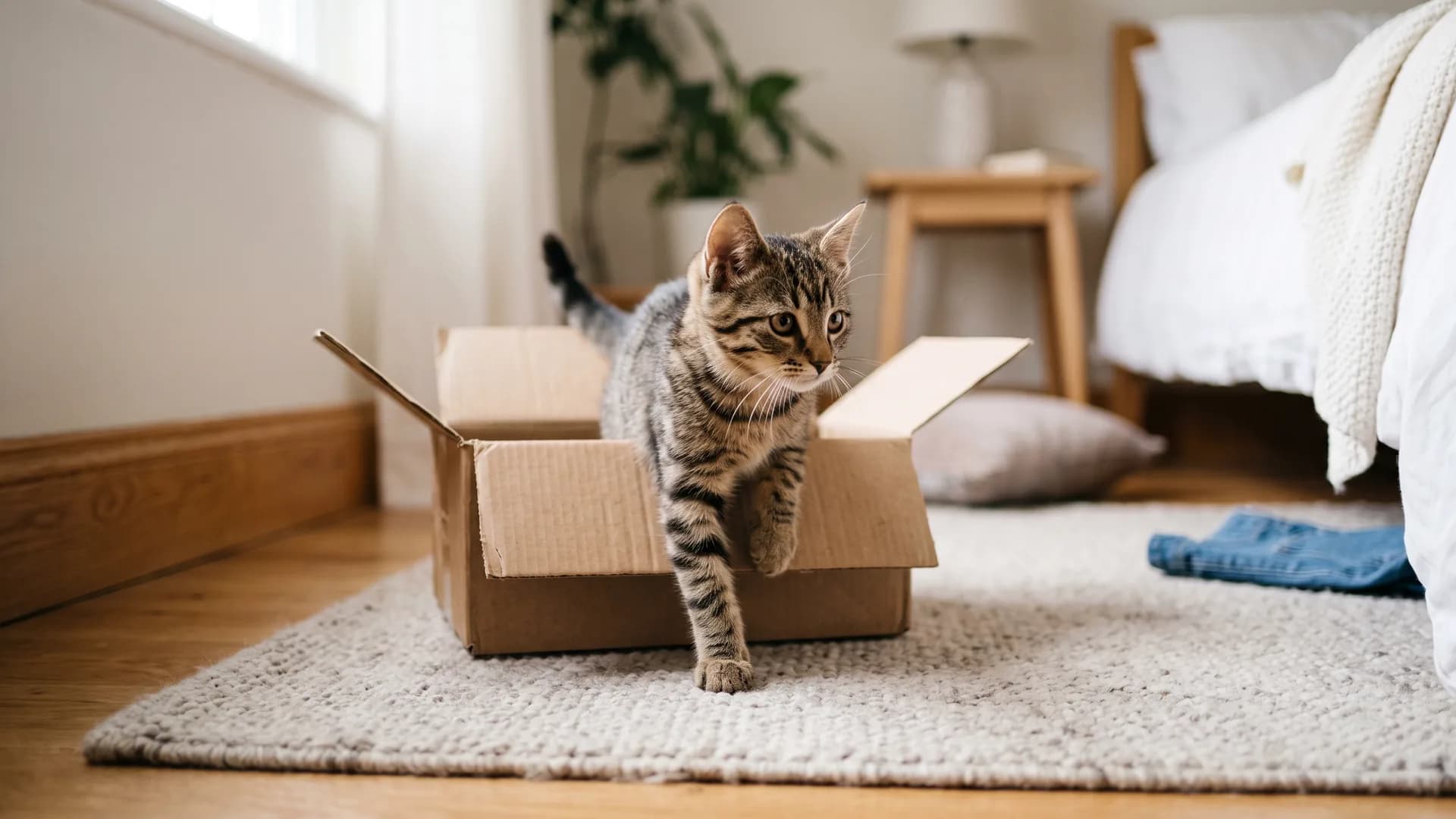
The first week with a new kitten: one room, then the house
A kitten does best when the world starts small. Give it one safe room, let it come to you, and open up the house only as its confidence grows — and the settling that could take weeks takes days.
A whole house is overwhelming to a kitten that has just left everything it knew. The single most useful thing you can do in the first week is to make its world small on purpose: one safe room to start, and the rest of the home earned as its confidence grows. Rushed, it hides for weeks; done gently, a kitten settles in days.
Set up one safe room
Choose a quiet room and put everything the kitten needs in it: food and water, a litter tray set well away from the food, a bed, a hiding spot, toys and a scratching post. Kitten-proof it as you would for a toddler that climbs — tuck away cords, block small gaps behind furniture, and remove houseplants that are toxic to pets. The room is a base, not a cage: it is where the kitten feels safe enough to be brave.
Let it come to you
Resist the urge to haul the kitten out from under the bed. Sit on the floor, talk quietly, and let it approach in its own time — a wand toy is often what draws a shy kitten out, because play builds trust faster than handling does. Keep early handling gentle and short, and let the kitten decide when the lap is safe. Confidence you wait for lasts; confidence you force does not.
Litter from the start
Show the kitten the tray, keep it clean and easy to reach, and site it away from the food and water — cats dislike eating next to their toilet as much as we would. Most kittens take to a tray almost immediately because the instinct is strong. If accidents happen, they are usually about the tray's location or cleanliness rather than defiance; litter-tray problems nearly always trace back to something the setup is getting wrong.
Expanding territory
Once the kitten is confident and playful in its room, open the rest of the house gradually and under supervision, letting it explore a little at a time with the safe room always available to retreat to. As the territory grows, add litter trays — the rule of thumb is one per cat plus one — and more than one place to eat and drink, so the kitten never has to cross the whole house for the basics.
Resident pets and children
Introduce a resident cat or dog slowly, scent first and through a door before any face-to-face meeting, so the introduction builds curiosity rather than a standoff. Teach children to sit still and let the kitten come to them rather than chasing or grabbing, and make sure the kitten always has an escape route and a high perch to watch from. A kitten that can get away is a kitten that stays brave.
Feeding a kitten, and keeping the room genuinely safe
A kitten has a tiny stomach and a fast metabolism, so it eats little and often — several small meals a day of a food made for kittens, which is richer than adult food for a reason. Keep it on whatever it was already eating for the first days and change gradually if you want to, because a new home and a new diet at once is what upsets a small stomach. Leave fresh water available, sited away from the food, and expect a kitten to graze rather than clear a bowl in one sitting.
Kitten-proofing goes further than it does for a puppy, because a kitten climbs, squeezes and investigates everything. Secure windows and any balcony — kittens misjudge heights and a fall is a real risk — and block the gaps behind and under furniture where a small cat can vanish or get stuck. Tuck away cords and hair ties, which are irresistible and dangerous to swallow, keep the toilet lid down, and get into the habit of checking before you close a washing machine, tumble dryer, drawer or reclining chair. A curious kitten will be in places you would never expect.
Play, scratching, and the bond that comes from both
Play is not optional for a kitten — it is how a hunter practises, burns energy and grows confident, and it is the fastest route to a bond with you. Use wand toys, balls and things that move, and never your hands or feet: a kitten taught to pounce on fingers becomes a cat that bites them, and by the time it is grown it is no longer cute. A few short play sessions a day settle a kitten far more than they wind it up, and a well-played kitten sleeps, which is what a growing one needs a great deal of.
Give the kitten a scratching post from the first day and put it where the kitten actually is, not hidden in a corner. Scratching is a need, not a habit to break — it conditions the claws and marks territory — so the choice is only whether it happens on a post or on your sofa, and a post offered early usually wins. Pair all of this with gentle, unforced handling, a steady daily rhythm, and an early vet visit for a health check and a plan for vaccines and neutering, and the kitten's first week lays the groundwork for a confident, friendly adult cat.
Should I keep a new kitten in one room at first?
Yes — it is the single most useful thing you can do. One safe room with food, water, litter, a bed and hiding spots lets a kitten build confidence without being overwhelmed, then you open the rest of the house gradually. Rushed into a whole home, a kitten tends to hide for far longer.
How do I get a shy kitten to come out?
Let it come to you. Sit quietly on the floor, keep your movements small, and use a wand toy — play draws a nervous kitten out faster than reaching for it does. Do not drag it from its hiding place; confidence you wait for lasts, and confidence you force sets you back.
How do I litter-train a kitten?
Show it the tray, keep the tray clean and easy to reach, and place it away from the food and water. Most kittens use it almost at once because the instinct is strong. Accidents usually mean the tray is in the wrong place, not clean enough, or hard to get to — not that the kitten is being difficult.
How do I introduce a kitten to my cat or dog?
Slowly and scent-first: keep them apart at the start, swap bedding so each learns the other's smell, and let them meet through a door before any face-to-face. Keep first meetings short and supervised, with escape routes for the kitten. A rushed introduction is what creates lasting conflict.
What do I need for a new kitten?
Food and bowls, a litter tray and litter, a bed and a hiding spot, a scratching post, and safe toys — set up in one quiet, kitten-proofed room to start. As the kitten expands into the house, add litter trays (one per cat plus one) and extra feeding and water spots.
When should a new kitten see a vet?
Early on, for a health check and a plan for vaccines, parasite treatment and neutering, and to catch anything a new kitten commonly carries. A calm first visit in the settling-in period also gets the kitten used to being handled and travelling in its carrier, which makes every later trip easier.