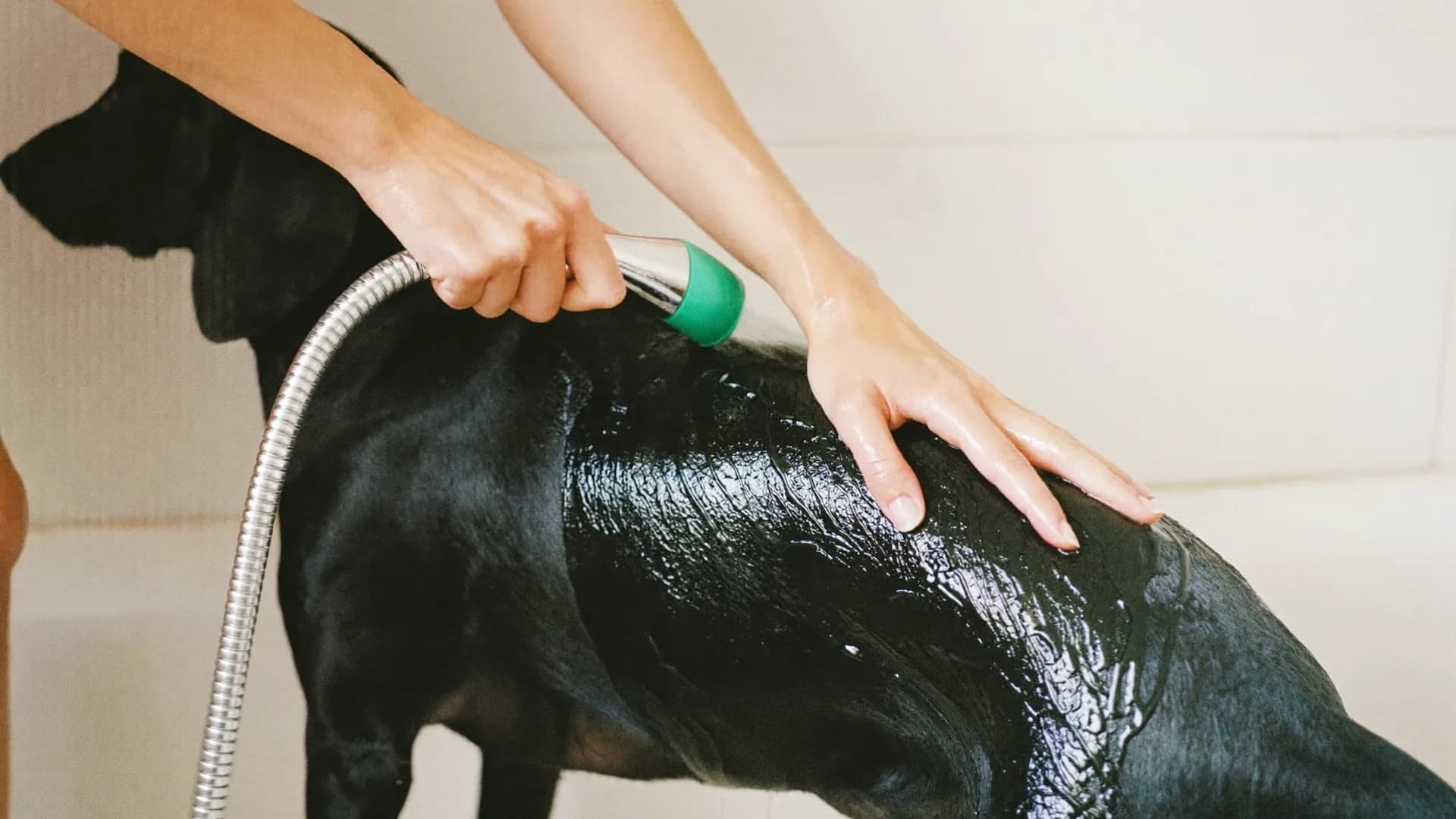
How often should you bathe a dog? It depends on the coat
Most dogs need bathing far less often than owners think, and over-washing strips the coat and dries the skin. The right frequency follows the coat type and the life the dog leads. Here is the guide, coat by coat.
Most dogs need a bath every few weeks to every few months, not every week — and washing too often does more harm than a bit of dog smell. The right rhythm depends on the coat the dog wears and the life it leads, so the honest answer is a range, not a number.
Why over-bathing backfires
A dog's skin and coat are kept in condition by natural oils, and frequent shampooing strips them out, leaving skin dry and itchy and a coat that looks worse rather than better. Unless a vet has prescribed a medicated wash for a skin condition, more baths are usually a step in the wrong direction.
There is a loop worth recognising here, because plenty of owners are stuck in it. Washing strips the oils, the skin dries and itches, the dog scratches and starts to smell, and the smell prompts another bath. Breaking it usually means bathing less rather than more, brushing more, and — if the itch persists on its own — having the skin looked at instead of washed again.
Match the frequency to the coat
The coat sets the pace. Short, smooth coats need bathing rarely and clean up easily between times. Thick double coats are managed mostly by brushing, with a bath around the heavy moults. Long, silky coats need more regular washing to stay free of tangles, and curly coats go on a routine of bathing and clipping together. Compare coat types across the catalogue with the coat filter on the breeds page.
A few coats come with their own rules. Wire-coated terriers lose their harsh texture if bathed often and are traditionally hand-stripped instead. Hairless breeds are the exception that genuinely does need frequent washing, because there is no coat to carry the skin's oils away and they build up. And a heavy double coat holds water: an under-dried dog can end up with damp skin under dense fur, which is a decent way to create a hot spot.
Between baths, the brush does the work
Brushing, not bathing, is the real coat care for most dogs. It lifts out dirt and loose hair, spreads those protective oils along the coat, and heads off the mats that a bath alone will not fix. A well-brushed dog needs the tub far less often than a neglected one.
Most of what people bathe for can be handled without a bath at all. Mud dries and brushes out, feet and undercarriage clean up with a damp cloth, and a mild smell usually comes from ears, mouth, skin folds or an anal gland rather than the coat at large — none of which shampoo fixes. Working out where a smell actually comes from is more useful than washing the whole dog on the assumption that it is general.
How to bathe a dog properly
Brush first, always: water turns loose tangles into tight ones, and a matted dog should be groomed out before it is ever washed. Use lukewarm water, wet the coat right through, and work the shampoo down to the skin rather than over the top of a dense coat. Keep it out of the eyes and ears, and rinse for longer than feels necessary — residue left in a coat is itchy in its own right and is a common reason a dog scratches after a bath.
Then dry properly. A double coat left damp near the skin invites trouble, so towel hard and use a dryer on a cool setting if the dog tolerates one. Keep the whole thing short and well paid: a bath is a handling exercise as much as a wash, and a puppy that learns the tub is boring and ends in cheese is a dog you can wash at ten without a wrestling match.
The shampoo aisle, briefly
Use a shampoo made for dogs rather than a human one, because canine skin sits at a different pH and human products dry and irritate it — and skip the baby shampoo shortcut for the same reason. Beyond that, plain and unscented beats elaborate: the fragrance is for you, and it is one of the more common irritants in the bottle. If a vet has prescribed a medicated wash, follow their schedule and contact time exactly, since those products work by sitting on the skin for a set number of minutes rather than by being lathered and rinsed straight off.
When to bathe regardless of the schedule
Some things override the calendar: a roll in something foul, a genuine skin condition your vet is treating, or a medicated shampoo prescribed on a set schedule. Outside those, let the coat and a sniff test decide, and reach for the brush before the shampoo.
A couple of overrides are urgent rather than cosmetic. A dog that has walked through anything caustic, oily or chemical needs washing straight away and a call to the vet, and one that has been in water with a blue-green algal bloom needs rinsing thoroughly and veterinary advice immediately, because that toxin can be swallowed off the coat during grooming. In those cases the question is not whether the coat can spare a wash.
Puppies, and old dogs
Puppies do not need much washing and mostly need the association built — short, warm, positive sessions with plenty of treats, at whatever age your vet is happy with, so the tub is a known quantity long before it is a necessity. At the other end, an old dog finds the bath harder than it looks: standing on a wet floor is a real demand on stiff joints, so use a non-slip mat, keep the session short, and dry thoroughly, since a damp older dog gets cold. The other things that shift with age covers what else changes at the same time.
How often should I bathe my dog?
For most dogs, every few weeks to every few months, depending on the coat and how dirty the dog gets. Washing weekly usually strips the coat's natural oils and dries the skin, so less is often more.
Is it bad to bathe a dog too often?
Yes. Frequent bathing removes the oils that keep skin and coat healthy, which can leave the skin dry and itchy. Unless a vet has prescribed a medicated wash, over-bathing tends to cause the very problems people bathe to fix.
How often should I bathe a double-coated dog?
Rarely — a double coat is maintained mainly by brushing, with a bath around the twice-yearly moult. Regular brushing does far more for the coat than the tub, and over-bathing can damage it.
Should I brush or bathe my dog?
Brush first and most. Brushing removes dirt and loose hair, spreads protective oils and prevents matting, and it keeps a dog clean between the occasional bath the coat actually needs.
Can I use human shampoo on my dog?
Better not — a dog's skin has a different pH, and human shampoo can irritate and dry it. Use a shampoo made for dogs, or the medicated one your vet recommends for a skin condition.
Why does my dog still smell after a bath?
Because the smell probably is not coming from the coat. Ears, teeth, skin folds and anal glands are the usual sources, and none of them is fixed by shampoo. Persistent odour after a wash is worth a vet's look rather than another bath.
How do I bathe a dog that hates it?
Break it into pieces the dog can manage — the empty tub and a treat, then a warm damp cloth, then a short wash — and keep the water lukewarm and the session brief. Non-slip footing matters more than most owners expect, since much of the fear is about sliding rather than the water.
Do I need to dry my dog after a bath?
Yes, properly — especially a thick double coat, which can stay damp against the skin long after the surface feels dry and is a good way to produce a hot spot. Towel firmly and use a cool dryer if the dog accepts one.