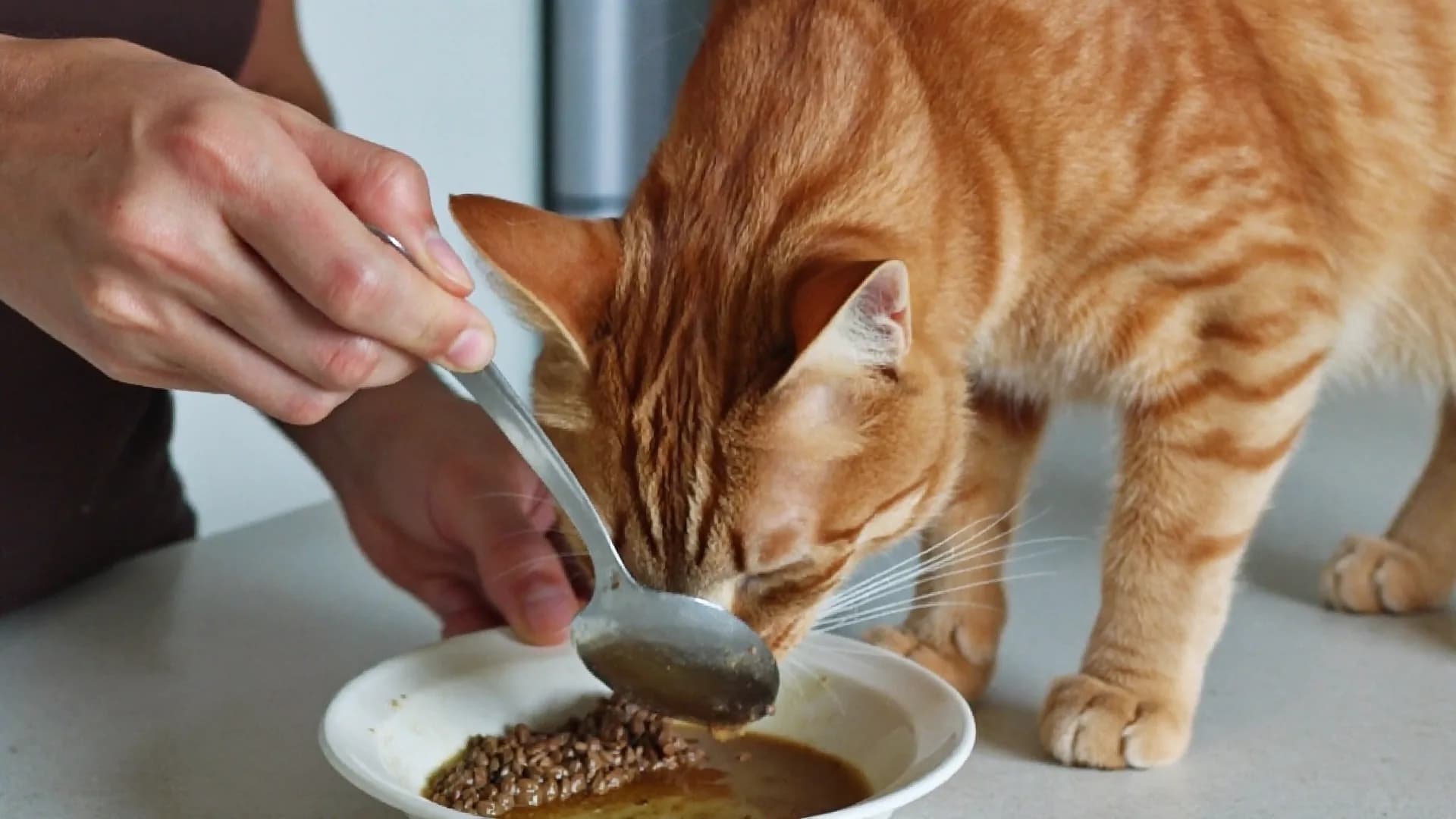
Nass- oder Trockenfutter für die Katze: worauf es wirklich ankommt
Der Streit Nass gegen Trocken wird meist auf dem falschen Feld geführt. Zwei Dinge zählen wirklich — Wasser und Kalorien — und die verbreitete Idee, Trockenfutter reinige die Zähne der Katze, ist größtenteils ein Mythos.
Fragen Sie zehn Katzenhalter, was besser ist, und Sie bekommen in beide Richtungen eine entschiedene Antwort, das meiste davon über Dinge, die kaum etwas ausmachen.
Reduziert man es auf das Wesentliche, hängt die Wahl an Wasser, an Kalorien und daran, wie das Futter angeboten wird — und eines der am häufigsten wiederholten Argumente für Trockenfutter ist schlicht nicht wahr.
Wasser ist das eigentliche Argument für Nassfutter
Der schwache Durst der Katze ist der ganze Grund, warum das zählt.
Die Hauskatze stammt von einem Wüstentier ab, das den größten Teil seines Wassers aus der Beute bezog, und sie ist schlecht darin, ein Defizit durch Trinken auszugleichen. Nassfutter besteht dem Gewicht nach zu etwa drei Vierteln bis vier Fünfteln aus Wasser; eine Katze, die es frisst, nimmt also weit mehr Flüssigkeit auf als eine, die Kekse knackt und am Napf nachfüllt.
Bei einer Katze mit Neigung zu Harnwegsproblemen oder mit Nierenerkrankung ist dieses zusätzliche Wasser das stärkste Argument, das überhaupt auf dem Tisch liegt, und der Grund, weshalb Tierärzte so oft empfehlen, eine solche Katze auf Nassfutter umzustellen. Bei einer gesunden Katze ist der Vorteil kleiner, aber es bleibt der einzige echte Vorteil, den eine der beiden Seiten hat.
Über die Größenordnung lohnt sich Genauigkeit. Eine Katze an Nassfutter nimmt den größten Teil ihres Tageswassers auf, ohne je einen Napf aufzusuchen; eine Katze an Trockenfutter muss alles davon dort finden, und viele trinken schlicht nicht genug, um die Lücke zu schließen. Deshalb zählen ein Trinkbrunnen und mehrere Näpfe im Haus in einem trocken fütternden Haushalt mehr als in einem nass fütternden — und deshalb sind die beiden Wege für eine Katze mit Harnwegsvorgeschichte nicht gleichwertig.
Der Zahn-Mythos
Das am häufigsten vorgebrachte Argument für Trockenfutter lautet, das Knacken reinige die Zähne. Größtenteils tut es das nicht.
Gewöhnliches Trockenfutter zerbricht beim ersten Kontakt, statt am Zahnfleischrand entlangzuschrubben, und der Plaque, der die Erkrankung verursacht, sitzt genau am Zahnfleischsaum, wo ein zersplitterter Keks nie hinkommt. Katzen an Trockenfutter bekommen Zahnerkrankungen in einer Häufigkeit, die die Behauptung schwer haltbar macht. Was wirkt, ist Zähneputzen, professionelle Zahnreinigung in Narkose und die speziellen Zahnpflegediäten und -sticks, deren Textur und Größe tatsächlich am Zahn entlangscheren — eine viel engere Kategorie als Trockenfutter im Allgemeinen.
Katzen bekommen außerdem ein Zahnproblem, das mit Plaque überhaupt nichts zu tun hat: die Zahnresorption, bei der der Zahn von außen nach innen aufgelöst wird. Sie ist schmerzhaft, sie ist häufig, und kein Futter irgendeiner Art verhütet sie. Das ist ein weiterer Grund, das Maul als etwas zu behandeln, das ein Tierarzt kontrolliert, und nicht als etwas, das die Ernährung erledigt.
Kalorien — und wie freie Fütterung still Gewicht zulegt
Trockenfutter ist energiedicht, hält sich den ganzen Tag im Napf und wird deshalb meist stehen gelassen — und genau diese Kombination macht sehr viele Katzen übergewichtig.
Es geht weniger um das Futter als um die Methode: ein Napf, der nachgefüllt wird, sobald er leer aussieht, hat überhaupt keine Portion, und eine Katze, die zwanzigmal am Tag nascht, frisst nach Appetit statt nach Bedarf.
Nassfutter hat bezogen auf seine Menge weniger Kalorien und wird schon seiner Natur nach portioniert, was die Disziplin herstellt, die ein voller Napf beseitigt. Wenn Sie trocken füttern, ist die Lösung nicht zwingend ein Wechsel: Wiegen Sie morgens die Tagesration ab und lassen Sie das das ganze Tagesfutter sein. Die Kalorienangabe auf der Packung macht das möglich, und das Etikett lesen erklärt, wo sie steht.
Das Naschen selbst ist nicht das Problem, und es passt dazu, wie Katzen zu fressen gelernt haben — eine wildlebende Katze nimmt viele kleine Mahlzeiten am Tag. Ärger macht das Naschen aus einem unabgemessenen Vorrat. Ein Zeitfutterautomat, mit der abgewogenen Tagesmenge bestückt, gibt einer Katze das Muster, das sie bevorzugt, und hält die Summe fest — meist die bessere Antwort, als einem Tier, das für zehn kleine Mahlzeiten gebaut ist, zwei große aufzuzwingen.
Die beiden fair vergleichen
Fast jeder Vergleich von Protein oder Fett zwischen Dose und Tüte ist falsch, weil die Dose überwiegend Wasser ist.
Um sie zu vergleichen, muss man das Wasser auf dem Papier herausrechnen: die Feuchte von 100 abziehen, den Nährstoff durch den Rest teilen, mal 100. Richtig gerechnet sind viele Nassfutter proteinreicher und kohlenhydratärmer als das Trockenfutter, mit dem sie verglichen werden — das Gegenteil des Eindrucks, den die gedruckten Prozente machen.
Dieselbe Korrektur gilt für den Preis. Kosten je Kilogramm schmeicheln Trockenfutter enorm, weil Sie in der Dose Wasser mitkaufen und in der Tüte nicht. Kosten je Fütterungstag sind der ehrliche Vergleich, und Trockenfutter gewinnt ihn meist noch — nur mit kleinerem Abstand, als der Regalpreis vermuten lässt.
Was tatsächlich zur Katze passt
Die Vorliebe für eine Textur entsteht früh.
Ein Kätzchen, das mit einer Form aufwächst, verweigert die andere als erwachsene Katze häufig — ein Argument dafür, beides anzubieten, solange die Katze jung ist, statt mit zehn festzustellen, dass sie kein Nassfutter frisst, wenn ihre Nieren es brauchen. Eine erwachsene Katze, die nur Trockenfutter kennt, lässt sich meist noch umstellen, langsam und mit Geduld, aber es ist Arbeit, die man lieber vorher erledigt hätte.
Den Rest entscheiden die persönlichen Umstände. Eine Katze, die abnehmen soll, fährt mit abgemessenen Nassmahlzeiten besser. Eine Katze, die den ganzen Tag allein ist, braucht Futter, das hält, oder einen Zeitfutterautomaten. Eine Katze mit wundem Maul frisst Nassfutter leichter. Eine Katze auf Medikamenten nimmt sie oft eher in etwas Weichem. Und ein Mehrkatzenhaushalt, in dem eine übergewichtig ist und eine nicht, braucht getrennte Fütterung mehr als ein anderes Futter.
Das Alter verschiebt es ebenfalls. Eine alte Katze, die abnimmt, oder eine mit verringertem Appetit, lässt sich oft leichter mit leicht erwärmtem Nassfutter locken, und das zusätzliche Wasser tut Nieren gut, die mehr arbeiten als früher. Eine junge, schlanke, aktive Katze ohne Vorgeschichte ist der eine Fall, in dem die Wahl wirklich kaum etwas ausmacht, und da ist Bequemlichkeit ein legitimer Stichentscheid.
Praktische Mittelwege
Viele Halter landen bei einer Mischung, und das ist eine vernünftige Antwort und keine Verlegenheitslösung: ein- oder zweimal täglich Nassfutter für das Wasser und die Portionierung, dazu eine abgewogene Menge Trockenfutter für Bequemlichkeit und Kosten. Rechnen Sie beides in dieselbe Tagesmenge, sonst wird aus der Mischung schlicht zweimal Abendessen.
Stehen gelassenes Nassfutter verdirbt, bei Wärme schneller: Legen Sie hin, was gefressen wird, und nehmen Sie weg, was übrig bleibt. Trockenfutter wird nach dem Öffnen schal und ranzig — bewahren Sie die verschlossene Tüte in einem Behälter auf, statt es lose hineinzuschütten, denn die Tüte ist die Feuchtigkeitssperre und der Behälter meist nicht. Wie auch immer Sie sich entscheiden: Wechseln Sie das Futter schrittweise; Katzen sind bei Futter neophober als Hunde, und ein plötzlicher Wechsel macht aus einer mäkeligen Katze eine, die gar nicht mehr frisst.
Ein paar kleine Handgriffe lassen beide Formen besser funktionieren. Füttern Sie aus einer breiten, flachen Schale, damit die Schnurrhaare nicht gegen die Ränder drücken. Halten Sie den Napf von der Katzentoilette fern und, im Mehrkatzenhaushalt, vom Napf der anderen Katze. Erwärmen Sie Nassfutter auf etwa Zimmertemperatur, statt es direkt aus dem Kühlschrank zu servieren, denn kaltes Futter riecht fast nach nichts, und der Geruch ist das meiste, was eine Katze beurteilt. Und spülen Sie die Näpfe täglich, was bei Nassfutter mehr zählt, als die Leute annehmen.
Was sich hiermit nicht klären lässt
Es gibt keinen Beleg, dass eine der beiden Formen für jede Katze besser ist, und wer etwas anderes behauptet, argumentiert an den Daten vorbei.
Gut belegt ist Engeres: Katzen nehmen schlecht Flüssigkeit auf, Flüssigkeit zählt für Harnwege und Nieren, Trockenfutter lässt sich leichter überfüttern, und Trockenfutter reinigt keine Zähne. Alles danach hängt vom Tier vor Ihnen ab — und wenn dieses Tier ein Gewichtsproblem, eine Harnwegsvorgeschichte oder eine Nierenerkrankung hat, ist das eine Entscheidung, die man mit dem Tierarzt trifft und nicht aus einem Artikel. Eine Katze, die länger als einen Tag nicht frisst, ist ein eigener und dringender Fall, behandelt in wenn eine Katze nicht mehr frisst.
Ist Nass- oder Trockenfutter besser für Katzen?
Für jede Katze gewinnt keines von beiden. Nassfutter hilft bei der Flüssigkeitsaufnahme, was für eine Art, die schlecht trinkt, viel bedeutet, und es kommt portioniert; Trockenfutter ist günstiger und bequemer, aber leichter überzufüttern. Viele Katzen fahren mit einer Mischung gut, und eine Katze mit Gewichts-, Harnwegs- oder Nierenproblem entscheidet man mit dem Tierarzt.
Reinigt Trockenfutter die Zähne einer Katze?
Größtenteils nicht. Die meisten Trockenfutter zerbrechen beim ersten Kontakt, statt am Zahnfleischrand zu schrubben, und tun wenig gegen den Plaque, der die Erkrankung verursacht. Was wirkt, sind Zähneputzen, professionelle Reinigung und die speziellen Zahnpflegediäten und -sticks, die am Zahn entlangscheren — nicht Trockenfutter allgemein.
Warum ist Flüssigkeit für Katzen so wichtig?
Die Hauskatze stammt von einem Wüstentier ab, das den größten Teil seines Wassers aus der Beute bezog, und sie ist schlecht darin, ein Defizit durch Trinken auszugleichen. Geringe Wasseraufnahme belastet Harnwege und Nieren, und Nassfutter liefert das Wasser mit der Mahlzeit, was das Problem umgeht.
Ist es schlecht, wenn eine Katze den ganzen Tag nascht?
Das Naschen ist nicht das Problem — viele kleine Mahlzeiten sind die Art, wie Katzen zu fressen gelernt haben. Das Problem ist das Naschen aus einem unabgemessenen Vorrat. Ein Zeitfutterautomat mit der abgewogenen Tagesmenge gibt der Katze das Muster, das sie bevorzugt, und hält die Summe fest.
Wie vergleiche ich Protein in Nass- und Trockenfutter?
Rechnen Sie beides auf Trockenmasse um, denn die Dose ist überwiegend Wasser. Die Feuchte von 100 abziehen, den Nährstoff durch den Rest teilen, mal 100. So gerechnet sind viele Nassfutter proteinreicher als das Trockenfutter, mit dem sie verglichen werden — das Gegenteil dessen, was die gedruckten Prozente andeuten.
Ist Trockenfutter günstiger als Nassfutter?
Meist ja, aber weniger deutlich, als der Regalpreis nahelegt, weil Kosten je Kilogramm die Aufmerksamkeit auf Wasser lenken, das Sie in der Tüte nicht kaufen. Vergleichen Sie Kosten je Fütterungstag über die Kalorienangabe beider Packungen — das ist die einzige faire Grundlage.
Kann ich meiner Katze Nass- und Trockenfutter geben?
Ja, und viele Halter tun es. Ein- oder zweimal täglich nass für das Wasser und die Portionierung, dazu eine abgewogene Menge trocken für die Bequemlichkeit — aber rechnen Sie beides in eine Tagesmenge, sonst wird die Mischung zweimal Abendessen und die Katze nimmt zu.
Kommt es darauf an, wie ich das Futter anbiete?
Mehr, als man denkt. Nehmen Sie eine breite, flache Schale, damit die Schnurrhaare nicht gegen die Ränder drücken, halten Sie sie von der Katzentoilette und vom Napf einer anderen Katze fern, und erwärmen Sie Nassfutter auf Zimmertemperatur, statt es aus dem Kühlschrank zu servieren — kaltes Futter riecht fast nach nichts, und der Geruch ist das meiste, was eine Katze beurteilt.
Meine Katze frisst nur Trockenfutter. Kann ich das ändern?
Meist ja, langsam. Die Texturvorliebe entsteht im Kätzchenalter, eine trocken aufgewachsene Katze verweigert Nassfutter also zunächst; kleine Mengen neben dem gewohnten Futter, leicht erwärmt, damit der Geruch steigt, stellen die meisten Katzen über Wochen um. Vor dem Bedarf ist das weit leichter als danach.