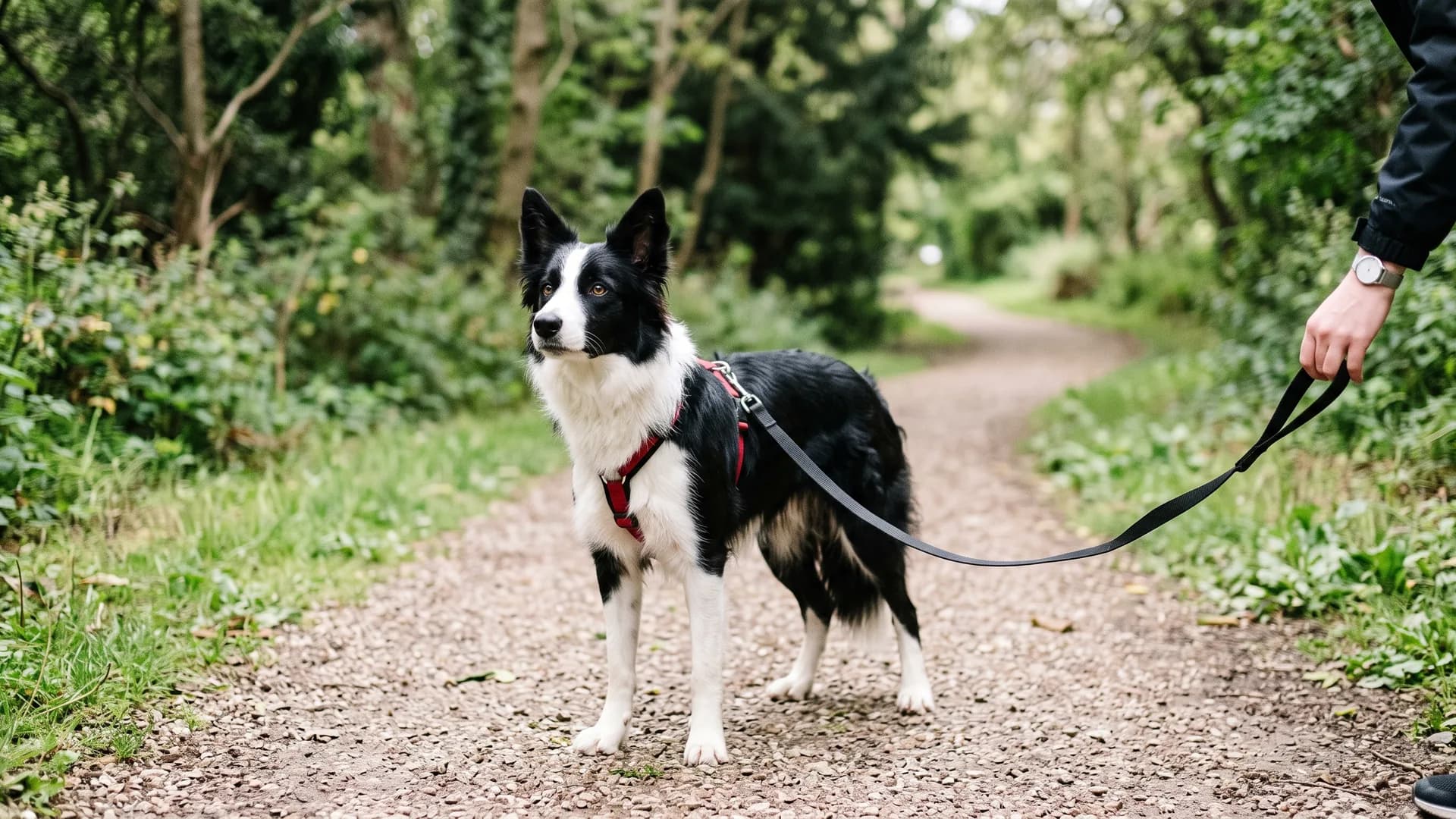
Leash reactivity: the dog that lunges and barks at other dogs
A dog that explodes at other dogs on the lead is usually not being dominant or bad — it is afraid or frustrated and stuck on a rope with no way to escape. The fix is distance, calm exposure and changing how the trigger feels, not correction.
It is one of the most miserable experiences a dog owner has: a walk that turns, the moment another dog appears, into a snarling, lunging, barking scene at the end of the lead. It is easy to read as aggression or bad manners, and easy to feel judged for. But most leash reactivity is neither dominance nor a badly behaved dog — it is a frightened or frustrated one, trapped on a lead with no option to move away, and the handling that helps is almost the opposite of the correction people reach for.
Why it happens
A loose dog that meets another dog it is unsure about has choices: approach, sniff, move away, leave. A dog on a lead has none of those — it cannot create distance, so the only tools left are the loud ones. Some dogs are afraid and go on the offensive because they cannot flee; some are the opposite, desperate to greet and frustrated by the rope that stops them; and in both cases the behaviour gets practised and paid off, because barking usually does make the other dog go past and disappear. The dog learns that the scene works, and repeats it.
Threshold is the whole idea
The single most useful concept is threshold — the distance at which your dog notices another dog but can still think, take a treat and stay under control. Closer than that and the dog tips over into the reaction, where no learning happens and the habit is simply rehearsed. Further away, the dog is aware but coping, and that is the only place progress is made. Every training session, every walk, is about keeping your dog under its threshold, which usually means much more distance than owners expect at first.
Change how the trigger feels
You cannot reason a dog out of fear, but you can change what the trigger predicts. Working under threshold, the appearance of another dog is followed, every time, by something wonderful — a stream of chicken, the good treats saved only for this. Done consistently, the dog stops seeing another dog as a threat and starts seeing it as the thing that makes food rain down, and the underlying emotion shifts from dread to something closer to hope. This is slow and unglamorous and it is what actually works, far more than any attempt to correct the outburst. It leans on the same how dogs learn principles as any other training.
Manage walks so you are not rehearsing it
While the retraining is underway, your job is to stop the blow-ups happening at all, because each one sets you back. Walk at quiet times and on open routes where you can see trouble coming, cross the road, arc around other dogs rather than passing head-on, and be ready to turn and walk the other way. A tight, narrow path with a dog coming the other way is the worst case; give yourself room to keep the distance you need. A week of calm, under-threshold walks does more than a month of daily explosions.
Equipment and handling
Gear matters less than distance but still matters. A well-fitted harness and a loose lead let the dog move without added pressure; a tight lead transmits your tension straight down it, and a dog already braced for a fight reads that instantly. Avoid choke chains and prong collars for a reactive dog in particular: they add pain at the exact moment the other dog appears, which for a fear-based reactor pairs the trigger with hurt and can make the whole thing worse. Keep your own voice light and your body relaxed, and resist the instinct to shorten the lead and brace, which announces to the dog that there is something to brace for. The calm-lead skills overlap with loose-lead walking.
What not to do
Do not punish the reaction. Yelling, jerking the lead or otherwise adding something unpleasant when the other dog is in view teaches the dog that other dogs make bad things happen — the precise association you are trying to undo. Do not force greetings in the hope the dogs will "sort it out"; a scared dog dragged into a nose-to-nose meeting learns that you cannot be trusted to keep it safe. And do not flood the dog with triggers to desensitise it faster — over-threshold exposure is rehearsal, not therapy. Reading your dog's body language tells you when it is coping and when it is over the edge.
When to get help
Reactivity that is entrenched, escalating or aimed at people is worth a qualified, force-free behaviourist, who can build and coach a plan for your specific dog. It is also worth a vet check, because pain makes dogs more reactive — a dog that hurts has a shorter fuse — and an undiagnosed sore hip or bad teeth can be part of the picture. Getting help is not failure; reactivity is a common, treatable problem, and a good behaviourist shortens a long road.
Why does my dog bark and lunge at other dogs on the lead?
Usually because the lead removes its ability to create distance, so a dog that is afraid or frustrated is left with only the loud options. The behaviour gets reinforced because barking tends to make the other dog pass and disappear. It is far more often fear or frustration than aggression or dominance.
What does 'under threshold' mean?
It is the distance at which your dog can see another dog but still stay calm enough to think, take a treat and respond to you. Closer than that, the dog tips into the reaction and no learning happens. All the useful training is done under threshold, which usually means more distance than owners first expect.
Should I let my reactive dog say hello to other dogs?
Not by dragging it into a face-to-face meeting. A frightened dog forced to greet learns it cannot rely on you to keep it safe, which makes reactivity worse. Work under threshold and let calm distance, not forced contact, be the goal; some reactive dogs never enjoy greetings and do not need to.
Is my dog aggressive or just reactive?
Most leash reactivity is fear or frustration rather than true aggression — the dog wants distance or wants to greet and cannot, and the lead traps it. The behaviour can look ferocious without the dog intending harm. Either way the approach is the same, and a behaviourist can assess a dog you are unsure about.
Does punishing leash reactivity help?
No — it usually makes it worse. Adding something unpleasant when the other dog appears teaches the dog that other dogs bring bad things, which strengthens the fear you are trying to reduce. Changing what the trigger predicts, from bad to good, is what actually shifts the behaviour.
How long does it take to fix leash reactivity?
Weeks to many months, depending on the dog and how consistent you can be. The key is avoiding over-threshold blow-ups, because each one sets you back, and steadily pairing the trigger with good things. It is slow work with real setbacks, and a force-free behaviourist can speed it up.
Can a leash-reactive dog be cured completely?
Many improve to the point where walks are calm and manageable, and some lose the reactivity entirely, but for others it becomes a well-managed rather than a vanished problem — a dog that copes at a distance it once could not. Either is a good outcome. Consistency, avoiding over-threshold rehearsals and, where needed, a force-free behaviourist decide how far a given dog gets.