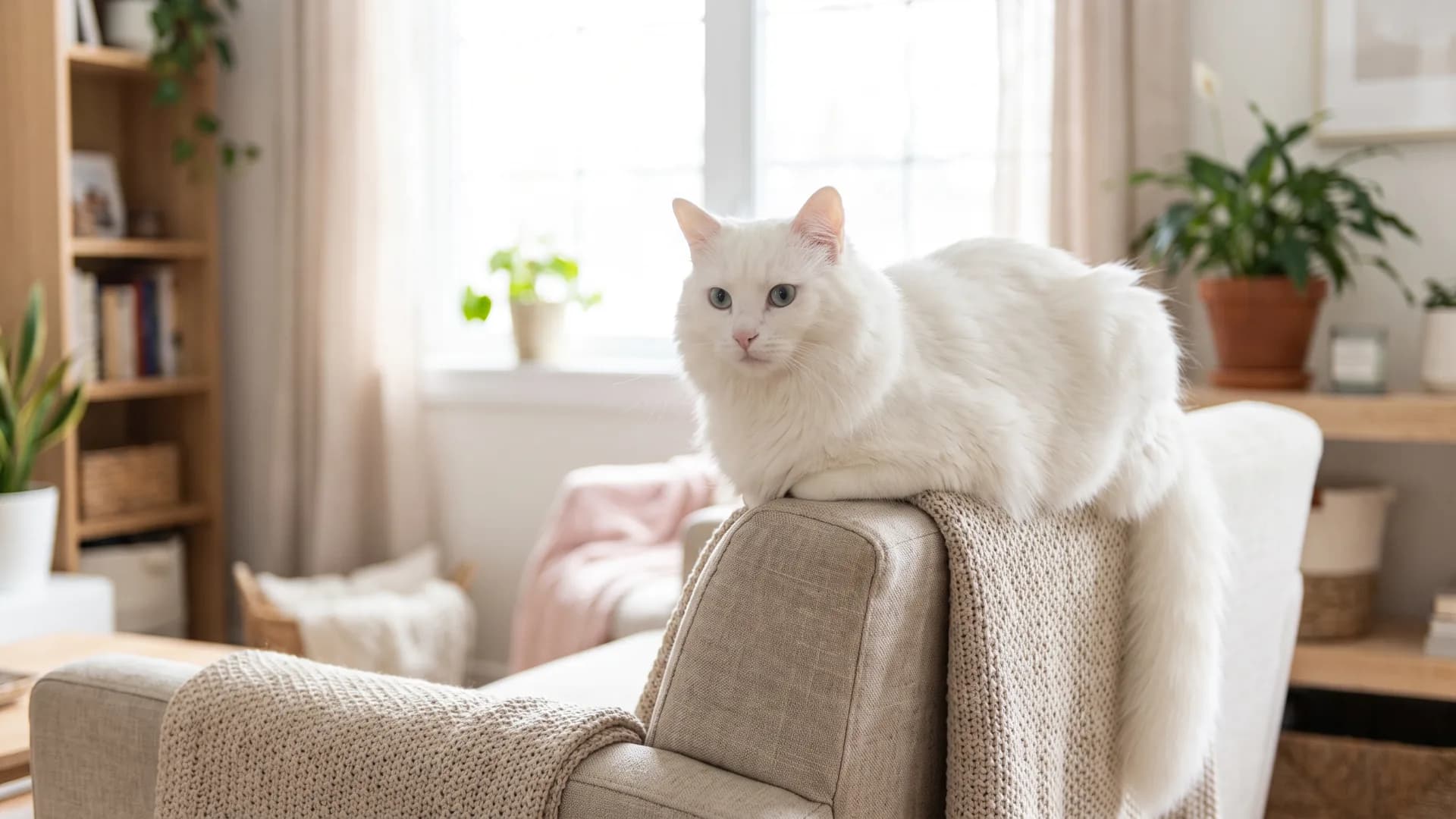
Pourquoi votre chat vous mord quand vous le caressez
Un chat qui réclame une caresse puis plante ses dents n'est pas versatile. La plupart des morsures de caresse arrivent précédées d'un avertissement qu'on peut apprendre à lire, et le remède consiste d'ordinaire à s'arrêter plus tôt, non à s'arrêter tout court.
C'est l'une des choses les plus déroutantes que font les chats : s'installer sur des genoux, savourer quelques minutes de caresses, puis pivoter et mordre la main qui caressait.
Cela ressemble à une trahison et ce n'en est pas une. Dans la plupart des cas, c'est un chat à bout de patience d'être touché, et qui l'avait déjà dit deux fois.
Pourquoi l'agréable devient irritant
La caresse stimule encore et encore la même zone de peau, et quantité de chats ont un plafond assez bas pour cela.
Au-delà du plafond, la sensation cesse d'être agréable et devient une démangeaison qui ne s'arrête pas, et le chat emploie le moyen brut dont il dispose. Les comportementalistes parlent d'agression par surstimulation ; du côté du chat, cela ressemble davantage à éteindre une radio devenue trop forte.
Autant le dire franchement : ce n'est pas un chat méchant, ni ingrat, ni un chat qui ne vous aime pas. Les chats varient énormément dans la quantité de manipulation qu'ils apprécient, surtout selon le tempérament et selon ce qu'ils ont vécu chaton, et ceux à la mèche courte ne sont pas défectueux. Ce sont simplement des chats dont il faut apprendre la limite.
L'avertissement qu'il donne d'abord
La morsure a presque toujours un préambule, et le lire constitue l'essentiel de la solution.
Une queue qui se met à battre ou à frapper. Une onde de peau qui parcourt le dos. Des oreilles qui pivotent vers l'arrière ou s'aplatissent. Un corps qui se raidit sous votre main. Un ronronnement qui s'arrête. Des pupilles qui s'élargissent. Des moustaches poussées en avant. Une tête qui se tourne délibérément vers votre main, ou une patte qui remonte pour la retenir.
Un seul de ces signes suffit. Mettez fin à la caresse au premier et la morsure disparaît pour l'essentiel, parce que le chat apprend que les petits signaux fonctionnent — et un chat dont les signaux fonctionnent n'a pas besoin du grand.
La plupart des chats qui mordent les mains ont simplement appris que rien en deçà des dents n'obtient de réponse. C'est une leçon que nous leur avons enseignée, et l'un des rares problèmes de comportement qui se règle entièrement en changeant ce que fait l'humain.
Le test du consentement
Il existe un moyen simple de cesser de deviner. Caressez deux fois, puis retirez la main et attendez.
Un chat qui en veut davantage poussera sa tête dans votre main, s'appuiera, donnera un coup de tête ou se rapprochera. Un chat qui a eu son compte restera immobile, regardera ailleurs, ou se mettra à se toiletter. Respectez ensuite la réponse.
Faites cela systématiquement et deux choses changent. Vous cessez de franchir la ligne, et le chat — qui dispose désormais d'un moyen fiable de demander — se met à réclamer au lieu d'endurer.
C'est l'habitude la plus utile pour un chat qui mord les mains, et elle ne demande aucun apprentissage de sa part. La plupart des gens s'étonnent du nombre de fois où la réponse est non, et de voir combien le chat devient affectueux dès lors que ce non est respecté.
Où les chats aiment réellement être touchés
La face et la base des oreilles sont les endroits où les chats déposent leur odeur, et la plupart apprécient d'y être caressés : joues, menton, sommet du crâne, le long de la mâchoire. Le cou et les épaules passent en général très bien. Le dos est toléré par beaucoup.
Le ventre, les pattes et la base de la queue sont les zones que la plupart des chats se contentent de supporter, et le ventre en particulier est l'endroit où un chat détendu qui se roule sur le dos affiche sa confiance plutôt qu'il ne réclame une caresse — distinction apprise à la dure dans quantité de foyers.
La base de la queue mérite un avertissement à part, parce que c'est elle qui produit la réaction la plus déroutante. Certains chats s'activent intensément quand on les y caresse, s'arquant et piétinant, puis mordent — et le propriétaire conclut raisonnablement que le chat aimait cela jusqu'à ce qu'il n'aime plus. Il aimait. C'est précisément le problème : c'est plus de stimulation que le chat ne peut réguler.
Toutes les morsures ne sont pas celle-ci
Quatre choses différentes portent le même nom, et le remède dépend de laquelle vous avez.
La surstimulation se produit pendant un contact consenti, suit des signaux d'avertissement, et cesse quand vous cessez. C'est le sujet de cet article.
L'agression de jeu, c'est un chat, jeune en général, qui embusque les chevilles et attrape les mains, pupilles dilatées et arrière-train frétillant. C'est un jeu de chasse qui réclame un exutoire — cannes à pêche à plumes, deux séances de jeu par jour jusqu'à une vraie fatigue — et les mains ne doivent jamais servir de jouet. Un chaton à qui l'on a appris que les doigts sont une proie devient un adulte qui mord pour s'amuser, ce qui est bien plus dur à désapprendre.
La morsure de peur ou de défense s'accompagne d'un corps accroupi, d'oreilles plates et écartées, d'une queue rentrée et d'un chat qui partirait s'il le pouvait. La réponse est la distance et une issue, non l'insistance.
La douleur. Un chat qui s'est mis récemment à refuser qu'on le touche là où cela n'a jamais posé problème est un chat à faire examiner et non un chat qui a changé de caractère. Arthrose, maladie dentaire, otite, plaie sous le poil et affections cutanées rendent toutes la manipulation douloureuse. Un début soudain est la raison la plus nette de consulter plutôt que de chercher une solution éducative.
La morsure d'amour, qui est une cinquième chose
À isoler, parce qu'elle inquiète inutilement. Certains chats donnent un mordillement doux et délibéré — souvent à une main ou un avant-bras, parfois en ronronnant et en pétrissant — qui n'entame pas la peau et n'est précédé d'aucun avertissement.
C'est social plutôt que défensif, plus proche du mordillement de toilettage que les chats se font entre eux, et cela veut d'ordinaire dire que le chat est parfaitement détendu. Ce qui trahit, c'est la pression et le contexte : une morsure d'amour est douce et arrive au milieu du contentement, là où une morsure de surstimulation est sèche et arrive au terme d'une montée.
Cela n'a pas besoin d'être corrigé. Si vous préférez que cela cesse, mettez simplement fin au contact quand cela arrive — calmement, sans réaction — et la plupart des chats abandonnent en quelques semaines.
Que faire sur l'instant, et ce qu'il ne faut jamais faire
Si les dents se plantent, immobilisez-vous au lieu de retirer la main d'un coup — une main arrachée déclenche le réflexe d'agrippement et déchire plus de peau qu'une main tenue immobile.
Attendez le relâchement, puis levez-vous et mettez fin à l'échange en silence. Pas de cris, pas de tape sur le nez, pas de prise par la peau du cou.
La punition n'enseigne pas à un chat à tolérer le contact ; elle lui enseigne que les mains sont imprévisibles, ce qui produit un chat qui mord plus tôt et avec moins d'avertissement. C'est la seule réponse qui aggrave le problème de façon fiable, et c'est celle vers laquelle on tend la main en premier.
Les morsures de chat méritent le respect sur le plan médical : ce sont des plaies punctiformes qui referment la saleté dessous, elles s'infectent volontiers, et une morsure profonde — à la main surtout — vaut l'avis d'un médecin plutôt qu'un pansement.
Construire la tolérance, lentement
Si vous voulez un chat qui apprécie des contacts plus longs, le chemin passe par des séances courtes qui se terminent toujours avant la limite, associées à quelque chose que le chat apprécie.
Deux caresses, une friandise, stop. Puis trois. Le nombre monte sur des semaines parce que le chat est détendu et non parce qu'il endure davantage, et il monte le plus vite chez les chats qu'on ne pousse jamais au-delà de la ligne.
L'endroit compte autant que la durée. Partir des joues vers l'extérieur — l'endroit que presque tous les chats apprécient — mène plus loin que commencer par le dos en espérant. Et mettre fin vous-même à la séance, pendant que le chat en veut encore, est ce qui transforme le contact en quelque chose qu'il attend avec plaisir.
Les enfants, et la règle du foyer
Dans une famille, la plupart des mains mordues appartiennent à un enfant, parce que les enfants caressent vite, longtemps, et vers la queue.
La règle qui fonctionne tient en peu de mots : court, doux, moitié avant seulement, et on s'arrête quand le chat cesse de demander — plus l'interdiction de suivre un chat qui s'est éloigné.
Un chat disposant d'une issue fiable mord bien moins qu'un chat qui a appris qu'il devait se la fabriquer. Cela veut dire une hauteur hors de portée de l'enfant, et un accord selon lequel un chat sous un lit ou sur une armoire est intouchable.
Quand il faut plus que de la patience
Consultez un vétérinaire pour toute morsure nouvelle, qui s'aggrave, ou accompagnée de cachettes, d'un changement d'appétit ou d'une réticence à sauter.
Une fois la douleur écartée, un comportementaliste félin vaut la peine pour une agressivité sévère ou imprévisible, et le passage par votre vétérinaire est la voie sûre.
Lisez les signaux, gardez les séances courtes et laissez le chat décider de leur fin — cela seul résout la grande majorité de ces cas, en général en quinze jours et sans que le chat ait rien à apprendre.
Pourquoi mon chat me mord-il quand je le caresse ?
D'ordinaire par surstimulation : le chat a reçu plus de caresses qu'il n'en trouve confortable et mord pour y mettre fin, après des signaux plus discrets qui ont été manqués. Ce n'est pas de la rancune, et lire les avertissements précoces prévient l'essentiel.
Quels sont les signes avant qu'un chat morde ?
Une queue qui bat ou frappe, une peau qui ondule le long du dos, des oreilles qui se tournent en arrière ou s'aplatissent, un corps qui se raidit, un ronronnement qui s'arrête, des pupilles qui s'élargissent, ou une tête qui se tourne délibérément vers votre main. S'arrêter au premier signe évite d'ordinaire la morsure.
Comment savoir quand mon chat veut que j'arrête ?
Employez le test du consentement : caressez deux fois, retirez la main et attendez. Un chat qui en veut plus pousse dans votre main, s'appuie ou donne un coup de tête. Un chat qui a eu son compte reste immobile, regarde ailleurs ou se met à se toiletter. Respecter cette réponse est l'habitude la plus utile qui soit.
Où les chats aiment-ils être caressés ?
Joues, menton, sommet du crâne et base des oreilles — les endroits où ils déposent leur odeur — et d'ordinaire le cou et les épaules. Le ventre, les pattes et la base de la queue sont seulement tolérés par la plupart, et un chat qui se roule sur le dos affiche sa confiance plutôt qu'il ne réclame une caresse du ventre.
Faut-il s'inquiéter si les morsures sont nouvelles ?
Oui, assez pour faire examiner le chat. Un chat qui refuse soudain qu'on le touche là où cela n'a jamais gêné souffre peut-être — arthrose, maladie dentaire, otite ou quelque chose sous le poil. Une morsure nouvelle ou qui s'aggrave est une question vétérinaire avant d'être une question d'éducation.
Que faire quand mon chat me mord la main ?
Immobilisez-vous au lieu de tirer, car une main arrachée déclenche le réflexe d'agrippement et déchire plus de peau. Attendez le relâchement, puis levez-vous et mettez fin à la séance calmement. Ne criez jamais, ne tapez pas, ne saisissez pas par la peau du cou : cela enseigne au chat que les mains sont imprévisibles et réduit l'avertissement la fois suivante.
Une morsure pendant le jeu, est-ce la même chose ?
Non, et cela demande un autre remède. La morsure de jeu vient d'un chat, jeune en général, qui embusque les chevilles pupilles dilatées et arrière-train frétillant ; il lui faut des cannes à plumes et deux séances de jeu par jour jusqu'à une vraie fatigue, et les mains ne doivent jamais servir de jouet. La morsure de surstimulation survient pendant une caresse consentie et suit des signaux d'avertissement.
Mon chat mordille doucement en ronronnant. Est-ce de l'agressivité ?
Non, c'est un mordillement social — plus proche de la morsure de toilettage que les chats se font entre eux — et cela veut d'ordinaire dire qu'il est parfaitement détendu. La différence tient à la pression et au moment : c'est doux et cela arrive au milieu du contentement, là où une morsure de surstimulation est sèche et arrive après une montée.
Pourquoi mon chat mord-il quand je caresse la base de sa queue ?
Parce que cet endroit est exceptionnellement stimulant pour beaucoup de chats. Ils s'arquent et piétinent souvent comme s'ils appréciaient, ce qui est le cas — jusqu'au point où la sensation dépasse ce qu'ils peuvent réguler, et la morsure suit. C'est l'exemple le plus net de ce qui fait que s'arrêter tôt compte davantage que lire le plaisir.