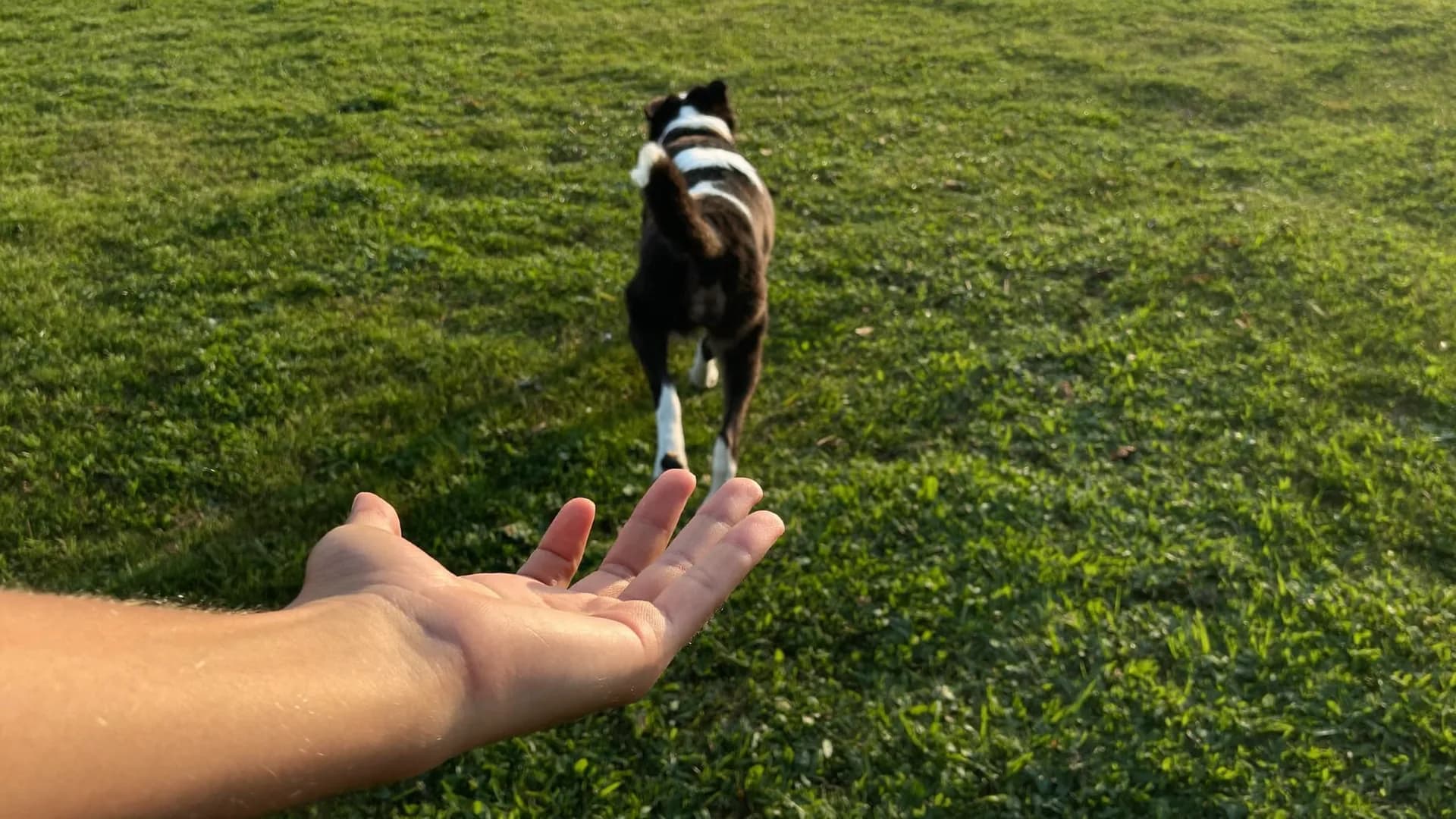
Teaching a reliable recall: why your dog ignores you, and how to build one
Coming when called is the most useful thing a dog learns and the easiest to ruin. A dog comes when coming is better than whatever else is on offer — so recall is less about obedience than about always being worth returning to. Here is how to build one and how to stop poisoning it.
Recall is the cue that keeps a dog alive near a road and welcome in a park, and it is also the one most owners quietly break. A dog does not come because it should; it comes because coming has, in its experience, been better than whatever it was doing. Build that reputation and the word works under distraction; undermine it a few times and the word becomes background noise. Most recall problems are not disobedience — they are a cue that has been taught to mean something disappointing.
Why 'come' stops working
A recall gets poisoned in ordinary, well-meaning ways. You call the dog and then end the fun — clip the lead on and go home, or give a bath — so the word starts to predict the good stuff stopping. You call in a cross voice when the dog has run off, so the word predicts trouble on arrival. Or you call when you cannot make it happen, the dog learns that the word is optional, and 'ignore it' becomes part of what the word means. Each of these teaches the dog something you did not intend, and the dog is being perfectly logical about it.
Build it from scratch with a clean word
If the old word is spoiled, retire it and start a new one the dog has no history with. Charge the new cue indoors first: say it, and the instant the dog turns to you, pay generously — food it loves, a game, genuine delight — so the word comes to mean a party every single time. Only once it is solid in a quiet room do you take it outside, and even then you build back up through mild distractions before you ever use it somewhere exciting. The order is the whole trick: reliability is built in easy places and spent in hard ones.
The rules that keep it reliable
Three rules protect a recall for life. Always pay the return, even when the dog took its time and even years in, because the day you stop paying is the day the word starts to fade. Never punish a dog that has come back, however annoyed you are that it took ten minutes — punish the return and you teach the dog not to bother next time. And do not use the word when you cannot back it up: if the dog is unlikely to come, go and get it rather than calling into the wind and teaching the word to mean nothing.
Long line and proofing against the real world
Between the living room and true off-lead freedom sits a long line — a fifteen-metre lead that lets the dog range while you keep the word from failing. Practise in gradually harder places: an empty field before a busy one, a quiet time before feeding time, distance from the exciting thing before right next to it. Reward heavily when the dog chooses you over something better, because that is the exact moment recall is being built. Rushing to off-lead before the word holds under distraction is how most recalls fall apart.
Some breeds make it harder, and that is worth knowing
A recall competes with whatever a dog was bred to do. A scent hound with its nose down is following a genuinely stronger signal than your voice, and an independent working breed was selected to make its own decisions at a distance. None of this makes recall impossible, but it does mean more work, better rewards and honesty about the individual dog — some dogs earn full off-lead freedom quickly, and some never earn it near livestock or a road.
When to manage instead of trust
A reliable recall is a high bar, and it is not reached with every dog in every place. It is no failure to keep a long line on near a road, to use a securely fenced field for a dog with a strong chase drive, or to accept that a particular dog is a manage-not-trust case around sheep. Managing the situation is not giving up on training; it is refusing to gamble a dog's safety on a word that is not yet — or may never be — proof against the one thing that dog cannot resist.
Why does my dog not come when called?
Usually because the word has been taught to mean something disappointing — the fun ending, a telling-off, or a cue the dog has learned is optional because you could not enforce it. It is rarely defiance; it is a poisoned cue, and the fix is to rebuild the word's reputation.
How do I teach a reliable recall?
Start a fresh word indoors and pay it generously every time the dog turns to you, then build up slowly through harder places on a long line. Always reward the return, never punish a dog that came back, and do not use the word when you cannot make it happen.
Should I punish my dog for not coming back?
Never — especially not once it has returned. Punishing the return teaches the dog that coming to you is a bad idea, which is the opposite of what you want. However long it took, make the return worth its while.
What is a long line and why use one?
A long training lead, often around fifteen metres, that lets a dog range and make choices while you keep the recall from failing. It bridges the gap between the living room and true off-lead freedom and stops the word being spent before it is reliable.
Why is recall harder with some breeds?
Because recall competes with instinct. A scent hound following a trail or an independent working breed making its own decisions is answering a stronger pull than your voice. It is not impossible, but it takes more work, better rewards and honesty about the individual dog.
Can every dog be trusted off the lead?
No, and pretending otherwise risks the dog. Some dogs earn full freedom, and some are manage-not-trust cases near roads or livestock, where a long line or a fenced field is the responsible choice rather than a gamble on an unproven word.
How long does it take to train a recall?
It varies with the dog, the distractions and your consistency — weeks to build a solid word in easy places, and longer to proof it against the exciting world. Recall is maintained rather than finished: keep paying the return for the dog's whole life.
My dog comes at home but ignores me at the park — why?
Because a recall built in a quiet room has not yet been proofed against distraction. Drop back to a long line and easier places, reward heavily when the dog chooses you over something better, and raise the difficulty only as the word keeps holding.