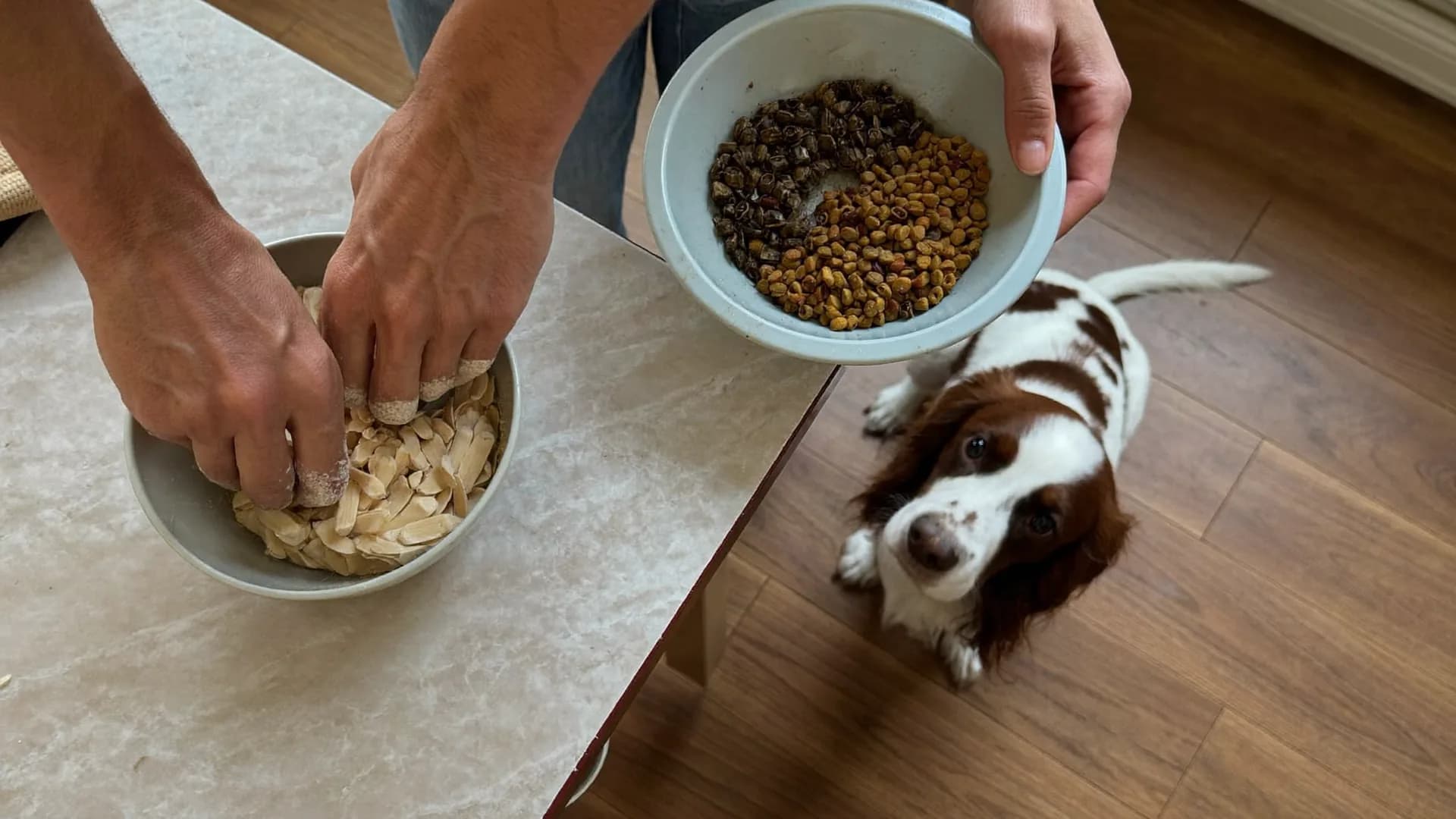
Zamenjava hrane brez razdraženega želodca
Zamenjajte psu ali mački hrano čez noč in rezultat vas pogosto zjutraj čaka na tleh. Prehod, razporejen na teden, pusti črevesju dohajati — tu je kratka različica in kdaj jo raztegniti.
Skoraj vsa zmešnjava, ki sledi novi vreči hrane, je preprečljiva, in vzrok je hitrost in ne hrana. Skupnost mikrobov, ki prebavlja obroke živali, je uglašena na to, kar je žival jedla, in zamenjava vsega naenkrat jo za kratek čas preseže. Spremembo uvedite blago in črevesje se tiho prilagodi.
Menjava v enem tednu, dan za dnem
Zanesljiva metoda je, da obe hrani zmešate in mešanico vsaka dva dneva nagnete nekoliko bolj k novi. Približno: četrtina nove prva dva dneva, polovica naslednja dva, tri četrtine naslednja dva, do konca tedna vse novo. Ko stara vreča poide, je menjava že opravljena in žival je komaj opazila.
Obe zmešajte v isti skledi, namesto da bi ju servirali kot ločena obroka. Žival, ki dobi staro zjutraj in novo zvečer, ni v prehodu: dobiva dve različni hrani na dan, kar je za črevesje težje od mešanice, in izbirčni živali omogoča, da preprosto počaka na obrok, ki ga ima rajši.
Novo hrano tehtajte, ne merite
Obe hrani skoraj zagotovo nista enaki po kalorijah, zato lahko zamenjava merice za merico tiho spremeni, koliko žival je, medtem ko je prehod videti kot iz učbenika. Preverite energijsko vrednost na obeh embalažah — branje etikete razloži, kje stoji — in novo količino izračunajte pred začetkom, da menjava spremeni eno stvar in ne dveh. To je eden pogostejših načinov, kako pes v enem mesecu brez očitnega razloga pridobi težo.
Za občutljiv želodec podaljšajte
Nekatere živali potrebujejo več časa. Znano občutljiv želodec, zelo mlada ali zelo stara žival, mačka namesto psa ali skok med precej različnima načinoma prehrane — s suhega na svežega, z ene beljakovine na drugo — lahko upravičijo štirinajst dni namesto tedna.
Mehko blato je znak, da je treba upočasniti, in ne, da je treba nadaljevati. Razmerje zadržite še nekaj dni, dokler se blato ne strdi, nato nadaljujte; če se na isti točki znova zmehča, se vrnite korak nazaj in napredujte v manjših korakih. Prehod, ki traja tri tedne in poteka brez zapletov, je uspeh in ne neuspeh.
Mačke terjajo več potrpljenja od psov
Mačke so pri hrani izrazito bolj neofobne, in mačka, ki se odloči, da nekaj novega ni hrana, lahko to stališče drži dolgo. Začnite z manjšim deležem, kot bi ga dali psu — žlica, vmešana v hrano, namesto četrtine sklede — in napredujte počasneje. Pogretje mokre hrane dvigne vonj, vonj pa je skoraj vse, kar mačka presoja.
Pomembno je, da merjenja moči ne pustite postati stradanje. Mačka, ki več kot dan ali dva ne je nič, je resnična zdravstvena zadeva in ne preizkušnja volje, saj mačja jetra slabo prenesejo nenadno stradanje; glejte ko mačka neha jesti. Če mačka novo hrano popolnoma zavrne, se vrnite k stari in poskusite znova čez teden z manjšim deležem, namesto da bi čakali, da odneha.
Ko za postopno menjavo ni časa
Včasih je izbira odvzeta: hrana gre iz prodaje, serija je odpoklicana, trgovina je nima, ali pa ste na poti in ste vrečo pozabili. Nenadna menjava za večino zdravih odraslih živali ni nevarna, le verjetno bo za par dni neurejena. Tiste dni dajajte nekoliko manjše obroke pogosteje, poskrbite za vodo in pričakujte mehko blato, namesto da bi vas prestrašilo.
Če menjavo vidite prihajati, novo hrano kupite, preden stara poide. Pol vreče prekrivanja je tisto, kar postopni prehod omogoči, ostati brez hrane v nedeljo pa je tisto, kar ga onemogoči.
Predpisane in terapevtske diete
Dieta, predpisana za bolezen, sledi navodilom veterinarja in ne temu članku. Nekatere se uvajajo postopno na običajen način, druge se namenoma zamenjajo hitreje, ker bolezen, ki se zdravi, tehta več od par dni mehkega blata. Prav tako živali ne vračajte tiho k stari hrani, ker jo ima rajši: predpisana dieta neha delovati, ko je polovica tega, kar žival je.
Domovi z več živalmi
Prehod ene živali v domu z več pomeni, da jih hranite ločeno, vsaj tiste štirinajst dni. Sicer pes na novi hrani poje mačjo staro, mačka poskusi novo, in nihče ne ve, katera žival je kaj jedla in kdaj, če komu kaj ne dene dobro. Ločeni prostori ali ločeni časi so lažji, kot se sliši, in celotno vajo naredijo razberljivo.
Ko ni hrana
Blag prehod bi moral miniti brez drame. Če težava traja več kot nekaj dni po koncu menjave ali pride z bruhanjem, krvjo, otopelostjo, vročino ali zavračanjem hrane, menjava hrane najbrž ni cela zgodba in naj pogleda veterinar. Mladiči in zelo stare živali se hitro dehidrirajo in imajo manj rezerve, zato naj bo prag za klic pri njih nižji.
Počasna menjava prepreči običajno želodčno težavo. Ni zdravljenje za tisto, ki pomeni kaj drugega, in tudi ni test za alergijo na hrano — resnično neprenašanje se ugotovi z nadzorovano izločitveno dieto, ki jo več tednov vodi veterinar, in ne z opažanjem, da je ena vreča videti bolj ustrezala od druge.
Kako dolgo naj traja menjava hrane?
Približno teden pri večini psov in mačk: četrtina nove dva dneva, polovica dva, tri četrtine dva, potem vse novo. Občutljivi želodci, mačke, zelo mlade in zelo stare živali ter veliki skoki med načini prehrane so na boljšem s štirinajstimi dnevi.
Zakaj ima moja žival po menjavi hrane drisko?
Običajno zato, ker je menjava prehitela črevesne mikrobe, ki hrano prebavljajo. Mešanico zadržite še nekaj dni, dokler se blato ne strdi, namesto da bi nadaljevali, in če se na isti točki znova zmehča, se vrnite korak nazaj in napredujte v manjših korakih.
Naj staro in novo hrano mešam ali ju dajem ločeno?
Zmešajte ju v isti skledi. Stara zjutraj in nova zvečer ni prehod: to sta dve hrani na dan, težje za črevesje, in izbirčni živali pusti, da počaka na obrok, ki ga ima rajši.
Ali lahko mački hrano zamenjam naenkrat?
Bolje ne. Mačke so izrazito bolj neofobne od psov: začnite z vmešano žlico namesto s četrtino sklede in napredujte počasi. In predvsem: merjenja moči ne pustite postati stradanje — mačka, ki več kot dan ali dva ne je nič, je zadeva za veterinarja in ne za voljo.
Kaj pa, če moram hrano zamenjati takoj?
Nenadna menjava je pri zdravi odrasli živali neurejena in ne nevarna. Par dni dajajte manjše obroke pogosteje, poskrbite za vodo in pričakujte mehko blato. Kadar menjavo vidite prihajati — hrana gre iz prodaje, odpoklic serije — novo kupite, preden stara poide.
Ali moram ob menjavi hrane spremeniti količino?
Skoraj vedno, ker se energijska gostota med izdelki močno razlikuje. Primerjajte energijski vrednosti obeh embalaž in novo količino izračunajte pred začetkom, sicer menjava spremeni dve stvari hkrati — pogost način, kako pes v mesecu brez očitnega razloga pridobi težo.
Kako opravim prehod pri eni živali v domu z več?
Med prehodom jih hranite ločeno. Sicer živali poskušajo iz tujih skled, in ko komu kaj ne dene dobro, ne veste, katera hrana je bila to niti koliko je je pojedla.