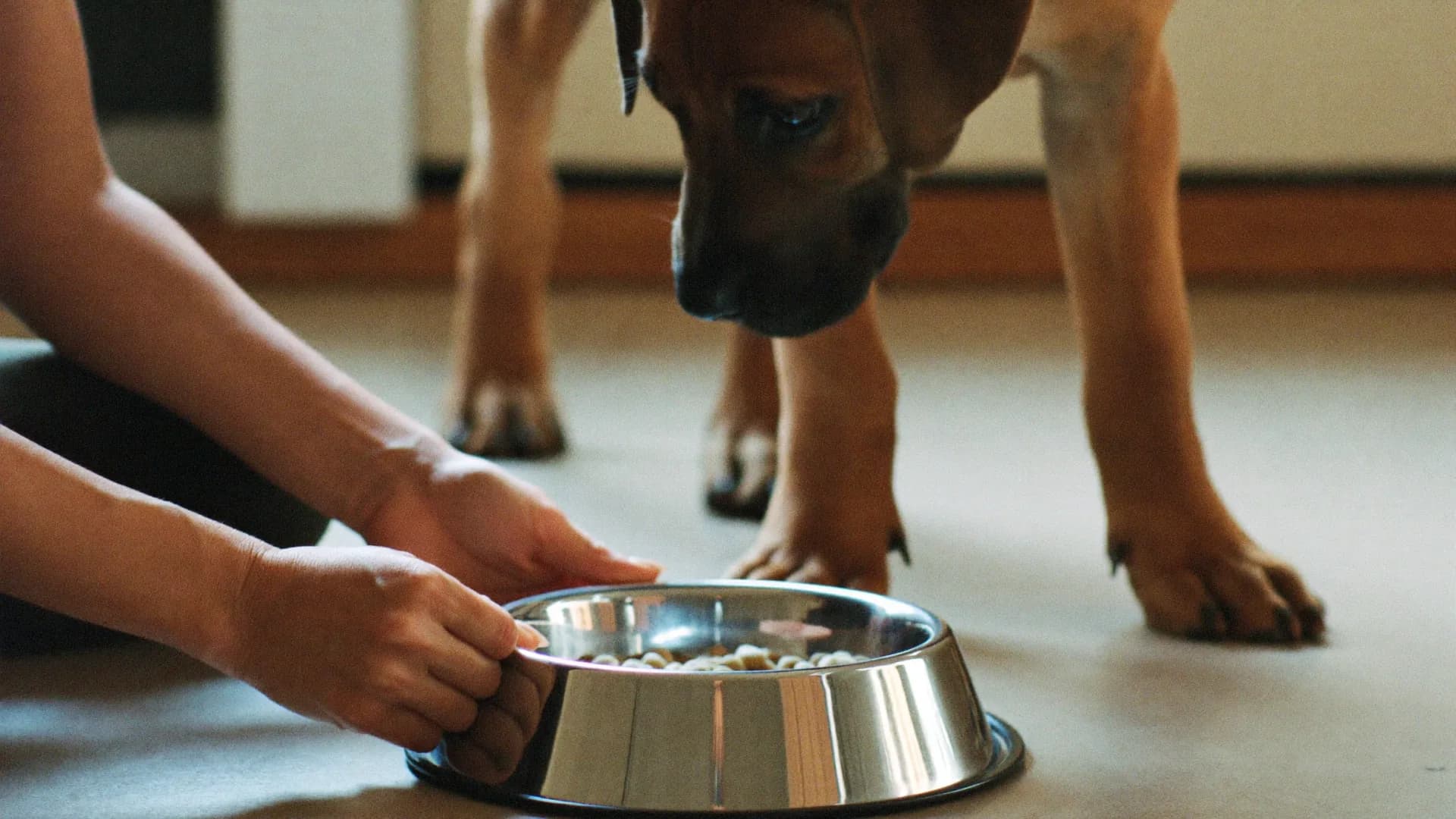
Welpen großer Rassen füttern: Warum das Wachstumstempo mehr zählt als die Größe
Ein Welpe einer Riesenrasse wächst fast zwei Jahre lang, und ihn zu schnell wachsen zu lassen belastet ein Skelett, das noch im Bau ist. Das Ziel ist gleichmäßiges Wachstum, nicht der größte Welpe im Wurf.
Der Rat, ein Welpe solle fressen, so viel er mag, ist einer der teureren Irrtümer, die neue Halter glauben können, und bei den größten Rassen geht er am schnellsten schief.
Dies ist ein praktischer Überblick, kein Fütterungsplan — die Mengen und das Timing gehören Ihrem eigenen Tierarzt, der Ihren Hund wiegen und sein Wachstum beobachten kann.
Ein großer Welpe wächst länger, nicht nur größer
Ein kleiner Hund ist binnen eines Jahres nahe an seiner erwachsenen Statur. Ein Riese baut sehr viel länger Knochen auf, und das heißt: mehr Monate, in denen das Gefressene unmittelbar in Wachstum umgesetzt wird. Dieses lange Fenster ist genau der Grund, weshalb sich derselbe Fütterungsfehler bei einer Deutschen Dogge oder einer Bordeauxdogge zeigt und bei einem Terrier selten.
Der Umfang dieser Baustelle lohnt einen Moment. Ein Welpe einer Riesenrasse vervielfacht sein Geburtsgewicht im ersten Jahr um ein Vielfaches und legt dabei Knochen, Knorpel und Gelenkflächen an — und jede dieser Strukturen ist weich und noch in Bildung, während der Hund längst schwer genug ist, sie zu belasten. Ein Terrier erledigt dieselbe Arbeit auf einer viel kürzeren Strecke und mit weit weniger Gewicht obendrauf.
Warum schnell das falsche Ziel ist
Einen Welpen einer großen Rasse auf maximales Wachstum zu füttern — reichhaltiges Futter, unbegrenzte Portionen, zusätzliches Kalzium obendrauf — lässt ihn schnell wachsen, und schnell ist das Problem.
Ein in Eile aufgebautes Skelett neigt eher zu den Entwicklungsstörungen von Gelenken und Knochen, für die diese Rassen ohnehin ein Risiko tragen. Tierärzte streben einen schlanken, gleichmäßigen Anstieg an, bei dem das Gerüst Zeit hat, mit dem Gewicht Schritt zu halten, das es einmal tragen wird.
Die Krankheitsbilder, gegen die das schützen soll, gehören beim Namen genannt, denn sie machen aus einem vorsichtigen Rat einen konkreten. Hüft- und Ellbogendysplasie, bei der das Gelenk nicht passgenau ausgeformt wird; Osteochondrose, bei der Knorpel nicht sauber zu Knochen wird; und eine schmerzhafte Entzündung des wachsenden Knochens, die sich zeigt, wenn ein junger Hund einer Riesenrasse erst auf einem Bein lahmt und dann auf einem anderen. Bei allen dreien lädt die Genetik das Gewehr, und das Wachstumstempo ist der Teil, auf den ein Halter tatsächlich Einfluss hat.
Nichts davon heißt, zu wenig zu füttern. Ein Welpe, der nicht genug bekommt, ist ein eigenes Problem, und das Ziel ist nicht dünn — es ist schlank und gleichmäßig. Ihr Tierarzt kann Ihnen zeigen, wie sich das bei Ihrem konkreten Hund anfühlen sollte, und eine monatliche Wiegung, eingetragen gegen die erwartete Kurve der Rasse, führt besser als jeder Blick.
Was wirklich hilft
Drei Dinge leisten die meiste Arbeit: ein Alleinfutter, das für Welpen großer Rassen zusammengestellt ist und darauf gebaut ist, das Wachstum zu bremsen statt es anzutreiben; abgemessene Portionen statt eines vollen Napfes; und den Welpen schlank genug zu halten, dass Sie die Rippen fühlen können.
Kalziumpräparate sind hier ein häufiges Eigentor — ein ausgewogenes Welpenfutter enthält bereits die richtige Menge, und mehr davon kann schaden statt nützen. Jeden einzelnen dieser Punkte sollten Sie für Ihren konkreten Hund mit dem Tierarzt abklären.
Was ein Futter für Welpen großer Rassen unterscheidet, ist keine Werbung. Es hat meist weniger Kalorien pro Bissen, Kalzium und Phosphor werden in einem engeren Bereich und in einem festen Verhältnis gehalten, sodass ein hungriger Welpe eine sättigende Menge fressen kann, ohne bei den knochenbildenden Mineralien über das Ziel hinauszuschießen. Das ist auch der Grund, warum sowohl „Erwachsenenfutter, nur mehr davon“ als auch „Welpenfutter für kleine Rassen, hochskaliert“ am Punkt vorbeigehen.
Wiegen Sie das Futter, statt es zu schöpfen, denn eine Schöpfkelle gleichen Volumens kann je nach Packung erheblich schwanken, und geben Sie mehrere kleine Mahlzeiten am Tag, solange der Welpe jung ist. Freie Fütterung — ein Napf, der den ganzen Tag steht — ist die einzelne Gewohnheit, die am ehesten einen schnell wachsenden, überkonditionierten Riesenwelpen hervorbringt, denn diese Rassen fressen oft bereitwillig weiter.
Bewegung, wenn wir schon dabei sind
Die Fütterung ist die eine Hälfte der Wachstumsfrage und für sich genommen nicht viel wert, denn dieselben Gelenke werden zur selben Zeit auch von außen belastet.
Die Wachstumsfugen eines großen Welpen bleiben deutlich länger offen als die eines kleinen Hundes, und bis sie sich schließen, sind die Gelenke gegen wiederholte Stöße empfindlich. Das heißt: sparsam mit allem, was Kraft bündelt — lange Läufe auf hartem Boden, wiederholtes Springen in den Kofferraum und heraus, Treppen, die mehrmals täglich im Tempo genommen werden, und harte Apportierspiele mit scharfen Wendungen.
Es heißt nicht, den Hund stillzuhalten. Freies Spiel auf Gras im eigenen Tempo, Schwimmen und viele kurze Spaziergänge tun ihm gut, und ein gelangweilter Riesenwelpe ist ein zerstörerischer. Der Unterschied liegt zwischen Bewegung, die der Welpe selbst wählt und beendet, wenn er müde ist, und Bewegung, die ein Mensch in festem Tempo über eine feste Strecke vorgibt.
Die praktische Fassung: benutzen Sie eine Rampe fürs Auto, tragen Sie einen jungen Welpen die Treppe hinunter, wo es geht, und heben Sie sich den Laufpartner auf, bis Ihr Tierarzt sagt, das Skelett ist fertig.
Die Kastrationsfrage, kurz
Sie gehört hierher, weil sie die Rechnung gleich zweimal verändert.
Bei großen und Riesenrassen kann eine Kastration vor dem Schluss der Wachstumsfugen diesen Schluss verzögern, was verändert, wie die Gliedmaßen zu Ende wachsen — einer der Gründe, weshalb Tierärzte den Zeitpunkt mit Haltern großer Hunde zunehmend besprechen, statt den Eingriff mit sechs Monaten standardmäßig einzutragen. Das ist ein Gespräch mit Ihrem eigenen Tierarzt, abgewogen gegen die Gründe für eine Kastration, und es gilt für den einzelnen Hund.
Der zweite Effekt ist schlichter und erwischt fast alle: der Energiebedarf eines kastrierten Hundes sinkt, oft merklich, während sein Appetit es nicht tut. Ändert sich im Napf nichts, folgt das Gewicht binnen ein paar Monaten. Fragen Sie beim Termin, auf welche Portion Sie heruntergehen sollen, und wiegen Sie den Hund ein paar Wochen später zur Kontrolle.
Wann auf Erwachsenenfutter umgestellt wird
Später als bei einem kleinen Hund, und das ist eine Frage, die man stellen sollte, statt sie zu raten.
Kleine Rassen wechseln um den ersten Geburtstag herum auf Erwachsenenfutter; die Riesen bleiben oft weit darüber hinaus bei einem Welpen- oder Juniorfutter für große Rassen, denn das Wachstum, das sie noch leisten, ist genau das, wofür dieses Futter gemacht ist. Ein zu früher Wechsel nimmt ihnen diese Zusammensetzung, während der Hund noch Knochen baut.
Wenn es dann so weit ist, stellen Sie über eine Woche oder so schrittweise um und mischen einen wachsenden Anteil des neuen Futters unter das alte, denn ein abrupter Wechsel im Futter eines großen Hundes erzeugt zuverlässig eine Sauerei. Und behalten Sie den Ernährungszustand während der Umstellung im Auge: ein junger erwachsener Riese, der aufgehört hat zu wachsen, aber weiter Welpenmengen frisst, nimmt schnell zu — und Übergewicht auf diesen Gelenken ist genau das, was das Ganze vermeiden sollte.
Die Rasseseiten führen die gemessenen Erwachsenengewichte, sodass Sie sehen, worauf ein Welpe zuwächst, bevor er dort ankommt. Was sie nicht können, ist eine Portion festlegen: die hängt vom einzelnen Tier ab, von seinem Futter und seinem Tierarzt, und keine Seite sollte etwas anderes vortäuschen. Vergleichen Sie die Erwachsenengrößen auf der Rasseseite.
Wann ist ein Welpe einer großen Rasse ausgewachsen?
Die Riesenrassen füllen sich noch etwa achtzehn Monate bis zwei Jahre lang aus, weit länger als ein kleiner Hund. Dieses lange Wachstumsfenster ist der Grund, weshalb es so sehr darauf ankommt, was sie als Welpen fressen.
Was unterscheidet ein Welpenfutter für große Rassen?
Es hat meist weniger Kalorien pro Bissen, und Kalzium wie Phosphor werden in einem engeren Bereich und Verhältnis gehalten, sodass ein hungriger Welpe eine sättigende Menge fressen kann, ohne bei den knochenbildenden Mineralien über das Ziel hinauszuschießen. Erwachsenenfutter in größerer Menge oder hochskaliertes Welpenfutter für kleine Rassen leisten dasselbe nicht.
Soll ich meinem Welpen einer großen Rasse ein Kalziumpräparat geben?
In der Regel nicht. Ein Futter für Welpen großer Rassen trägt bereits das richtige Verhältnis, und zusätzliches Kalzium kann das Risiko für Skelettprobleme eher erhöhen als senken. Fragen Sie Ihren Tierarzt, bevor Sie etwas zufüttern.
Ist es besser, einen großen Welpen eher schlank zu halten?
Tierärzte streben meist ein schlankes, gleichmäßiges Wachstum an statt eines schnellen, schweren, weil es den Gelenken Zeit gibt, mit dem Gewicht Schritt zu halten. Schlank heißt aber nicht dünn — Ihr Tierarzt kann Ihnen zeigen, wie es sich bei Ihrem Hund anfühlen sollte, und eine monatliche Wiegung schlägt einen Blick.
Darf ich bei einem Welpen einer großen Rasse Futter stehen lassen?
Besser nicht. Freie Fütterung ist die Gewohnheit, die am ehesten einen schnell wachsenden, überkonditionierten Riesenwelpen hervorbringt, denn viele dieser Rassen fressen bereitwillig weiter. Wiegen Sie abgemessene Portionen, statt zu schöpfen, und verteilen Sie sie auf mehrere Mahlzeiten am Tag, solange der Welpe jung ist.
Wie viel Bewegung braucht ein Welpe einer großen Rasse?
Viel freies Spiel im eigenen Tempo und sehr wenig von der stoßintensiven Sorte. Die Wachstumsfugen bleiben bei großen Rassen länger offen, also sparsam mit langen Läufen auf hartem Boden, wiederholtem Springen aus dem Auto, Treppen im Tempo und hartem Apportieren mit scharfen Wendungen. Nehmen Sie eine Rampe, und heben Sie sich das gemeinsame Laufen für ein fertiges Skelett auf.
Wirkt sich eine Kastration auf das Wachstum eines großen Welpen aus?
Sie kann es. Eine Kastration vor dem Schluss der Wachstumsfugen kann diesen Schluss verzögern und verändern, wie die Gliedmaßen zu Ende wachsen — deshalb besprechen Tierärzte den Zeitpunkt mit Haltern großer Rassen zunehmend, statt standardmäßig mit sechs Monaten zu terminieren. Sie senkt außerdem den Energiebedarf, ohne den Appetit zu senken, sodass die Portion danach meist heruntergehen muss.
Wann sollte ein Welpe einer großen Rasse auf Erwachsenenfutter wechseln?
Später als ein kleiner Hund — oft weit nach dem ersten Geburtstag, denn das Wachstum, für das dieses Futter gemacht ist, läuft noch. Fragen Sie Ihren Tierarzt, stellen Sie über etwa eine Woche um, damit der Magen mitkommt, und achten Sie danach auf das Gewicht, denn ein Hund, der nicht mehr wächst, aber weiter Welpenmengen frisst, nimmt schnell zu.