A pet first-aid kit, and the emergencies where minutes matter
First aid for a pet buys time to reach the vet — it does not replace them. The point of a kit and a little knowledge is to handle the first few minutes calmly, and to know which situations are the ones where those minutes genuinely change the outcome.
Pet first aid is widely misunderstood in one direction: it is not about treating the animal yourself, it is about stabilising and getting to the vet without losing the minutes that matter. Almost everything serious still ends with a phone call and a car journey. What a kit and a bit of preparation give you is the ability to do the right thing in the first few minutes rather than freezing — and, just as importantly, to know the handful of situations where those minutes truly count.
The number on the fridge
Before any kit, the single most useful piece of preparation costs nothing: know now who to call. Write down your vet's number and your nearest out-of-hours emergency service, find out which one covers nights and weekends, and put it somewhere you will find it in a panic. The moment you need it is exactly the moment you will not want to be searching, and a poisoning or a serious injury is a bad time to discover your practice closes at six.
What goes in the kit
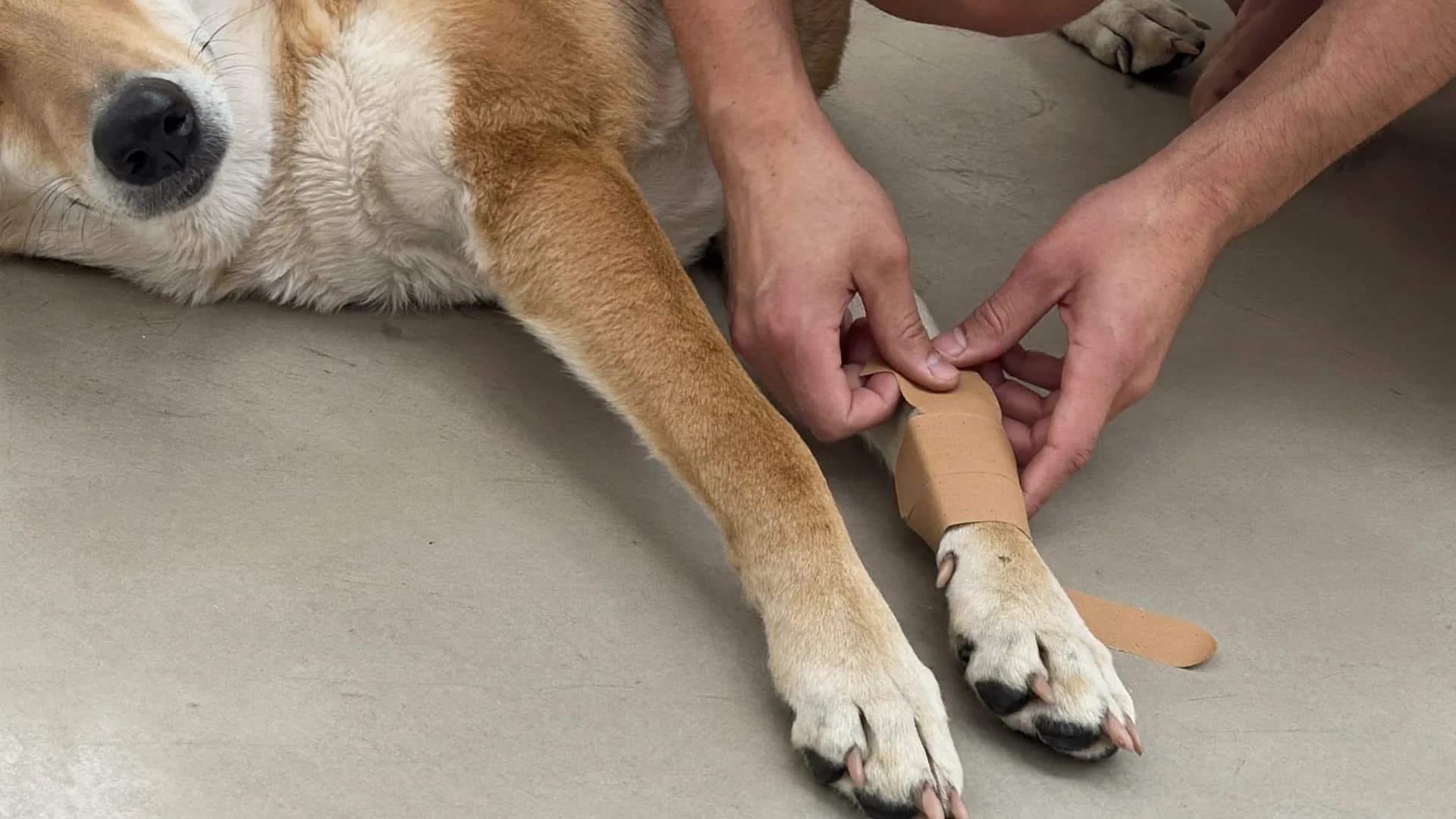
A workable kit is simple: sterile gauze and non-stick dressings, a self-adhesive bandage that does not stick to fur, blunt-ended scissors, tweezers, a proper tick-removal tool, disposable gloves, and a clean towel or blanket that doubles as a way to wrap and carry an injured animal. Add a digital thermometer if you are confident using one, a syringe for giving water, and a photograph of your pet with its microchip and vaccination details in case it is ever lost. Keep the packaging of anything the animal might get into, so the vet can see exactly what it was.
What not to put in it is a list of human medicines. Many common human painkillers are toxic to pets — some dangerously so — and the single most important rule of home first aid is to give no medication unless a vet has told you to. The kit is for holding a situation steady, not treating it.
The emergencies where minutes matter
A few situations are the ones worth knowing cold, because they escalate fast. Difficulty breathing, or choking on a lodged object, is minutes-count territory. So is bloat — a sudden hard, swollen abdomen with unproductive retching, most often in large deep-chested dogs — which is a life-threatening emergency that needs a vet immediately, not in the morning. Heavy bleeding needs firm pressure with a clean dressing while you get to help. A suspected poisoning is a same-hour call rather than a wait-and-see, and you take the packaging with you. Collapse, a seizure that does not stop, or an animal that cannot get up all mean go now.
Several of these have their own fuller guides, because prevention is where most of the ground is won: the foods that poison, the garden chemicals and plants, and heatstroke, which is its own kind of emergency where cooling on the way to the vet genuinely changes the outcome.
The one course worth doing
Reading about CPR or how to help a choking animal is not the same as being able to do it, and this is the one area where a hands-on pet first-aid course earns its place. A short session with a practical component leaves you able to act rather than half-remember, and if you have a large or deep-chested dog, or simply want the confidence, it is a few hours well spent.
None of this replaces good prevention, which is where the real safety lives — the same instinct behind pet-proofing the house. The kit and the knowledge are for the day prevention was not enough, and the goal is modest and worth it: to stay calm, do no harm, and get to the vet with the minutes intact.
What should be in a pet first-aid kit?
Sterile gauze and non-stick dressings, a fur-safe self-adhesive bandage, blunt-ended scissors, tweezers, a tick-removal tool, gloves, and a clean towel for wrapping and carrying. Add a thermometer and syringe if you are confident, and your pet's microchip and vaccination details. Do not include human medicines.
Can I give my pet human painkillers in an emergency?
No. Many common human painkillers are toxic to pets, some dangerously so, and the rule of home first aid is to give no medication unless a vet has told you to. First aid is for stabilising and getting to the vet, not treating at home.
What pet emergencies need a vet immediately?
Difficulty breathing or choking, bloat — a sudden hard, swollen belly with unproductive retching in deep-chested dogs — heavy bleeding, suspected poisoning, collapse, and a seizure that does not stop. These escalate fast, so they are go-now situations rather than wait-and-see.
What is the most important pet first-aid preparation?
Knowing who to call before you need them. Write down your vet and nearest out-of-hours emergency service, confirm which covers nights and weekends, and keep it somewhere you will find it in a panic — a poisoning is a bad time to discover your practice closes at six.
Is a pet first-aid course worth it?
For hands-on skills like helping a choking animal or CPR, yes — reading is not the same as being able to do it. A short practical course leaves you able to act rather than half-remember, which is especially worth it for owners of large or deep-chested dogs.