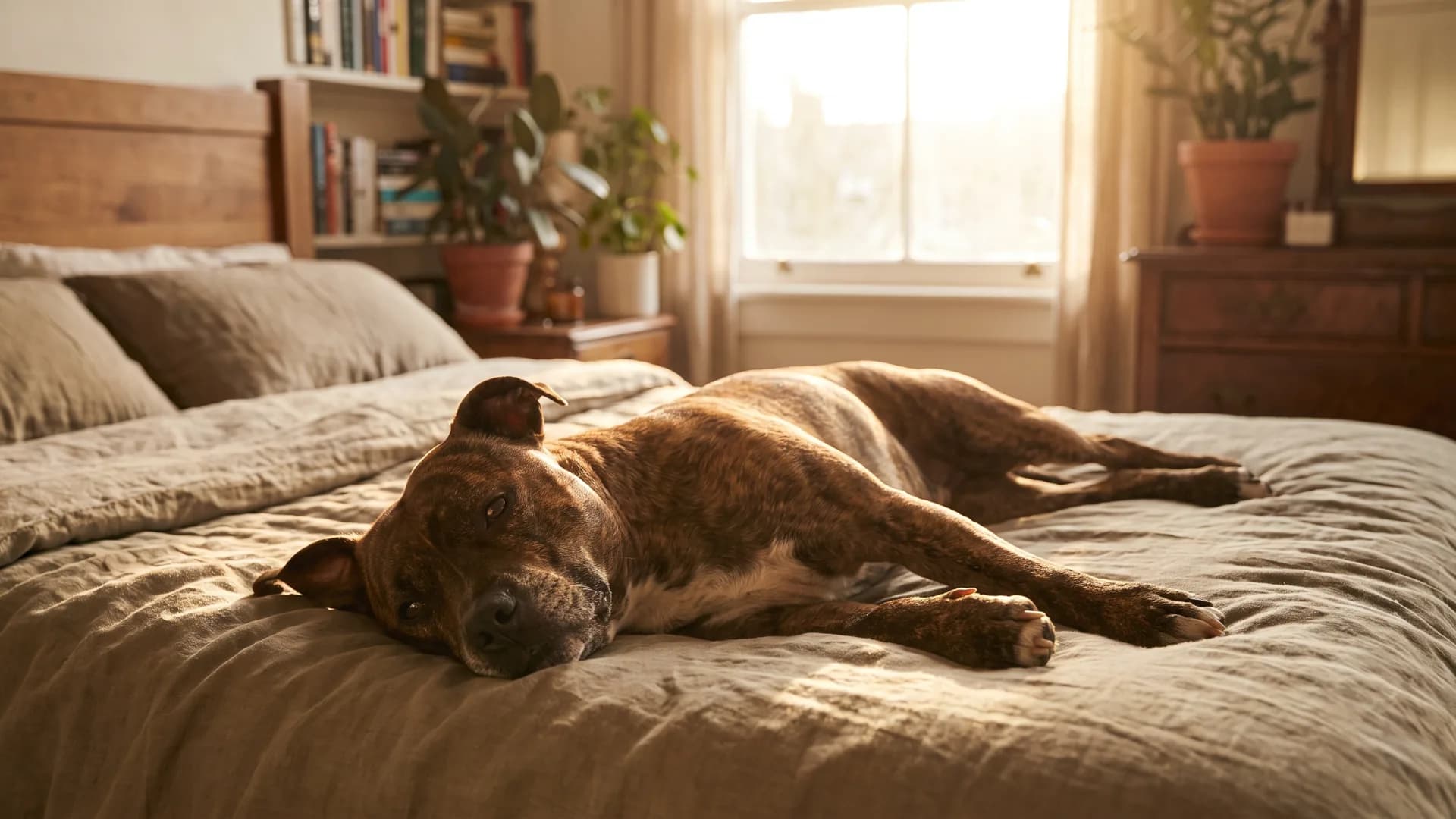
The best dog breeds for apartment living
A dog suits a flat by temperament far more than by size — a calm giant settles where a wound-up terrier never will. Here is what actually matters between four walls, and the breeds, big and small, that tend to cope.
The best apartment dog is not the smallest one; it is the calmest. What decides whether a dog thrives in a flat is its energy, its voice and how it copes with being left — not its shoulder height. Get those right and a large breed can be a model neighbour; get them wrong and a small one becomes a daily complaint.
Size is the least of it
The reflex is to equate small with suitable, and it misleads in both directions. A Greyhound is a famous couch potato that folds into a flat with ease, while a small, high-drive terrier in a studio is a spring with no room to uncoil. Floor space is not the constraint most dogs run into — the missing walk is.
What actually matters between four walls
Three traits carry most of the weight: an energy level you can satisfy with the walks you will actually take; a low tendency to bark, because thin walls turn a vocal dog into a neighbour dispute; and enough tolerance of being alone that the working day is not a crisis. Adaptability ties them together — a steady dog adjusts to a smaller world.
Noise is the thing that actually gets people evicted
Of the three, sound is the one that turns into a letter from the building. A dog that barks at every footstep in the corridor is a problem eight hours a day, and the neighbours hear the part you are not home for. Worth knowing before you choose: some breeds were selected to be loud, and a scent hound's voice carries through concrete in a way that surprises people who have only heard it outdoors.
Most flat barking has one of three causes, and they need different answers. Territorial barking at the hallway is answered by managing what the dog can see and hear — move the bed away from the front door, use a white-noise machine, cover the gap under it — and by teaching a different response to the trigger. Boredom barking is answered by exercise and something to chew. And barking that starts as soon as you leave and does not stop is not noise, it is distress, and it needs separation anxiety treated rather than a louder correction.
The logistics nobody mentions on the viewing
A flat changes the mechanics of ordinary dog ownership. Every toilet trip is a corridor, a lift and a street door — which is fine for an adult dog and hard on a puppy that has fifteen seconds of warning, so plan for a temporary indoor pad or carry the puppy down. Stairs are not free: a young dog's joints and a long-backed breed's spine both do better carried for the first months, and an old dog on the fourth floor eventually needs a plan.
Then the building's own rules. Lifts mean meeting strangers and other dogs in a metal box, so a dog that cannot cope in tight quarters will meet that situation daily. Balconies need proper mesh rather than a railing a small dog can slip through. Communal gardens are usually not toilets. And the freehold or the tenancy may simply say no pets, or cap the size — worth reading before you fall for a breed, since a dog rehomed over a lease clause is a thoroughly avoidable outcome.
Small does not mean low-energy
Many toy and terrier breeds were bred to work and carry the drive to match, so a compact body is no promise of a quiet flat. A Cavalier King Charles Spaniel is a gentle fit for a small home; a working terrier of the same weight may bark and dig its way through your deposit. Read the temperament, not the scale.
The real trade is exercise, not floor space
A flat is fine for most dogs as long as the exercise and stimulation are not. A committed owner who walks, plays and trains can keep a surprising range of breeds happy from an apartment; skip that, and no amount of square metres will settle the dog. Compare energy and size across the catalogue on the breeds page before you choose.
Indoors, the useful currency is not space but occupation. A sniffing walk that lets the dog read the street tires it more than the same distance marched at heel; ten minutes of training works a dog harder than half an hour of pacing; food out of a puzzle rather than a bowl fills the gap that a garden would otherwise fill. And a dog that has somewhere of its own to sleep, away from the front door and the television, gets the rest that a small home otherwise interrupts all evening.
When the flat is the wrong answer
Two situations are worth naming honestly. A dog left alone through a full working day in a small space with nothing to do is not a housing problem, it is a welfare one, and the answer is a walker, a daycare or a different plan rather than a smaller breed — how long a dog can be left does that arithmetic. And a high-drive working breed in a flat can be done, but only by someone who genuinely delivers a couple of hours of real work every day, in February as well as June. If that is not the life you have, choosing the calm breed is not a compromise. It is the whole answer.
What is the best dog breed for an apartment?
There is no single one, but calm, quiet, adaptable breeds suit flats best — from small companions like the Cavalier King Charles Spaniel to famously lazy sighthounds like the Greyhound. Energy and barking matter far more than size.
Can big dogs live in apartments?
Yes, often better than small energetic ones. Several large breeds are low-energy and quiet indoors and settle well in a flat, provided they get their walks. Size is not the barrier people assume.
Are small dogs always better for apartments?
No. Many small breeds were bred to work and are high-energy and vocal, which is a poor match for close neighbours. A calm small breed is ideal; a wound-up one is harder to live with than a placid large dog.
Which dogs bark the least?
Barking tendency is a rated trait on the breed pages, and the quieter breeds make easier apartment neighbours. Some scent hounds and terriers were bred to be loud, so it is worth checking before you commit.
Can I keep a high-energy dog in a flat?
It can work, but only if you genuinely meet the exercise and mental stimulation the breed needs every day. Without that, a high-drive dog in a small space becomes destructive and noisy — the space is fine, the missed activity is not.
How do I stop my dog barking at the corridor?
Manage what it can hear and see first — move its bed away from the front door, block the gap underneath, use background noise — then teach a different response to the trigger. Barking that starts the moment you leave and does not stop is distress rather than noise, and needs treating as such.
How do I house-train a puppy in a flat?
Plan for the delay: a corridor, a lift and a street door is longer than a puppy's warning. Carry it down rather than racing, use a temporary indoor pad if the trip cannot be made in time, and expect the outdoor routine to click later than it would with a garden.
Are stairs bad for a dog in a flat?
For a young puppy and for long-backed breeds, repeated stairs are worth avoiding — carry them for the first months. An old or arthritic dog on an upper floor eventually needs a plan too, which is worth thinking about before the dog is old.