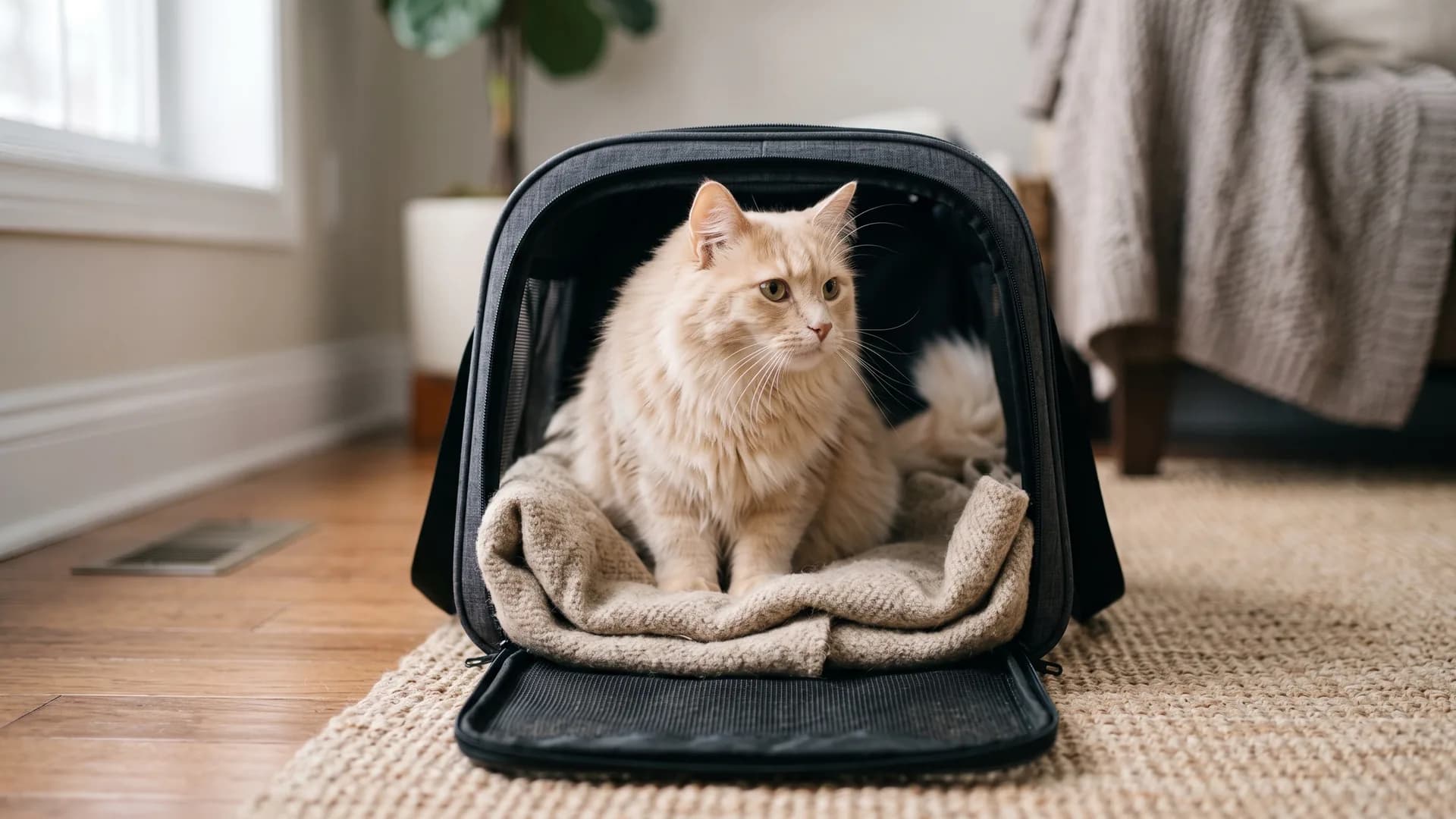
Getting a cat used to its carrier, before you need it
The battle at the carrier door is avoidable. Leave the carrier out as furniture, make it a good place year-round, and the trip to the vet or the new home stops being an ambush.
Everyone knows the scene: the carrier comes out of the cupboard and the cat evaporates. It happens because the carrier only ever appears before something the cat dislikes — the vet, the car — so the box itself becomes the warning. The fix is not a better grab on the day; it is changing what the carrier means, in the weeks before you need it.
Leave it out all the time
The most effective single change is to stop hiding the carrier away. Leave it out as ordinary furniture, open, with a soft bed inside, in a room the cat already likes. A carrier that is always around, and never followed by anything bad, stops being a threat and becomes just another napping spot. A cat that chooses to sleep in its carrier is a cat that will not fight it later.
Make it a good place
Help that along: feed treats and the occasional meal in or beside it, drop a toy inside, praise the cat for going near it. The carrier itself matters too — a hard one that opens from both the top and the front is far easier to load a reluctant cat into than a narrow front-only box you have to post the cat into headfirst. Being able to lower a cat in from above, or lift the lid off entirely, changes everything on a bad day.
Practice before the real trip
Once the cat is relaxed about the carrier, rehearse the parts that come next: closing it in for a moment, then carrying it around the house, then a short car trip that ends back home rather than at the vet. Keeping some journeys uneventful breaks the link between the carrier and a bad destination — the same logic that makes a bigger move go more smoothly when the carrier is already familiar.
On the day
Put a blanket that smells of home inside, load the cat through the top if you can, and cover the carrier with a towel — most cats are calmer when they cannot see the world going by. Secure it in the car rather than leaving it loose on a seat, keep the cabin quiet and cool, and handle everything at a slow, unhurried pace. A calm handler is half of a calm cat.
If the cat still panics
For a cat that stays fearful despite all this, a synthetic feline pheromone spray in the carrier can take the edge off, and for a genuinely terrified cat the vet can advise a calming aid before a trip. What never helps is forcing a frightened cat in headfirst through a small front door — that is exactly the memory that makes the next time worse. Top-load, or tip the cat in gently rear-first, and keep it brief.
Choosing and placing the carrier so it works for you
The carrier itself does a lot of the work, for good or ill. A hard-sided model that opens from both the top and the front is the one to have: the top lets you lower a reluctant cat in gently, and a lid that unclips entirely means a vet can lift the top off and examine the cat where it sits rather than dragging it out through a small door. Get the size right — big enough to stand, turn and lie down, but not so cavernous that the cat slides about — and put a non-slip mat or a folded towel in the base so it does not skate on every corner.
Where you keep it matters as much as which one you buy. A carrier left out in a room the cat actually uses becomes part of the furniture; one that lives in the garage or the loft and only appears on vet day stays a warning sign no matter what you do with it. Line it with something soft that smells of home, and in a multi-cat household give each cat its own carrier — sharing one is a recipe for a bad journey. A carrier that is comfortable, familiar and always around is one a cat will walk into on its own, which is the whole aim.
The car, and travelling with more than one cat
Once the cat is in, the journey decides how it remembers the carrier. Secure the carrier with a seatbelt so it sits flat and stable rather than sliding or tipping on a seat, keep the cabin cool and quiet, and drape a towel over the top so the cat cannot see the world rushing past — the visual motion is a large part of what frightens a cat in a car. Avoid a big meal right before you set off, drive smoothly, and keep your own voice and movements low and unhurried, because a cat reads a tense handler instantly.
If you are moving more than one cat, travel them in separate carriers even if they are bonded and normally inseparable. Fear does strange things: a stressed cat can lash out at the nearest target, and the nearest target in a shared carrier is the other cat, which is how two friends arrive at the vet as enemies and stay wary for days afterwards. Separate carriers, each covered and secured, keep a stressful trip from turning into a lasting fallout between them — and make each cat easier to handle at the other end.
How do I get my cat into the carrier?
Make it a non-event long before the day: leave the carrier out as furniture with a bed inside, feed treats in it, and use one that opens from the top so you can lower the cat in rather than pushing it through a front door. On the day, a home-scented blanket and a towel over the carrier keep the cat calmer.
What kind of cat carrier is best?
A hard carrier that opens from both the top and the front. Top-loading lets you lower a reluctant cat in gently, and a removable lid means you can lift the whole top off at the vet rather than dragging the cat out. A narrow, front-only box you have to post the cat into headfirst is the hardest kind to use.
How do I make my cat less scared of the carrier?
Change what it means. Leave it out all the time so it is not a signal that something bad is coming, put a soft bed and treats inside, and take a few short car trips that end back home rather than always at the vet. A carrier the cat naps in is one it will not fight.
Should I cover the carrier in the car?
Usually yes. Most cats are calmer when a towel over the carrier hides the moving world outside, which is a major source of stress on a trip. Keep the carrier secured rather than loose on a seat, the cabin quiet and cool, and everything slow and low-key.
How do I calm a stressed cat for a trip?
Prepare in advance with carrier training, use a home-scented blanket and cover the carrier, and keep your own handling slow and quiet. A synthetic feline pheromone spray can help, and for a genuinely terrified cat the vet can advise a calming medicine beforehand — worth arranging rather than fighting the cat on the day.