Car sickness in dogs: why it happens and how to fix it
Most car sickness is a puppy's inner ear catching up with the motion, tangled with a bit of anxiety — and most dogs can be helped out of it with gradual, positive trips and a few practical changes. Here is what works, and when to ask the vet for medication.
Car sickness is most common in puppies, and it usually comes from two things braided together. One is physical: the balance organ in a young dog's inner ear is still maturing, so motion it cannot yet make sense of turns the stomach — the same reason children are carsick more than adults. The other is learned: if the early car trips all ended somewhere frightening, the car itself starts to make the dog anxious, and anxiety and nausea feed each other. Both are worth treating, because both usually improve.
The signs, caught early
It rarely starts with vomiting. Watch for drooling, repeated lip-licking and swallowing, wide yawns, whining, and a dog that cannot settle — pacing, shifting, panting. Those are the early stages, and a break or a change before they build often heads off the sickness. By the time a dog is actually sick it has usually been uncomfortable for a while.
Set the car up right
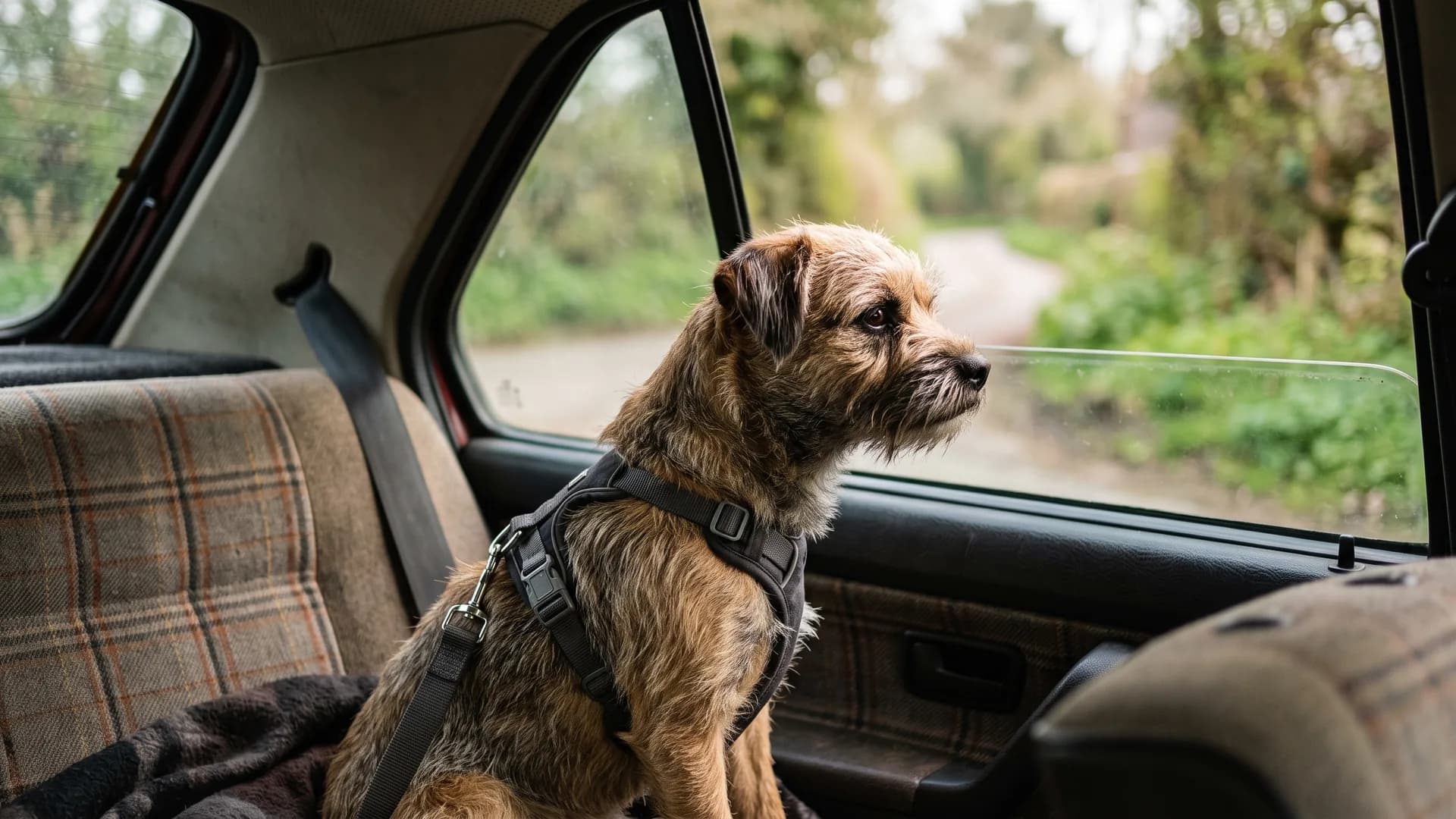
A dog that is secured and facing forward, in a crate or on a fitted harness, is steadier than one sliding around loose, and steadier means less queasy. Crack a window so there is some airflow and the pressure inside is not sealed, keep the car cool, and drive smoothly — the gentle acceleration and braking that a carsick passenger of any species appreciates. Travel on a fairly empty stomach, withholding food for a few hours before a trip while leaving water available, so there is less to bring back up.
Rebuild the association
Alongside the physical side, teach the car to mean good things. Start with the engine off: let the dog get in, be fed a treat, and get out, with no journey at all, until the car is boring rather than ominous. Then take very short trips that end somewhere the dog likes — a park, a walk, home again — rather than only ever the vet. The aim is to break the pattern where every car ride ends somewhere unpleasant, and to build up the distance only as the dog stays relaxed.
When to ask the vet
If the nausea is real and persistent, there is a genuinely effective prescription anti-sickness medicine for dogs — ask your vet, rather than reaching for a human remedy, which can be the wrong dose or the wrong drug entirely. Where the problem is mostly fear, calming aids or a short course of anti-anxiety medication can do more than any anti-nausea pill. And car sickness that appears suddenly in an adult dog that used to travel fine is worth a check, since an ear or other medical problem can lie behind it.
Most puppies grow out of it
As the inner ear finishes maturing, the physical motion sickness usually fades on its own — many puppies simply outgrow it. What can outlast it is the anxiety, if the early experience taught the dog to dread the car, which is exactly why the positive, gradual trips matter: they make sure the fear does not linger after the body has moved on. Once the dog travels easily, the rest of a good car journey — restraint, breaks and a cool cabin — is the same for any dog.
Why does my puppy get car sick?
Usually because the balance organ in the inner ear is still developing, so motion the puppy cannot yet process makes it queasy — the same reason young children are carsick more than adults. Anxiety about the car often rides along with it. Both tend to improve as the puppy matures and builds good experiences of the car.
How do I stop my dog being sick in the car?
Secure the dog facing forward in a crate or harness, crack a window, keep the car cool and drive smoothly, and travel on a fairly empty stomach. Alongside that, rebuild the car as a good place with short trips that end somewhere fun, and see the vet about anti-sickness medicine if the nausea persists.
Should my dog travel on an empty stomach?
A fairly empty one helps — withhold food for a few hours before the trip so there is less to bring back up, but leave water available. Once a dog travels well, a small light meal is fine; it is the full stomach on a queasy young dog that causes trouble.
Is there medicine for dog car sickness?
Yes — there is an effective prescription anti-nausea medicine vets use for exactly this, and for the anxiety side there are calming aids and anti-anxiety options. Ask your vet rather than giving a human motion-sickness drug, which can be the wrong medicine or dose for a dog.
Do dogs grow out of car sickness?
Most puppies do, as the inner ear matures and the physical motion sickness fades. What can linger is anxiety about the car, if the early trips taught the dog to dread it — which is why gradual, positive journeys matter, so the fear does not outlast the sickness.