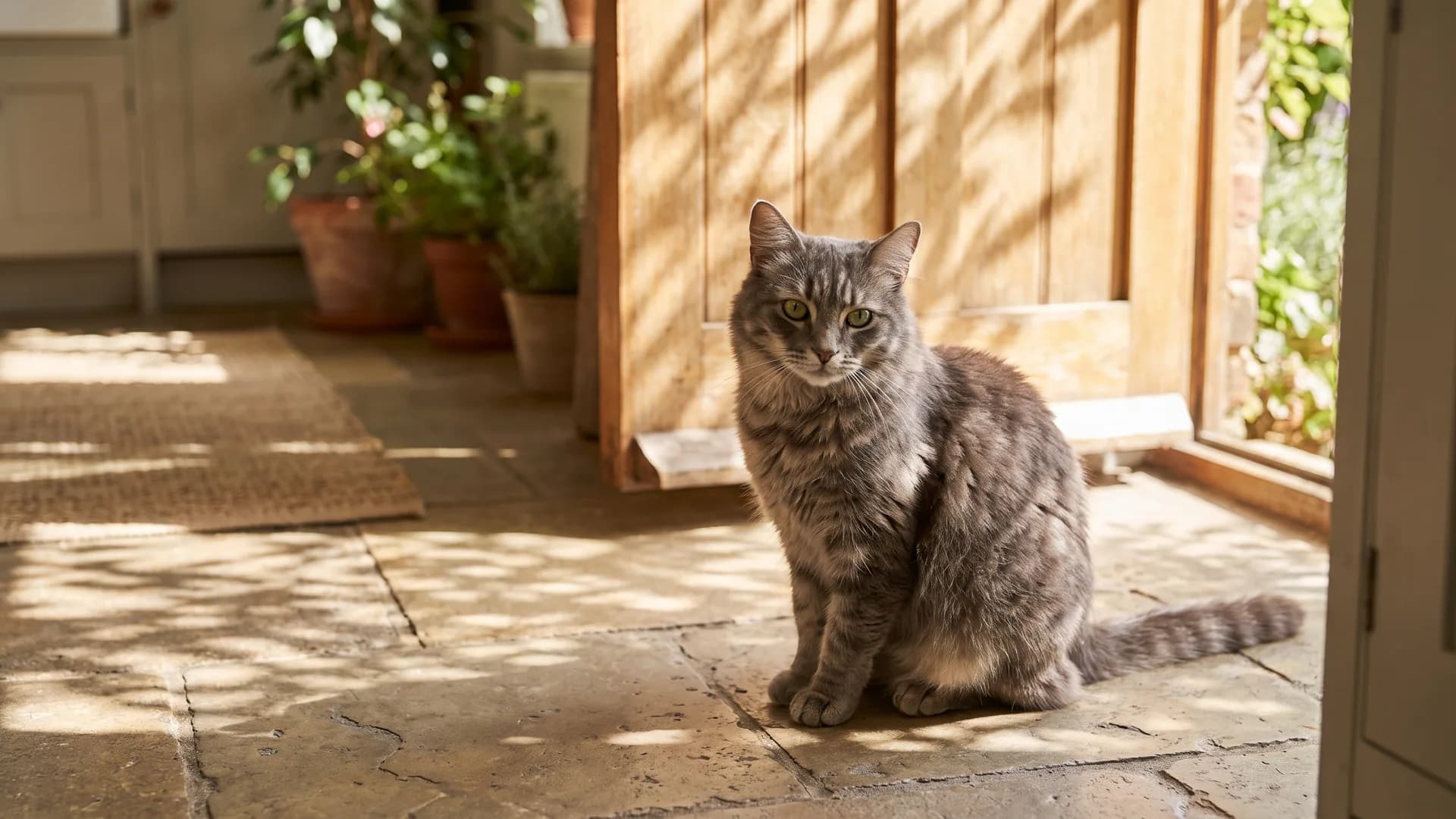
Food names for pets, from Mochi to Pepper
Food and drink names people really register, each tagged with the dish or ingredient it names.
Food names are the fastest-growing habit in the registers and the easiest to get right.
They're short, they end in vowels, and nobody has to ask you to spell them twice. Mochi, Miso, Pepper, Oreo — all of them near the top of the counts.
Each one names something
The tag records the dish or ingredient — Japanese rice cake for Mochi, fermented soybean paste for Miso — which is what separates a food name from a name that merely sounds edible.
Why food works so well
Three things come together here, and they explain both the popularity and why it keeps growing.
The first is shape. Food words are overwhelmingly short and end in open vowels, which is the exact profile a called name wants — and that's not a coincidence, since food vocabulary is the most-used part of any language and constant use wears words down to the easiest possible form.
The second is warmth without sentiment. A food name is affectionate in a way that doesn't announce itself; it says the animal is something you like having around, which is exactly what people mean and often can't say without sounding soppy.
The third is that food is global and the naming is borrowing heavily from it. A great many of the names near the top of this tag come from cuisines outside the English-speaking world, which means they arrive with a settled pronunciation, a clear meaning and almost no company — the best combination available anywhere in the catalogue.
Sweet and short
The shortest food names are the ones that survive being shouted.
The only tag where unisex leads
48 of the 120 food names measure unisex, ahead of female at 41 and male behind both at 24.
No other style tag in this catalogue looks like that, and the reason is structural: food words carry no gender in English, so they get given to both sexes and the measurement comes back in the middle.
It also explains what little documentation there is. 17 of the 120 carry a checked meaning, which is one of the better rates in a catalogue that holds only 111 in total: a dish or an ingredient is exactly the kind of thing a dictionary defines. Mochi is a rice cake, and the page it was read from is on the record.
Density is high too — 237 registrations per name. Food naming isn't a quirk of the last few years; it's spread across every register counted, on three continents.
Choosing one that ages
The risk with a food name is the same as with any joke: whether it still works when the animal is twelve.
Peanut on a large adult dog is funnier than on a puppy, and Pepper stopped reading as a joke decades ago. Names that describe size are the ones that date; names that name a flavour or a dish are the ones that don't.
65 of the 120 classify easy-to-call and 24 soft-sounding, which is the right shape for calling. 15 are single syllables if you want it shorter.
The other thing that ages badly is a food that was having a moment. Every few years a particular dish or drink is everywhere, and the animals named after it that year are dated as precisely as if you'd written the date on the collar. Staples don't do that — a name from something people have eaten for centuries is one that won't mark a moment at all.
Where the untaken food names are
The obvious end of the theme is busy and the rest of the kitchen isn't.
Ingredients rather than dishes are the deepest seam. Spices, herbs, grains, the names of cuts and the words for stages of cooking — short, concrete, comprehensible, and almost entirely unused on animals.
Foods from cuisines you know well and English doesn't are the easiest route to something nobody else has. The names at the top of this tag took exactly that route a few years ago; the same door is still wide open.
Drinks are a smaller and quieter group, and they read slightly more grown-up than the sweet names do — which suits an animal you'd rather not give a cute name to.
Old and regional food words — the dialect names for ordinary things, the words for foods people stopped making — are where the genuinely strange finds are, and several of them are lovely.
The one practical drawback
There's a small cost to food names that nobody mentions until it happens, and it's worth a paragraph.
A dog called after something edible will be called by that word in the kitchen, at the table and in the supermarket, and the dog notices. Households with a Biscuit or a Sausage routinely find the animal arriving hopefully every time somebody says the word for reasons that have nothing to do with it.
It's mild and mostly funny, and it's a real argument for choosing a food you rarely name out loud rather than a staple. Something from another cuisine solves it neatly, because the word simply doesn't come up in English conversation.
The other version of the same thing is a name that sounds like a cue, which food words do more often than you'd expect — several of the short ones sit close to a command. That's the ordinary check, run aloud, and it takes a minute.
The pair the data cannot see
Food names are the commonest source of matched pairs — Salt and Pepper, Coco and Chip, Peanut and Butter.
Every register behind this catalogue records one animal per row, with no household field, so a pair is invisible to us. We can tell you both names are used; we can't tell you they were used together.
That's worth stating plainly because a page confidently listing the best matching pairs is guessing, and the guess is easy to hide behind a theme. The honest version is that food gives you a large enough field to build a pair yourself: 120 names, of which 15 are one syllable and 24 read soft.
If you do pair them, keep the stressed vowels apart. Coco and Cocoa will produce two animals answering to both, which is the practical failure that matching names run into.
And think about what happens if one of them outlives the other, which is a thing that happens. A pair where each name works perfectly well alone survives that; a pair where one name is meaningless without its partner doesn't, and it's an easy thing to check while both are still on a shortlist.
What are the most popular food pet names?
Mochi, Pepper and Oreo lead these registers. The tag records the dish or ingredient that each name refers to.
Why do food names work so well for pets?
Shape, mostly — food words are short and end in open vowels, because constant use wears a word down to its easiest form, and that's the profile a called name wants. They're also warm without being soppy, and a lot of them are borrowed from cuisines outside English, which means no company.
Why is Oreo tagged as food?
Because it names a specific product, and the lexicon records which. A name that merely sounds edible doesn't carry the tag.
Why do so many food names measure unisex?
Because food words carry no gender in English, so they get given to both sexes and the measurement lands in the middle. 48 of the 120 are unisex, which no other style tag here matches.
Will a food name date?
Only if the food was having a moment. Animals named after whatever dish or drink was everywhere in a given year are dated as precisely as if the date were on the collar. A staple — something people have eaten for centuries — marks nothing.
Where do I find a food name nobody uses?
Ingredients rather than dishes: spices, herbs, grains, the words for cuts and cooking stages, which are short and almost untouched. Then foods from a cuisine you know well and English doesn't, which is the route the current leaders took a few years ago.
Is there a downside to a food name?
One mild and permanent one: a dog called after something edible hears that word in the kitchen, at the table and in the supermarket, and turns up hopefully every time. Choosing a food you rarely say aloud — or one from another cuisine — solves it neatly.
Do food names have meanings?
More often than most: 17 of the 120, out of only 111 checked meanings in the whole catalogue, because a dish or an ingredient is the kind of thing a dictionary defines.
Can you suggest matching pairs of food names?
Not from data. Every register records one animal per row with no household field, so pairs are invisible here — any site presenting confident pairings is guessing. Pick two yourself, keep their stressed vowels apart, and make sure each works alone in case one outlives the other.