Pet names starting with P, where the status names live
737 names, and the busiest of them are Princess, Penny, Prince and Precious. No other letter is so full of rank and value.
Princess. Prince. Precious. Penelope. Pearl. Read the top of this letter and you're reading a small catalogue of rank and value, which no other initial in this data comes close to matching.
119 of the letter classifies as elegant-sounding, and the two names at the very top are about as plain a statement of the letter's character as anyone could ask for. P is where people announce what the animal is worth to them.
It's one of the larger letters
737 names at 74 registrations each: big, and used slightly above the catalogue's own rate. That combination is genuinely uncommon.
Most large letters are large because they're diluted — a long tail of names nobody uses much. P isn't. It's large and it's busy, which means the letter is doing real work rather than simply accumulating entries.
Long, for a busy letter
149 of it runs to three syllables or more and 91 to eight letters or more. Penelope, Precious, Pumpkin, Peanut, Poppy.
The status names are long names, because grandeur in English takes syllables — you cannot sound ceremonial in one beat. And length ordinarily costs a name its use, as every other page in this series has pointed out. Here it doesn't, which makes P the clearest exception to the catalogue's most reliable rule.
The reason, most likely, is that these names aren't being used at full length in practice. Penelope is Penny by the second week. Precious survives intact because it's already only two beats. The long P names are formal registrations with short working versions underneath, and the register records the formal one.
The plosive underneath all of it
Whatever the name means, a P opens on a stop, and that's what makes these carry. Lips closed, pressure, release. It's the same mechanism as B without the voicing, which makes it slightly sharper and slightly quieter — a crack rather than a thud.
114 of the letter is a single syllable: Pip, Prince, Pax, Peach clipped down. Those are the ones that work outdoors. Penelope becomes Pen in a field whether or not you ever agreed to it, and it's better to make that decision at the kitchen table than to have it made for you by the wind.
Why people give animals titles
It's worth taking the status names seriously rather than smiling at them, because they're one of the oldest and most consistent habits in pet naming. Prince, Princess, Duke, Duchess, Queen, King, Major, Baron, Lady. Every letter in the alphabet has one or two. P has a nest of them.
The joke is always the same and it's always affectionate: this animal is treated like royalty, and everybody in the house knows it. There's a second layer too, which is that a title is a name you can say with mock exasperation — Princess, said to a cat refusing to come in from the rain, does a job no ordinary name can do.
Precious is the outlier in the group and the only one that's sincere rather than ironic. It goes overwhelmingly to small elderly animals and to first pets, and if you've ever heard someone use it in a waiting room you'll know it isn't a joke at all.
The food cluster
P has the richest seam of food names in the alphabet and it's worth browsing on its own: Peanut, Pumpkin, Pickle, Peaches, Popcorn, Pepper, Pesto, Pretzel.
Two things make these work better than food names generally. The P gives them a hard opening, so unlike most cute names they actually carry. And several of them double as descriptions — Pumpkin for a ginger animal, Pepper for a salt-and-pepper coat, Peanut for something very small. A name that's both a joke and a description has two separate reasons to last.
Place, and the cue to think about
If you train with a mat or a crate, Place is likely to be in your vocabulary, and it opens on the same stop as most of this letter. It's a moderate clash: Place is said calmly and at close range, unlike a recall, so the tone does a lot of the separating for you.
The sharper one is Paw, if you teach it, which shares its whole first half with Poppy and Pax. None of this is a veto. It's a two-minute check to run before you commit, and the check is simply to say the name and your intended cues out loud in sequence and listen for the ones that blur.
Where the P names come from
Penelope is Greek and comes to us through the Odyssey, where she spends twenty years outlasting everybody, which is a reasonable thing to wish on an animal. Phoebe is Greek too and means bright or radiant. Pearl is exactly what it says. Piper is an occupational surname, from playing the pipes, and belongs to the same surname-to-first-name fashion that gave us Harper and Hunter.
Pip is interesting because it barely comes from anywhere. It's a seed, it's a sound, it's a short form of Philip, and it's been used for small animals for generations without anybody being clear which of those is doing the work. That vagueness is a strength: a name with no fixed origin can't be dated and can't be wrong.
Peanut, and naming for size
There's a whole class of P names given for smallness — Peanut, Pip, Pixie, Pebble, Pocket — and it's worth one warning before you use one. Puppies grow. Kittens grow. A name chosen to describe an animal that fits in a shoe will still be the name when the animal doesn't.
In practice that's usually funny rather than a problem, and a large dog called Peanut is one of the better sights at any park. But it's a choice with a joke built into its future, and it's worth being aware you're making it. The size names that age best are the ones that were never literal: Pip works at any weight, where Pocket increasingly doesn't.
The reverse case is rarer and funnier. Naming a small animal something enormous — Pharaoh, Phantom, Pilot — produces a joke that improves with time, because the gap between the name and the animal never closes.
Naming a litter to P
A comfortable letter with a deep pool, and a straightforward trap: the P-plus-short-vowel names all sound alike. Pip, Pippa, Pixie, Penny, Pepper, Peppa. Six names, one opening, and a great deal of confusion for six households.
Reach across the letter's range instead: Pip, Poppy, Pax, Pumpkin, Prince, Piper. Short vowels, long vowels, a consonant cluster, and one with an X in it. The initial stays constant for the registry and nothing else does, which is the whole art of this.
P names for cats
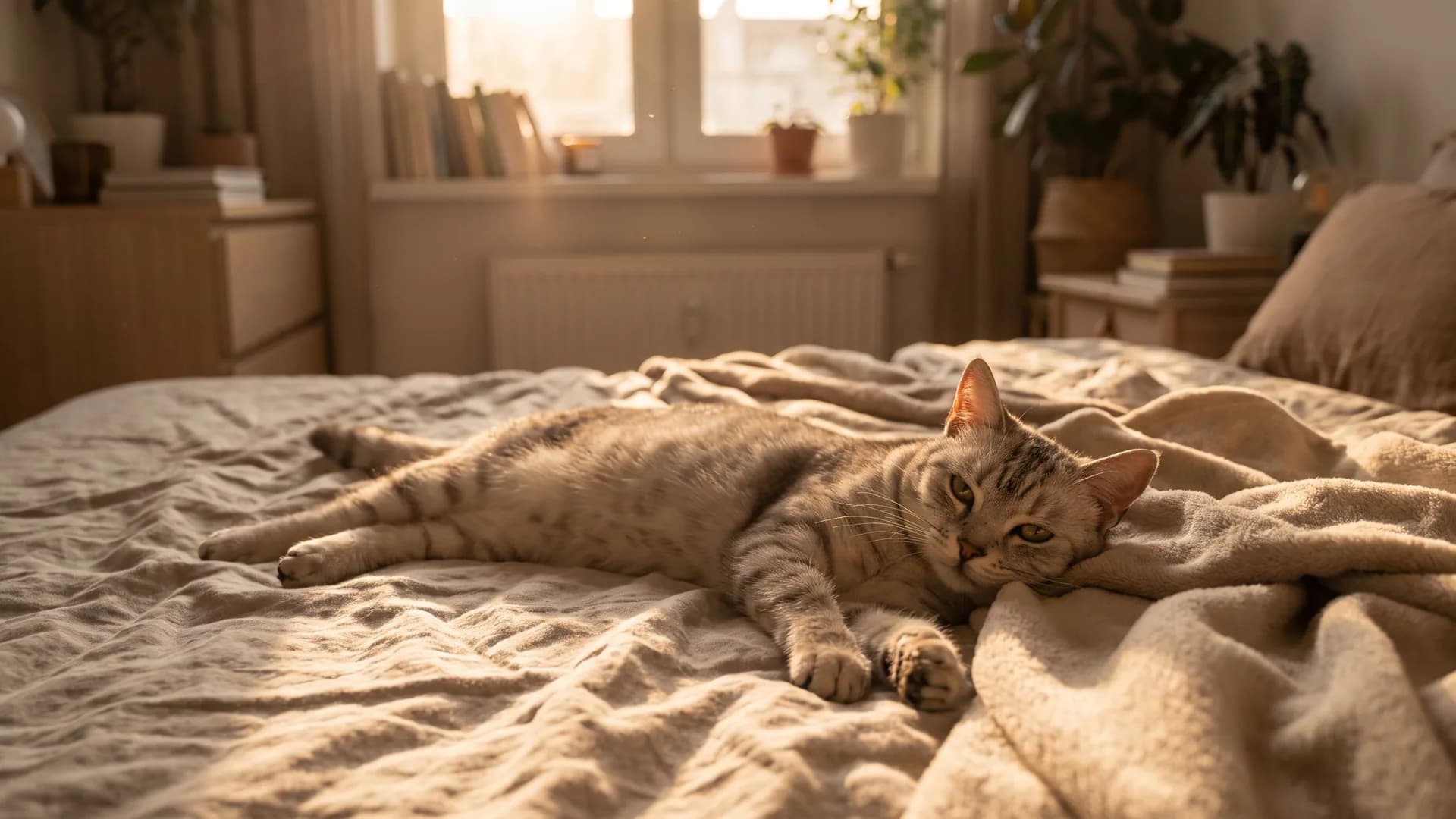
This is one of the best letters for cats in the alphabet, and the food names are why. Pumpkin, Pepper, Peanut, Pickle, Poppy, Pumpkin again for every ginger cat in the country.
Poppy deserves particular mention. It's a flower, it's two soft beats with hard consonants inside them, and it's about as easy to say as any name in English — you can call it, murmur it or mutter it with equal ease, which is the full range a cat name has to cover.
Princess, meanwhile, is the cat name par excellence, and it's noticeably more common on cats than on dogs for reasons anyone who lives with one can explain without effort.
What are the most popular pet names starting with P?
Princess, Penny, Prince, Phoebe and Piper, ordered by how many animals carry each name across public register sources.
Why are there so many royal-sounding P names?
Princess, Prince, Precious, Penelope and Pearl all sit near the top of the letter, and 119 of it classifies elegant-sounding. P holds more status vocabulary than any other initial, and giving an animal a title is one of the oldest jokes in pet naming.
Are P names long?
Longer than most: 149 of them have three syllables or more. Unusually, that doesn't cost them use — the letter still averages 74 registrations per name, probably because the long ones get shortened in practice while the register keeps the formal version.
Which P names work best outdoors?
The short ones. A P is a clean crack of a consonant, so Pip, Pax, Prince and Piper all carry well, while Penelope arrives as Pen whether you planned it that way or not.
What are good P names for a cat?
Poppy, Pumpkin, Pepper, Pickle and Peanut. The letter's food names double as descriptions — Pumpkin for a ginger cat, Pepper for a grey-flecked one — which gives them two separate reasons to last.