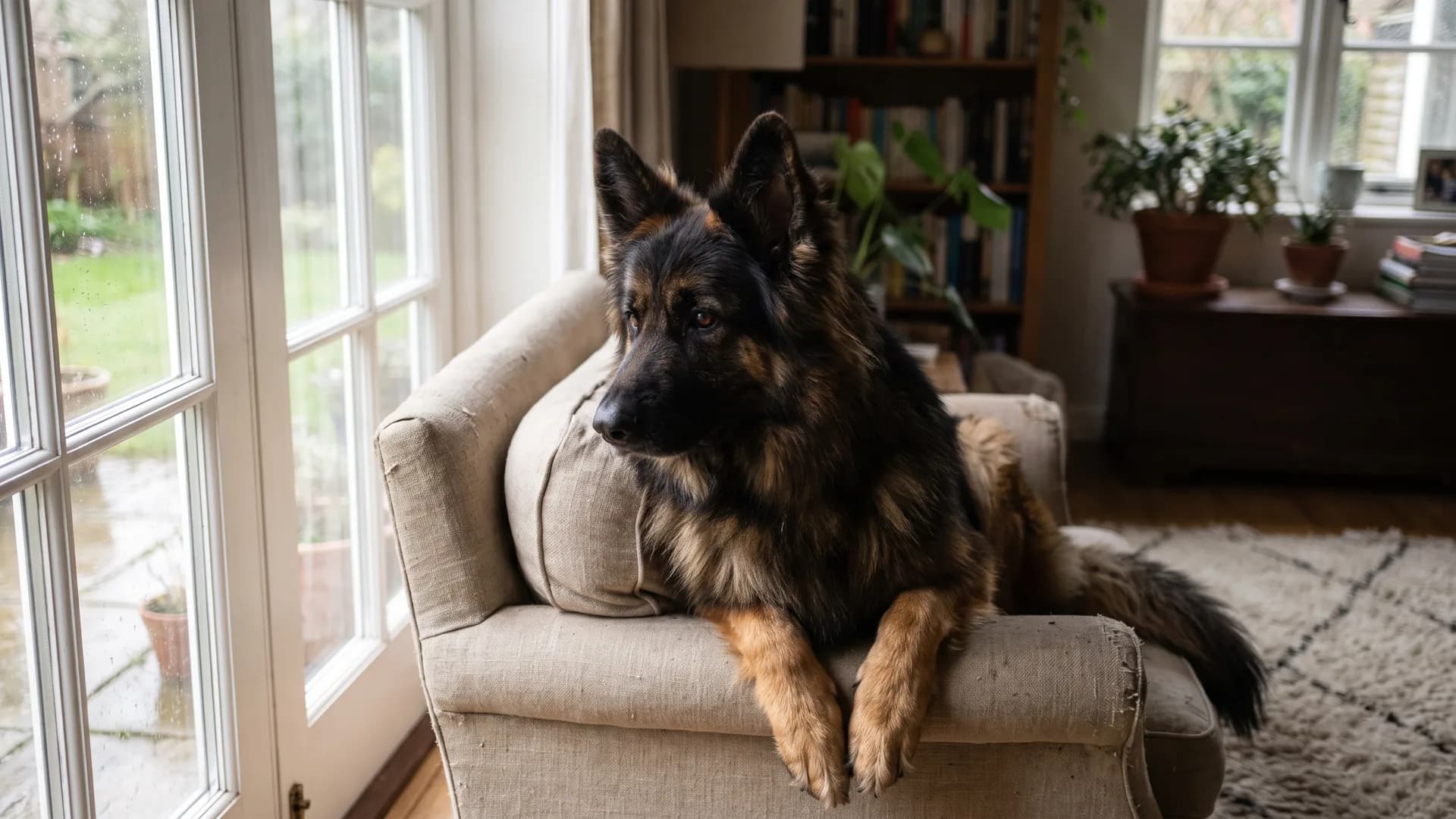
The best dog breeds for families with young children
Good-with-kids is a temperament, not a size or a famous name, and the traits behind it are ones you can look up. Here is what to look for, the breeds that tend to have it, and why supervision beats any list.
A good family dog is patient, tolerant of being handled, and slow to react — a temperament some breeds carry more reliably than others. It is worth choosing for, but it is never a guarantee: the individual dog, how it was raised, and above all supervision decide far more than the name of the breed.
The trait to look for
Tolerance of children is a rated characteristic, and the breed pages carry it, so you can filter for the breeds that tend to be gentle with young ones rather than guessing from reputation. Treat it as a starting shortlist, not a promise — a rating describes a population, and your dog is one animal shaped by its own upbringing.
Size and energy are practical filters too
Beyond temperament, match the build to the household. A large, calm dog is often steadier around children than a tiny, easily-hurt one, but a bouncy adolescent of any size can flatten a toddler by accident. Aim for a dog whose energy your family can actually spend, so the dog is fulfilled rather than frustrated around the kids.
Think in terms of the child's age rather than the abstract idea of children. A crawling baby grabs whatever it reaches and cannot be reasoned with, so this is the stage that asks the most of an adult's attention. A toddler runs, shrieks and falls into things, which is exactly what makes a boisterous young dog a hazard by accident rather than by temper. From school age a child can genuinely learn to be safe around a dog, and by ten or so can take on real responsibility. Buying a puppy the same year a baby is due puts two demanding jobs in the same twelve months, and it is the commonest version of a household that later regrets its timing.
The rule that beats any breed
No breed is a babysitter. The single most important thing is that a dog and a small child are never left together unsupervised, however trustworthy the dog. Teach children to leave a dog alone while it eats or sleeps and to read a turned head or a lifted lip as a request for space; most bites come from a familiar dog whose earlier signals went unread.
Supervision is a specific thing, not a feeling of being nearby. It means being in the room, looking at both of them, and close enough to intervene — not in the kitchen listening. The pattern behind most household bites is dull and repeatable: the dog was cornered, held, sat on, woken, or approached over food; it gave the small signals first; nobody moved; and it escalated to the only thing that has ever worked. Reading the small signals is not a nicety. It is the whole of prevention.
What the dog needs from the arrangement
A family dog needs somewhere children are not allowed to follow. A bed behind a gate, a crate the child never reaches into, a room with the door shut for an hour — any of these gives the dog a way to leave, which is what turns a tense afternoon into an uneventful one. A dog that cannot get away has only one remaining option, and that is where trouble starts.
Feed it away from the traffic, ideally behind a closed door, because guarding a bowl is normal behaviour rather than a fault. Protect its sleep: a startled dog snaps before it is awake enough to recognise anyone. And give it time that has nothing to do with the children — a walk with one adult, a training session, ten minutes of being left alone — since a dog that only ever experiences the household at full volume never gets to rest.
Teaching the child, not just the dog
Half of this is a job for the child, and children can learn it early. No hugging around the neck, no climbing on, no faces pressed into fur, no following a dog that has walked away, and nothing taken out of its mouth. Stroke the shoulder rather than the head. Ask an adult before touching any dog you do not live with, and then ask the person holding it.
The consent test works with children too, and it makes the abstract rule concrete: stroke twice, take the hand away, and see whether the dog leans back in or moves off. It gives a five-year-old something to do rather than something to remember, and it teaches the thing that matters — that the dog gets a say.
Cats can be family pets too
The same child-friendliness rating applies on the cat side of the catalogue, where the calm, sturdy breeds tend to tolerate a busy household best. As with dogs, a gentle temperament plus taught, supervised handling is what makes it work.
A cat has one advantage in a loud house: it can go up. Shelves, a tall scratching post and the top of a wardrobe give it somewhere a toddler cannot follow, which is worth more than any breed choice. Keep the litter tray somewhere a child cannot reach it, teach that a cat walking away is not an invitation, and know that a swat is a warning rather than an attack — the signals that come first are the same ones adults miss.
Choosing the individual, not the label
When you meet a litter or a rescue dog, watch what it does about being handled rather than how friendly it seems in the first minute. Does it stay for a stroke, or does it leave and come back? How does it react to being held for a moment, to a dropped set of keys, to a child's voice? A good rescue will tell you plainly how a dog has been with children and will say when it does not know — and a dog with no history around them is not disqualified, just unproven. The rest of the route is in adopting or buying, and the socialisation window is where a puppy learns that children are ordinary.
What is the best family dog breed?
The ones rated highly for tolerance of children — often steady, patient breeds — make the best starting point, but the individual dog and its raising matter more than the breed. Use the rating as a shortlist, then meet the dog.
Are big dogs safe around children?
Many large breeds are gentle and steady with children, sometimes more so than small, easily-injured dogs. Size is less important than temperament and, above all, supervision — no dog should be left alone with a young child.
How do I keep my child safe around the dog?
Never leave them together unsupervised, teach the child to leave the dog be while it eats or sleeps, and give the dog a place to retreat to. Learn the early signs a dog wants space, because acting on them prevents almost all bites.
Which dog breeds are bad with kids?
Rather than a blacklist, look at the traits: very high energy, low tolerance of handling, or a strong guarding drive make a harder fit for small children. The breed pages carry the child-friendliness rating so you can compare.
Can cats be good with children?
Yes — several cat breeds are rated tolerant and easy-going, and the calm, sturdy ones cope best with a lively home. The same rule holds: supervise, and teach the child to handle the cat gently.
What age should a child be before getting a dog?
There is no fixed age, but the demands differ sharply: a crawling baby cannot be reasoned with, a toddler is a hazard by accident, and from school age a child can genuinely learn to be safe. Getting a puppy in the same year a baby is due puts two hard jobs in one twelve months.
What does supervision actually mean?
Being in the room, watching both of them, and close enough to step in — not within earshot from the kitchen. Most household bites follow the same dull pattern: the dog was cornered, held or disturbed, it gave small signals, nobody moved.
How do I teach a child to behave around a dog?
Concrete rules beat general kindness: no hugging the neck, no climbing on, no following a dog that walked away, nothing taken from its mouth, stroke the shoulder not the head. The stroke-twice-then-pause test gives a young child something to do rather than something to remember.