Pet names starting with T: a big letter that nobody crowds into
715 names at only 57 registrations each. Large, thinly used for its size, and the best-value letter in the alphabet if you want recognisable without shared.
T is one of the larger initials at 715 names, and one of the least concentrated: 57 registrations per name, below the catalogue figure.
That combination is the whole point of the letter. Most large letters are large because a handful of their names are enormous. T is large because it holds a lot of names that a moderate number of animals carry, which makes it the best-value initial here if you want something instantly recognisable that isn't shared with three dogs at the park.
Tucker, Tyson, Theo, Tiger, Toby, Teddy
Nothing at the top of this letter is a runaway. Compare it with L, where the leading names are among the most registered in the entire catalogue and the gap between first and tenth is enormous.
T's leaders are ordinary in scale, and the spread continues a long way down. That's the defining property of the letter, and it means the usual advice about avoiding the top of a list barely applies here. You can take the most popular T name in the catalogue and still not meet another one for months.
A clean stop at the front
140 of the letter classifies as strong-sounding. T is the sharpest of the plosives: there's no voicing behind it, so it arrives as a click rather than a thud, with all its energy concentrated in a fraction of a second.
That makes it the consonant that stays intelligible when a name is shouted rather than spoken. Voiced sounds lose definition when you raise your voice — they blur towards each other — where an unvoiced stop simply gets louder. If you have ever wondered why Tess works at two hundred metres and Maisie doesn't, that's the answer.
There's a related advantage that dog owners notice without articulating: a T name is easy to say sharply without shouting. You can put urgency into it at low volume, which is useful in a vet's waiting room, a café, or anywhere else that a raised voice would be unwelcome.
Short, and mostly two beats
187 of these are four letters or fewer and 466 are two syllables. The letter has no formal register to speak of and doesn't try for one.
Its long names are compounds like Thunder and Tornado rather than anything ceremonial. There's no T equivalent of Penelope or Athena in common use, and the effect is that the whole letter reads as unpretentious. These are working names, kitchen names, names you say fifty times a day.
The -er ending
One pattern worth pointing out: T produces an unusual number of names ending in -er. Tucker, Tanner, Turner, Tiger, Trooper, Thunder.
Most of those were occupational surnames — a tucker finished cloth, a tanner worked leather, a turner used a lathe — and they arrived as pet names through the same surname fashion that gave us Hunter and Harper. The ending gives a name a solid, workmanlike quality that no other suffix quite manages, and it pairs particularly well with the hard T at the front.
It comes with the accent caveat from the R page: in much of England and Australia that final R isn't pronounced, so Tucker ends on a soft vowel there and a firm consonant in North America. It changes the feel of the name more than you'd expect.
The cues that clash
Almost none, which is another quiet advantage. Standard dog cues beginning with T are rare — Take it is about the only common one, and it's used in a calm, close-range register that doesn't compete with a called name.
What T does collide with is the noise people make to get an animal's attention: the tongue click, the tch-tch, the tut. Those are produced in the same part of the mouth as a T, and a cat that has learned to come to a click may occasionally read the first sound of Tilly as the same summons. This is a very minor problem and, if anything, a useful one.
Where the T names come from
Theo is short for Theodore, from Greek, usually glossed as a gift of god. Toby comes from Tobias, biblical and much older than it sounds, and has been a standard English dog name for centuries — the dog in Punch and Judy was traditionally a Toby. Tyson is a surname made famous by a boxer and goes almost exclusively to large, powerful breeds.
Tiger is descriptive and goes to striped cats far more often than to dogs. Teddy is a toy, by way of a president, and is one of the most affectionate names in the alphabet: nobody has ever given a dog that name without meaning it kindly. Trixie and Tilly are worn-down forms of longer names that have long since become names in their own right.
Naming a litter to T
A good letter for it. The pool is deep, the names are varied in shape, and the shared hard opening doesn't cause the confusion a shared soft opening does — because the T is so brief that the vowel behind it arrives almost immediately and does the distinguishing.
Tess, Toby, Tucker, Tilly, Thor, Tansy. Six names, six vowels, one initial, no confusion. The only thing to avoid is doubling up on the -y ending, which is the usual advice everywhere in this alphabet: Tilly, Trixie, Tammy and Tessie together are one rhythm repeated four times.
The TH names are a different letter
Worth separating before you shortlist, because the alphabet files them together and the mouth doesn't. Theo, Thor, Thunder and Thistle don't open on a T at all. They open on a soft th, which is a fricative made with the tongue against the teeth — about as far from a clean stop as English gets.
The difference outdoors is substantial. Thor is a fine name and it doesn't cut the way Tess cuts; what carries in it is the vowel and the R, not the opening. If you chose it for its bluntness you chose it for something the word doesn't actually have.
Theo has the same property and it matters less, because the name is soft all the way through and nobody picked it expecting an edge. It's simply worth knowing which of the two T sounds you're looking at, since the list above won't tell you.
What thin use is actually worth
It's easy to read the letter's low average as a weakness, so it's worth stating the other way round. A name that a moderate number of animals carry is a name that has been tested — people have chosen it, lived with it and kept choosing it — without becoming so common that it stops identifying your animal.
That's the sweet spot this entire site keeps circling. An invented name is untested. A top-ten name is shared with everyone. The middle of a broad, thinly used letter is where the names that do both jobs live, and T has more of that middle than anywhere else in the alphabet.
T names for cats
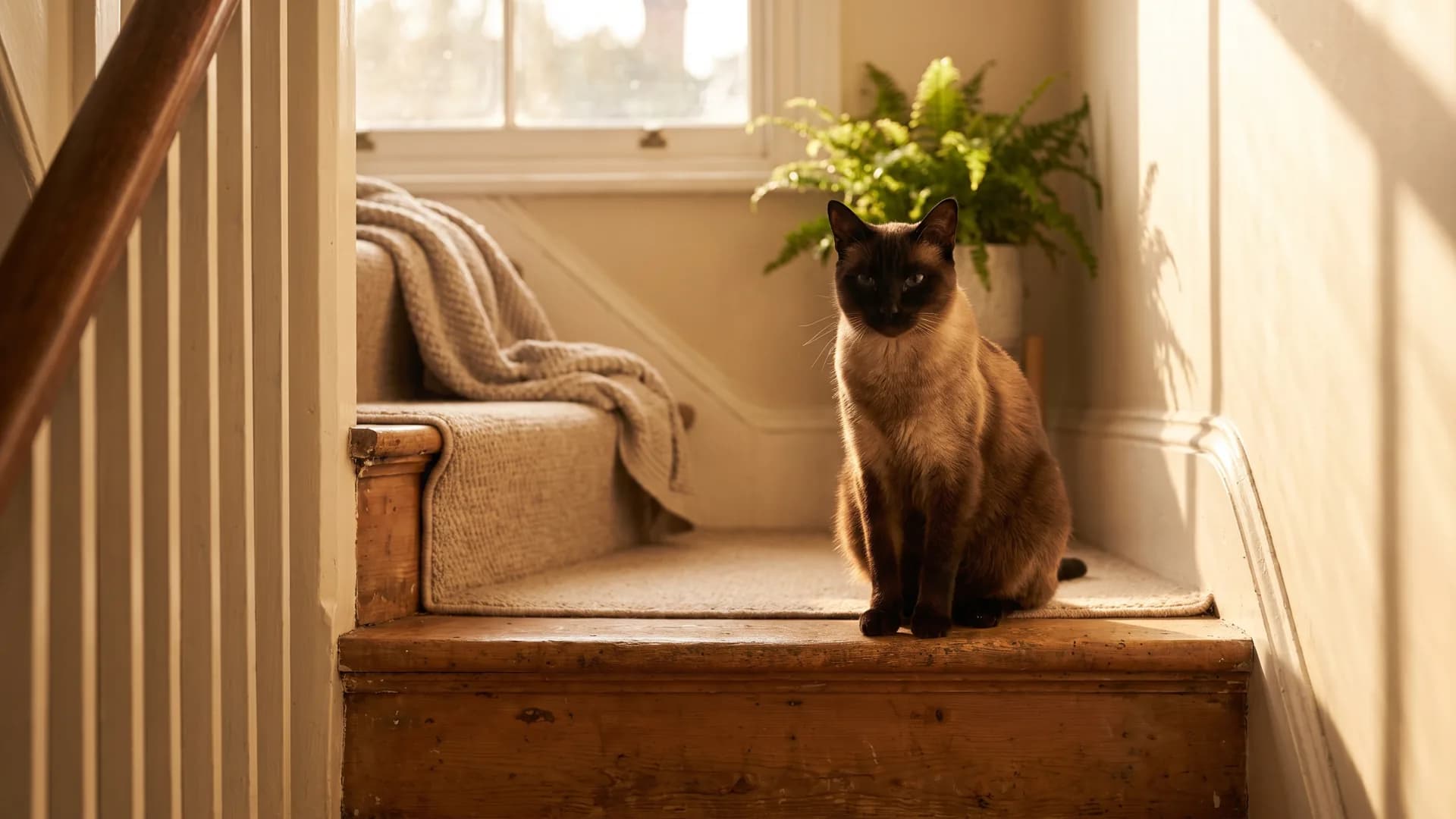
Cats do well here and the letter's most-used cat names are almost all descriptive or affectionate rather than grand. Tiger, Tigger, Tilly, Toby, Tinkerbell, Tofu.
Tigger is the pick for a bouncy tabby and has the advantage of being immediately explicable to anyone who asks. Tofu belongs to the food tradition and works particularly well for a white cat, in the same family as Mochi and Biscuit.
The hard T is genuinely useful with a cat, for one reason people underestimate: it makes a name easy to say at conversational volume from another room. You can get a cat's attention without shouting, which is more or less the only way of getting a cat's attention that has ever worked.
What are good pet names starting with T?
Tucker, Tyson, Theo, Tiger and Trixie lead the list, ordered by registration count across public register sources.
Are T names common?
The letter is large, at 715 names, but thinly used at 57 registrations each, which is below the catalogue average. You get a wide choice without much crowding, which is a combination no other big letter offers.
Do T names carry outdoors?
The consonant does. T is the sharpest plosive in English, arriving as a click rather than a thud, and unvoiced sounds hold their definition when you raise your voice where voiced ones blur. 140 of the letter classifies strong-sounding.
Why do so many T names end in -er?
Tucker, Tanner, Turner and Trooper were occupational surnames before they were pet names, and they arrived through the same fashion that made Hunter and Harper popular. The ending gives a name a workmanlike quality that suits the hard opening consonant.
What are good T names for a cat?
Tiger, Tigger, Tilly, Toby and Tofu. The sharp T is genuinely practical indoors, because it lets you get a cat's attention at conversational volume from another room rather than having to raise your voice.