Pet names starting with F, and the one family that carries the letter
454 names at 54 registrations each. A thin letter held up by variants of a single name, which turns out to be an argument for using it.
F is one of the least used letters in this catalogue. There are 454 names in it, averaging 54 registrations each, both figures well under what the catalogue manages overall.
And a striking share of the use it does get belongs to a single name wearing three hats. Frankie, Frank and Franklin between them outweigh everything else at the top of the list, which means that if you set that one family aside, the letter is even thinner than it looks.
What's left once you set Frankie aside
Fiona. Fluffy. Frida. Foxy. Fudge. The letter's real character is descriptive rather than personal: it names the coat, the manner, or the animal this animal reminds you of. That's an unusual balance. Most letters are mostly inherited human names with a few descriptions mixed in, and F is closer to the reverse.
112 of the letter classifies as soft-sounding, which is what happens when an F is followed by a liquid consonant. Fluffy, Flora, Freya, Flossie. The fl- and fr- openings are doing an enormous amount of the work in this letter, and they're the reason it feels gentle even when the names themselves are blunt.
A quiet opening, and what that means outdoors
F is a fricative. There's no stop, no burst, no closing of anything: you're just pushing air between your lip and your teeth. It's a sound made almost entirely of noise, and noise is precisely what a windy field is already full of.
This is the practical argument against the letter, and it's the most useful thing on this page for anyone choosing a name for a dog that will be off-lead. A B or a K arrives at a distance as a distinct event. An F arrives as a slightly louder patch of wind. What the dog actually hears is the vowel after it.
98 of these names are single syllables, which is where the letter puts up its best fight: Fred, Frank, Fox, Finn. One beat, a strong vowel, and a consonant at the end to close it off. Those carry perfectly well, because the work has been moved off the opening and onto the rest of the word.
And a word about Fetch
The other reason F needs thinking about with a dog: Fetch is a cue in most households that own a ball, and it's the only common cue beginning with this sound. A dog called Finn or Fudge is hearing the same opening for its name and for the most exciting word in its vocabulary.
In practice this is less trouble than the Come clash, because a mistaken fetch costs you nothing. The dog looks hopefully at a ball that isn't there. It's still worth a moment's thought if you're naming a retriever-shaped animal that already believes everything is about balls.
Why Frankie, of all names
It's worth asking why one family of names props up an entire letter, because the answer says something about what a good pet name is. Frank gives you a single hard-vowelled syllable that ends on a consonant cluster you can bite off. Frankie takes that and adds the affectionate ending English reaches for whenever it likes something. And Franklin sits behind both as the formal version nobody uses except on paperwork.
So the family covers every register a household needs, from the version you shout to the version you write on a form, and all three are obviously the same name. That's genuinely rare. Most names give you one or two of those and leave you improvising the rest.
There's cultural weight behind it too — a singer, a president, a monster with a different spelling — but the reason it's outlasted all of them is structural. Frankie is a name that works on a mastiff, a chihuahua, a tabby and a lop-eared rabbit without changing character, and very few names stretch that far.
The upside of being unused
A thin letter is an uncrowded one, and that's genuinely valuable. At 54 registrations per name you're far less likely to run into your own choice at the park than you would be picking from a letter twice the size.
What makes F unusual is that the names aren't obscure. Fred, Frida, Fern and Fox are all instantly understood, immediately spellable and entirely ordinary words. They're simply less chosen. That combination — familiar to hear, rare in practice — is the hardest thing to find in pet naming, and this letter has it lying around unclaimed.
Compare that with the usual route to an uncommon name, which is to pick something genuinely unusual and then spend ten years spelling it at reception desks. The F names cost you none of that.
The food half
There's a small, cheerful cluster of F food names that deserves pointing out: Fudge, Fig, Feta, Fennel, Fritter. Food names as a category tend to suit small round animals and tend to age well, because a joke about a biscuit doesn't become dated the way a joke about a television programme does.
Fudge in particular has the useful property of describing a colour while sounding like an endearment, which is the same trick Brownie and Biscuit pull in other letters. If your animal is brown, you have a free and very durable name available to you.
The two-letter openings
One more thing about this letter that repays a minute's attention: F almost never stands alone at the front of a name. It comes with a partner. Fr- in Frank, Frida, Fred and Freya. Fl- in Flora, Flossie and Fluffy. Fi- in Fiona and Fitz. The bare F followed by a plain vowel is comparatively rare, which is why Fox and Fern stand out so sharply from the rest of the list.
This matters because the cluster, not the F, is what your ear registers. Fr- gives you a bit of friction and then a roll, which is why those names feel brisk. Fl- glides, which is why those feel gentle. If you're weighing two F names against each other and can't work out why one appeals more, it's almost always this rather than the meaning.
It also explains why the letter sounds more coherent than it has any right to. A group of names sharing an opening cluster share a great deal of their first syllable, and a shared first syllable is most of what makes two names feel like they belong to the same family.
Naming a litter to F
Breeders drawing F have a middling job: not the disaster of Q, not the comfort of B. The supply is genuinely limited once you rule out the Frank family, so the temptation is to reach for the fl- and fr- names because they sound nice together.
Resist that specific instinct. Flora, Flossie, Freya and Frida make a beautiful list on paper and four indistinguishable noises in a garden, because the consonant cluster at the front dominates the whole first half of each word. Use the letter's other shapes: Fox, Fern, Fig, Fiona, Fitz. Different vowels, different lengths, same initial, and nobody's puppy grows up answering to its sibling's name.
F names for cats
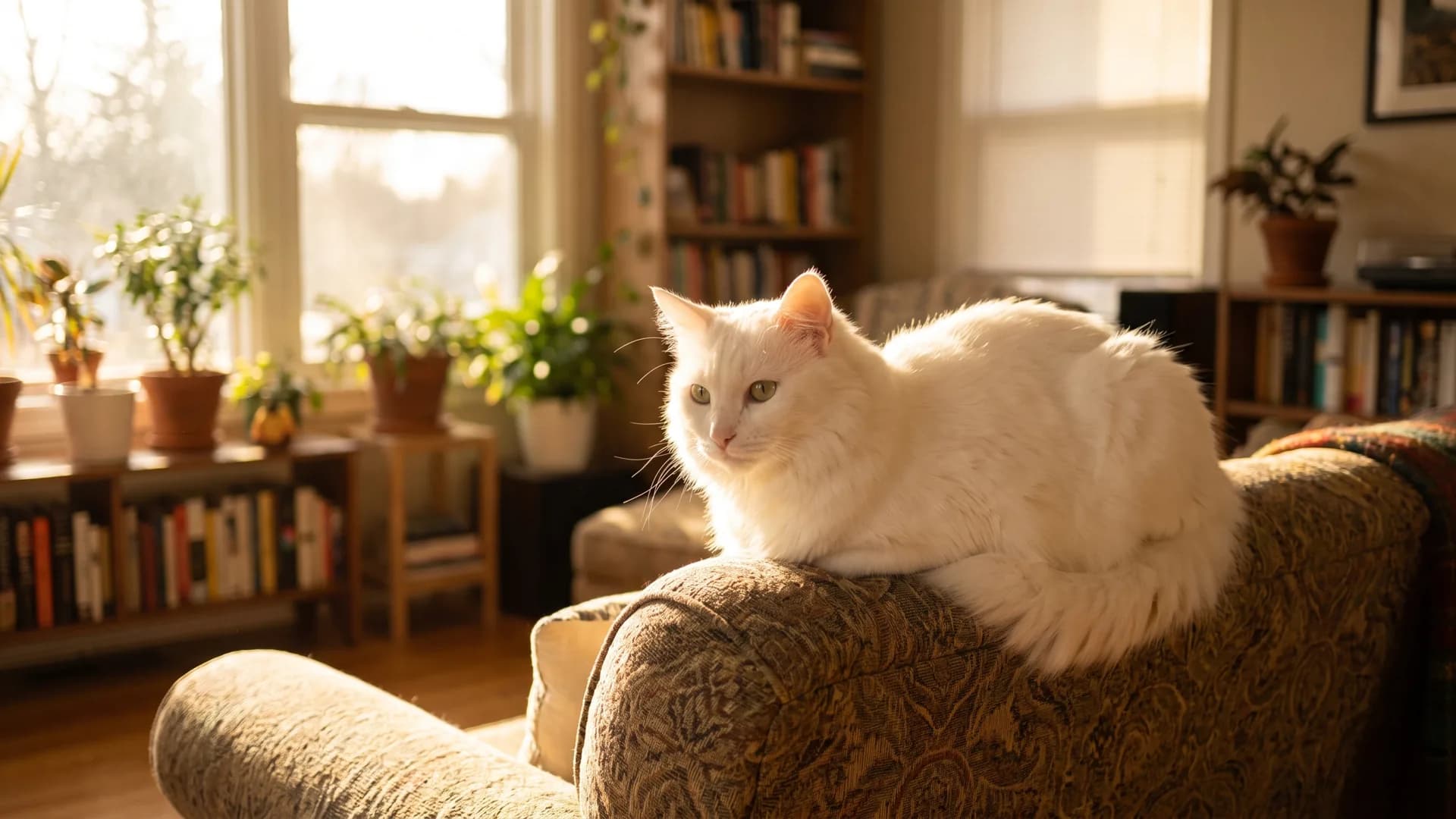
This is where the letter is at its strongest, and Fluffy is the proof. It's the archetypal cat name in English, so much so that it's become shorthand for the whole idea of naming a cat, and it works for exactly the reasons this page has been describing. Soft opening, soft middle, soft ending, nothing sharp anywhere in it.
The fricative that fails outdoors is an asset indoors. It makes a name you can whisper, and a great deal of talking to a cat is done at something close to a whisper. Fern, Figaro, Flora, Freya, Felix: all of them sit comfortably in that register.
Felix is worth its own note. It's Latin for lucky or happy, it's been a cat's name for well over a century, it survived being a cartoon and then a tin of cat food, and it's still in use. Very few names take that much cultural traffic and come out the other side intact.
What are good pet names starting with F?
Frankie leads the list by a distance, followed by Fiona, Fluffy, Frida and Foxy. The ordering is by how many animals actually carry each name across the register sources rather than by anybody's taste.
Are F names uncommon?
Comparatively, yes: 454 names at 54 registrations each, both below what a letter this size would suggest. That makes it a good place to look for a name that's familiar to hear and rarely chosen.
Do F names carry well outdoors?
Less well than a plosive. F is a fricative — air rather than a stop — so it doesn't cut through background noise, and the vowel behind it does most of the work. The one-syllable names like Fred, Finn and Fox are the letter's strongest option for a dog off the lead.
What are the best F names for a cat?
The soft ones, which is most of the letter: Fluffy, Felix, Fern, Flora, Figaro. The airy opening that costs a dog its carrying power costs a cat nothing, because you're never more than a few feet away when you use it.
Is Fetch a problem if my dog's name starts with F?
Mildly, and only if you play ball. The name and the cue share an opening sound, so a dog may check for a ball when you're only saying its name. It's a much cheaper mistake than a recall clash, and most dogs sort it out quickly.