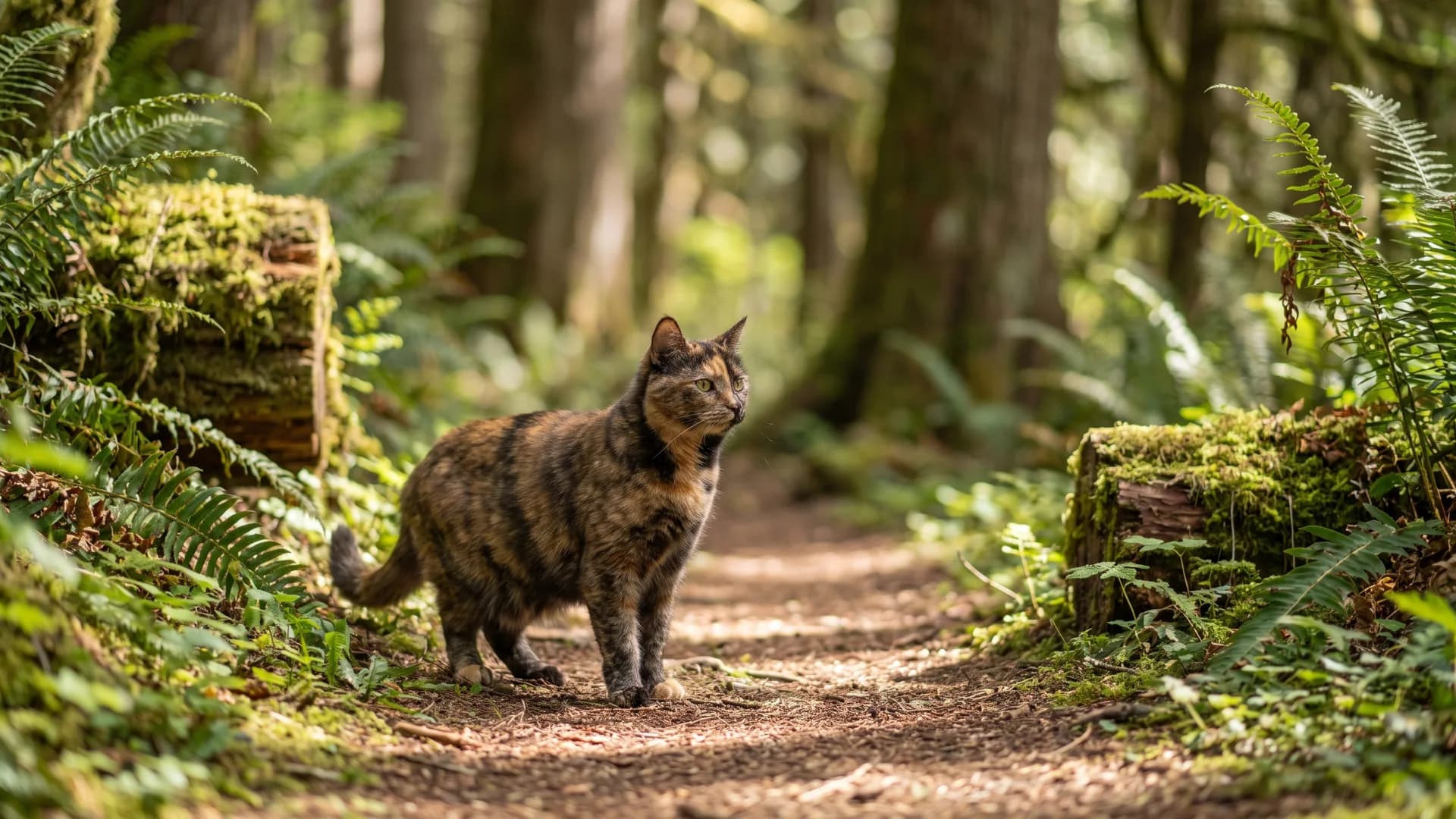
Female cat names, from the registers rather than a wishlist
What owners really call female cats, counted from shelter and licence records, with the short and soft-sounding options separated out.
Cats answer to a name on their own terms, which doesn't stop nearly every owner choosing carefully. The names here are the ones that show up most in records where the animal is a cat and was sexed female.
There are 1,763 of them in the catalogue. One thing to be precise about before the list: the counts behind it are per name, not per species. A name's number is every registration it holds across every animal, so this is the most registered names that female cats carry rather than a cat-only ranking. Building the second thing would need counts split by species, which the registers don't publish.
Cat naming really is different
The difference shows up in the density rather than in the sounds. These 1,763 names average 160 registrations each against 88 for the female dog list — nearly twice as many animals per name.
The cause is the size of the field. Under half as many distinct names are recorded for cats, so this list is the concentrated core of pet naming rather than its long tail. Cat owners aren't less imaginative; there are simply fewer cat names in circulation, and everybody is drawing from the same smaller pot.
The shape is familiar though: 1,119 of these names are two syllables, 234 are one, and 596 end in -a. Whatever people say about cats ignoring their names, they choose them as if they expect to be heard.
Soft sounds, measured rather than felt
The catalogue classifies a name's sound from its letters — soft, strong, playful, elegant, easy to call — which is a description of the spelling and not a claim about character.
It's a useful filter anyway. Soft names end in a vowel or a liquid consonant, and they're the ones that carry indoors without sounding like a reprimand. If you're choosing a name you'll say quietly several hundred times a week, this is the shortlist to start from.
Where the sex in this list comes from
From shelter records that state it: female at 65% or more of a sample of at least five animals. Not from how the name sounds, and not from anybody's judgement about what suits.
That matters more for cats than for dogs, because shelters estimate a kitten's sex and are sometimes wrong — which is how a great many cats end up with a name that no longer fits. It's common enough that vets mention it unprompted, and it's the single most avoidable naming regret there is.
If the sex isn't yet confirmed, the unisex filter is the practical answer. It holds the names the records show going to males and females in near-equal measure, between 35% and 65% female, rather than the ones that merely sound neutral to an English ear.
Naming is not global
Before reading any popularity list, including this one, it's worth knowing where it was counted.
Read that block rather than a summary of it. The regions genuinely disagree, and a name that leads one of them can be missing from another's top eight altogether — which means the ordering above is a fact about naming in the cities these registers cover, not about naming everywhere.
What this list cannot tell you
Whether a name suits a breed, a coat or a temperament. No source we have connects any of those to a name, and any site offering you names for a particular breed is offering you an opinion with a filter on it.
Whether your cat will respond. Cats do recognise their names; whether they act on them is a separate question this catalogue has no data on, and the honest answer is that it depends on what usually follows the sound.
And what a name means, wherever nobody has sourced it. Those fields are empty rather than filled in plausibly, which is a deliberate choice — a citation makes a wrong meaning look more credible rather than less.
Choosing a name a cat will actually hear
Cats hear high frequencies considerably better than low ones, which is the one piece of physiology worth acting on. A name with a bright vowel carries to a cat across a flat better than a low, closed one does.
Most owners arrive at this by accident, which is part of why the list above leans the way it does — the names that rose to the top are disproportionately the ones with an ee, an i or an open a in the stressed position. If you're choosing between two candidates and everything else is equal, take the brighter one.
In a household with more than one cat the harder problem is distinctness. Two names sharing a stressed vowel — Milly and Lily, Coco and Bobo — are two names one cat will answer to. Read a shortlist against the names already in the house before you read it against anything else.
And keep the calling form short. A three-syllable name gets shortened by the household within a fortnight, so the version the cat learns is the one nobody chose. Pick the abbreviation deliberately, or expect to inherit one.
Kittens, and names that have to last
A kitten is small for about six months and then isn't, which catches out anyone who names for size.
The registers are full of adult cats called Tiny and Peanut, and the names have survived perfectly well — but they were chosen by people who didn't mind the joke ageing. If you'd mind, the safer choices describe nothing at all: a word, a place, a character, a colour that won't change.
The same applies to names that describe behaviour. A kitten that hides is not necessarily a shy adult, and a name like Shadow chosen in week one can end up describing an animal that now sits on visitors' heads. Appearance is a safer bet than character, and neither is as safe as a name that simply sounds nice.
The one question worth answering first
Before any list is useful, decide whether you want a name that describes the cat or a name that doesn't. Almost every naming difficulty people run into comes from not having settled that.
A descriptive name — a colour, a marking, a habit — is accurate, never dates, and explains itself to every visitor. Its weakness is that it ties the name to the animal's appearance, which is fine until you adopt a second cat of the same colour and discover you've used the obvious name.
A name that describes nothing is free of all that. It can be anything you like the sound of, it survives the cat changing, and it doesn't compete with any future animal. Its weakness is that it has to earn its place on sound alone, with no accuracy to fall back on.
Neither is better. But choosing between them takes a minute and saves an hour of scrolling, because it eliminates half of every list on this site immediately.
The names that have always been here
Something worth noticing if you scroll the full list: the female cat names divide cleanly into two traditions that have been running in parallel for a very long time.
One is descriptive and domestic — Misty, Sooty, Patches, Smokey, Snowy. These are the names of a hundred years of household cats, they're accurate, and nobody has to have them explained. They've gone quietly out of fashion without ever stopping being good.
The other is the borrowed human name — Luna, Bella, Lily, Daisy, Willow — and it's the one dominating the top of the list now. If you want a name that will sound like it belongs to this decade, that's where to look. If you'd rather it didn't, the first tradition is sitting there largely unclaimed.
What are the most common female cat names?
The list above, ordered by share of the registers. Note that the counts are per name rather than per species, so it's the most registered names that female cats carry rather than a cat-only ranking.
Do cats respond to their names?
Cats recognise their names; whether they act on them is a separate question this catalogue has no data on. What it can tell you is which names owners actually chose, and how often.
Are cat names more popular than dog names?
They're not more common overall, but they're more concentrated: female cat names average 160 registrations each against 88 for female dog names, because under half as many distinct names are recorded for cats.
What if the shelter got my kitten's sex wrong?
It happens, which is the argument for a unisex name. Those are measured rather than guessed: the records show them going to males and females in near-equal numbers, between 35% and 65% female.
How many female cat names are in this catalogue?
1,763, every one of them from public shelter and licence records rather than invented for a list.
Which names carry best to a cat?
Bright ones. Cats hear high frequencies considerably better than low ones, so a stressed vowel like the ee in Mimi or the i in Willow reaches a cat across a flat more readily than a low, closed sound. Between two names you like equally, take the brighter.