Weimaraner
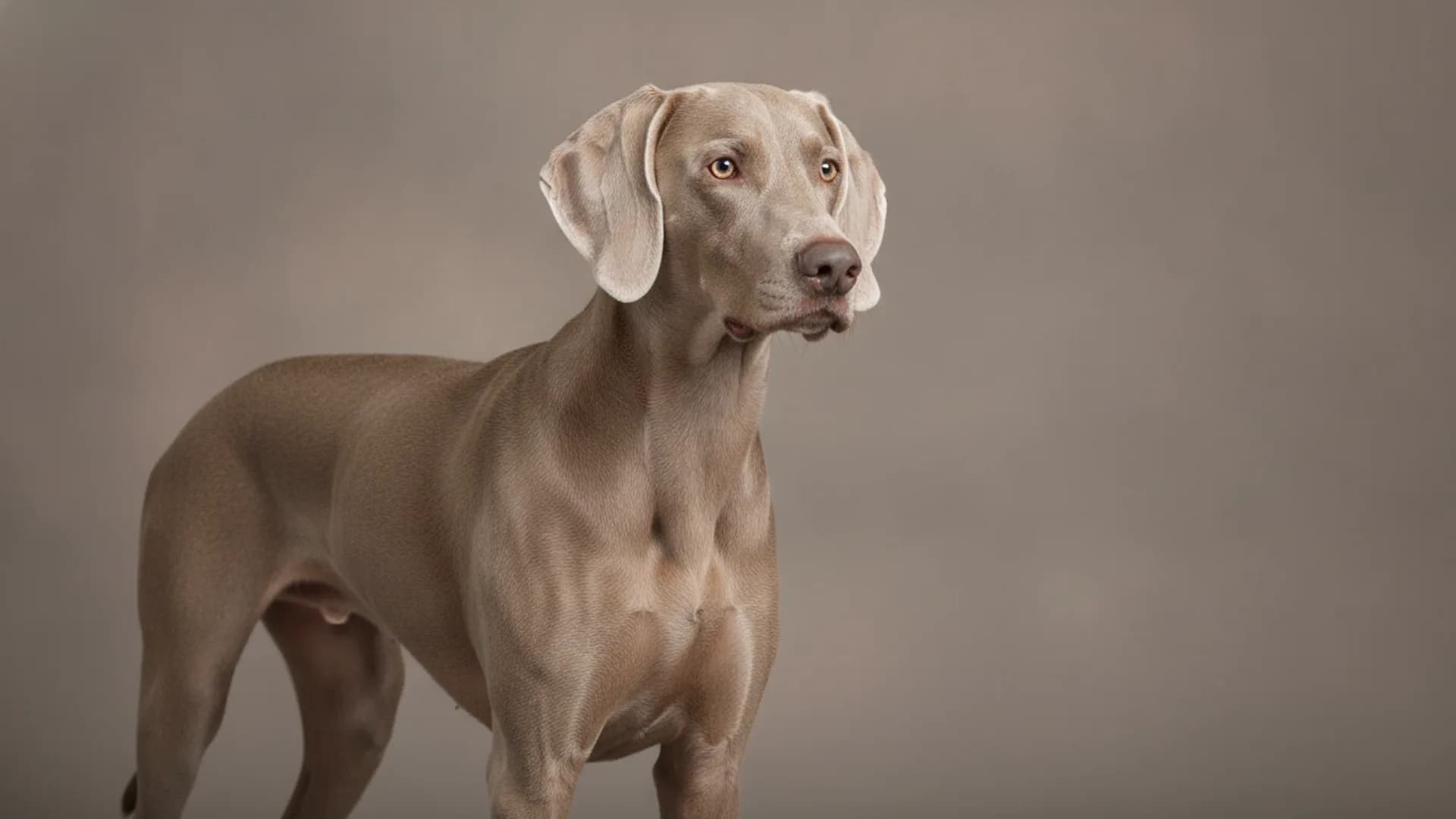
The Weimaraner is the grey German pointer — the "Grey Ghost" — bred for the court of Weimar to hunt large game and later adapted to birds. Its silver coat and pale eyes make it one of the few breeds recognisable in silhouette alone.
History
The breed is traditionally linked to Grand Duke Karl August of Saxe-Weimar-Eisenach, at whose court it is said to have been kept in the early nineteenth century. The early dogs were used on big game, bear and deer among them; in the second half of the century the same dogs were converted into all-round workers on fur and feather.
A German breed club formed in 1897 and guarded the dog jealously: only members could own and breed one, and a dog leaving the circle was sterilised first. An American sportsman, Howard Knight, joined the club and brought two Weimaraners to the United States in 1929, both sterilised; breeding stock followed in 1938, and the American Kennel Club accepted the breed in 1943. Later the photographer William Wegman's portraits of his own dogs made the grey face familiar to people who had never seen one hunt.
Temperament
A Weimaraner is forceful, clever and possessive of its people. It follows its owner so closely that it gets trodden on, objects loudly to closed doors, and suffers real distress when excluded. With family it is affectionate and clownish; with strangers it is more aloof than most gun dogs, and it will bark at a caller.
It is headstrong in adolescence and tests rules. Its origins as a hunter of large animals show in a pronounced prey drive, and cats, rabbits and poultry are often not safe with it. Children get a loyal but heavy and exuberant companion.
Living with the breed
Cleverness is the surprise. Weimaraners learn to work door handles, open fridges and gates, and take food from the back of the worktop, and owners end up fitting child locks. A bored one dismantles sofas, skirting boards and car interiors, and some injure themselves trying to break out of a crate or room when left.
The adult eye is light amber, grey or blue-grey, which adds to the ghostly look. The sleek coat sheds moderately and needs little attention, but it gives no warmth, and the dog expects a place on the furniture. It needs room, a secure garden and a household where somebody is around.
Care and training
Two hours a day of hard exercise is a fair expectation for an adult — free running, tracking, retrieving from water, or accompanying a runner. Mental effort counts as much: the breed takes well to tracking and scent work, which draw on what it was made for.
Start training the week the puppy comes home and keep the rules the same from every member of the family. It responds to reward and fairness and resents rough treatment, yet it will exploit a pushover. Gradual practice at being alone, from the first days, is the single most useful thing an owner can do. The coat needs only a weekly wipe with a hound glove.
Health
Gastric dilatation-volvulus — bloat, where the stomach distends and rotates — is a particular danger in this deep-chested breed and is fatal without urgent surgery. Hip dysplasia, an inherited laxity of the hip joint, is screened for by scoring both parents. Hypothyroidism, a shortage of thyroid hormone, appears in adults.
Growing puppies are prone to hypertrophic osteodystrophy, a painful inflammation of the growth plates of the long bones that brings fever and lameness. Spinal dysraphism, a developmental defect of the spinal cord, has been described in the breed. Extra eyelashes that rub the eye are also seen.
Who it suits
An experienced, active owner who wants a shadow and has hours to give it will get an extraordinary dog. It is too much for most first-time owners, for anyone with a full-time job away from home, and for households with small pets it might regard as game.
Questions
Why is the Weimaraner called the Grey Ghost?
The nickname comes from the coat, which ranges from silver-grey to mouse-grey and is matched by pale amber or grey eyes. The Kennel Club puts the name down to that silver-grey jacket, and in poor light a working Weimaraner seems to appear and vanish among the trees.
Can a Weimaraner be left alone?
Poorly. Separation anxiety is a familiar problem in the breed, and affected dogs howl, wreck rooms or hurt themselves attempting to escape. Short absences built up carefully from puppyhood help; a daily routine of many hours alone does not suit it.
Are Weimaraners good with cats?
Often not. The breed was created to pursue game and retains a strong instinct to chase and catch small animals. Some live peacefully with a cat they were raised beside, but introductions to an adult dog are risky and outdoor cats are frequently chased.
Is there a long-haired Weimaraner?
There is. The Kennel Club in Britain registers a long-haired variety alongside the smooth one, though it is far less numerous. The American standard treats a distinctly long coat as a disqualification in the show ring. Apart from the hair it is the same dog.
Characteristics
- Origin
- Germany
- Size
- Large
- Weight
- 25–41 kg
- Height
- 58–69 cm
- Lifespan
- 10–13 yr
- Group
- Sporting
Traits
- Affection
- Energy
- Intelligence
- Shedding
- Grooming
- Good with kids
Similar breeds
Dogs with a comparable size, coat and temperament.
| Breeds | Size | Weight | Height | Lifespan |
|---|---|---|---|---|
| Weimaraner | Large | 25–41 kg | 58–69 cm | 10–13 yr |
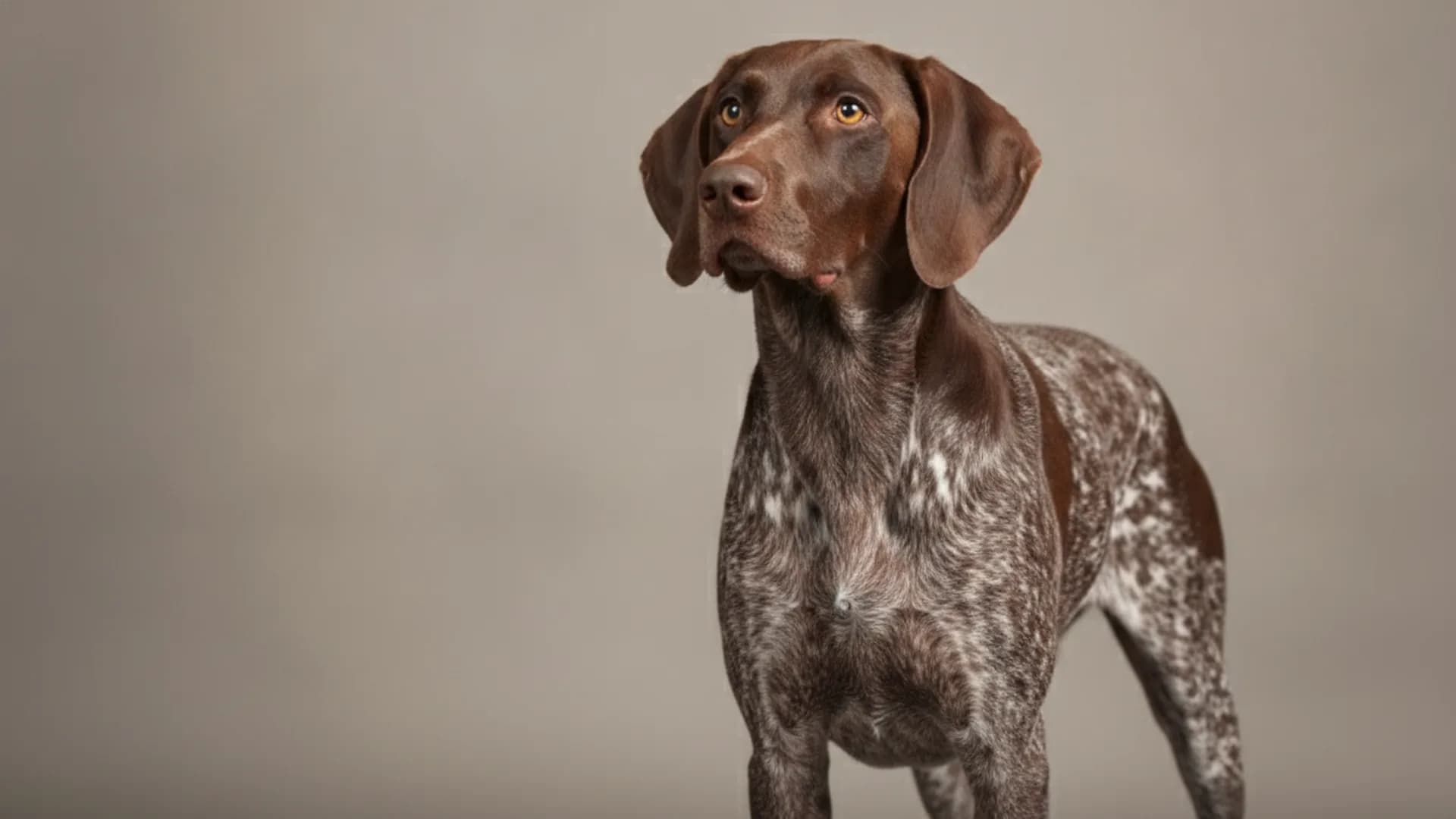
| German Shorthaired Pointer | Large | 20–32 kg | 53–64 cm | 10–12 yr |
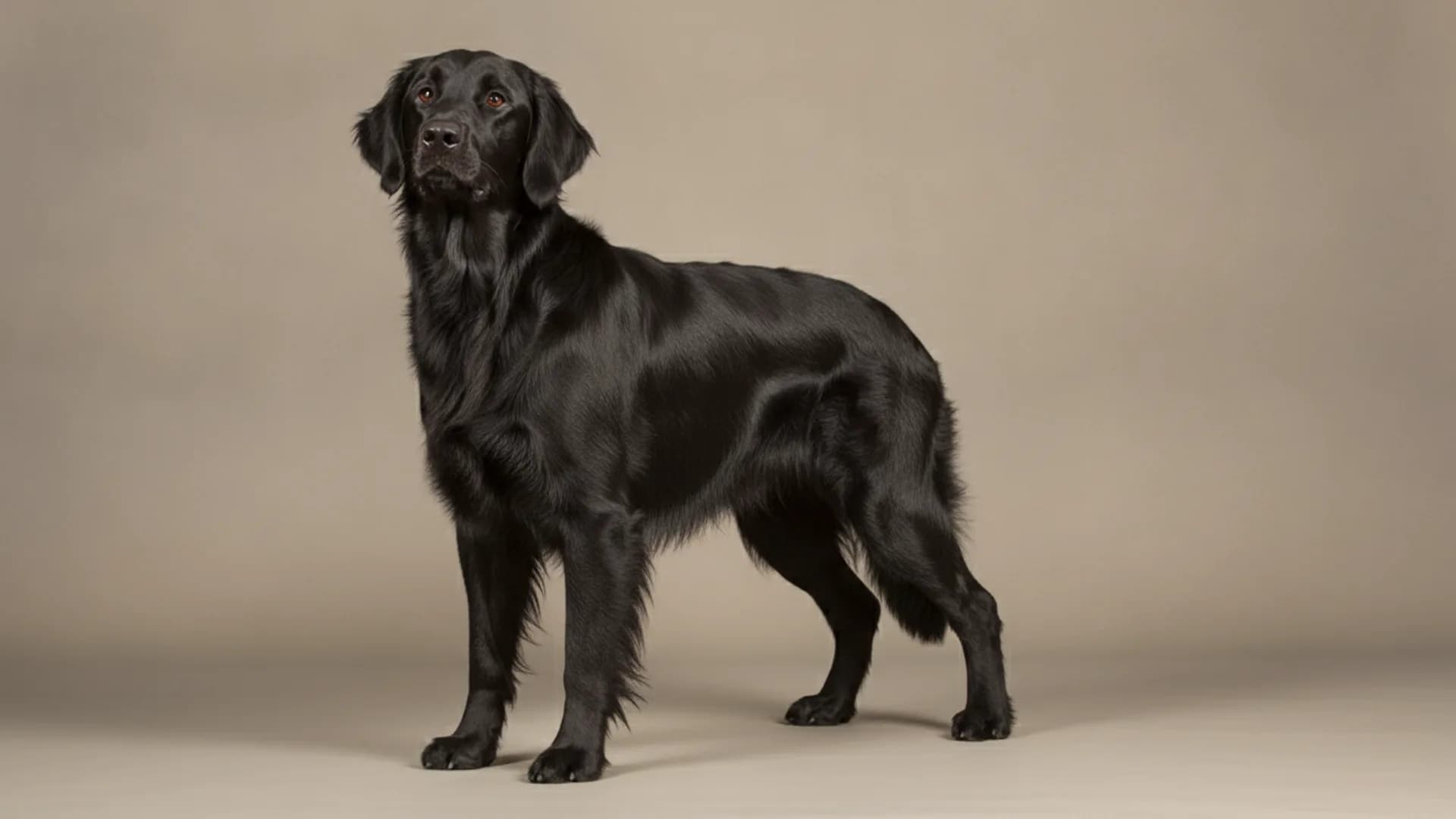
| Flat-Coated Retriever | Large | 25–32 kg | 56–62 cm | 8–10 yr |
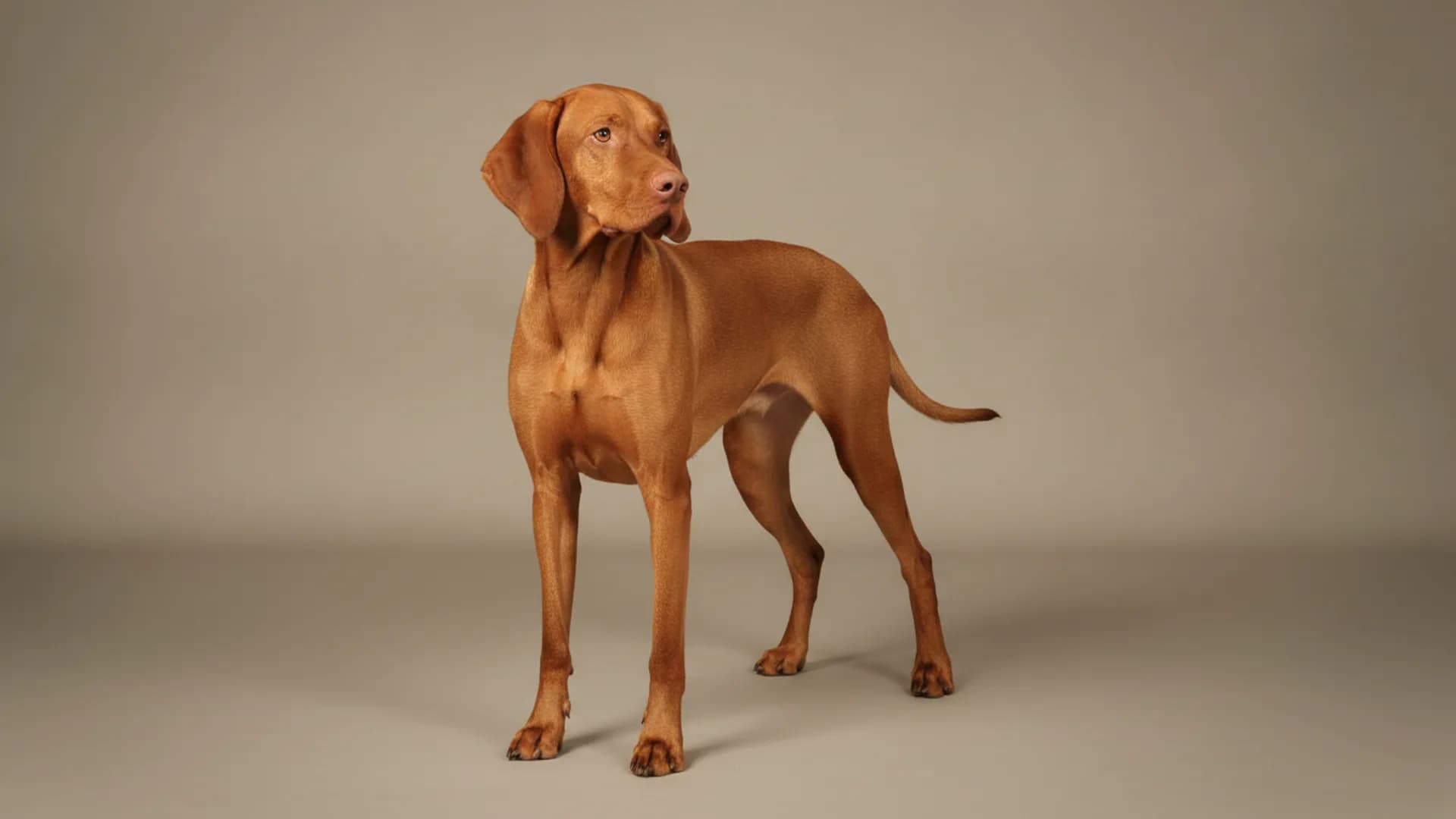
| Vizsla | Large | 20–27 kg | 53–61 cm | 12–14 yr |
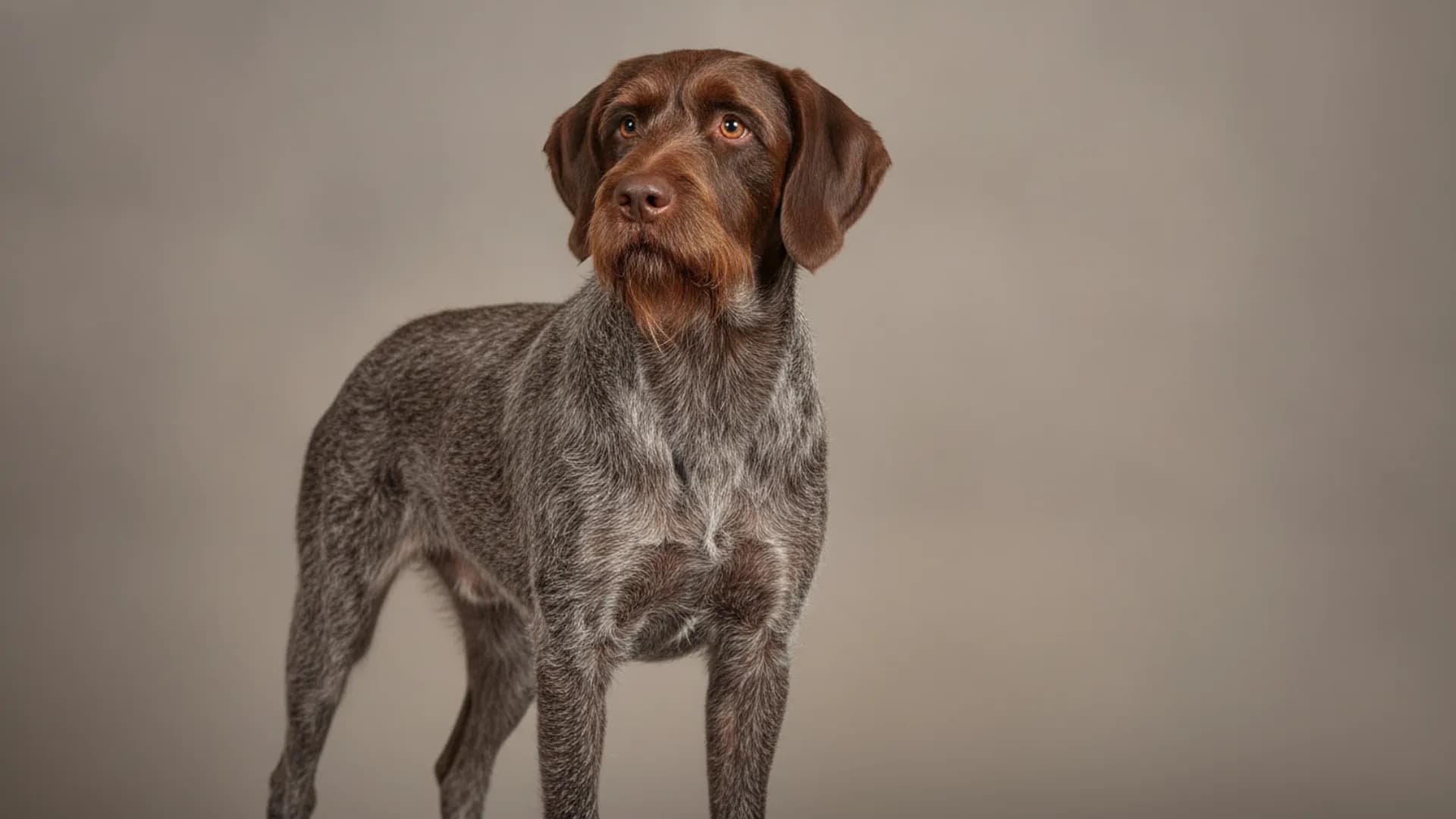
| Wirehaired Pointing Griffon | Large | 16–32 kg | 51–61 cm | 12–15 yr |