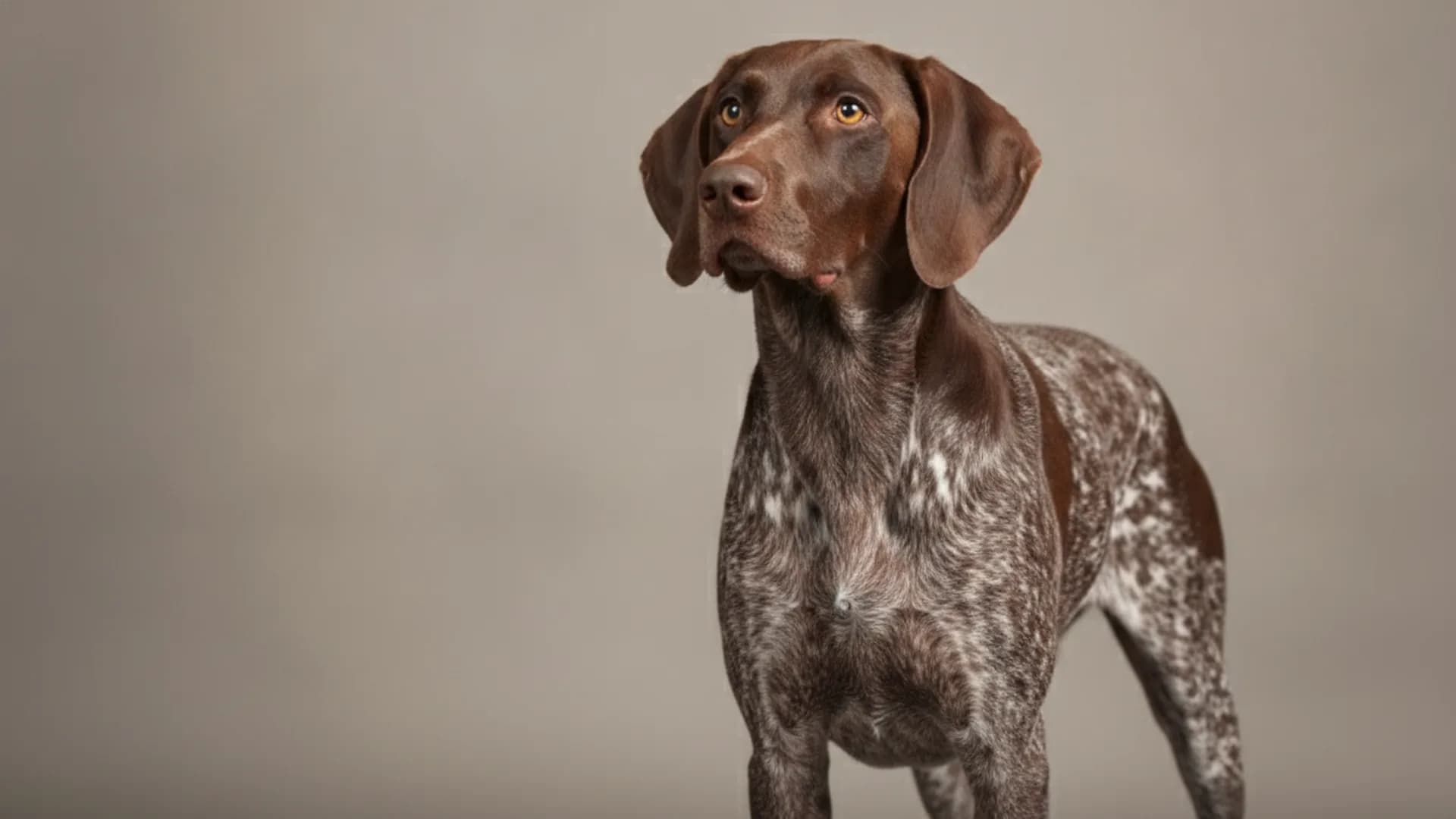
German Shorthaired Pointer
The German Shorthaired Pointer is the all-round continental gun dog — bred to track, point, retrieve and work water, on fur as readily as feather. At home it is called the Deutsch Kurzhaar, simply "German shorthair".
History
German hunters of the nineteenth century mostly had no kennel of specialists to draw on, so they wanted one dog for forest, field and water. They built it from heavy old Spanish-derived German pointing dogs, lightened and quickened with English Pointer blood, and kept the nose and tracking sense of hound ancestors. The brief was unlike the British one: the dog had to find and point birds, follow a blood trail to wounded deer, fetch a duck from a reed bed and deal with foxes and other predators.
Prince Albrecht zu Solms-Braunfels is the nobleman most often named among its makers. A standard was agreed at the end of the 1870s and the first stud book was published in 1897. Registration still depends on the dog passing a working trial. American recognition came in 1930.
Temperament
This is a dog with the engine always running. It is cheerful, bold and affectionate, glad to meet most people, and devoted to its household without singling out one member. Indoors after proper work it can be a contented sofa companion; without that work it paces, whines and invents jobs.
Its hunting instinct is not decorative. A GSP will lock on point at pigeons in the park at a few months old, and small furry pets are seen as quarry — a cat it grew up with is often tolerated, a strange cat in the garden is not. Young dogs are rough, springy playmates for small children.
Living with the breed
Fences are the first discovery. A bored German Shorthair climbs, jumps or digs its way out, and a garden needs to be properly secured before the dog arrives. The second is how little a normal walk achieves: an hour on the lead barely warms it up.
The coat is short and hard, and its stiff little hairs work themselves into upholstery like splinters. The thin jacket also means the dog feels the cold when standing about, though it will plunge into winter water regardless. It suits a rural or suburban home with access to open ground far better than a town flat, and it is noisy when frustrated.
Care and training
Count on two hours of vigorous activity daily for an adult, with running off the lead, swimming, or work alongside a bicycle or a runner once the dog is fully grown. Scent work, retrieving and gun-dog training use the brain as well as the legs, and the breed excels at field trials and hunt tests.
It learns quickly and enjoys it, but it is easily distracted by scent, so recall and a stop whistle should be started in puppyhood and proofed around game. Steadiness — not chasing what it has pointed — is the hard lesson. Grooming is a weekly rub-down and a check of the ears and feet after work in cover.
Health
The deep, narrow chest puts the breed at risk of bloat, a swelling and rotation of the stomach that cuts off its blood supply and is an emergency. Hip dysplasia, a slack and badly seated hip joint, occurs, and breeding stock is X-rayed for it.
Progressive retinal atrophy, a gradual degeneration of the retina that ends in blindness, can be screened for with a DNA test. An inherited skin disease called lupoid dermatosis and von Willebrand disease, a clotting disorder, are both recorded in the breed. Good breeders also have eyes examined and elbows X-rayed. Working dogs collect cuts, torn nails and grass seeds as a matter of course.
Who it suits
Someone who hunts, runs long distances, or trains dogs for sport will find it close to ideal. Households hoping for a handsome pet to walk round the block twice a day will be overwhelmed within months, and so will anyone who keeps rabbits, poultry or free-roaming cats.
Questions
How much exercise does a German Shorthaired Pointer need?
More than almost any other popular breed: around two hours a day of hard, mostly off-lead activity for an adult, plus training or scent games. Lead walking alone is not enough. An under-exercised GSP becomes destructive, vocal and inventive about escaping.
Can a German Shorthaired Pointer live with cats?
Sometimes, with a cat it has known since puppyhood and careful management. The breed was developed to hunt fur as well as feather, so the urge to chase is strong, and unfamiliar cats, rabbits and chickens are at real risk.
Do German Shorthaired Pointers shed?
Yes. The coat is short but sheds steadily through the year, and the hairs are stiff enough to stick in fabric and resist the vacuum cleaner. A weekly going-over with a rubber grooming mitt lifts most of it.
Is a German Shorthaired Pointer a good family dog?
It can be, in an active family that treats exercise as a daily fixture. The breed is affectionate and good-humoured with children, though boisterous. In a sedentary home the same dog is a problem, however fond everyone is of it.
What is the difference between the German Shorthaired and German Wirehaired Pointer?
They are separate breeds, not coat varieties of one. The German Wirehaired Pointer is a close relative, a rough-coated pointing dog of the griffon type, and the international federation lists it as a breed in its own right, with a standard of its own.
Characteristics
- Origin
- Germany
- Size
- Large
- Weight
- 20–32 kg
- Height
- 53–64 cm
- Lifespan
- 10–12 yr
- Group
- Sporting
Traits
- Affection
- Energy
- Intelligence
- Shedding
- Grooming
- Good with kids
Similar breeds
Dogs with a comparable size, coat and temperament.
| Breeds | Size | Weight | Height | Lifespan |
|---|---|---|---|---|
| German Shorthaired Pointer | Large | 20–32 kg | 53–64 cm | 10–12 yr |
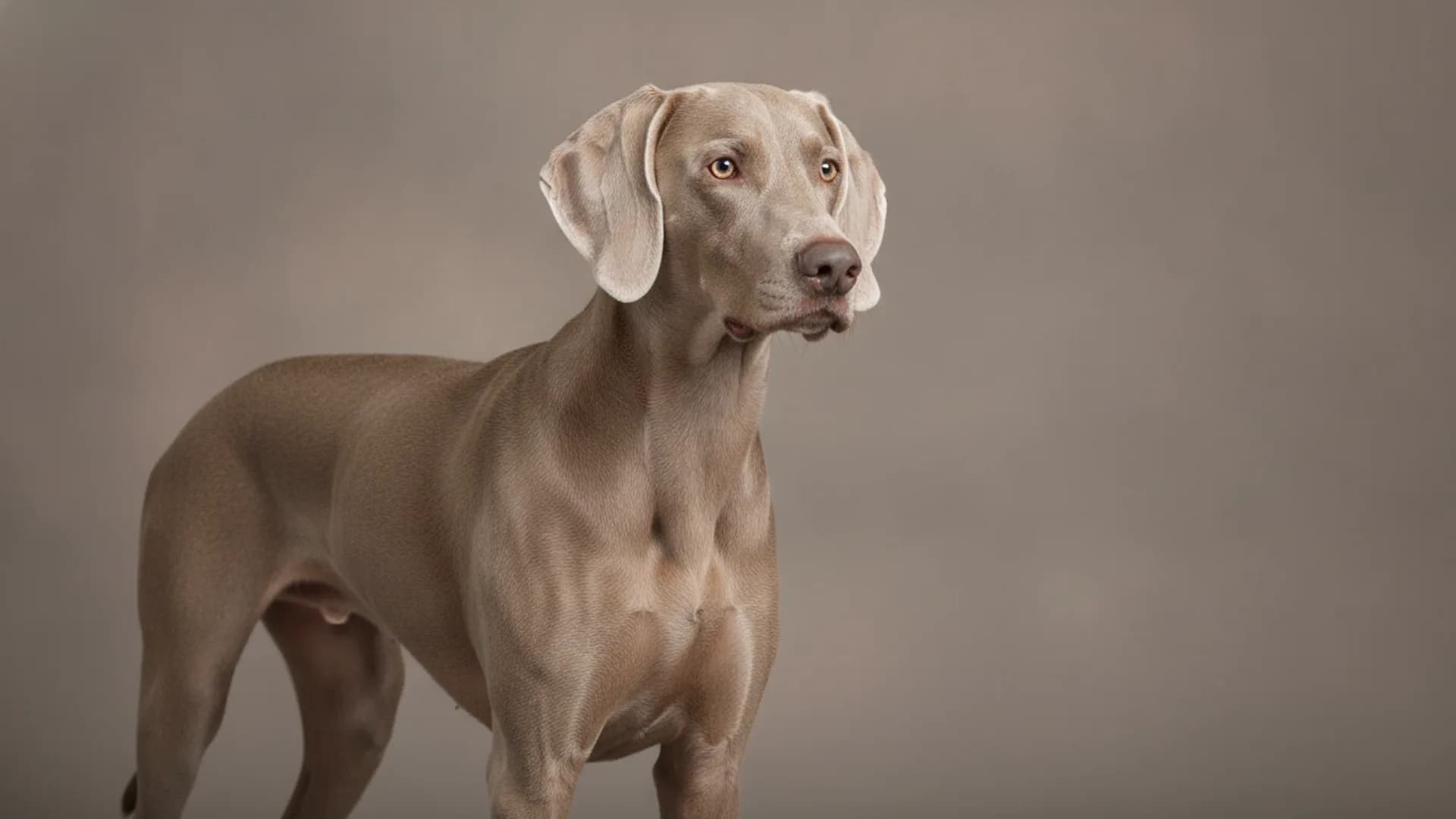
| Weimaraner | Large | 25–41 kg | 58–69 cm | 10–13 yr |
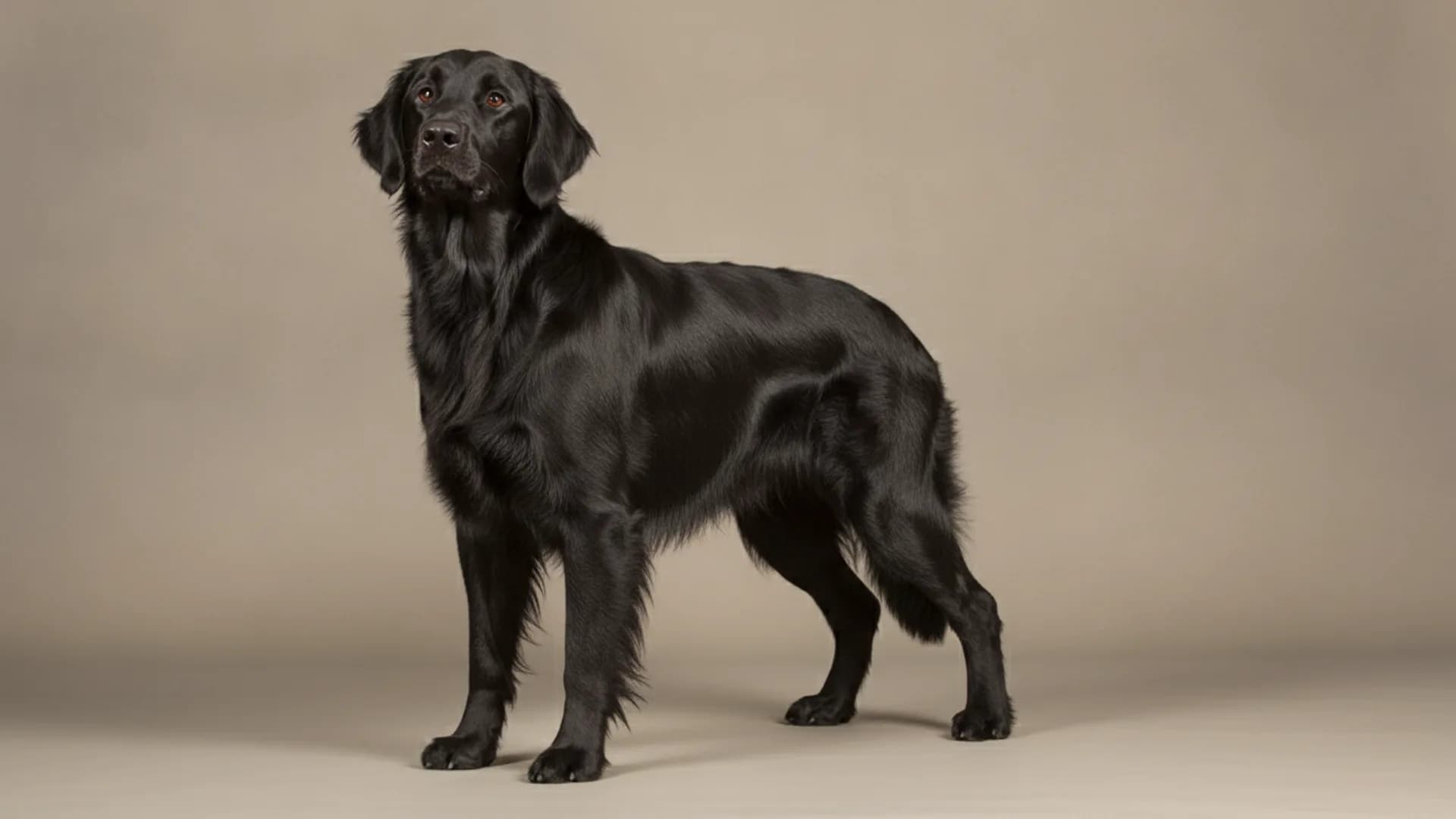
| Flat-Coated Retriever | Large | 25–32 kg | 56–62 cm | 8–10 yr |
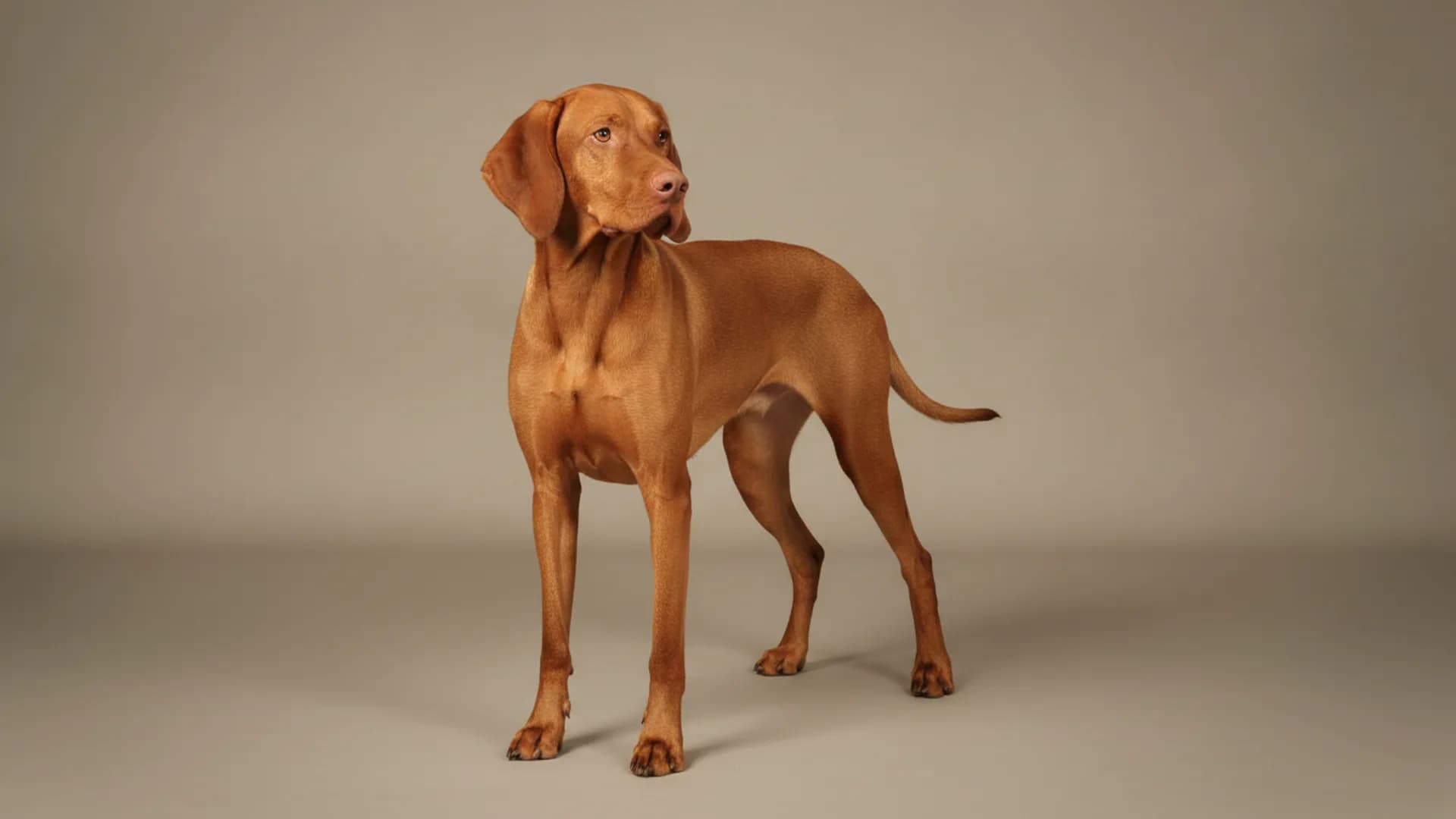
| Vizsla | Large | 20–27 kg | 53–61 cm | 12–14 yr |
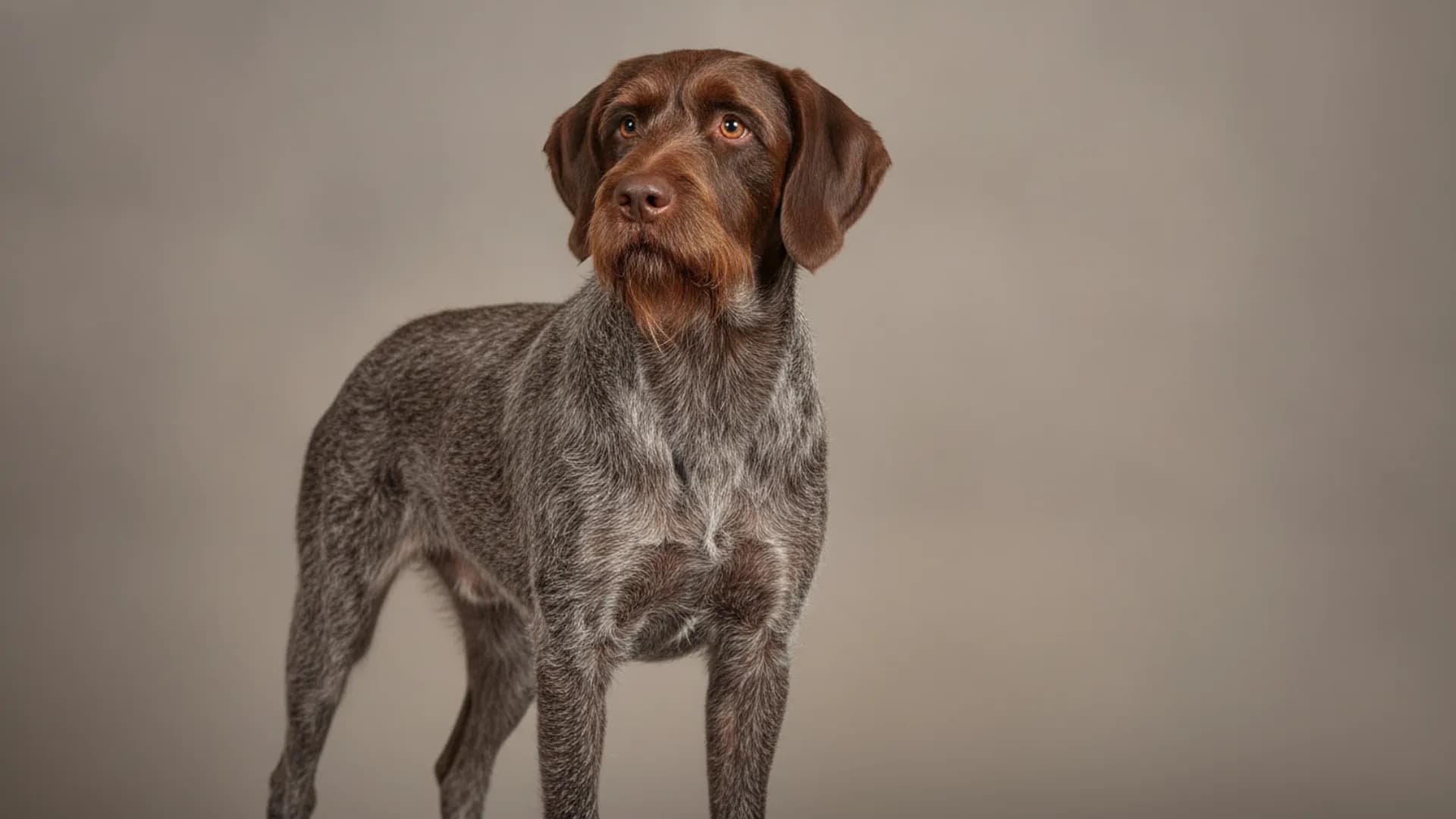
| Wirehaired Pointing Griffon | Large | 16–32 kg | 51–61 cm | 12–15 yr |