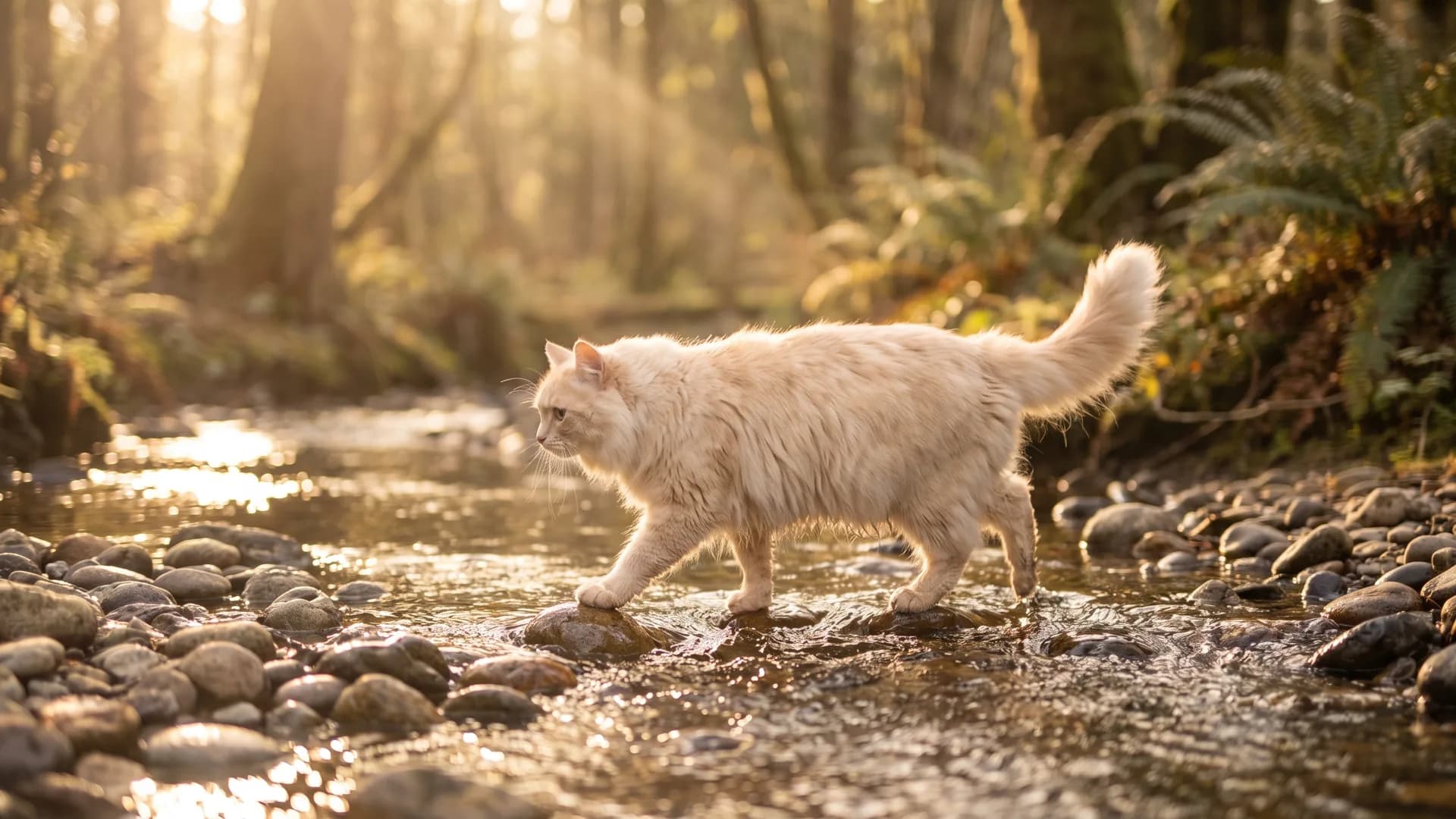
Calm cat breeds are rarer than you would think: four out of 59
Twenty-three breeds carry the highest energy rating and only four sit at the bottom, which makes the quiet-lap-cat search much narrower than it sounds.
People ask for a calm cat far more often than the records can supply one.
Of the 59 cat breeds rated for energy here, 23 carry the highest rating and just four sit at the bottom two levels. The lazy cat is a cultural idea; in this data it's about one breed in twenty.
The four
They're the Persian, Himalayan, Chartreux and British Shorthair.
All four also carry the quietest vocalisation rating, which is the only place in this catalogue where two traits reinforce each other that cleanly — low energy and low noise arriving together.
Three of the four are also among the heavier, more solidly built breeds, and two of them are long-coated. Whether that's a real association or a reflection of how a small number of very well-known breeds got described, the data can't say — but it does mean the calm end of the catalogue looks like a type rather than a scatter.
Where the idea of the lazy cat comes from
The gap between what people expect and what the records show is worth explaining, because it isn't that everybody is wrong.
Cats do sleep for most of the day, and that's real. What they do with the rest of it is the part the stereotype drops: a cat's waking time is spent in short intense bursts of hunting behaviour, which in a house with nothing to hunt turns into tearing up a hallway at eleven at night.
The cultural image was also formed by a particular animal — an adult, often middle-aged, often overweight, frequently with outdoor access that used up the energy somewhere you couldn't see. A young indoor cat on a good diet is a very different proposition, and it's the one more people now have.
And there's a survivorship effect in what gets photographed and written about. A cat asleep on a windowsill is a picture; a cat rocketing off a bookcase at two in the morning is an inconvenience, and nobody makes it into a poster.
The crowded other end
Twenty-three breeds at maximum energy is more than a third of the catalogue, and it includes several people buy expecting a house cat: the Abyssinian, Siberian, Manx and Turkish Angora are all there. So is the Savannah, which surprises nobody.
That mismatch between expectation and rating is the practical use of this page. A high-energy cat isn't a difficult cat — it's a cat that will find something to do whether or not you provide it, and the difference between a delightful animal and a destructive one is mostly whether the household noticed which kind it had.
What energy means on a rating card
It describes how much the breed is reported to want to do, not how much space it needs or how destructive it is.
Those are different questions and this data doesn't answer them. A high rating is a reason to plan for play, not a warning.
Twenty breeds sit at the middle rating, and that's the honest answer for most households: a cat with normal energy. The distribution is on the breeds page, along with the source of every figure.
It's also worth saying that the rating is about the breed and not about the life. An indoor cat with a window, two play sessions and food it has to work for behaves quite differently from the same cat in an empty flat, and the second version is where nearly all the complaints about high-energy breeds come from.
Making a house work for an active cat
Since the high end is the likelier outcome, the useful half of this page is what to do about it.
Play is the lever, and the form matters more than the amount. A wand toy that stalks, darts and hides — ending in a catch and then a meal — runs the whole hunting sequence and satisfies far more than a box of soft mice on the floor. Two short sessions a day beats one long one, and the one before bed is the one that buys you the night.
Then give the room a third dimension. Height is what cats want and floor space is what houses offer, so a shelf, a tall post and the top of a wardrobe convert a small flat into a large territory. A window with something happening outside it is the cheapest enrichment there is.
And make the food into work. A portion of the daily ration scattered, hidden or put in a puzzle feeder turns eating from a thirty-second event into an activity, which is exactly what an under-occupied cat is short of.
None of that is much effort, and it's the difference between a high-energy rating being a feature and being a problem.
What a calm cat is actually good for
Worth being specific about who should be filtering for this, because it's a narrower group than the number of people asking suggests.
A household with very limited space and no way to add height has a real case. So does one where somebody is frail, or unsteady on their feet, and a cat crossing a hallway at speed is a genuine hazard rather than a joke.
And so does anybody who knows they won't do the play. That's a perfectly honest position — an active cat in a home that never gets the wand toy out is worse off than a placid one — and it's the most useful reason to use this filter.
What isn't a good reason is wanting a cat that doesn't need attention. The calm breeds aren't low-involvement; two of the four are among the highest-grooming breeds in the catalogue, and a Persian's coat is a daily job for its whole life. Low energy and low effort are different columns, and this one buys you the first only.
What age does to this
The column describes an adult breed, and an individual cat moves across it over its life.
A kitten is at the top of any scale for the first year and a half regardless of breed, which is why so many people describe their calm breed as a lunatic and then, two years later, as exactly what the label said. Judging energy in the first year tells you almost nothing about the animal you'll have.
At the other end, energy falls with age, and it falls for reasons worth checking. A cat that has become notably quieter is often simply older, and is sometimes arthritic, which is common, underdiagnosed and much easier to miss in a cat than in a dog — a cat doesn't limp, it just stops jumping.
So a sudden drop in activity is a vet question rather than a personality change, and a gradual one is worth mentioning at the annual check. The calm cat you ended up with should be calm because it aged, not because something hurts.
The trait ratings on this page are TheCatAPI's, on a one-to-five scale, and they are somebody's assessment rather than a measurement — which is why the dog columns are left empty. Where the breed data comes from.
What is the calmest cat breed?
Four breeds sit at the lowest energy ratings here — the Persian, Himalayan, Chartreux and British Shorthair — and all four are also among the quietest.
Are most cat breeds high energy?
More than a third are: 23 of the 59 rated breeds carry the highest energy rating, against four at the bottom. A calm breed is the exception in these records, not the norm.
Why do people think cats are lazy?
Because cats sleep most of the day, which is true, and because the image was formed by adult, often overweight cats with outdoor access that used up the energy out of sight. A cat's waking time goes in short intense bursts of hunting behaviour, which indoors becomes a hallway at eleven at night.
How do I keep an active cat happy indoors?
Two short wand-toy sessions a day that run the whole hunting sequence and end in a catch and a meal, with the later one before bed. Height rather than floor space — a shelf, a tall post, the top of a wardrobe. And part of the daily food scattered or in a puzzle feeder so eating becomes work.
Should I choose a calm breed?
If space is very limited, if somebody in the house is unsteady on their feet, or if you honestly know you won't do the daily play — an active cat in a home that never gets the wand toy out is worse off than a placid one. It's not a route to a low-effort cat, though: two of the four calm breeds are the highest-grooming in the catalogue.
Is my kitten's energy a guide to the adult cat?
Almost none. Every kitten is at the top of the scale for the first year and a half whatever its breed, which is why people describe a calm breed as a lunatic and then, two years on, as exactly what the label promised.
My cat has become much less active — is that just age?
Possibly, and worth checking. Energy does fall with age, but arthritis is common in older cats and easy to miss, because a cat doesn't limp — it stops jumping. A sudden drop is a vet question; a gradual one is worth raising at the annual check.
Does a calm breed mean a calm cat?
No. The rating describes what a reference work recorded about the breed, and individual animals vary far more than breed averages do.