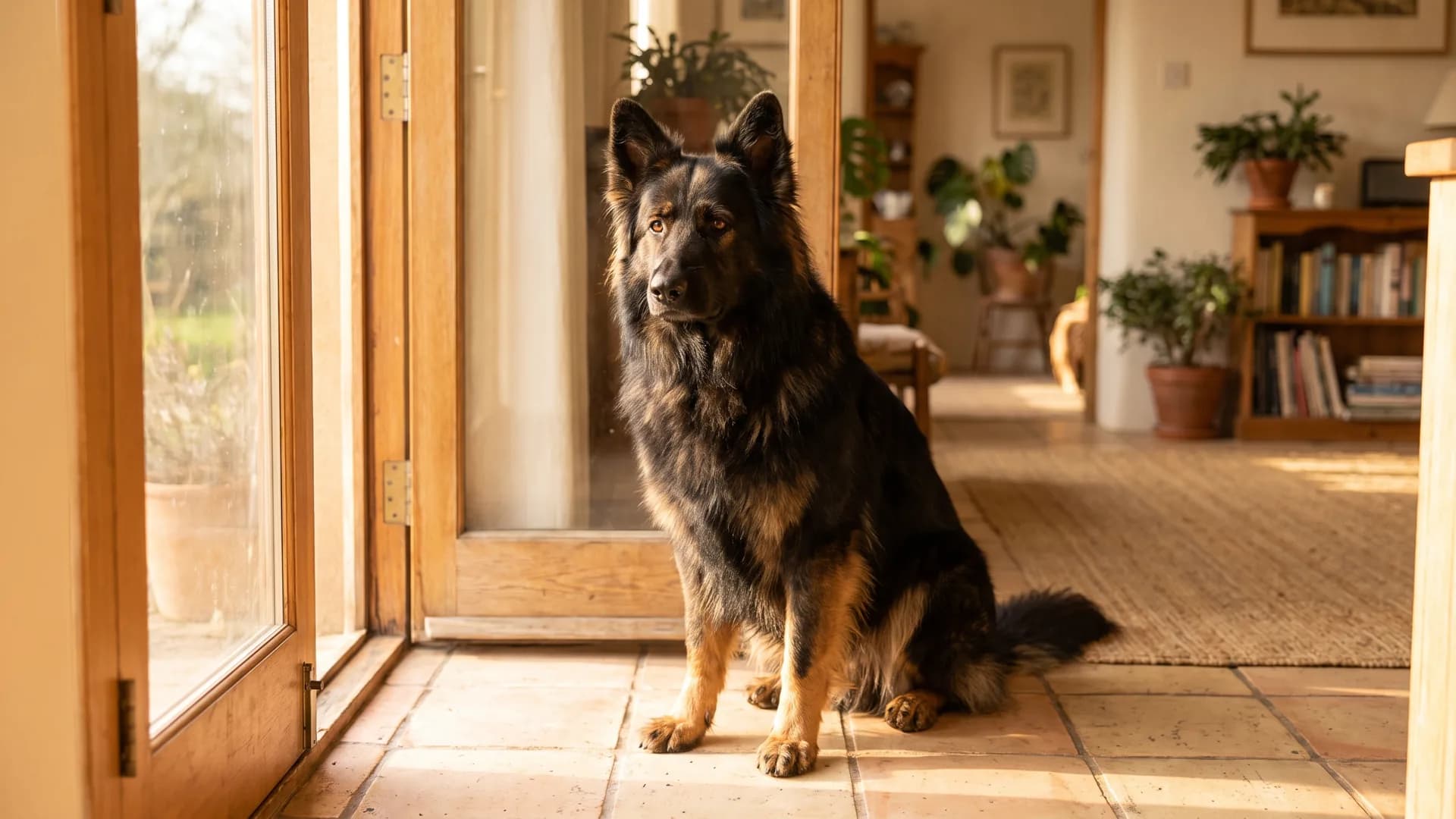
Unique dog names: 8,053 that almost nobody uses
The thin end of the register data, where a name is carried by a handful of dogs rather than by thousands. Counted rather than invented.
Most pages promising unique dog names are lists somebody wrote to feel unusual. You can tell by reading them: the names have no history, no spelling anyone agrees on, and no evidence that a dog has ever been called one.
This one is the measured bottom of public register source groups: 8,053 names, averaging 18 registrations each against 71 across all dog names.
Rare here means counted, not invented
A name lands in this band because its share across the registers is small, not because an editor judged it unusual. That has a consequence worth knowing: everything here is a name a real dog has, somewhere.
Banksy, Leonidas and Ruffles aren't suggestions, they're records. Somebody filled in a licence form with each of them, and somewhere there's an animal answering to it.
It also means the band moves. Add a register and the shares shift, so a name can leave this list without anybody deciding anything. The methodology note below says when the last recount was.
What rarity costs
Documentation, mostly. 5,081 of these are two syllables and 3,126 classify easy-to-call, so they're ordinary in shape — but almost none carries a meaning or a recorded origin, because nobody writes a dictionary entry for a name fifteen animals hold.
1,380 of them are still names a dictionary lists for people. Rare doesn't mean invented; it usually means an ordinary name that few owners reached for.
The gender labels thin out for the same reason. Sexing a name needs a minimum sample, and down here the samples are small, so a label in this band is a measurement with wide margins rather than a settled fact.
Choosing from a band this size
The band is too large to read, so use a second filter. Rare and short, rare and one-syllable, rare and a particular letter — each is one query in the archive and each returns a list you can finish in a sitting.
The one thing to check yourself is whether the name is unusual or merely unfamiliar. A name nobody uses because it's hard to say isn't a find, and the archive can't hear it. Read the shortlist aloud, and read it aloud to somebody else.
The four kinds of rare name
They're worth telling apart, because they behave very differently once the dog is home.
The first is an ordinary word nobody has thought to use: Rook, Bramble, Pilot, Flint, Marlow. These are the best of the band. They're unusual as choices and completely ordinary as words, so nobody asks how they're spelled and nobody forgets them.
The second is a name that used to be common and isn't now: Rover, Shep, Patch, Sandy, Blackie. Safe, familiar, quietly funny on a modern dog, and very unlikely to come back into fashion in the animal's lifetime.
The third is a borrowing that's ordinary somewhere else: Enzo, Taro, Bram, Nuri, Suki. Rare in these registers because of which cities were counted, which is the most honest sort of rarity there is.
And the fourth is the genuinely odd — the joke, the reference, the name somebody made up one afternoon. These are the ones to test hardest, because the qualities that made them rare are sometimes the qualities that make them difficult.
Why so many of them are perfectly normal
The counterintuitive shape of this band deserves an explanation, because it surprises everybody who arrives expecting a freak show.
There are far more usable names in English than there are dogs being named in any given year. Once the popular few hundred have absorbed most of the animals, what's left is a very long tail of names that are perfectly fine and simply weren't reached for — not rejected, not difficult, just not picked.
That tail is what this band mostly is. The genuinely strange names are in there too, but they're a small minority sitting inside a much larger set of ordinary words and ordinary human names that happened to lose a popularity contest nobody entered on purpose.
A note on invented names
Since this is the page people arrive at wanting something nobody else has, it's worth saying what happens when you go one step further and make a name up.
An invented name is genuinely unique and has been through none of the checks that a used name has passed by accident. Nobody has discovered that it's hard to shout, that it sounds like a rude word at speed, that it produces an unfortunate abbreviation, or that half the people who hear it write it down differently.
Those problems don't appear on day one. They appear in month three, at a counter, in a park, or the first time a stranger has to read it off a tag. If you want something unique, a name fifteen dogs have is a far better bet than a name nobody has, because those fifteen households have already done the testing for you.
What rarity actually buys you
Three things, and it's worth being clear that only one of them is large.
The name identifies your dog rather than a category of dog. In a busy park, that's the whole of it: you call and one animal looks up. Anybody who has owned a Bella in a city knows the alternative.
It won't date the animal. Names from the top ten bunch tightly by year, so a dog called one of them can be placed to within a couple of years by anybody who notices such things. Something almost nobody picks was never in fashion and so has nowhere to fall from.
And it hands you a small recurring conversation. People ask about an unusual name — in parks, at counters, at the vet — perhaps half a dozen times a year for the animal's whole life. Some owners enjoy that and some find it a chore, and it's worth knowing which you are before you commit.
What it costs, in plain terms
Spelling, at every counter, for as long as the dog lives. Boarding kennels, insurers, groomers, out-of-hours vets, the app the dog walker uses.
There's also a smaller and more interesting cost. An unusual name is harder for other people to retain, and other people matter: the neighbour who finds your dog in the road, the stranger who reads the tag, the friend who's feeding it while you're away. A name nobody can repeat back after hearing it once is doing slightly less work than it could.
Both costs disappear if you choose from the first two kinds above — a plain word or an old-fashioned name. That's the whole argument for preferring those, and it's why this page keeps returning to them.
It's worth adding that rarity is local in a way no national count can capture. A name that's uncommon across four countries can still be the name of two dogs on your street, because naming spreads through neighbourhoods and social circles rather than evenly across a map. The band tells you the odds; it can't tell you the outcome.
Rare, and still a good dog name
Whatever you pick from this band, it still has to pass the ordinary tests, and rarity is no excuse for skipping them.
Say it at a shout. Say it after every cue you intend to teach. Say it to somebody over a bad phone line. Check what happens to it when a child says it, and what the household will shorten it to by Thursday.
A rare name that fails those tests is worse than a common name that passes them, because you'll be living with the failure and explaining the name at the same time. The point of the band is to widen the field, not to lower the bar.
What is a unique dog name?
Here it's a measured band: names whose share across the register source groups is small. 8,053 dog names qualify, averaging 18 registrations each.
Are these names made up?
No. Every one is carried by a real dog in a public register — that's how it got counted. Banksy and Leonidas are records rather than suggestions.
Do rare names have meanings?
Rarely, and for a structural reason: nobody writes a dictionary entry for a name fifteen animals hold. Of the 8,053 names in this band, 20 carry a checked meaning, out of 111 the site publishes in total.
How do I narrow down a list this long?
Apply a second filter rather than scrolling. Rare and short, rare and one-syllable, rare and starting with a particular letter — each is a single query and each returns something you can read to the end.
Which rare names are easiest to live with?
Plain English words nobody has used on a dog, and old-fashioned names that have fallen out of use. Both are unusual as choices and entirely ordinary as words, so nobody asks how they're spelled and everybody remembers them.