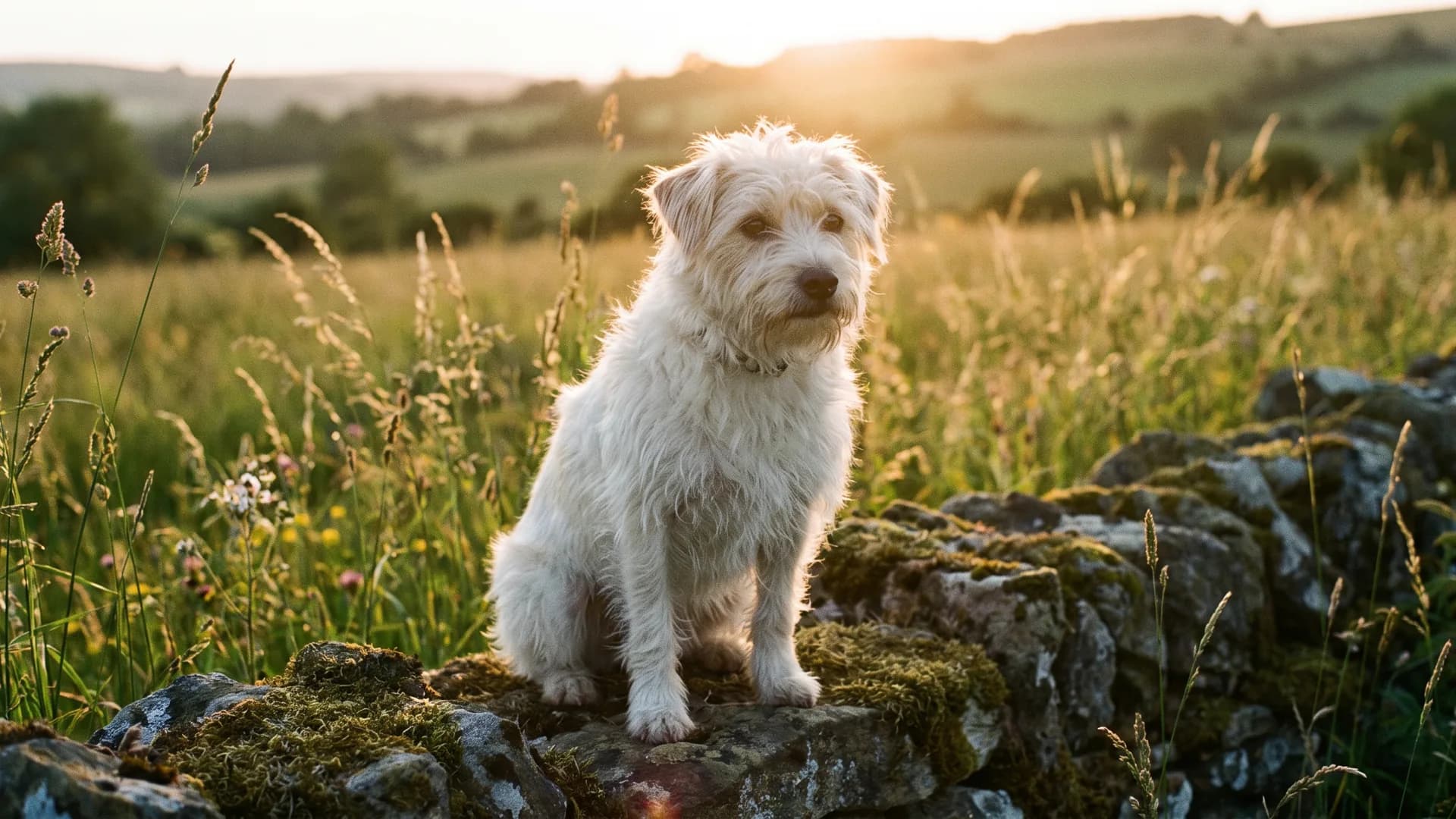
Elegant dog names, and the one thing the tag is really measuring
1,480 names, of which 1,479 have three syllables or more. The tag is length in disguise, and it's better said first.
1,480 dog names classify elegant-sounding, and 1,479 of them have three syllables or more. Short ones barely exist.
The tag is measuring length with soft consonants, and that's worth saying before the list rather than after it. If you came here for something graceful and brief, this filter is built to exclude exactly that, and there's a better route further down the page.
Elegance is expensive here
The slice averages 29 registrations each against 71 across all dog names — the thinnest of any sound group. Long names are rare names, consistently, across every cut of this catalogue.
It leans female, at 666 to 307, which follows from the same thing: female given names in English run longer, so a filter that selects for length selects for them as a side effect.
Neither of those facts is about elegance. They're about syllables, and every conclusion this tag offers has to be read with that in mind.
What a long name does on a dog
Here's the part that matters in practice, and it's quite different from the cat case. A dog's name is a working word: it has to reach across a field, cut through wind, and arrive fast enough to interrupt a decision the animal has already started making.
Three syllables is slow. By the time you've finished saying Persephone, a spaniel that has caught a scent is thirty metres into the argument. That isn't an aesthetic objection, it's a timing one, and it's the reason so few working dogs carry long names.
What happens instead, universally, is abbreviation. Persephone becomes Percy at the first sign of trouble, and whatever short form the moment produces is the one the dog learns as the urgent word. You can either choose that word or inherit it.
So choose the short form first
This is the practical reversal worth making at this end of the catalogue. Instead of picking a long name and hoping the abbreviation turns out well, pick the short name you want to shout and then find the long one it belongs to.
Gus from Augustus. Bea from Beatrix. Theo from Theodora. Val from Valentina. Ari from Ariadne. Each of those gives you a ceremonial name for the paperwork and a hard, fast, one-beat word for the field, and the pair was designed rather than accidental.
That approach also solves the household problem. When the short form is announced from the start, nobody invents a competing one, and the dog hears a single consistent word from every person in the house.
Where the elegant names come from
Three sources, and they behave differently on a dog.
Classical mythology supplies the grandest: Persephone, Athena, Artemis, Apollo, Achilles. These go disproportionately to large, striking breeds, and they come with a character attached that people will read onto your dog whether you meant it or not.
Inherited human names supply the bulk: Isabella, Sebastian, Genevieve, Theodore. Worn in by centuries of human use, and the safest of the three because they carry no expectations about behaviour.
And the botanical group supplies the rest: Magnolia, Juniper, Rosemary, Amaryllis. Long, flowing, and entirely free of mythology, which is why they're the quiet favourite among people who want the sound without the performance.
A long name on a large dog
There's a real pattern here that the numbers hint at and any dog walker can confirm: the ceremonial names cluster on the big breeds.
Part of it is proportion. A great dane called Bartholomew looks correct in a way that a jack russell called Bartholomew is funny, and both are deliberate. Part of it is that owners of large dogs often want a name that sounds composed rather than excitable, because the animal is already conspicuous enough.
And part of it is practical in a way people rarely articulate. A calm, formal name said calmly is a small piece of public relations for a dog that strangers find intimidating. It signals that the animal is managed, which is not nothing when you're passing a nervous person on a narrow path.
The show-name tradition
If you have a pedigree dog you already know its registered name is a different sort of object: a long compound carrying the kennel's prefix, often built to a theme running through the whole litter, and sometimes starting with an assigned letter.
Those names exist for a register rather than for a garden, and nobody expects them to be used. The puppy leaves with a call name from the first day, and the two have almost nothing to do with each other — which is the oldest version of the formal-and-informal pair this page keeps recommending.
What's interesting is how much of that tradition has leaked into ordinary naming. A great many people with no pedigree and no registry at all now give a dog a grand full name and a short working one, purely because they like having both. It's a habit borrowed from a world of paperwork, kept because it turned out to be useful.
When elegance is the wrong instinct
One honest caution. A ceremonial name sets an expectation, and a dog is under no obligation to meet it.
Seraphina on a dog that eats compost and rolls in worse is a joke, and a good one. Seraphina on a nervous, reactive rescue that finds the world difficult can start to feel like a costume the animal never agreed to wear. The difference is whether the name is laughing with the dog or quietly describing something it isn't.
Names about appearance survive this easily, because appearance doesn't argue. Names implying temperament are a bet placed before you know the animal, and at eight weeks old you're betting on very little information.
If two syllables is a hard limit
Then this tag is the wrong door: a two-beat elegant dog name is a handful of entries in a slice of 1,480.
The soft-sounding filter is the closer substitute. It selects ending and consonants without selecting length, so it holds 3,084 names at a workable size — and that's usually what people asking for an elegant name actually want: something warm that doesn't take three beats to say.
Names like Mira, Elle, Noor, Vale and Luca all have the texture without the syllables. They're graceful, they carry, and nobody will ever have to abbreviate one.
There's a second reason these names cluster on bigger dogs, and it's about the voice rather than the animal. A long name invites you to say it slowly, and a slow delivery is a calm one. People with excitable dogs often find that the full name comes out when they want to lower the temperature and the short one when they want speed — two tools from a single choice, which is more than most names offer.
The paperwork cost
Long names are written down more often than they're said, which sounds like a joke and isn't. Over a dog's life the name appears on a microchip record, an insurance policy, a vaccination card, a boarding form, a groomer's file, a training class register and a vet's invoice.
Every one of those is an opportunity for a spelling to drift, and long names drift most. Genevieve loses a letter, Anastasia gains one, and eventually two systems disagree about your dog's name at a moment when you'd rather they didn't.
The fix is dull and effective: choose one spelling, write it somewhere you can check, and use exactly that version everywhere from the first day. Short names don't need this discipline. These ones do.
What makes a dog name sound elegant?
Length and soft consonants. 1,479 of the 1,480 names with this tag have three syllables or more, so the classifier is largely reading length rather than anything you'd call elegance.
Are elegant names less common?
Considerably: 29 registrations per name against 71 across all dog names. Length and use pull against each other everywhere in this data, and this is the thinnest sound group of the five.
Is there a short elegant name?
Barely. Almost the whole tag is three syllables or more, so if two beats is a hard limit the soft-sounding filter is the better route — it holds 3,084 dog names without selecting for length.
Do long names work for a dog you need to call?
Not at full length. Three syllables is slow, and by the time you've finished saying one a dog that has caught a scent is already committed. Every long name acquires a short form the first time something goes wrong, so choose that short form deliberately rather than inheriting whatever the moment produces.
How do I pick a long name I won't regret?
Start from the other end. Decide the one-beat word you want to shout — Gus, Bea, Theo, Val — and then find the ceremonial name it belongs to. You get the formal version for the paperwork and a fast, hard word for the field, and the pair was designed rather than improvised.