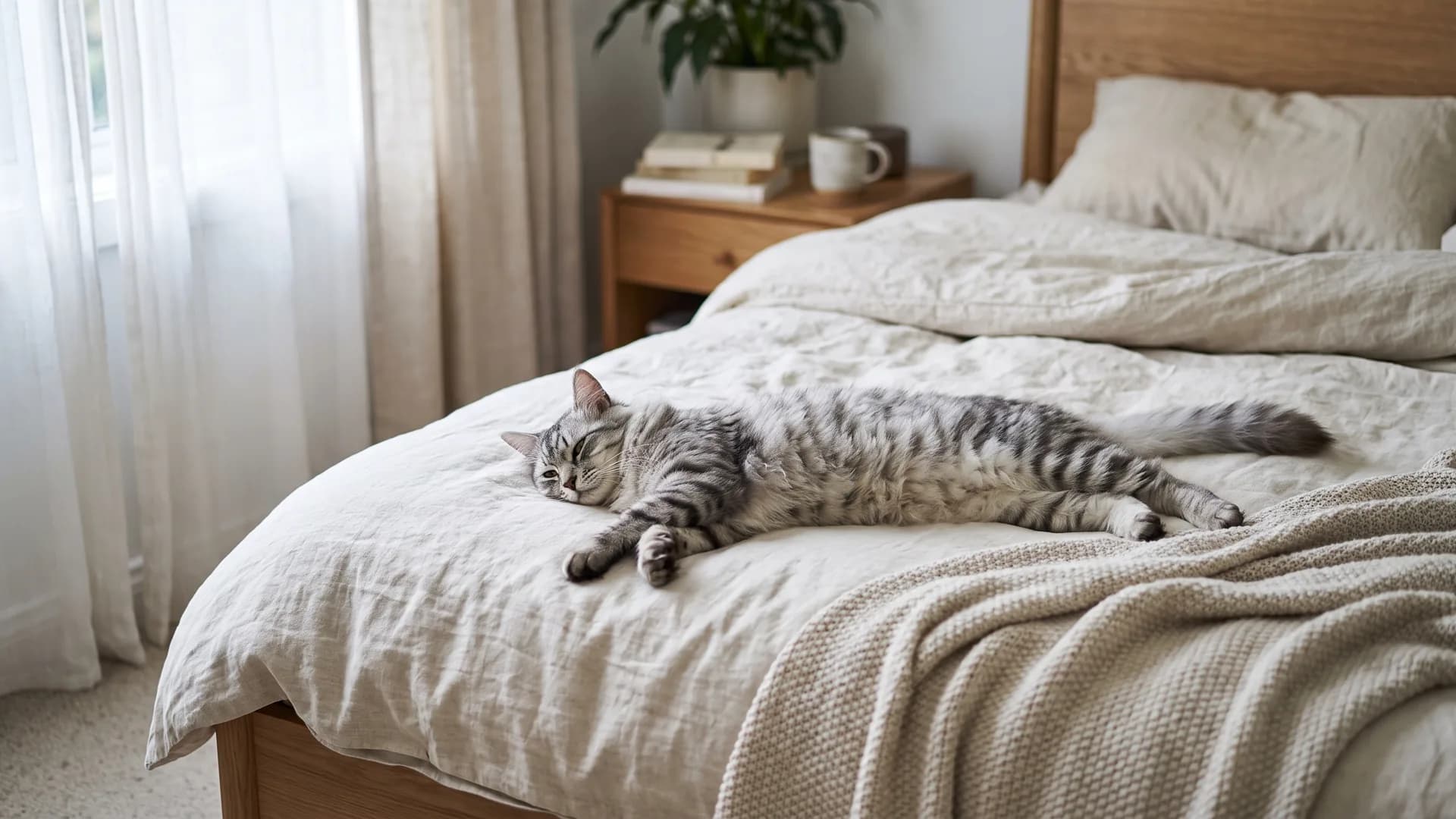
Unisex cat names from the shelter records
Cat names given to males and females in roughly equal measure — useful when the shelter's guess about a kitten's sex turns out to be wrong.
A kitten's sex is estimated at the shelter, and the estimate doesn't always hold.
The names below make that irrelevant. The records show every one of them going to males and females in near-equal numbers, which means the name you choose on the day the kitten comes home is still the right name six weeks later when somebody looks more carefully.
Where the threshold comes from
Five or more sexed records, with the female share landing in the middle band from 35% to 65%.
Under five records a name is left with no gender at all rather than given one inferred from too little evidence, which is why some names you'd expect to see here are absent. An unmarked name isn't a name that failed the test — it's a name that never sat the exam.
It's worth being clear about what this measures. It isn't a judgement about whether a name sounds masculine or feminine. It's a count of how real animals carrying that name were actually sexed, which is a different question and occasionally produces surprises.
The best documented big slice on the site
The 701 unisex cat names average 106 registrations each, ahead of the unisex dog list at 92, and 280 of them classify easy-to-call — the largest share of any sound here.
The reason is vocabulary. Unisex names tend to be words rather than given names — colours, animals, foods, weather — and words are short, plain and easy to say. A name that was never anybody's first name has no grammatical gender attached to it in the first place.
403 are two syllables and 193 are one.
Why this matters more for cats
Shelters estimate a kitten's sex, and on a very young animal the estimate is sometimes wrong. That isn't a rare accident — it's common enough that a measured unisex name is genuinely the risk-free choice for anyone adopting a kitten rather than an adult.
The alternative is renaming a cat that has already started responding, which takes weeks and works imperfectly. Choosing from the middle of the measured band costs nothing and removes the problem entirely.
151 of these classify strong-sounding, a higher share than the female cat list. If you want a name that carries across a flat rather than across a room, that's where to look inside this slice.
What happens if you rename a cat
Since this is the problem the page exists to prevent, it's worth saying what the cure actually involves.
A cat that has learned a sound will keep responding to it for a while, so the usual method is to bridge: use the old name and the new one together for a week or two, pair the new one with food, then drop the old one. Most cats transfer within a month, some never fully do, and a few will answer to both for life, which is harmless.
What makes it easier is choosing a new name that starts with the same sound or shares the stressed vowel — Millie to Milo, Sasha to Saxon. What makes it hardest is a complete change of shape, which is effectively teaching the name from scratch in an animal that already has one.
What the shelter is actually doing
Sexing a very young kitten is genuinely difficult, and it's worth knowing why rather than assuming somebody was careless. At a few weeks old the visible differences are small, the animal is wriggling, and the person checking may be doing it forty times that week under time pressure.
Good shelters say so. You'll often be told the sex is a best estimate and to have it confirmed at the first vet visit, which is sensible advice that a fair number of people miss in the excitement of collecting a kitten.
The error rate isn't something this catalogue can measure — it holds names, not veterinary records — but it's common enough that vets, breeders and rescues all mention it unprompted. Treating the shelter's note as provisional for the first few weeks costs you nothing, and choosing a name from this slice means you never have to act on the correction at all.
Naming two at once
Kittens arrive in pairs more often than puppies do, and a pair is where the sexing problem doubles. Two unisex names let you name both on the day they come home instead of waiting for a confirmation that may revise itself.
The one thing to avoid is a pair that rhymes. Two cats whose names share a stressed vowel will both answer to both, which is a problem you inherit for a decade — so pick two that relate in sense or theme and differ in sound, rather than two that sound like a set.
193 of the 701 are one syllable if you want the pair short, and 280 classify easy-to-call. Neither costs you the documentation.
There's a second group this slice serves, less often mentioned. Some people simply don't want the name to announce anything about the animal — no title, no reading, no assumption made by the receptionist before they've looked in the basket. A measured neutral name does that quietly and without any need to explain the choice to anyone.
The best sources of genuinely neutral names
If nothing in the list fits, the categories worth raiding are the ones where English never assigned a gender in the first place.
Weather and landscape: Storm, River, Misty, Cloud, Ridge. Colours and materials: Onyx, Slate, Copper, Ash, Sable. Food: Miso, Biscuit, Olive, Pepper, Mochi. Plants: Fern, Moss, Juniper, Basil, Clover.
Every one of those describes something rather than someone, which is why none of them carries a reading. It's also why they tend to suit cats so well: a cat is much more obviously a small weather system than it is a person.
Why gender is in this data at all
It's a fair question, since a cat has no opinion about it. The answer is that people do, and the name is for them as much as for the animal.
A name that reads male on a female cat produces a small, permanent friction: corrected pronouns on forms, a receptionist saying he, a boarding cattery emailing about the wrong animal. None of it matters and all of it recurs. Some owners enjoy the correction and some find it wearing, which is precisely why the measurement is published rather than an opinion about what suits.
The other reason is practical. A great many people arrive at this site having been given an animal whose sex is uncertain, and the honest answer to what they should do is not a list of names that sound balanced — it's a list of names that were actually used that way.
A note on names that only look neutral
Some names feel unisex and aren't, at least not in these registers. A name can sound perfectly balanced to an English ear and still go overwhelmingly to one sex in practice, because usage is a habit rather than a rule.
That's exactly what this slice is for. Rather than trusting your instinct about how a name reads, you can check how it was actually used — and the answer is occasionally the opposite of what you'd have guessed. The measurement is the point; the intuition is what it's correcting.
Finally, a small reassurance for anyone who has already got this wrong. A female cat called Oliver is not a problem that needs solving. Cats are supremely indifferent to the grammar of their names, the vet will note the sex on the file whatever the name says, and within a year the mismatch will be one of the small things you like about the animal rather than a mistake you made. This page is here to spare you the paperwork, not to suggest that anybody has failed.
Why choose a unisex name for a cat?
Because shelters estimate a kitten's sex and are sometimes wrong, which is how a great many cats end up with a name that no longer fits. A measured unisex name removes the problem before it arises.
How many unisex cat names are there?
701, averaging 106 registrations each — more than the unisex dog list, and with 280 of them classifying easy-to-call.
Why choose a unisex name for a kitten?
Because a shelter's estimate of a young kitten's sex is sometimes wrong, and renaming a cat that has begun responding takes weeks and works imperfectly.
What are good unisex names for two kittens?
Pick two that differ in their stressed vowel. Matched sounds cause a real problem: two cats whose names share one will both answer to both, for as long as they live.
How do I rename a cat if I need to?
Bridge it. Use both names together for a week or two, pair the new one with food, then drop the old one. It's much easier if the new name shares an opening sound or a stressed vowel with the old one — Millie to Milo rather than Millie to Rex.