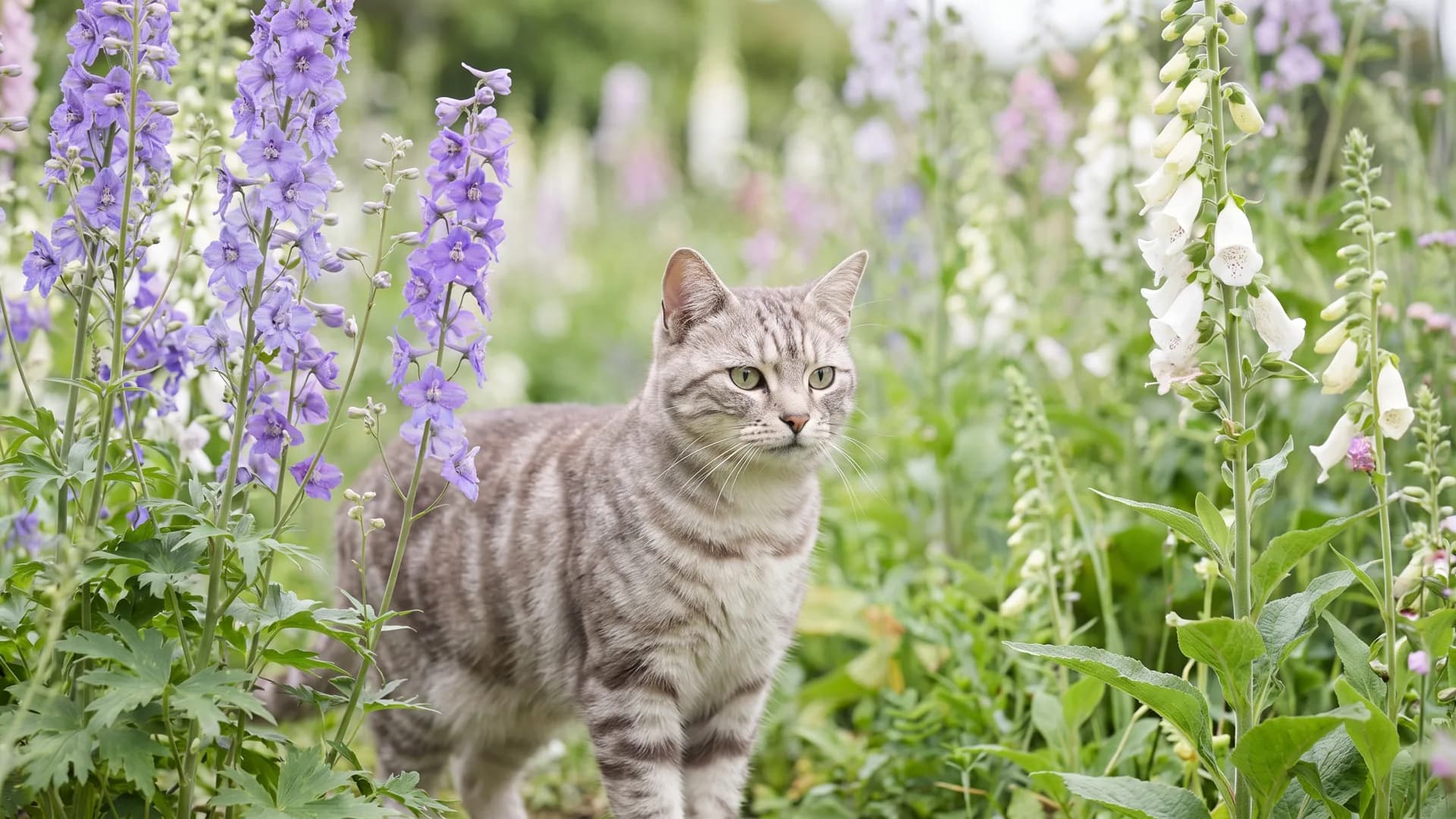
Short cat names that carry across a room
Four letters or fewer, from real shelter and licence records. The length that gets a cat's attention before it has finished deciding to ignore you.
Cats respond to a name on their own schedule, and a short one at least gets said twice in the time a long one takes once.
Four letters or fewer is the definition here, computed from the spelling, so the filter is exact rather than editorial. That's a different cut from the syllable filter and it produces a noticeably different list, which is worth understanding before you use either.
Why so many end in a vowel
Because that's what people choose. It isn't a rule imposed on this list — it's what the registers contain, and it holds across every city counted.
The likely reason is that a four-letter name ending in a consonant has very little room left over. Once you've spent a letter on the opening sound and one or two on the vowel, a closing consonant makes the word feel clipped. An open ending gives the same short name somewhere to breathe, which is why Coco, Mika, Nala and Toby outnumber the Max shape at this length.
Short cat names are unusually well used
1,162 names qualify and they average 183 registrations each — more than double the catalogue middle. Brevity and popularity travel together everywhere in this data, and the cat lists show it most clearly of all.
The syllable split is almost even, with 634 at one beat and 528 at two, so short doesn't mean clipped. Plenty of these names are perfectly rounded two-beat words that simply happen to be spelled economically.
And 510 classify strong-sounding against 334 soft, which is the arithmetic of shortness rather than a statement about taste: fewer letters means a higher proportion of consonants, and consonants are what the strong tag is counting.
35 carry a checked meaning, which is a large share of the 111 the catalogue holds in total. That's because so many short names are simply words — Bean, Sage, Mochi, Blue — and a word's meaning can be looked up and cited, where a given name's often can't.
The collar tag argument
Here's the practical case for counting letters rather than syllables, and it's one nobody makes until they're standing at an engraving machine in a pet shop.
A standard engraved disc holds a surprisingly small amount of text, and it has to carry a phone number too. Four letters leaves room for a legible number at a legible size. Nine letters means the engraver reduces the font, and a tag you can't read at arm's length in poor light is a tag that doesn't do its job.
The same logic runs through the rest of the paperwork. A short name fits the box on a boarding form, survives somebody else's handwriting on a vaccination card, and comes back from the microchip database exactly as you typed it. Long names get abbreviated by strangers, and their abbreviations are the ones that stick in other people's systems.
Choosing inside a slice this large
With a slice this size the constraint isn't availability, it's distinctness from what's already in the house.
Two cats whose names share a stressed vowel are two cats answering to both, and short names collide more easily because there's less of them to differ. Mika and Mila have one letter between them. Kit and Pip have everything.
The second filter worth applying is sound. The strong end of this slice carries further and the soft end reads warmer, and both are the same length, so it costs you nothing to choose deliberately rather than by accident.
Where the boundary sits, and that it's ours
Short here means four letters or fewer. That's a line we drew, and it's worth seeing plainly: Coco is in at four letters, Bella is out at five, and nothing about either name changes at the boundary. The number is stated so that you can disagree with it.
If the line isn't where you want it, the archive's length filter also offers medium at five to seven letters, and the syllable filter cuts the same field differently again. Those are three different definitions of short, and all three are on the page rather than sitting behind an editor's judgement.
It's worth noticing that they disagree in interesting places. Sky is short by letters and short by syllables. Mochi is five letters and two brisk beats, so it's long by one definition and short by the other. Which definition matters depends entirely on whether you're saying the name or writing it.
Short names and the way cats actually learn them
A cat learns a name the way it learns anything: by association and repetition. A sound that reliably precedes food, a lap, or a door being opened becomes a sound worth responding to.
Length affects that in one specific way. A short name is cheap to say, so you say it more, so the association builds faster. That's the entire mechanism, and it's why owners of short-named cats sometimes report that their animal is unusually responsive — they've simply run more repetitions.
What a short name won't do is overcome a cat's indifference. Nothing will. The registers can measure what people choose and not what cats think, and any site claiming otherwise is selling something.
The rescue-name problem
A large share of the short names in these registers weren't chosen by the people who ended up using them. Shelters name animals on arrival, often in batches, often quickly, and short names are what a busy kennel reaches for.
That's worth knowing for two reasons. It explains part of why this slice is so dense: the same handful of easy short names gets assigned again and again by people who have forty animals to log before lunch. And it means that if you adopt an adult cat, you may well inherit one.
Whether to change it is a genuine question with no settled answer. A cat that has been called Smokey for three years has some attachment to the sound, and changing it costs you a few weeks of retraining. Keeping it costs you nothing but choice. The usual compromise is to keep the sound and change the word — Smokey to Smudge, Tigger to Tilly — which lets the cat keep its first syllable while you get a name you picked.
Short names for a cat that goes out
If the cat has outdoor access the short slice is where you should be looking, and the reason is about repetition rather than volume.
Calling a cat in is not one shout. It's the same name said perhaps twenty times over a few minutes, in a voice that gradually stops being patient. A long name makes that a performance; a short one makes it sustainable. You can repeat Mochi twenty times at a back door without your voice going. You cannot do the same with Persephone, which is exactly why nobody tries.
The names that work best out there put a hard consonant in the middle and an open vowel at the end, giving you something to strike and something to hold: Mika, Toby, Coco, Lulu, Nala. That combination is the reason so much of this slice looks the way it does.
If short starts to feel too plain
The risk at four letters is that names become interchangeable. There are only so many ways to arrange four characters, and a slice this popular is full of near-neighbours.
The escape is to pick a short word with content rather than a short name with none. Sage is a herb and a quality. Bean is a shape. Juno is a goddess. Inky is a description. Each is four letters and each has something behind it, which is what stops a short name feeling like a placeholder.
The other escape is sound. A four-letter name with an unusual consonant — Zuzu, Figg, Kiki, Onyx — stands out in a list of otherwise similar shapes, and it does so without costing you a single letter of tag space.
How short is short?
Four letters or fewer, computed from the spelling. The syllable count is measured the same way, from the vowel groups in the name, which is why the two filters disagree about names like Mochi.
Why do so many short cat names end in a vowel?
Because that's what owners chose — it's what the registers contain, across every city counted, rather than a rule imposed on the list. At four letters an open ending gives a name somewhere to breathe, where a closing consonant makes it feel clipped.
Are short cat names more popular?
Yes, measurably: they average 183 registrations each against 147 across cat names as a whole. Brevity and use travel together throughout this data.
Does short mean one syllable?
No. Short here means four letters or fewer, and the split is nearly even — 634 of the 1,162 have one syllable and 528 have two.
What counts as a short cat name?
Four letters or fewer, which is a line we drew and state plainly: Coco is in, Bella is out. The archive also filters by syllable count if you'd rather cut the field a different way.
Why does the letter count matter more than the syllable count?
For anything written down. Four letters fits an engraved collar tag beside a readable phone number, fits the box on a boarding form, and survives a stranger's handwriting on a vaccination card. Long names get abbreviated by other people, and their abbreviations end up in other people's systems.