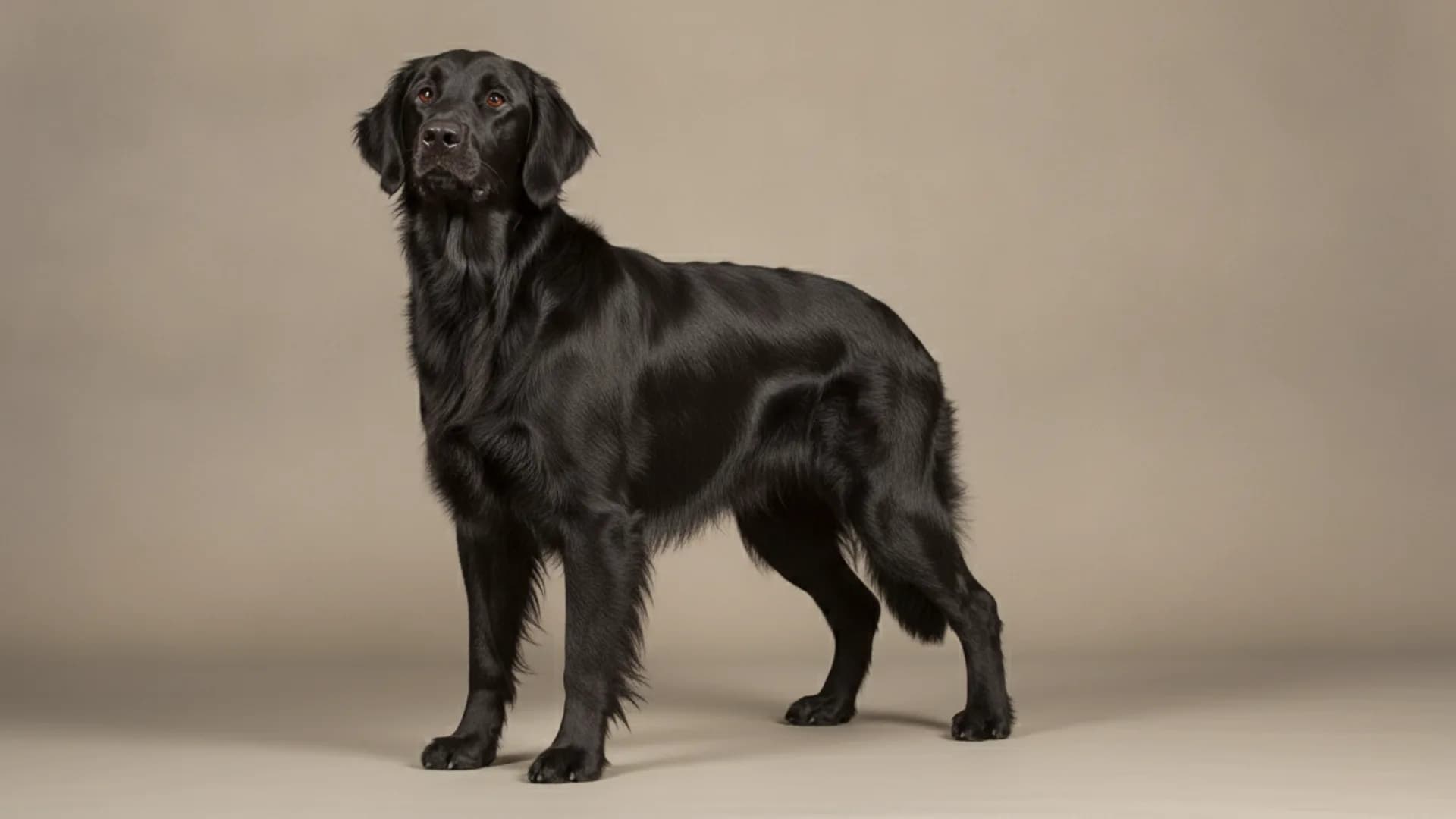
Flat-Coated Retriever
Le retriever à poil plat est le retriever qui n'est jamais devenu à la mode — un chien d'arrêt noir ou foie qui garde une exubérance de chiot jusque tard dans sa vie.
Histoire
Il a été développé en Grande-Bretagne au milieu du dix-neuvième siècle à partir de fonds terre-neuve et setter, et il fut le retriever dominant jusqu'à ce que le labrador et le golden le supplantent au début du vingtième siècle. Il a frôlé la disparition après la Seconde Guerre mondiale. Ce désintérêt commercial a eu un avantage : il n'a jamais été élevé en masse, et ses types de travail et d'exposition ne se sont jamais séparés.
Caractère
La race est connue pour être extravertie, optimiste et chaleureusement amicale avec tout le monde, plus lente à mûrir que la plupart des races et souvent décrite comme ne grandissant jamais tout à fait.
Entretien et éducation
Il lui faut énormément d'exercice et de compagnie ; elle se porte mal seule. L'éducation passe par l'enthousiasme plutôt que par la pression. La robe plate et frangée réclame un brossage régulier.
Santé
La race porte un taux de cancers bien documenté et exceptionnellement élevé, en particulier le sarcome histiocytaire, qui constitue la préoccupation sanitaire centrale et une affaire d'éleveur et de vétérinaire. La dysplasie de la hanche et le glaucome sont également connus. Ce sont des schémas de la race plutôt qu'un pronostic sur un chien donné ; les faits mesurés figurent dans le tableau.
Caractéristiques
- Origine
- Angleterre
- Taille
- Grande
- Poids
- 25–32 kg
- Hauteur
- 56–62 cm
- Espérance de vie
- 8–10 yr
- Groupe
- Chiens de chasse
Caractère
- Affection
- Énergie
- Intelligence
- Perte de poils
- Toilettage
- Aime les enfants
Races similaires
Des chiens au gabarit, au pelage et au tempérament proches.