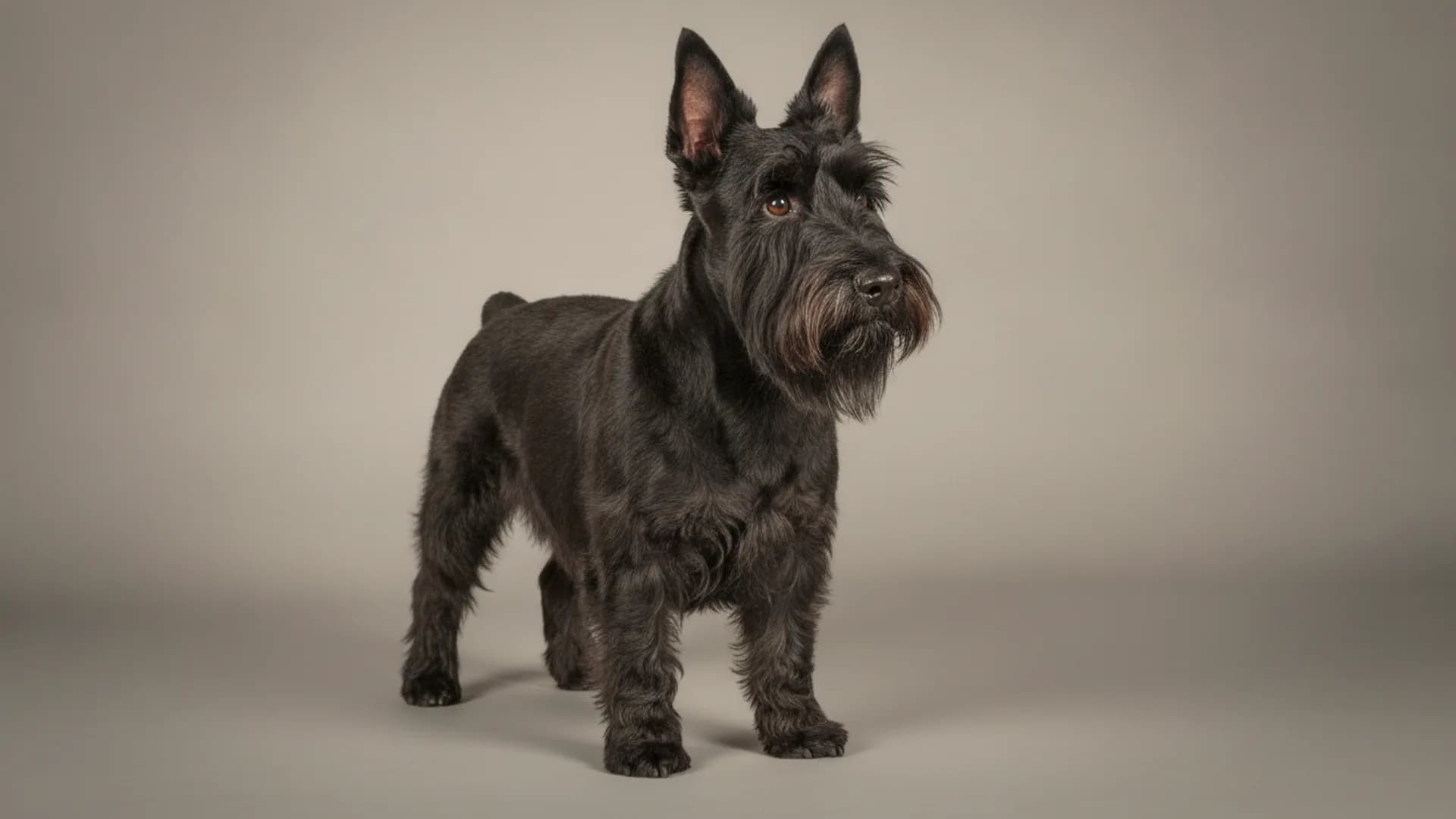
Scottish Terrier
The Scottish Terrier is the black bearded terrier of the Highlands — short-legged, hard, and among the most recognisable outlines in dogs. Most people call it the Scottie; an older generation knew it as the Aberdeen Terrier.
History
Its forebears were the rough little dogs Highland keepers sent underground after fox, badger and otter. For much of the nineteenth century every terrier from Scotland was shown under one loose label, and sorting them into separate breeds took years of argument among fanciers. A written standard for this one was published in 1880, breed clubs formed in England and Scotland during that decade, and the first Scottish Terrier was registered in America in 1885. The nickname 'Diehard' is traditionally credited to an Earl of Dumbarton who kept a pack of them.
Fame followed in the twentieth century. The silhouette sold Black & White whisky alongside a Westie and became a playing piece on the Monopoly board. Franklin Roosevelt's Fala travelled with the president and stands beside him in the Roosevelt memorial in Washington; George W. Bush later kept two, Barney and Miss Beazley.
Temperament
A Scottie gives its loyalty to one or two people and is polite, at best, to everybody else. It is dignified, self-contained and undemonstrative — affection is shown by choosing to be in the same room, not by fuss. Strangers are watched in silence and visitors are announced with a bark much deeper than the dog's height would suggest.
It does not seek quarrels with other dogs but will not walk away from one, and males in particular can be combative. It suits considerate older children better than small ones, because it objects to being poked or carried about. Squirrels, rats and neighbourhood cats bring out the hunter immediately.
Living with the breed
This is a compact, quiet housemate that sheds little and settles well in a flat or a small house. It prefers routine, tolerates a few hours alone with more composure than most terriers, and is content with a couple of purposeful walks. It is not built for jogging: the legs are short and the body heavy.
The long beard and the skirt of hair along the belly bring in water, leaves and mud, and the skirt knots unless it is brushed out. Gardens are dug up in pursuit of moles and mice. Owners also discover that the dog sulks after a scolding and remembers it.
Care and training
Daily walks amounting to an hour or so, with time to investigate, are sufficient. Near roads a lead is sensible, since a Scottie in pursuit of something does not reconsider.
The coat is a hard, wiry jacket over a dense undercoat. Hand-stripping two or three times a year keeps it correct; pet dogs are more often clipped, which softens the texture. Either way the beard, legs and skirt need brushing several times a week and the face needs wiping after meals. Training calls for patience and a sense of proportion. The dog understands perfectly well what is being asked and weighs up its own interest, so brief sessions, good rewards and firm household rules from the start achieve more than repetition.
Health
Scottie cramp is the condition named after the breed: an inherited disorder in which excitement or exertion brings on a spell of stiff, exaggerated movement, with the dog fully conscious throughout. Von Willebrand's disease is an inherited fault in blood clotting for which a DNA test is available. Craniomandibular osteopathy, an excessive growth of the jawbone during puppyhood that can make eating difficult, is inherited in the breed too.
The breed has a markedly higher rate of bladder cancer, specifically transitional cell carcinoma, than dogs in general, and its own clubs have supported research into the reasons. Responsible breeders use the DNA tests on offer and are frank about cancer in their lines.
Who it suits
The Scottie rewards an owner who likes a dog with reserve — a single person or a couple, an adult household, someone who wants a watchful companion and not a crowd-pleaser. Families wanting a playmate for young children, people who expect ready obedience, and homes with an unfenced garden or free-roaming small pets are better served by another breed.
Questions
Are Scottish Terriers always black?
No. Black is the most familiar colour, but the breed standard also allows wheaten, a pale straw-gold, and brindle of any shade. White is not among the standard's colours; the white dog on the old whisky label is a West Highland White Terrier.
Are Scottish Terriers good with children?
They are better with older children than with young ones. A Scottie is devoted to its family but values its dignity, dislikes rough handling and may snap if pestered. In a home where children have learned to leave a dog in peace it does well.
Do Scottish Terriers shed?
Hardly at all. The wiry coat keeps its dead hair until it is stripped or clipped, so little falls about the house. The price is upkeep: regular brushing of the longer hair and a visit to a groomer every couple of months.
What is Scottie cramp?
It is an inherited movement disorder named after the breed, though a few other terriers get it. When an affected dog is excited or exercised hard its legs stiffen and its gait becomes arched and awkward for a few minutes, after which it recovers. The dog stays conscious throughout, and a vet can tell the condition from others that look similar.
Characteristics
- Origin
- Scotland
- Size
- Medium
- Weight
- 8–10 kg
- Height
- 25–28 cm
- Lifespan
- 12–15 yr
- Group
- Terrier
Traits
- Affection
- Energy
- Intelligence
- Shedding
- Grooming
- Good with kids
Similar breeds
Dogs with a comparable size, coat and temperament.
| Breeds | Size | Weight | Height | Lifespan |
|---|---|---|---|---|
| Scottish Terrier | Medium | 8–10 kg | 25–28 cm | 12–15 yr |
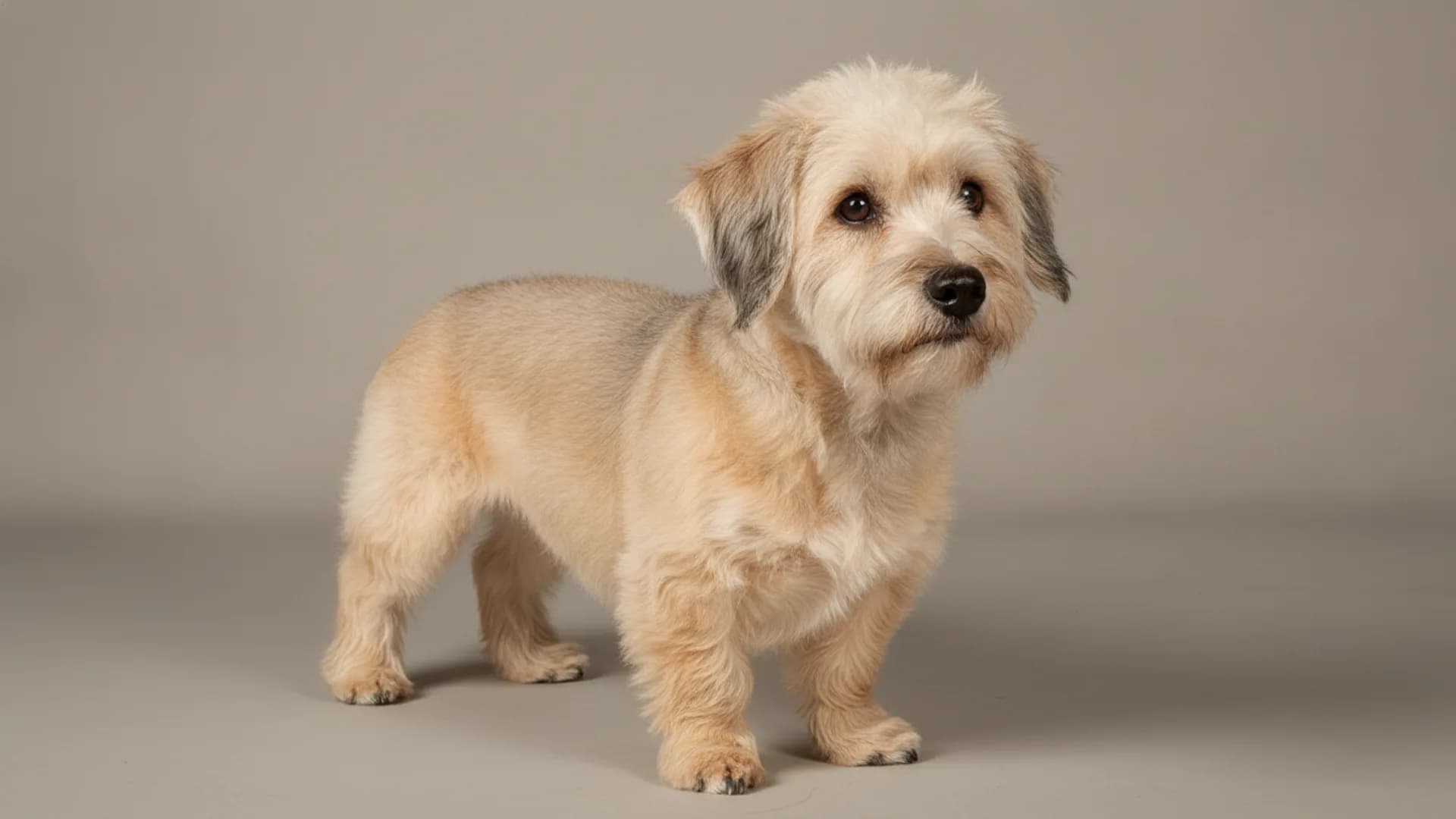
| Dandie Dinmont Terrier | Medium | 8.2–10.9 kg | 20.3–27.9 cm | 12–15 yr |
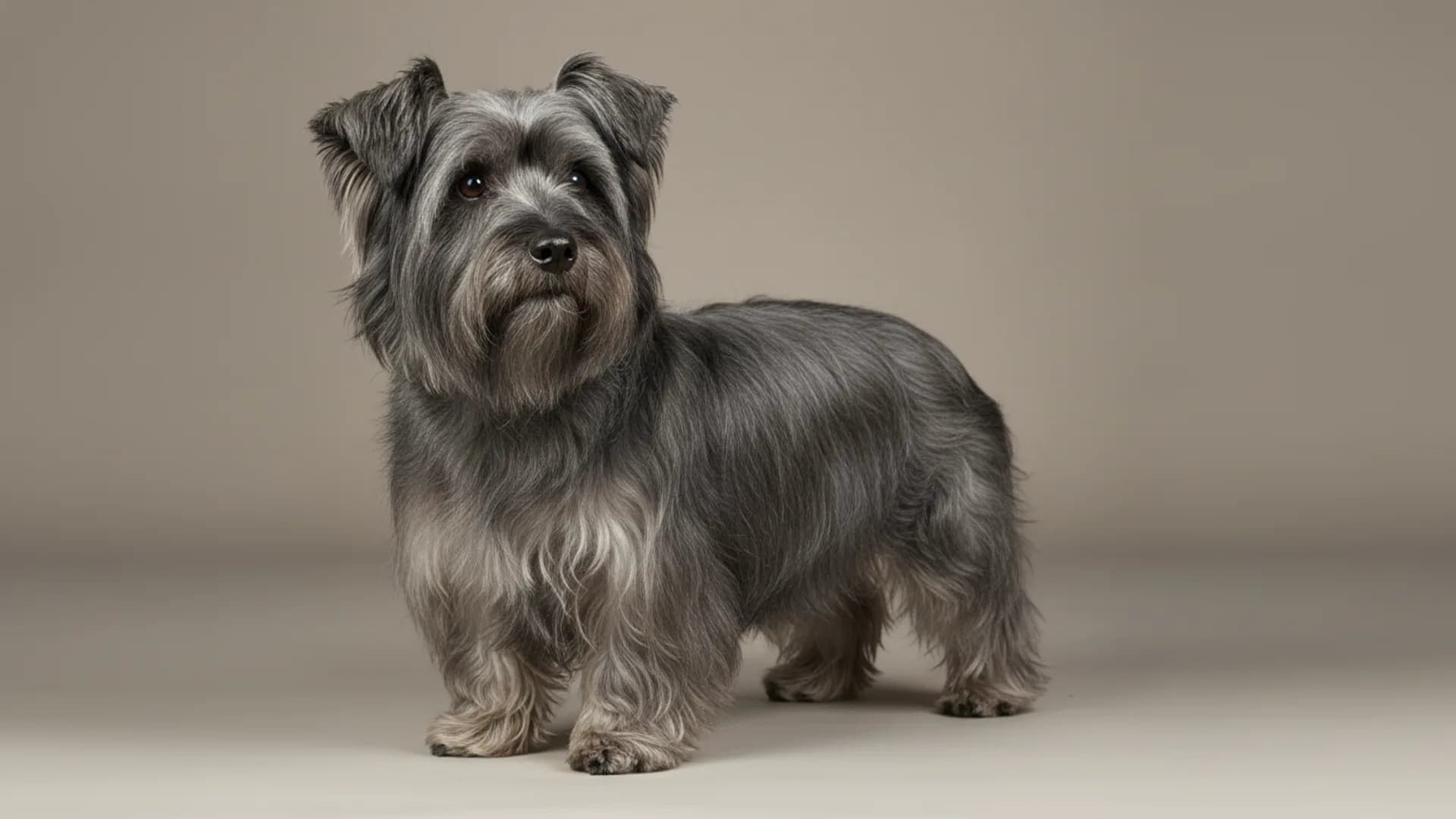
| Skye Terrier | Medium | 12–18 kg | 23–27 cm | 12–14 yr |
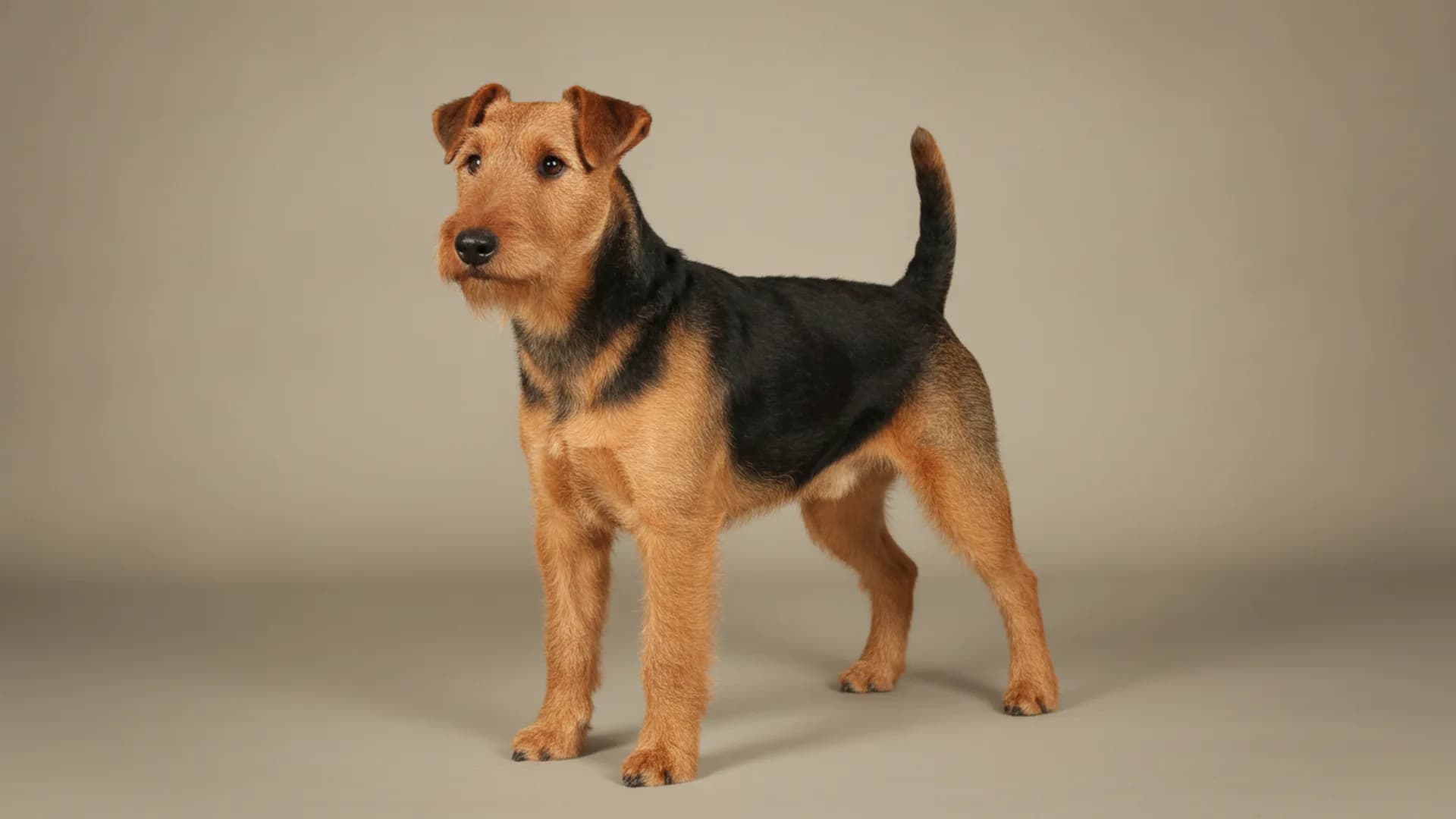
| Welsh Terrier | Medium | 9–10 kg | 38–39 cm | 12–15 yr |
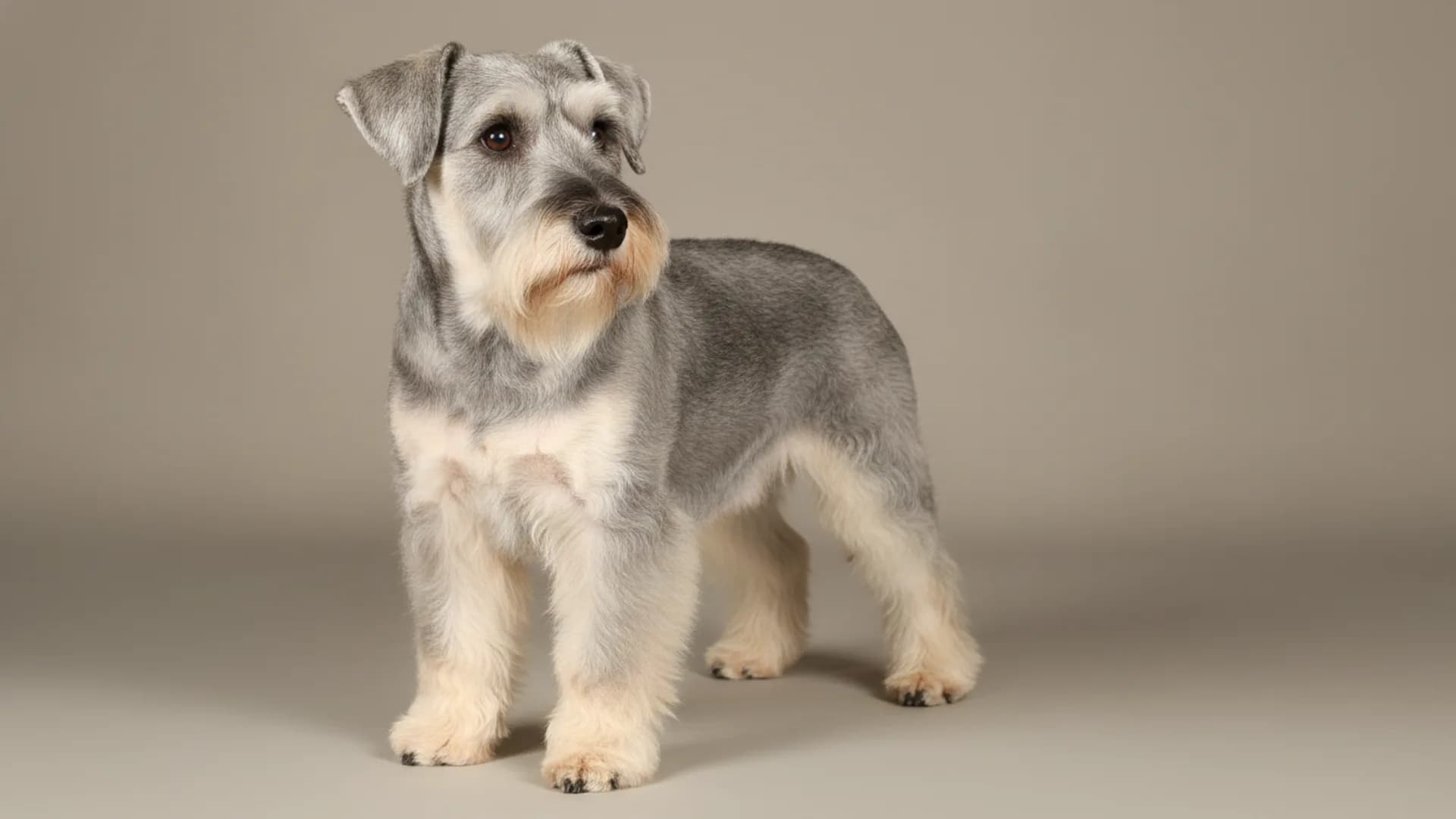
| Cesky Terrier | Medium | 6–11 kg | 25–33 cm | 12–15 yr |