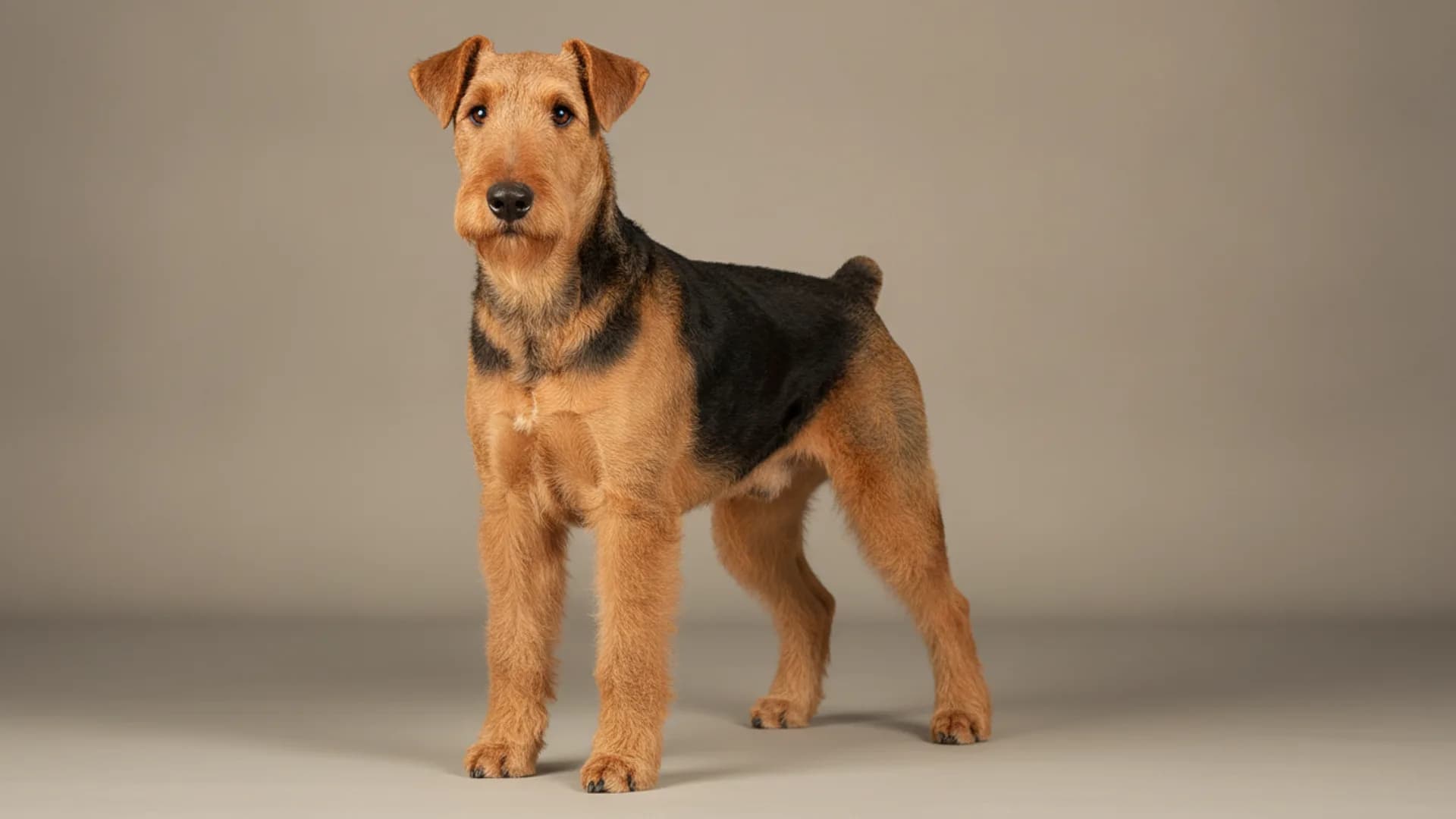
Airedale Terrier
The Airedale is the largest of the terriers — the "King of Terriers" — bred in Yorkshire to hunt otter and rat along the river it is named for. It stands far taller than the terriers that go to ground, and it worked the riverbank and the water instead.
History
Working men in the valley of the River Aire, in the West Riding of Yorkshire, created the breed in the middle of the nineteenth century. They crossed the old rough-coated Black and Tan Terrier with the Otterhound, looking for a dog with a terrier's nerve and a hound's nose that would also take to water. The result was known for a while as the Waterside or Bingley Terrier before the present name stuck, and the Kennel Club accepted it in 1886.
Its range of work soon widened. Airedales were among the first police dogs in Britain, patrolling the docks at Hull from 1908, and in the First World War they carried messages through the trenches, stood sentry and helped locate the wounded. In North America they were taken up for hunting large game. Warren Harding's Airedale, Laddie Boy, was a celebrity of the 1920s White House. The German Shepherd later took over most of the service roles.
Temperament
An Airedale combines a guard's steadiness with a clown's timing. It is self-assured, playful, fond of its family and inclined to think a problem through for itself, which is not always what the owner had in mind. Towards strangers it is watchful but composed, and it protects its household without much prompting.
It grows up slowly and stays boisterous for the first few years. Children get an enthusiastic playmate that is simply too powerful and bouncy to leave with the very young. With other dogs it rarely starts trouble and rarely backs down from it. The urge to chase is strong, and cats and small livestock need careful introduction or separation.
Living with the breed
This is a big, athletic animal that needs room and a securely fenced garden; a flat seldom gives it enough. It can reach a kitchen worktop without effort and regards anything left there as available. Bored Airedales dig craters, chew furniture and rearrange the washing.
On the credit side the coat sheds very little and has no strong smell. The beard does hold water and delivers it to the nearest lap. Many like swimming, a legacy of the riverbank work. The dog wants to be with its people and involved in what they are doing, and one left by itself for long working days tends to find occupations of its own.
Care and training
A grown Airedale needs something like two hours of exercise a day, and it wants variety: long walks, running, swimming, tracking games. The breed has done well in obedience, agility and working trials, but it loses interest in repetition quickly. Ask for the same thing five times and the fifth answer is usually a refusal.
Training therefore works best when it starts early, stays firm and fair, and keeps changing the task. Pulling on the lead and jumping up should be dealt with before the dog reaches its adult weight. The harsh, wiry coat is brushed weekly and either hand-stripped a few times a year or clipped. Clipping is simpler, though the texture softens and the black saddle and tan fade with it.
Health
Hip dysplasia, a malformation of the hip joint that leads to arthritis, is the main inherited concern, and breeding stock should be X-rayed and scored under the kennel-club scheme; elbows are assessed in the same way. Hypothyroidism, an underactive thyroid gland, appears in the breed, and dilated cardiomyopathy, a disease of the heart muscle, is recorded too.
Cancer is the commonest cause of death reported in breed health surveys in Britain and in North America, ahead of old age. The oversized Airedales bred in America are more prone to hip dysplasia than dogs of the correct size. Asking a breeder for hip and elbow scores is reasonable.
Who it suits
It belongs with experienced, energetic owners who have space, time and a sense of humour: country households, families with older children, people who want one dog for walking, sport and watch-keeping. It is the wrong dog for a first-time owner wanting easy obedience, for a small home without a garden, or for anyone who cannot give it a job.
Questions
Why is the Airedale called the King of Terriers?
Because it is the largest of all the terrier breeds. The title also reflects its versatility: it has hunted, guarded, carried wartime messages and served with the police. Its actual dimensions are listed in the facts panel on this page.
Are Airedales good family dogs?
For an active family with children of school age, yes. The breed is loyal, protective and loves rough-and-tumble play. Its strength and exuberance are too much for toddlers and frail adults, and it needs far more exercise and training than a typical household pet.
Do Airedale Terriers shed?
Very little. The wiry coat keeps most of its dead hair until it is stripped or clipped, which is why the breed is often suggested to people who dislike hair in the house. It still needs weekly brushing and professional grooming several times a year.
Are Airedales easy to train?
They are quick to learn and slow to comply. An Airedale grasps a new exercise in a few repetitions and then questions the point of doing it again. Short, varied sessions with good rewards work; drilling and harsh correction produce a dog that digs its heels in.
How much exercise does an Airedale need?
About two hours a day for a healthy adult, including time to run freely in a safe place. It was bred for long days along a river, and walks on the lead alone do not use it up. Puppies should have much shorter outings while they grow.
Characteristics
- Origin
- England
- Size
- Large
- Weight
- 18–32 kg
- Height
- 56–61 cm
- Lifespan
- 11–14 yr
- Group
- Terrier
Traits
- Affection
- Energy
- Intelligence
- Shedding
- Grooming
- Good with kids
Similar breeds
Dogs with a comparable size, coat and temperament.
| Breeds | Size | Weight | Height | Lifespan | Coat |
|---|---|---|---|---|---|
| Airedale Terrier | Large | 18–32 kg | 56–61 cm | 11–14 yr | — |
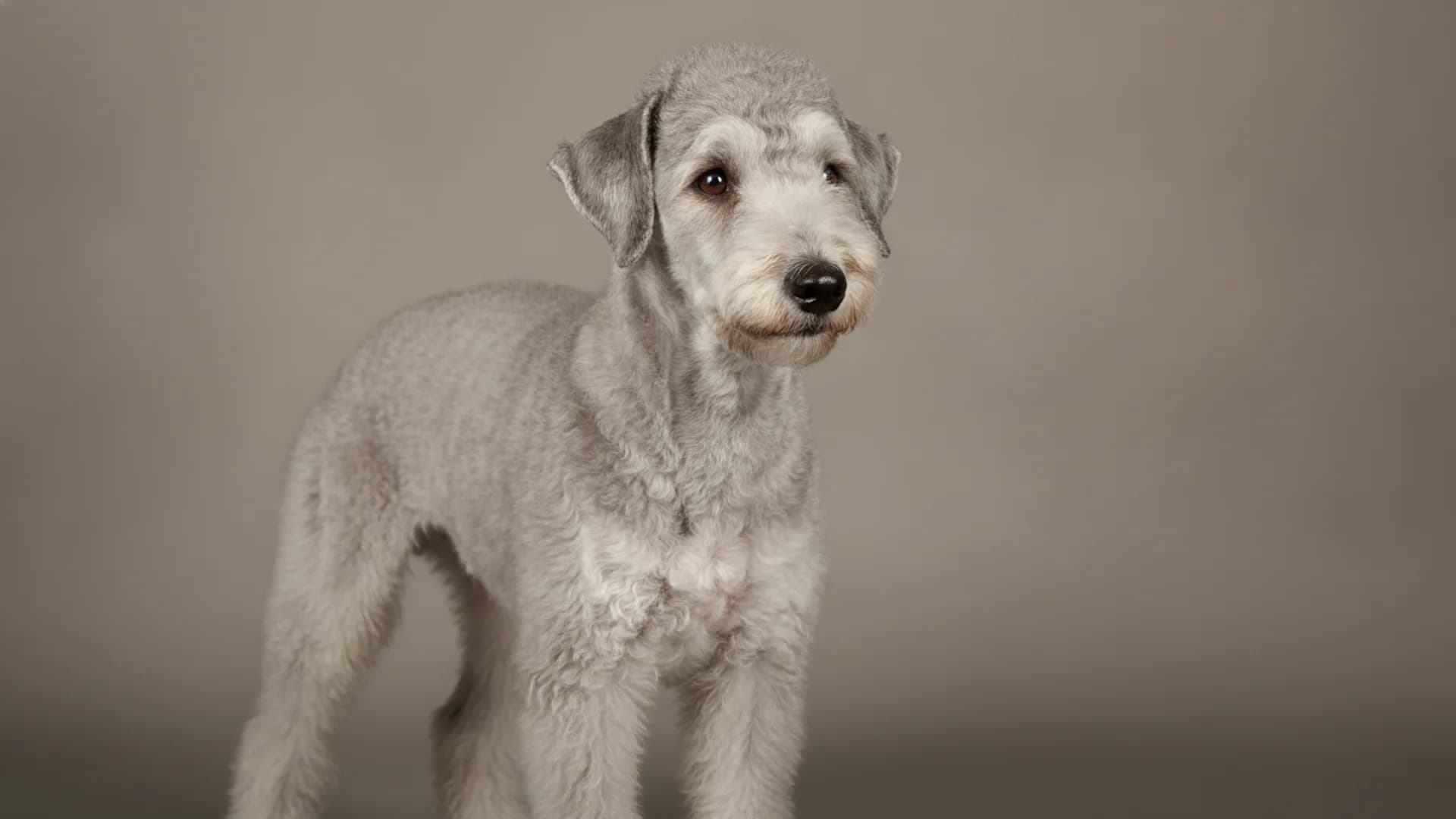
| Bedlington Terrier | Medium | 7.7–10.4 kg | 38–44 cm | 11–16 yr | — |
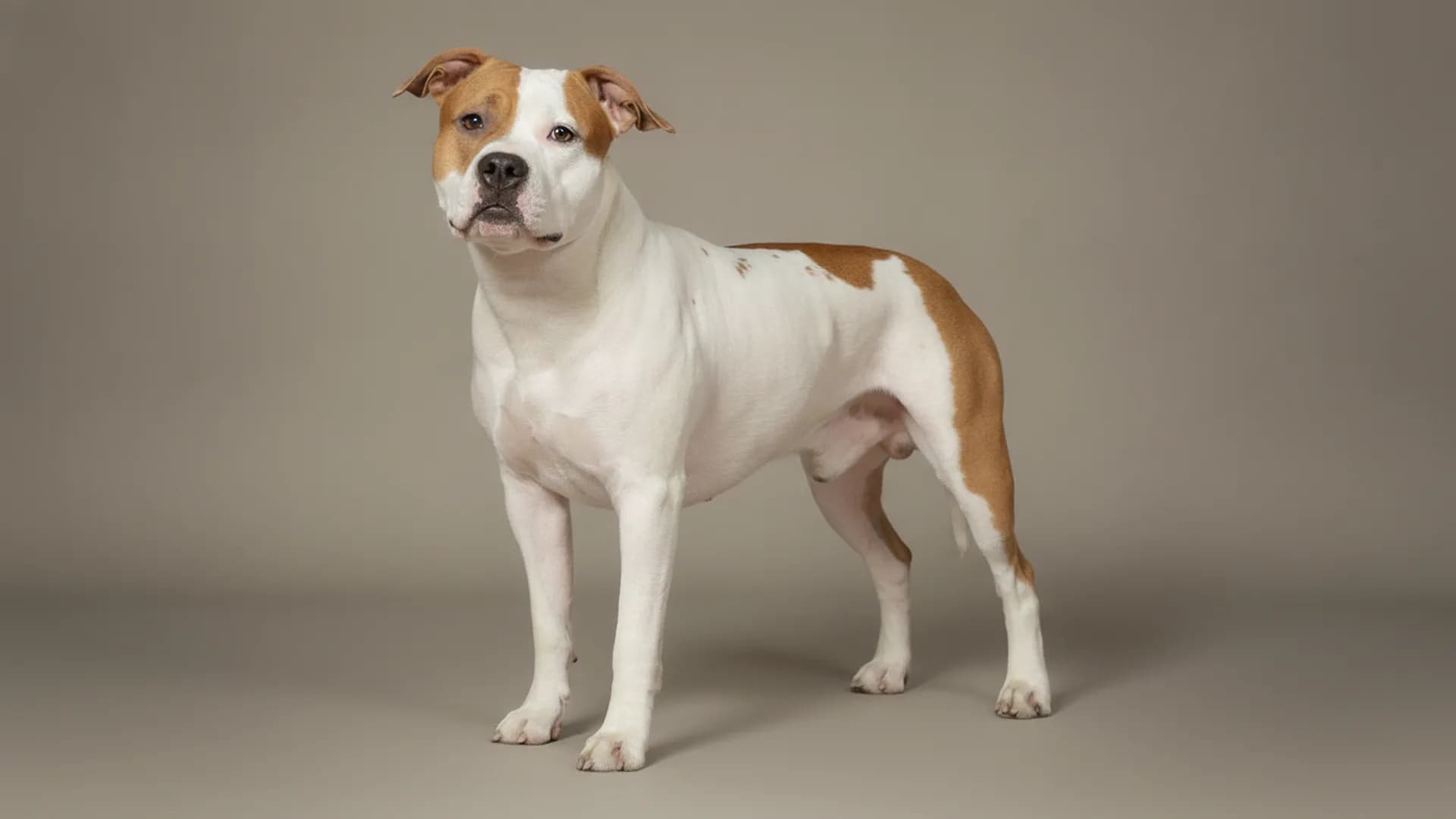
| American Staffordshire Terrier | Large | 22.7–36.3 kg | 42.9–47.8 cm | 12–16 yr | — |
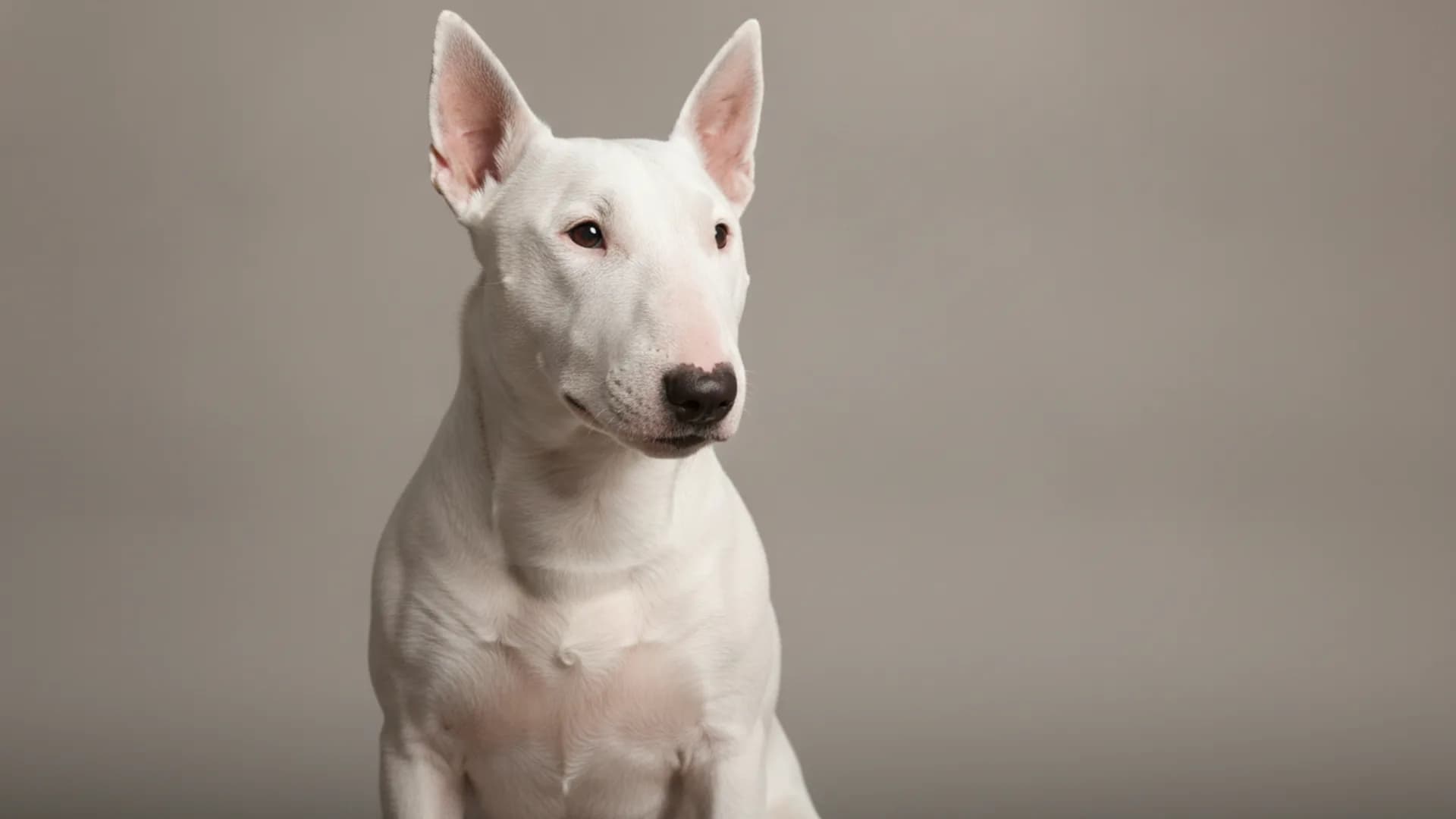
| Bull Terrier | — | 23–32 kg | 53–56 cm | 12–13 yr | Short |
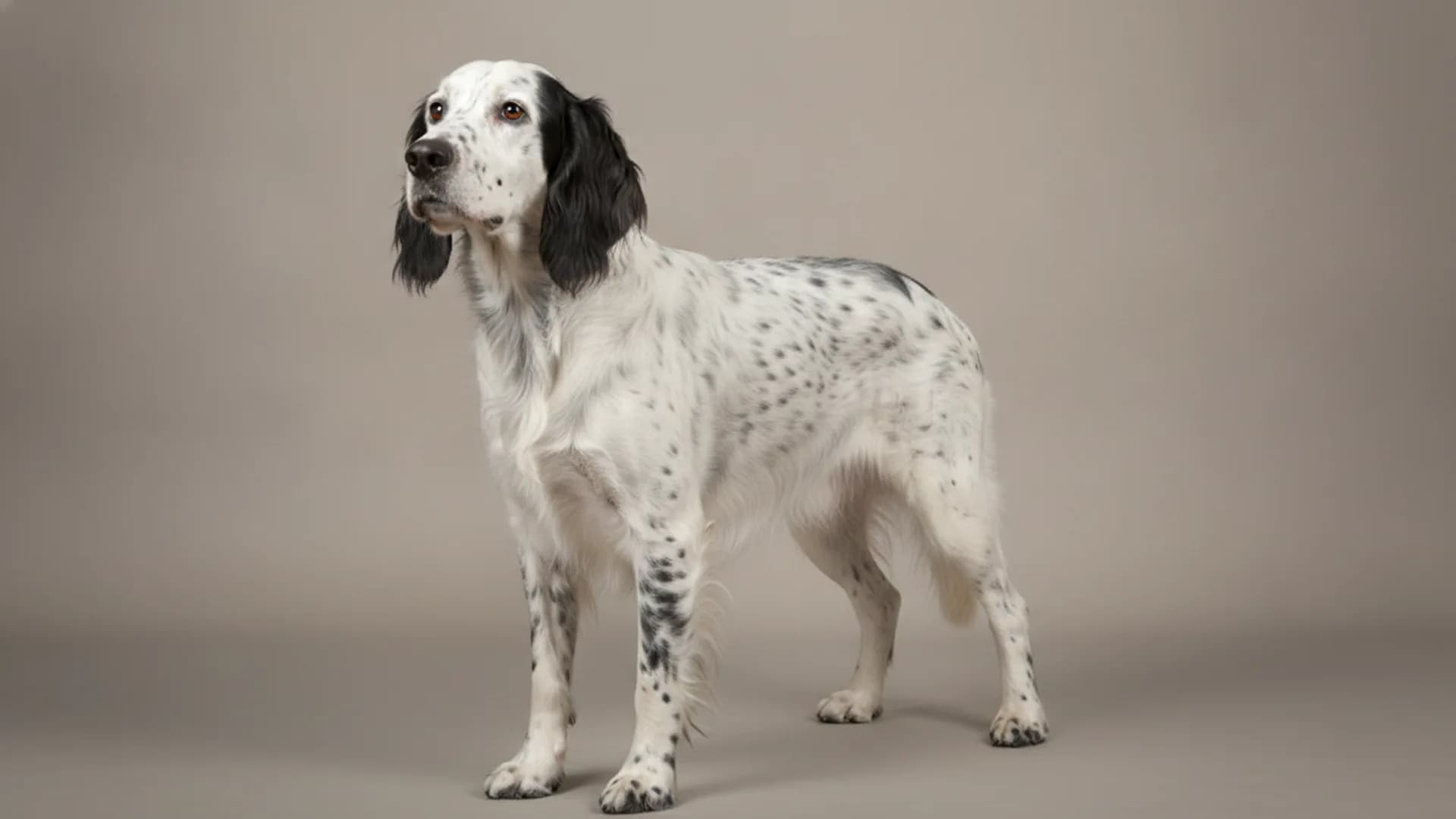
| English Setter | Large | 20–36 kg | 58–69 cm | 12–14 yr | — |